Portable chargers
Portable chargers are judged on three things: how much charge one holds in practice, how fast it moves that charge, and whether you will carry it. We weigh manufacturer specs against independent lab testing, from pocket 10,000mAh power banks to 140W laptop bricks, so you can pack the right one.
 Alisdair, network engineer, 9 years
Affiliate disclosure: if you buy through links on this page we may earn a commission, at no extra cost to you.
Two pages before everything else
Four answers in thirty seconds
How many mAh do I need?
For a phone, 10,000mAh covers roughly two full charges and stays pocketable. For a tablet or a laptop you want 20,000mAh or more.
What wattage for a laptop?
Match the charger your laptop shipped with. Most thin laptops are happy at 65W, larger ones want 100W or more.
Can I fly with one?
In hand luggage, yes, up to 100Wh on almost every airline, with some allowing up to 160Wh if you ask first. Never in the hold.
What does Qi2 change?
Magnets join the standard, so the bank locks onto the back of a compatible phone and stays aligned. Slower than a cable, but nothing to hold.
Reviews, roundups and guides, newest first
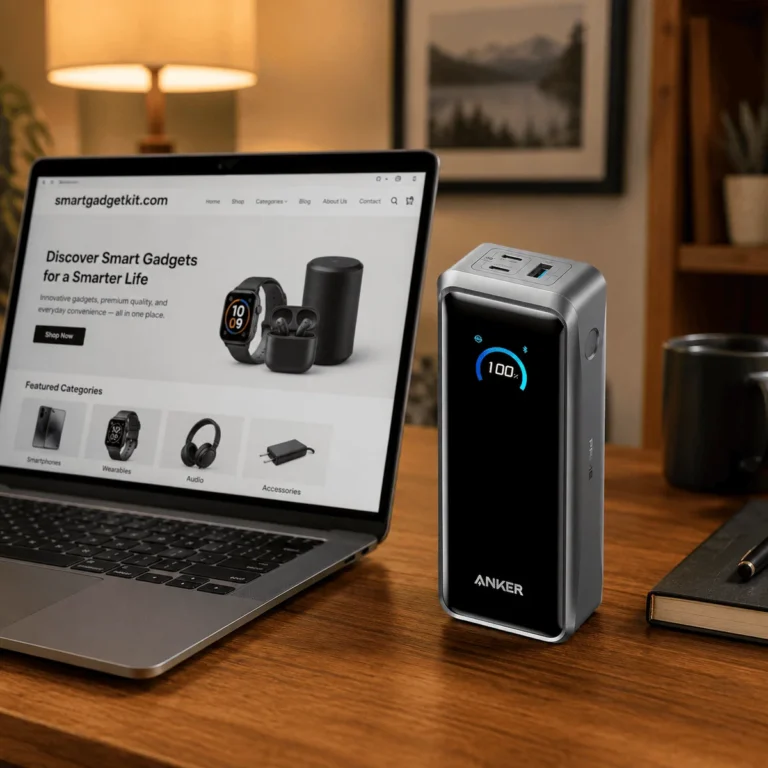
Anker Prime 300W Power Bank Review
Anker’s Prime 300W pack held 140W on both USB-C ports at once in independent testing, and at 99.75Wh it clears the usual airline cabin limit.
Read the review ›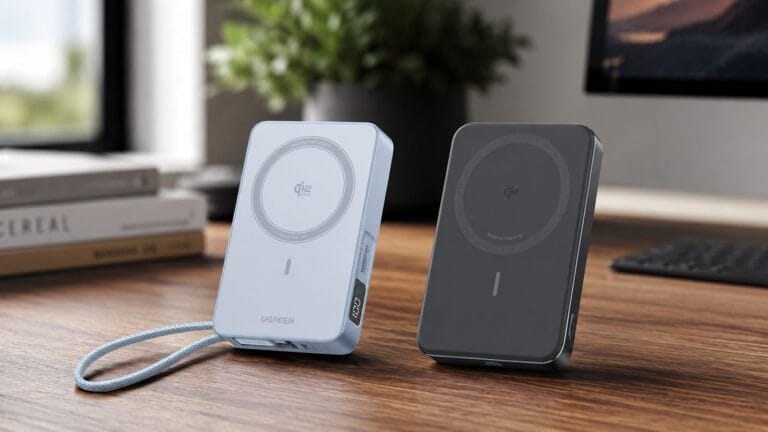
Anker MagGo vs UGREEN MagFlow
Both hold 10,000mAh and both charge at 30W on a cable. We score them on wireless speed, weight and what you carry.
Read the comparison ›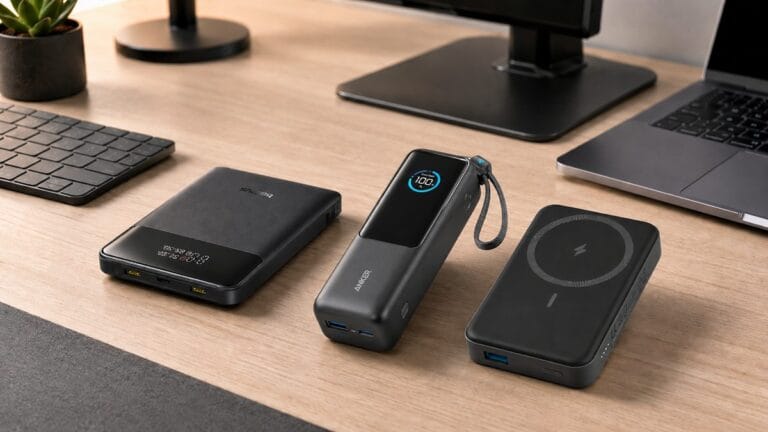
How to Choose a Power Bank: 4 Numbers That Decide It
Capacity, speed and weight decide which power bank you need. This guide gives you all three in five minutes.
Read the guide ›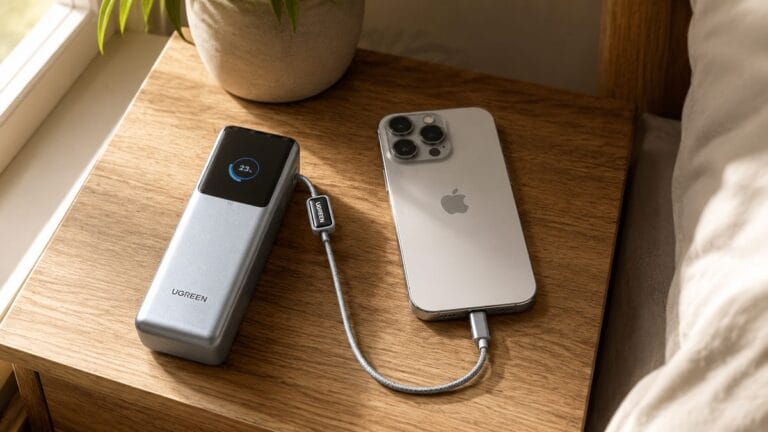
How Long Does a Power Bank Last? Charges, Years and Sizing
About two phone charges from a 10,000mAh bank, and two to four years before it fades. The sums are shown, along with what ages a pack fastest.
Read the guide ›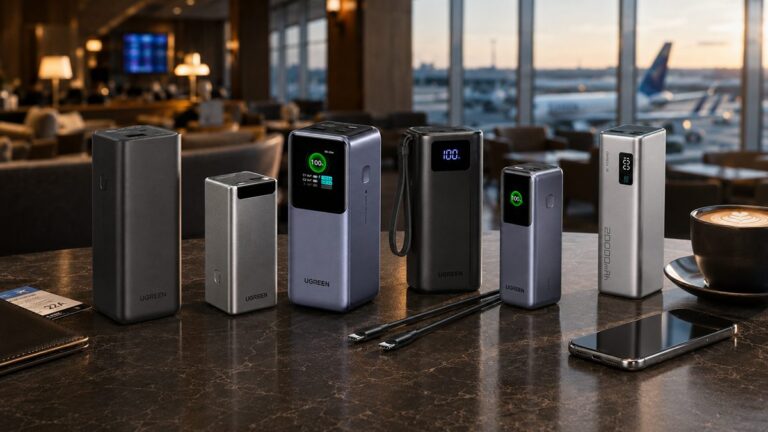
Best 20,000mAh Power Banks
Ranked by what comes out of them rather than the number on the front. Seven picks for laptops and phones.
Read the roundup ›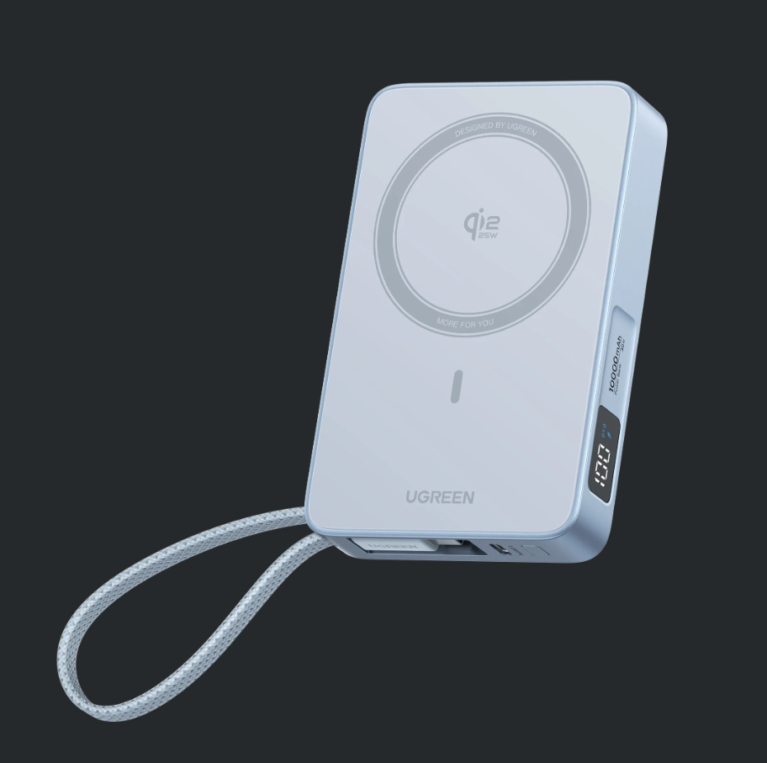
UGREEN MagFlow Review: First Qi2 25W Magnetic Power Bank
A 10,000mAh Qi2 power bank with 25W wireless charging, a built-in USB-C cable, and a 17-magnet hold. Airline-safe.
Read the review ›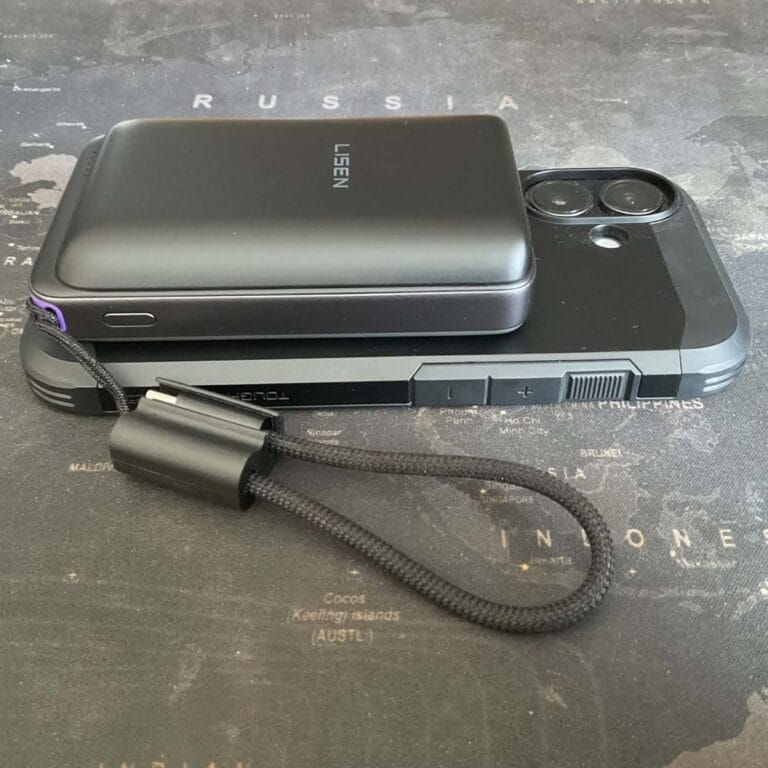
LISEN Power Bank Review
Qi2.2 magnetic 10,000mAh, with the wired and wireless output measured on a USB tester.
Read the review ›
Anker Nano 10K Review: A1259 vs A1638 (30W vs 45W)
Two Anker Nano 10K models reviewed side by side: the 30W A1259 and the 45W A1638 with its retractable cable.
Read the review ›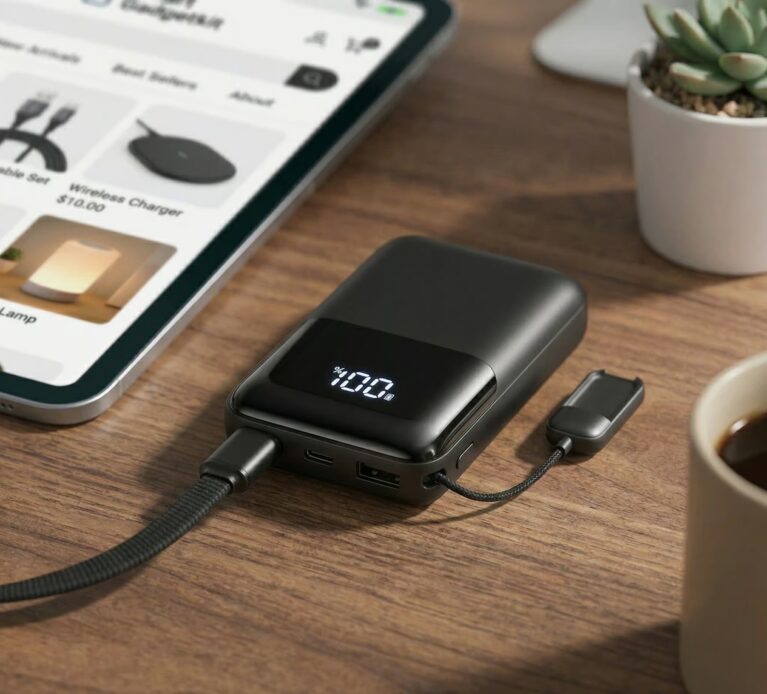
INIU Pocket Rocket P50 Review: The Smallest 45W Power Bank
The INIU Pocket Rocket P50 squeezes verified 45W charging into 160g. Our review covers real charge times and the 15W multi-port catch.
Read the review ›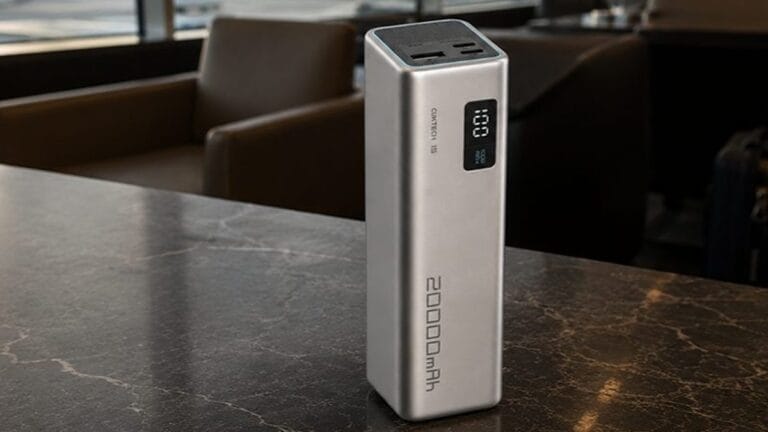
CUKTECH 15 SE (PB200) Review: 20,000mAh Power Bank
Marketed as 65W, 85W or 100W depending on where you read. This review settles what the 20,000mAh CUKTECH 15 SE really delivers.
Read the review ›
Best Power Banks 2026: Top 8 Picks by Use Case
Our eight best power banks for 2026, matched to the job: phones, laptops, travel and magnetic charging.
Read the roundup ›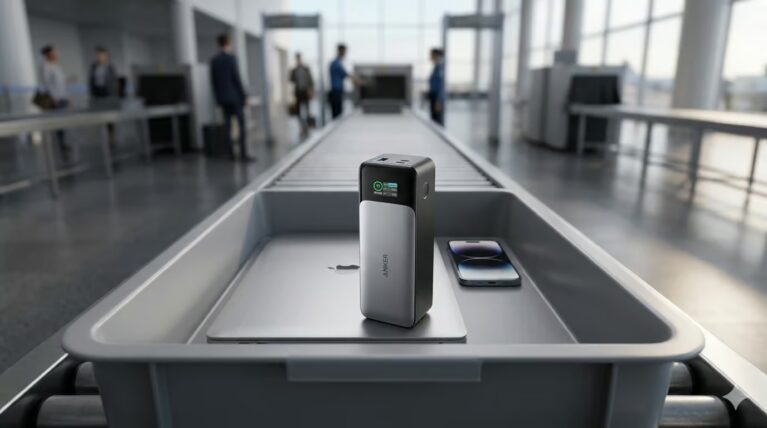
Can You Take a Power Bank on a Plane? Quick 2026 Rules
Yes, in your hand luggage and never in the hold. The 2026 power bank rules for 25 airlines, checked against each carrier’s own policy page.
Read the guide ›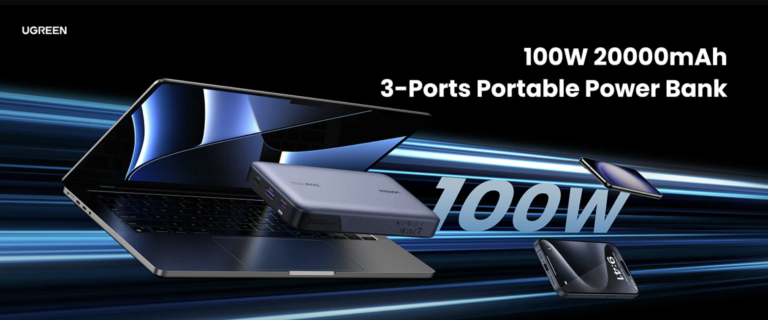
UGREEN Nexode 100W Power Bank Review: 20,000mAh Laptop Charger
A 20,000mAh power bank with a single 100W USB-C port and 72Wh capacity. One of the few portable banks that charges most USB-C laptops at full speed.
Read the review ›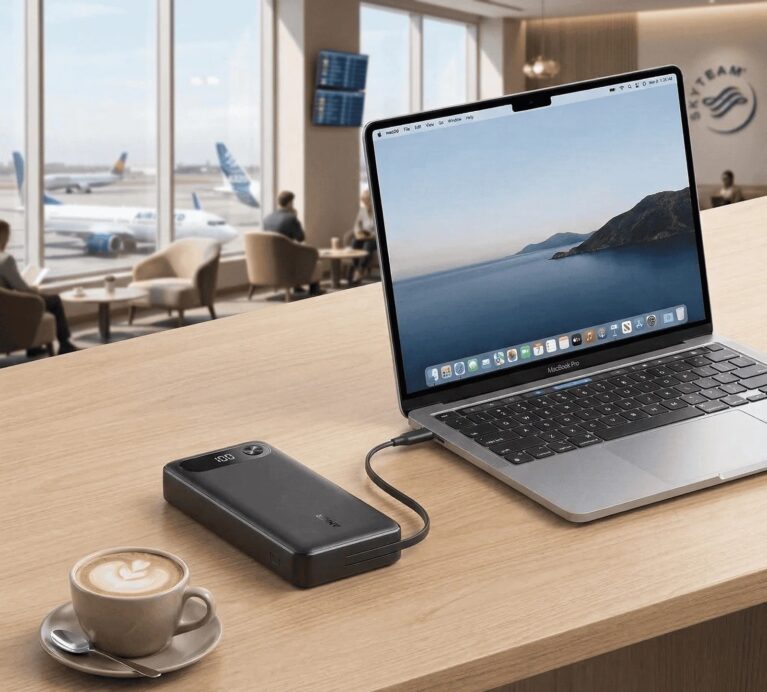
Anker 87W Power Bank Review (A1383): Can It Run a Laptop?
A 20,000mAh bank with a built-in USB-C cable that fast-charges a laptop at a steady 65W, with airline-safe capacity for travel days.
Read the review ›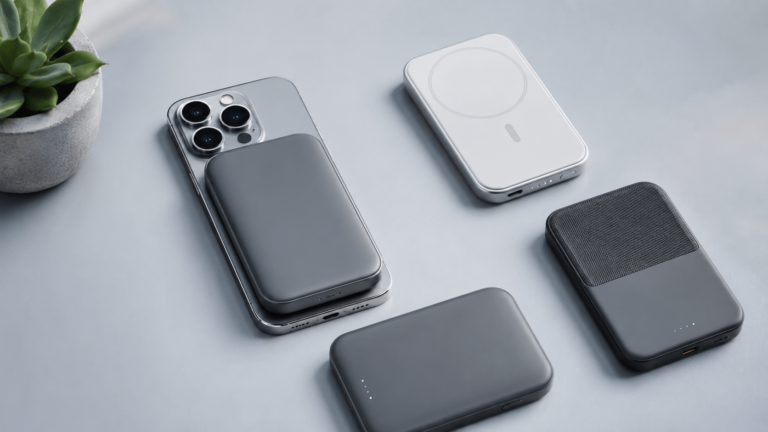
Best MagSafe Power Banks 2026: 6 Qi2 Picks for iPhone
Six Qi2 MagSafe power banks for iPhone in 2026, ranked by job from the fastest 25W wireless charge to the lightest everyday carry.
Read the roundup ›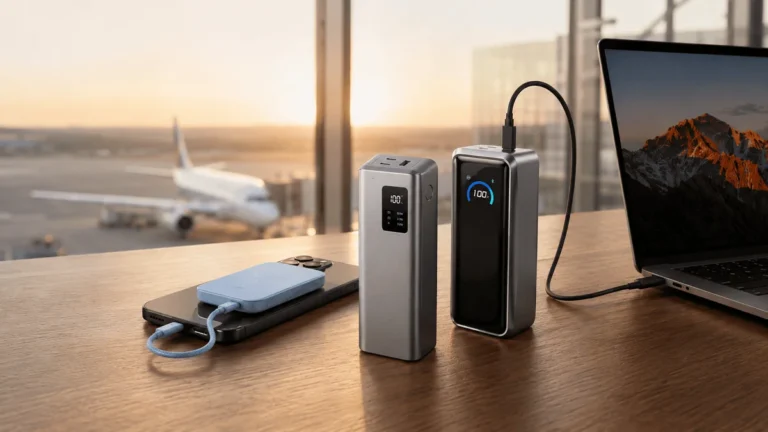
Best Power Bank for Travel 2026: 6 Flight-Legal Picks
Six power banks for travel in 2026, all under the 100Wh airline carry-on limit, grouped by job from phone-only top-ups to laptop-capable.
Read the roundup ›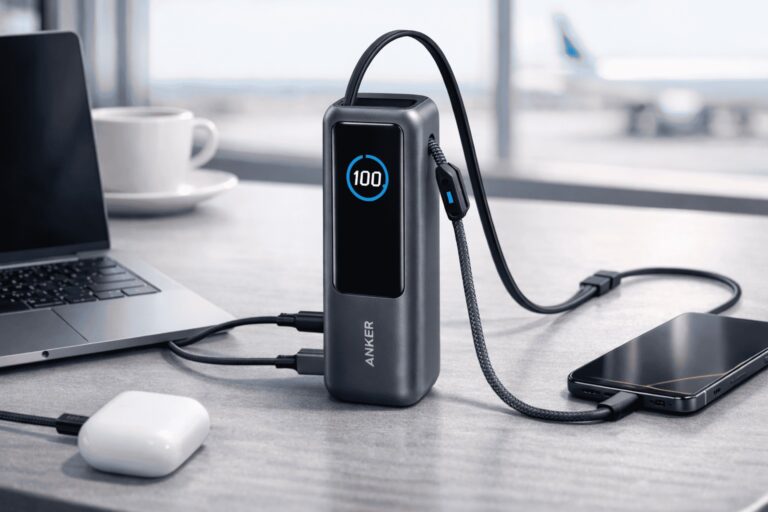
Anker A1695 Review: 25,000mAh 165W Power Bank
Anker’s 25,000mAh bank squeezes 165W output, a retractable cable, a built-in display and 90Wh into one airline-safe unit.
Read the review ›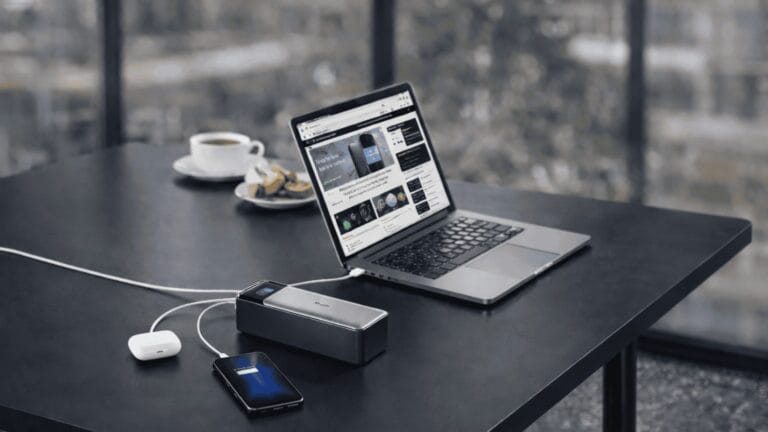
Anker 737 Power Bank Review: 24,000mAh 140W
Anker’s 737 offers 140W output and 86Wh capacity. Independent testing shows what the spec sheet leaves out.
Read the review ›What to look for in a power bank
A power bank is only as good as the energy it delivers in practice. Makers quote big capacity numbers, but conversion losses mean you get noticeably less than the label, and the figure that matters at the gate is watt-hours, not milliamp-hours.
Capacity and usable power
The mAh on the label is the raw cell capacity, not what reaches your phone. After the step-up from 3.7V to 5V or more, you get roughly 60 to 70 percent of it. A 10,000mAh bank delivers around 6,000 to 6,500mAh to your device.
Output speed
Capacity is how much; output wattage is how fast. A 20W bank tops up a phone nicely, but a laptop needs 60W or more from a USB-C port. Check the output figure, not only the capacity, or you may end up trickling a laptop all day.
Airline rules
Airlines measure power banks in watt-hours. The cabin limit is 100Wh without approval, about 27,000mAh, and a bank must travel in your carry-on, never in checked luggage. Most everyday banks are well under the limit. Check yours with our mAh to Wh calculator.
Why capacity is not the whole story
The headline mAh number sells power banks, but on its own it tells you little. Three quick truths save most buyers from a poor choice, and they are below.
Three quick truths
- Usable energy is lower than the label. Expect 60 to 70 percent of the rated mAh to reach your device after conversion losses.
- Flights care about watt-hours. Convert with mAh times 3.7 divided by 1000. So 20,000mAh is about 74Wh, comfortably under the 100Wh cabin limit.
- Output decides what it can charge. 20W for phones, 45W for tablets and fast phones, 60W and up for laptops.
Tell us how you charge, we point you to the review
I need to top up my phone
A pocket-sized 10,000mAh bank for a phone and earbuds, around two full charges.
Anker Nano 10K review › Laptop powerI need to charge a laptop
High-capacity banks with 60W or more output for a full working day away from a socket.
Best 20,000mAh power banks › Wireless and MagSafeI want magnetic wireless charging
A Qi2 magnetic bank that snaps to an iPhone, fastest on the iPhone 16 and 17.
UGREEN MagFlow review › Flying soonI want to know what I can fly with
The 2026 cabin rules for the UK, EU and US, and how to pack a power bank safely.
Power banks on a plane ›Power banks we have reviewed, compared
The key numbers side by side. Every figure is cross-checked against independent testing in each review.
Capacities are manufacturer rated; usable output is lower after conversion losses. Watt-hour figures are what airlines use for the 100Wh cabin limit. Every figure cross-checked against named third-party testing in each review.
Power bank questions, answered
The things buyers ask us most about power banks, explained in plain English.
How many mAh do I need?
For phone top-ups, 10,000mAh covers a full day and around two charges. For multi-day trips, or to charge a laptop, look at 20,000mAh or more. Remember you get roughly 60 to 70 percent of the rated number in usable power.
Why don’t I get the full mAh from a power bank?
Conversion losses. The cells store energy at 3.7V, but your device charges at 5V or higher, and that step-up wastes 30 to 40 percent. So a 10,000mAh bank delivers around 6,000 to 6,500mAh to your phone, not the full label figure.
How many times will a 10,000mAh power bank charge my phone?
Around 1.5 to 2 full charges of a modern phone, depending on the model. A large iPhone Pro Max or Galaxy Ultra is closer to 1.2 charges, a smaller phone closer to 2. Wireless charging gives fewer charges than a cable.
Can I take a power bank on a plane?
Yes, in your carry-on, never in checked luggage, and it must be 100Wh or under, about 27,000mAh. Most everyday banks qualify easily. Rules tightened on some airlines in 2026, so check the details in our full guide before you fly.
What is Wh and the 100Wh airline rule?
Watt-hours measure total stored energy, and airlines allow up to 100Wh in the cabin without approval. Convert milliamp-hours to watt-hours with mAh times 3.7 divided by 1000. So 20,000mAh is about 74Wh, and 27,000mAh is about 100Wh.
Can a power bank charge a laptop?
Yes, if it has a USB-C port rated 60W or more and enough capacity, ideally 20,000mAh and up. A small 20W bank will only trickle a laptop and may not keep up under load. Check the output wattage, not only the capacity.
Do power banks lose charge when they are not used?
Yes, slowly, around 2 to 10 percent a month through natural self-discharge. A bigger drain is leaving the digital display switched on, which can cost around 15 percent in a day on some banks. Press the button to turn the screen off when you are not reading it.
What is Qi2 and MagSafe wireless charging?
Magnetic wireless charging that snaps to the back of a phone. Qi2 tops out at 15W on most phones and 25W on the newest iPhones. It is convenient and cable-free, but slower and warmer than a wired connection, so a cable is still faster.
How do you test power banks?
Our verdicts combine hands-on testing by the SGK team with trusted independent lab data, scored against one published rubric. The full method is on our how-we-test page.
How we choose what to recommend
We start with the specs
Manufacturer data and the real listing, checked for the exact model, capacity and watt-hours.
We cross-check the labs
Independent measurements from named sources. Every number we quote is attributed to who measured it.
We weigh real owners
Verified buyer feedback to catch what spec sheets leave out, like heat or display drain.
Every figure in our reviews is attributed to its source, and we flag anything not yet independently verified. That is how an independent site earns trust without owning every product.

Beyond power banks
Evidence first, marketing last
We do not run a battery lab, and we will never pretend we did. Every figure in our reviews is attributed to its source, and we flag anything not yet independently verified.
Written by AlisdairNetwork engineer, 9 years
Everyday perspective: DarleeneNurse, professional sceptic
Some links across the site are affiliate links. If you buy through one we may earn a small commission, at no extra cost to you. It never changes what we recommend.