Review · Power banks · A110A
Anker Prime 300W Power Bank Review: Two Laptops, One Socket-Free Table
Anker says this pack runs two demanding laptops at once, away from the mains. This Anker Prime power bank review checks that claim against the outlets that measured it, for model A110A only.

Scored against independent measured testing
SmartGadgetKit is reader-supported. We may earn a commission if you buy through links on this page, at no extra cost to you. We only recommend gear we would carry ourselves.
Expert Score
The rare high-output pack that holds its headline figure under independent testing, so long as you are the buyer who has two laptops to feed and can carry 600g to do it.
Pros
- Both USB-C ports held up to 140W while charging two power-hungry laptops at once, in independent testing
- Independently reported at 99.75Wh, which sits under the 100Wh cabin ceiling most airlines apply
- Independently recorded a total recharge score of 123% against a 14-inch MacBook Pro
- OLED display and app that independent reviewers rated highly
Cons
- 600g is bag carry, not pocket carry
- No built-in cable, so the right cable is one more thing to remember
- The charging base is a separate purchase, not part of this box
Key takeaways
Six numbers that decide whether this is your power bank
Quick specs
The paper numbers for the Anker Prime Power Bank (26K, 300W)
| Model number | A110A |
| Cell capacity | 26,250mAh |
| Rated energy | 99.75Wh |
| Maximum total output | 300W across all ports |
| Maximum single USB-C output | 140W |
| Ports | Two USB-C and one USB-A |
Specs confirmed against the Anker and Amazon listings for A110A. Performance figures come from independent testing by Macworld and Basic Tutorials. See how we test and score.
First impressions
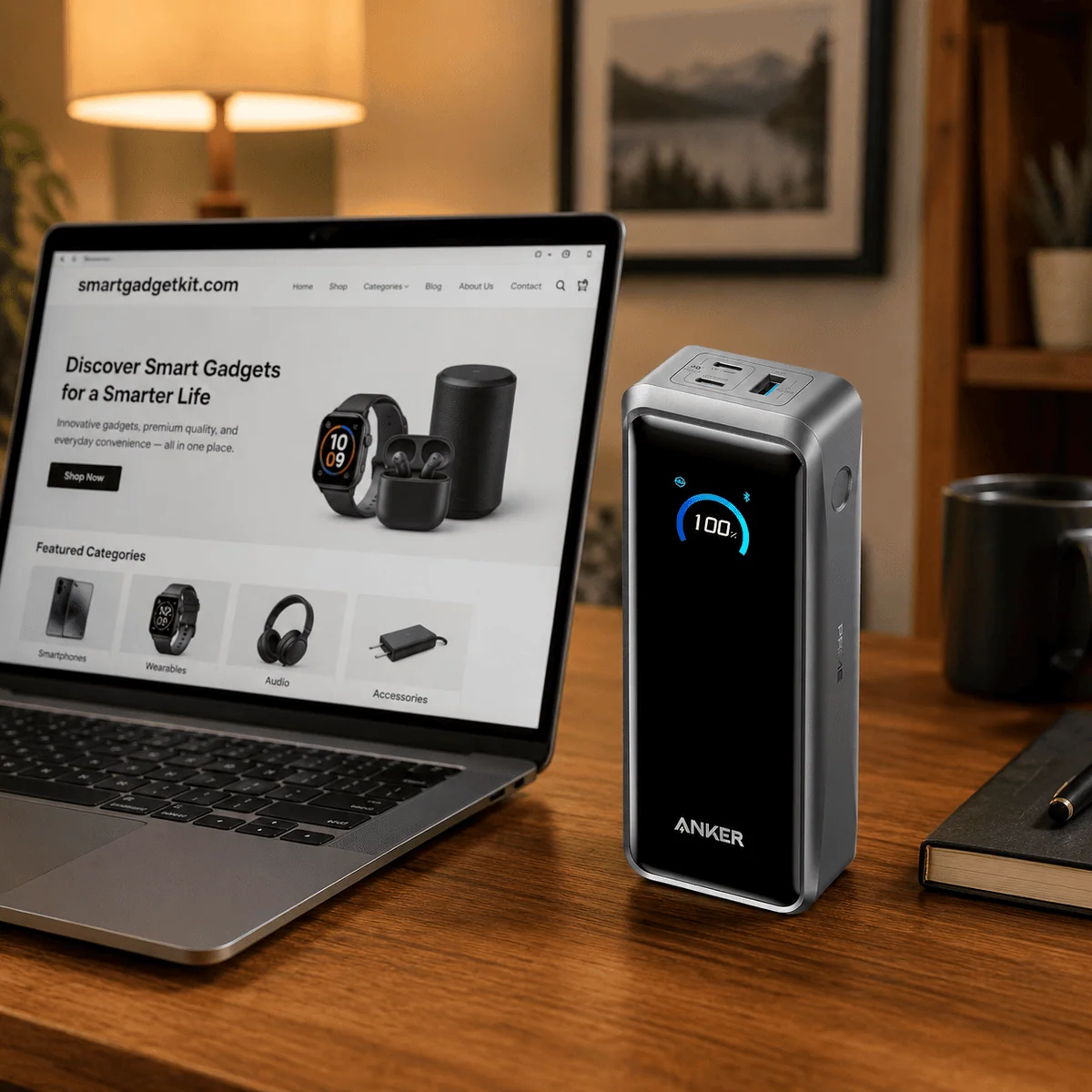
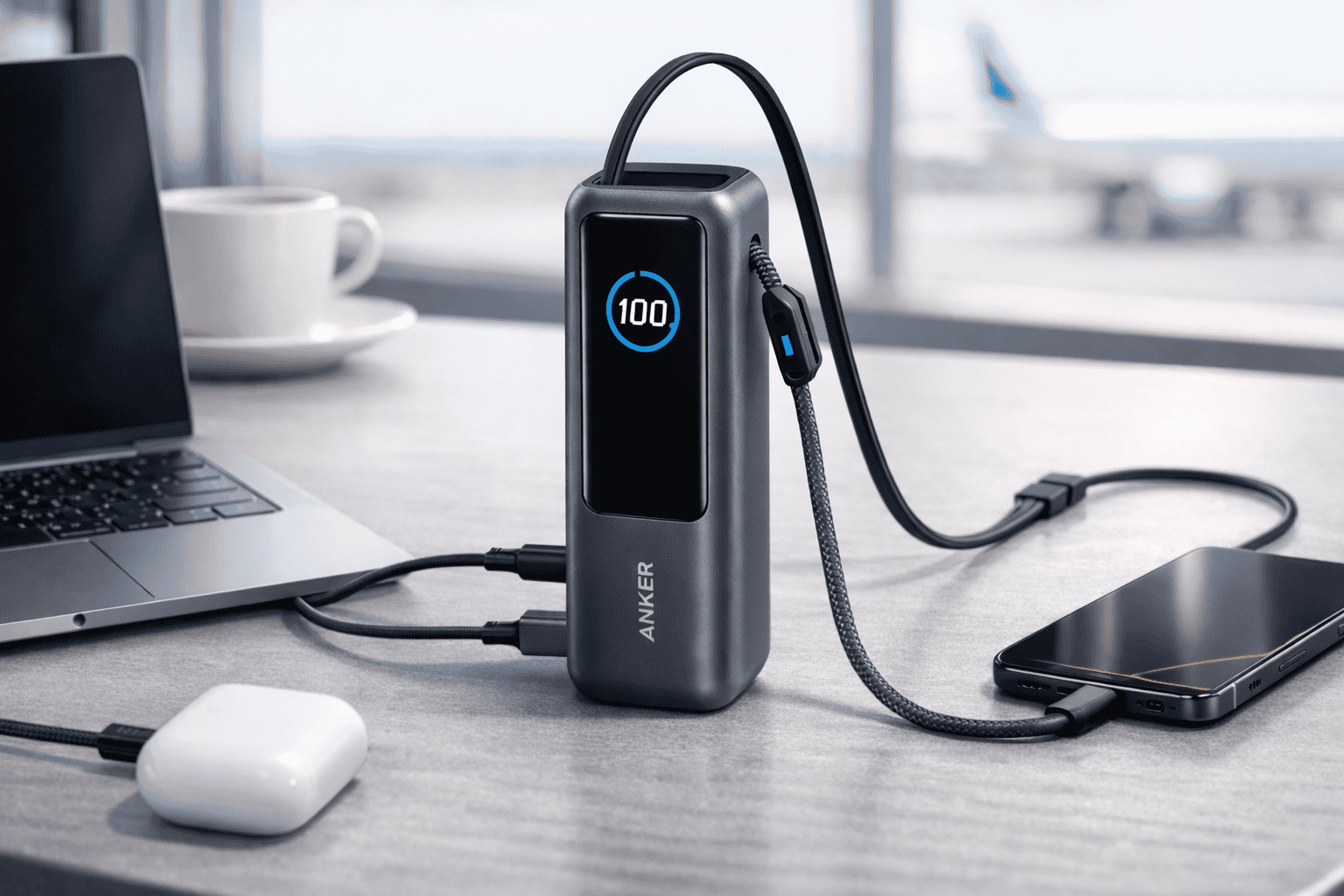
It reads as a tool rather than a gadget. A dense dark slab with a screen on one face, closer in feel to a piece of kit you pack than something you slide into a jacket.
Basic Tutorials describes the finish and the case as robust, and Digital Camera World notes that the polished surface picks up marks, which is the trade that comes with a shell that looks this good on day one.
The OLED display is the tell that this sits at the top of Anker’s ladder. Independent reviewers found both the screen and the companion app useful rather than decorative, which is not the norm at any output level.
Design and build
A pack you allocate bag space to, with the port layout that makes the two-laptop claim possible
At 600g and 159.9 x 38 x 62.7mm, this is a pack you allocate space to. Anker publishes both figures on its A110A product page, and the weight there is the product weight rather than a shipping weight, which is a distinction worth holding on to when comparing listings.
Anker does not publish the cell chemistry for this model, so we are not going to name one. Several chemistry claims circulate online that belong to other products in the Anker range, and we would rather leave a gap than repeat one.
The port layout is three sockets: two USB-C, each rated to 140W on its own, and one USB-A rated to 22.5W. That is the layout that makes the two-laptop claim possible, and it is also why the USB-A port is best thought of as the phone or earbuds socket rather than a third serious output.
On safety, Anker specifies ActiveShield 4.0 and states that the pack checks its own temperature more than ten million times a day, a figure Anker’s own footnote attributes to internal lab testing. Power distribution runs on PowerIQ 4.0. Basic Tutorials confirms the temperature monitoring exists; nobody independent has verified the checks-per-day number, so treat it as an Anker claim.
In the box
You get the pack, a 1 m USB-C to USB-C cable rated at 240W, a travel pouch and a welcome guide, on Anker’s own list, with Basic Tutorials independently describing the cable as braided and the case as sturdy. The Prime charging base is not in this box; Anker sells that bundle as a separate model. If you want a sense of what a good 240W cable does for a pack like this, our Anker 240W cable review covers the one in the pouch.
 Darleene asks
“Everyone keeps saying 300W like I should be impressed. Impressed by what, exactly? My laptop charges from a plug on the wall.”
Alisdair’s answer: 300W is how much this can push out of all three sockets added together, not into any one of them.
The number exists because a modern laptop wants a lot more than a phone does. One socket here tops out at 140W, which is roughly what a large laptop’s own wall charger delivers, and there are two of those sockets.
So in practice it means you can put two laptops on it at the same time and neither one is being throttled to keep the other going. Basic Tutorials tested exactly that and found it held.
You do not need any of this if your heaviest device is a phone. A phone will draw a fraction of what one of these ports can give, and a much smaller pack will serve you better and weigh a third as much.
Independent testing
What the Anker Prime 300W power bank delivers under test
Three independent reviewers put meters on this power bank. Each result below is theirs, named in full and never linked.
Found both USB-C ports delivering up to 140W stably while two power-hungry laptops charged at the same time, which is the claim the whole pack rests on.
Charged a 14-inch M2 Pro MacBook Pro to 100% with 33% still left in the pack, then drew nearly another quarter charge out of it.
Took a 14-inch MacBook Pro M4 from about 5% to about 80% in around 40 minutes over a single USB-C connection.
That is the part rivals quietly cap. Plenty of packs advertise a high total and then split it once a second device appears, so the interesting figure was never 300W; it was whether 140W survived contact with a second laptop.
Put together, those results are a laptop fully restored with capacity to spare, or a working day extended for two people on one pack. Macworld also charged an iPhone 16 Pro to 50% in under 25 minutes, with the pack’s own display reporting a draw only slightly above 20W, which is a useful reminder that the hardware scales down as well as up.
One thing nobody has measured, said plainly: how fast the pack itself refills. Our sources disagree on its input ceiling and no independent outlet has timed a full recharge, so this page publishes no recharging figure rather than picking the flattering one.
The caveat is the one the specification hands you. 300W is a total. One device sees at most 140W, and the USB-A port at most 22.5W, so any listing implying 300W to a single laptop is describing something this product does not do. Counted fairly, it is a two-laptop pack that happens to charge phones well, rather than a general-purpose one that happens to be big.
Darleene’s version: Two laptops, both charging properly, neither one waiting its turn. That is the whole point of it.
The single figure that decides it for anyone who flies. Macworld reports the A110A at 99.75Wh against a 100Wh cabin ceiling, so you are carrying close to the legal maximum with laptop-grade output attached. Airlines set their own rules, so confirm with yours before you travel.
If two laptops on one pack is the job you are buying for, the evidence above is the whole argument.
amazonCheck latest priceThe display, the app and charging while charging
The OLED panel on the face reports what is going in and what is coming out, and the companion app extends that to per-port detail and settings.
Independent reviewers rated both as worth having rather than ornamental, and Macworld’s iPhone result above was read straight off that display. Basic Tutorials also confirms a pass-through mode, so the pack can feed connected devices while it is itself plugged in.
The limit is that the display tells you rates, not the state of the cells over time, and Anker publishes no charge-cycle rating for this model. If you want a running record of how the battery is ageing, this is not the pack that gives you one.
Portability and travel use
600g and 159.9 x 38 x 62.7mm puts this in a bag, permanently. It is not a coat pocket item and it is not meant to be.
What the weight buys is the two-laptop capability and the near-airline-maximum capacity. Judged against other high-output packs above 20,000mAh it is unremarkable; judged against a slim phone bank it is a brick, and both of those statements are fair depending on which you were shopping for.
There is no built-in cable, which is the design decision that will annoy some buyers most. The supplied 240W cable is good, but it lives in the pouch, and a pack this capable is exactly the one you least want to find cable-less on a train.
The number that matters here is 43.75 mAh per gram. That is mid-range, and mid-range is the correct result for a pack built to push 300W rather than to disappear into a pocket.
Can you take it on a plane?
Macworld reports the A110A at 99.75Wh, and the common cabin ceiling is 100Wh, so this pack clears it with a quarter of a watt-hour to spare. Anker states the same capacity figure in its own product description.
The rule for a power bank at or under 100Wh is that it must travel in the cabin, in your hand luggage, and never in checked baggage. For a buyer who flies regularly, that headroom is arguably the most useful fact on this page: close to the maximum energy you are allowed to carry, with laptop-grade output attached to it.
Rules vary by airline, so check before you fly. Our guide to taking a power bank on a plane covers the cabin rules in detail, and you can check any capacity in seconds with our mAh to Wh calculator.
Specifications
Every figure, with its source attached
Manufacturer figures are specifications or claims. Measured figures belong to the independent outlet named beside them. Nothing on this page was measured by SmartGadgetKit.
| Specification | Figure | Source |
|---|---|---|
| Model number | A110A | Anker |
| Cell capacity | 26,250mAh | Anker |
| Rated energy | 99.75Wh | Macworld |
| Maximum total output | 300W across all ports | Anker |
| Maximum single USB-C output | 140W | Anker, held under load by both ports in Basic Tutorials testing |
| Maximum USB-A output | 22.5W | Anker |
| Dimensions and weight | 159.9 x 38 x 62.7mm, 600g | Anker |
| Protection | ActiveShield 4.0 temperature monitoring and PowerIQ 4.0 power distribution | Anker, as it specifies them |
| In the box | Power bank, 1 m USB-C to USB-C cable rated 240W, travel pouch, welcome guide, 24-month warranty. The charging base is sold separately. | Anker |
Anker publishes no cell chemistry, no charge-cycle rating and no operating temperature range for this model, and itemises ActiveShield 4.0 in temperature terms only. We are not going to fill those gaps with figures borrowed from a different product. Confirm the exact certification marks on the unit and packaging when yours arrives.
If the numbers already make the case for you, the current Amazon listing is one tap away.
amazonCheck latest priceScoring
How the Anker Prime 300W scores
Four category scores, fixed by editorial judgement. The overall is not their average.
The overall lands at 8.0 rather than higher because the audience this suits is narrow. It is an editorial judgement about who should buy it, not an average of the four bars above. One gap stays open: our sources disagree on the pack’s own input ceiling and no independent outlet has timed a full recharge, so this page gives no recharging figure at all.
The verdict
It does one demanding job exceptionally well, and independent testing rather than a spec sheet is what says so: two laptops, both at full rate, on one pack, away from the mains.
What you give up for that is 600g of bag space, a cable you have to remember, and a charging base that is not in the box. None of those are faults; they are the cost of the capability.
If you regularly work away from sockets with a laptop and a colleague, or a laptop and a camera rig, this is an easy recommendation. If your heaviest device is a phone, it is the wrong pack and a smaller one will make you happier.
Two laptops away from the mains is the job it does properly, and it is the only job worth buying it for.
amazonCheck latest priceShould you buy it?
Where it wins, and where it costs you
Buy it if
- You charge two laptops, or a laptop and a camera rig, away from sockets
- You fly often and want close to the maximum capacity allowed in a cabin
- You want per-port readouts on a screen rather than guessing
- You already carry a bag and 600g will disappear into it
Do not buy it if
- Your heaviest device is a phone, in which case this is far more pack than you need
- You want something that lives in a pocket
- You want built-in cables and nothing extra to remember
- You expected the charging base included, because it is a separate purchase
Buy it if working away from sockets with a laptop is your normal, skip it if a phone is the whole job.
amazonCheck latest priceHow it compares
The two products a reader is most likely weighing against it
| Anker Prime (26K, 300W) | Anker Prime (20K, 220W) | UGREEN Nexode 25000mAh 200W | |
|---|---|---|---|
| Cell capacity | 26,250mAh | 20,100mAh | 25,000mAh |
| Rated energy | 99.75Wh | 72.36Wh | 90Wh |
| Maximum total output | 300W | 220W | 200W |
| Maximum single USB-C | 140W | 140W | 140W |
| Weight | 600g | 510g | 609g |
| Best for | Two laptops at full rate at once | The same design in a lighter bag | A non-Anker pack at similar capacity |
Rival figures come from the Anker and UGREEN product pages, with the UGREEN output figures independently corroborated by Trusted Reviews and Absolute Geeks. No outlet we found has instrumented the Anker Prime (20K, 220W), so treat that column as manufacturer-stated.
If this one is not the fit
Three alternatives, three different readers
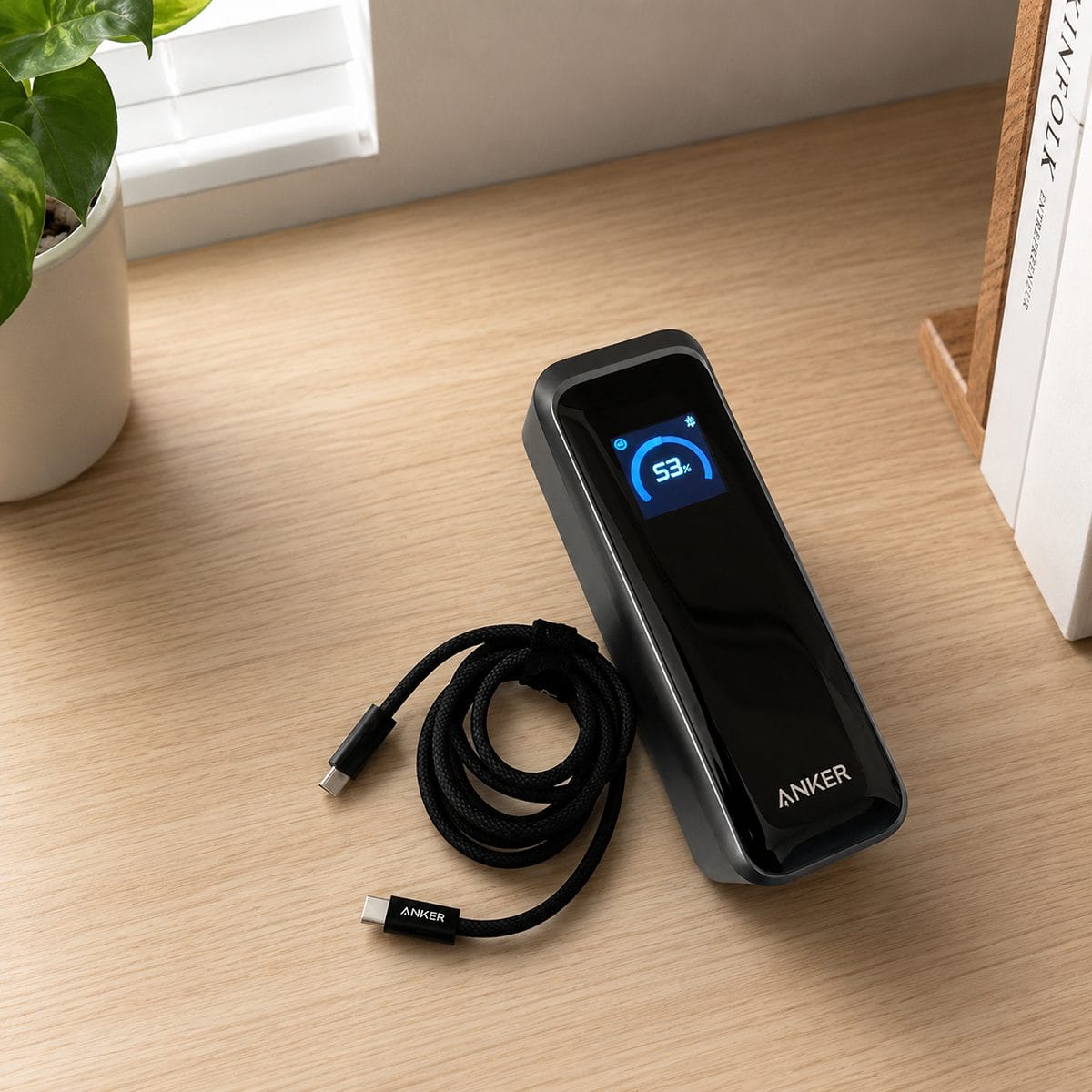
Anker Prime Power Bank (20K, 220W)
The same Prime build and display one size down, at 510g instead of 600g. You keep 140W on a USB-C port and give up total output and capacity.
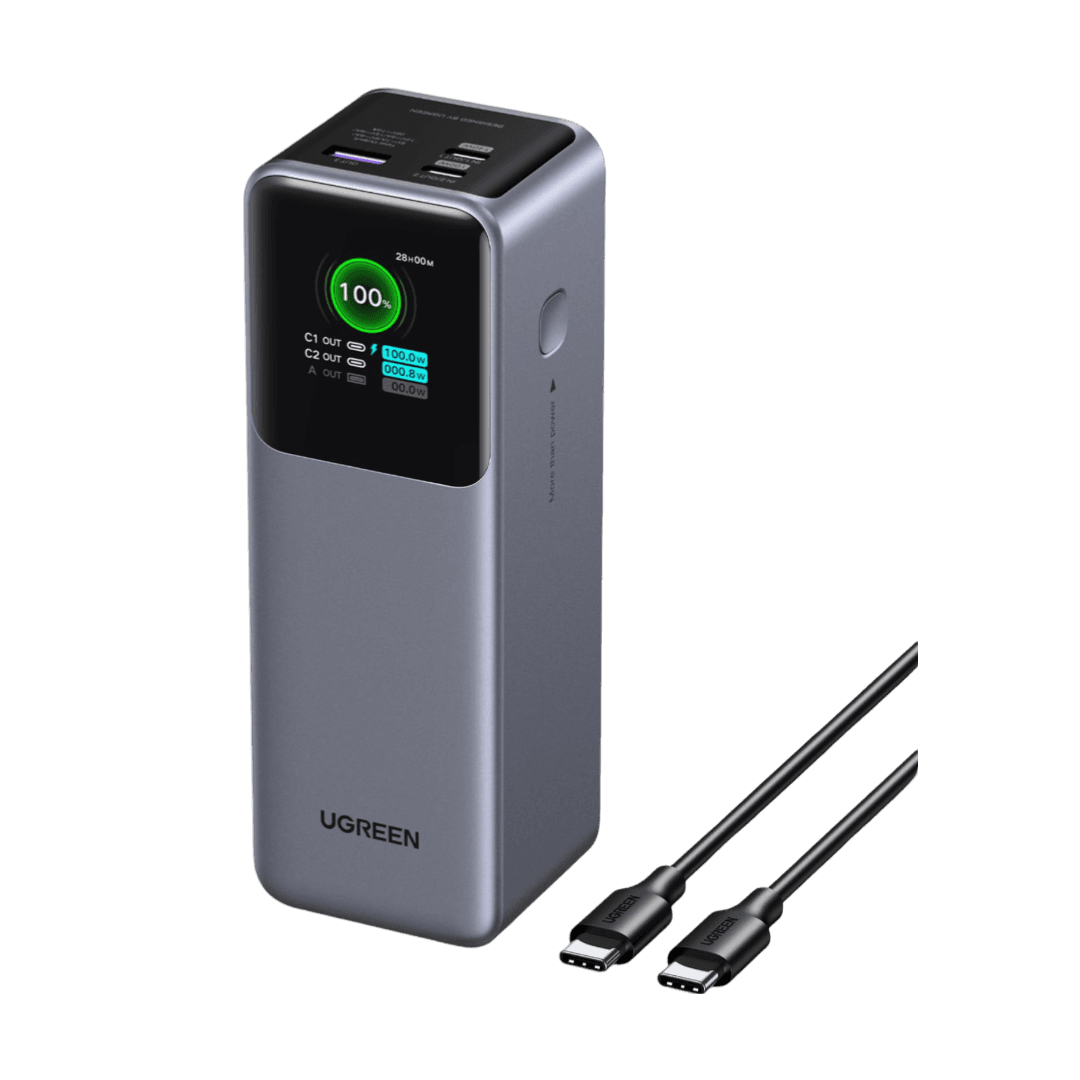
UGREEN Nexode Power Bank 25000mAh 200W
Similar capacity from a different brand, with its own display and 140W on its lead USB-C port. The catch is a lower total ceiling at a near-identical weight.
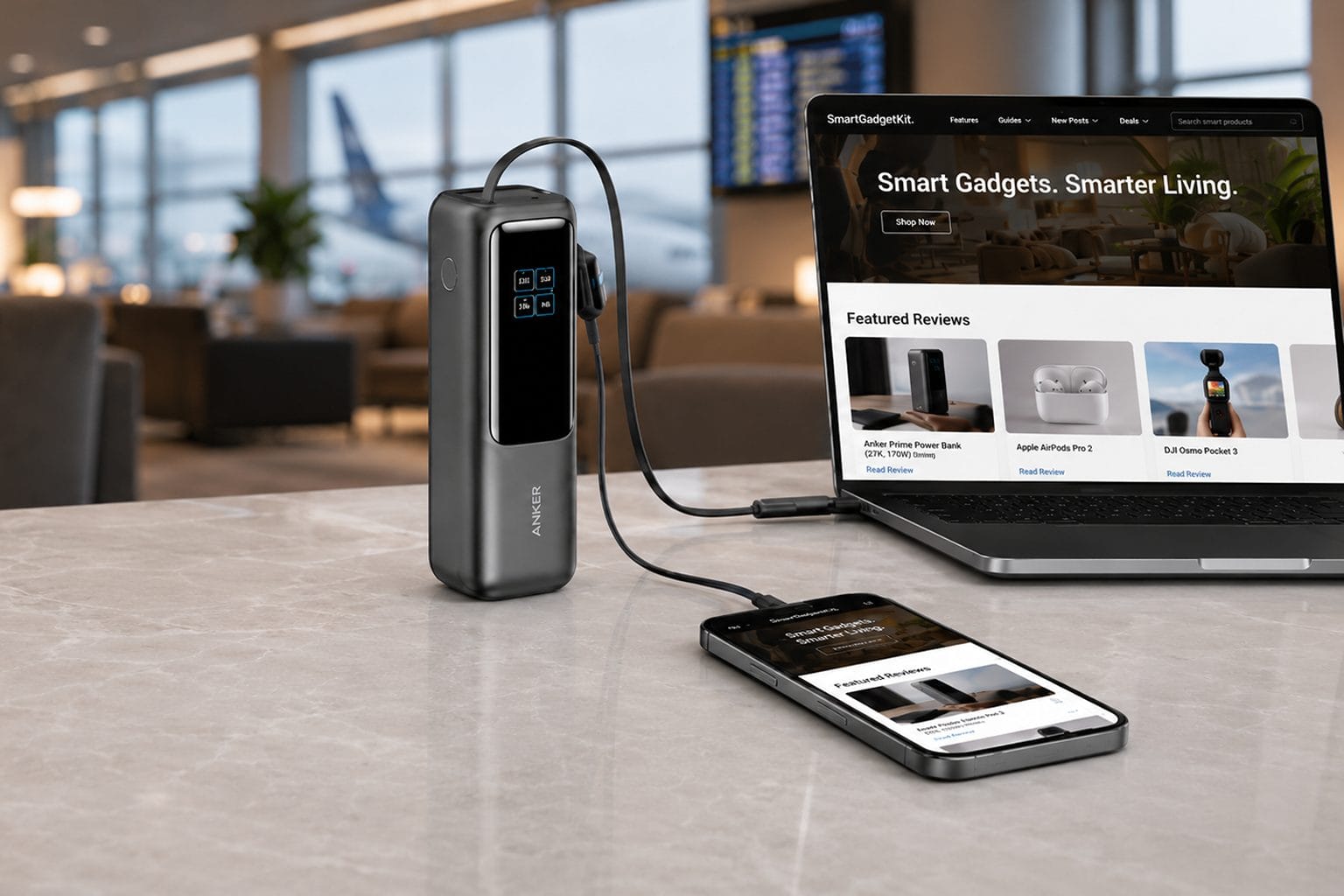
Anker Laptop Power Bank (25K, 165W)
Built-in retractable cables at a similar capacity, which is the one thing the Prime does not offer. You trade output ceiling for never hunting a cable again.
Need it to run a laptop? Compare every high-wattage pick in our laptop power banks hub.
FAQ
Questions readers ask
Is the Anker Prime power bank worth it?
For charging two laptops away from the mains, yes. Basic Tutorials found both USB-C ports holding up to 140W at once, and we score it 8.0 out of 10. For one phone or one modest laptop, no. How-To Geek and Digital Camera World both call it specialist kit, and you would be paying for output you never use.
Is 300W the output of one port, or the total across all three?
It is the total across all ports at once. One USB-C port tops out at 140W and the USB-A at 22.5W, so no single device ever sees 300W. Any listing that implies otherwise is describing something this pack does not do.
Does the Anker Prime 26K 300W come with the charging base?
No. Anker’s own What You Get list for this model covers the power bank, a 1 m USB-C to USB-C cable rated 240W, a travel pouch and a welcome guide. The Prime charging base is sold as a separate bundle, so check which one you are ordering.
Can you take the Anker Prime 26K 300W on a plane in hand luggage?
Macworld reports it at 99.75Wh, which is under the 100Wh ceiling most airlines apply, so it travels in the cabin and never in checked baggage. Rules vary by carrier, so confirm with yours. Our power bank flight guide covers the detail.
Can it charge two laptops at full speed at the same time?
That is the claim, and Basic Tutorials tested it. Both USB-C ports delivered up to 140W stably while two power-hungry laptops charged together, which is the headline reason this pack exists.
Can you charge devices while the power bank itself is recharging?
Yes. Basic Tutorials confirms a pass-through mode, so the pack can feed connected devices while it is plugged in. We publish no figure for how fast it refills, because our sources disagree and no independent outlet has timed it.
Do you need the Anker app, or does the display work on its own?
The OLED display works on its own and reports what is going in and out. The app adds per-port detail and settings. Independent reviewers rated both as useful rather than decorative, which is not the norm in this class.
What are the common problems with Anker power banks?
We can only speak to this model, and no source we cite reports a reliability fault with the A110A. The drawbacks on record are no built-in cable, a polished shell that shows marks per Digital Camera World, and 600g that rules out pocket carry.
How does it compare to the older Anker Prime with 27,650mAh and 250W?
They are different products and reviews mix them up constantly. This page covers model A110A only: 26,250mAh and 300W total. If a figure you have read does not name A110A, assume it belongs to the older pack.
Final word
A two-laptop pack that earns its bulk
Independent testing rather than a spec sheet is what proves it: 140W held on both USB-C ports at once, and near the maximum energy an airline will let you carry. Shortlist it if you work away from sockets with more than a phone, and skip it if you do not.
See how we test, or see where it ranks against the rest in our best power banks roundup.
Keep reading
Browse all our power bank guides and reviews.
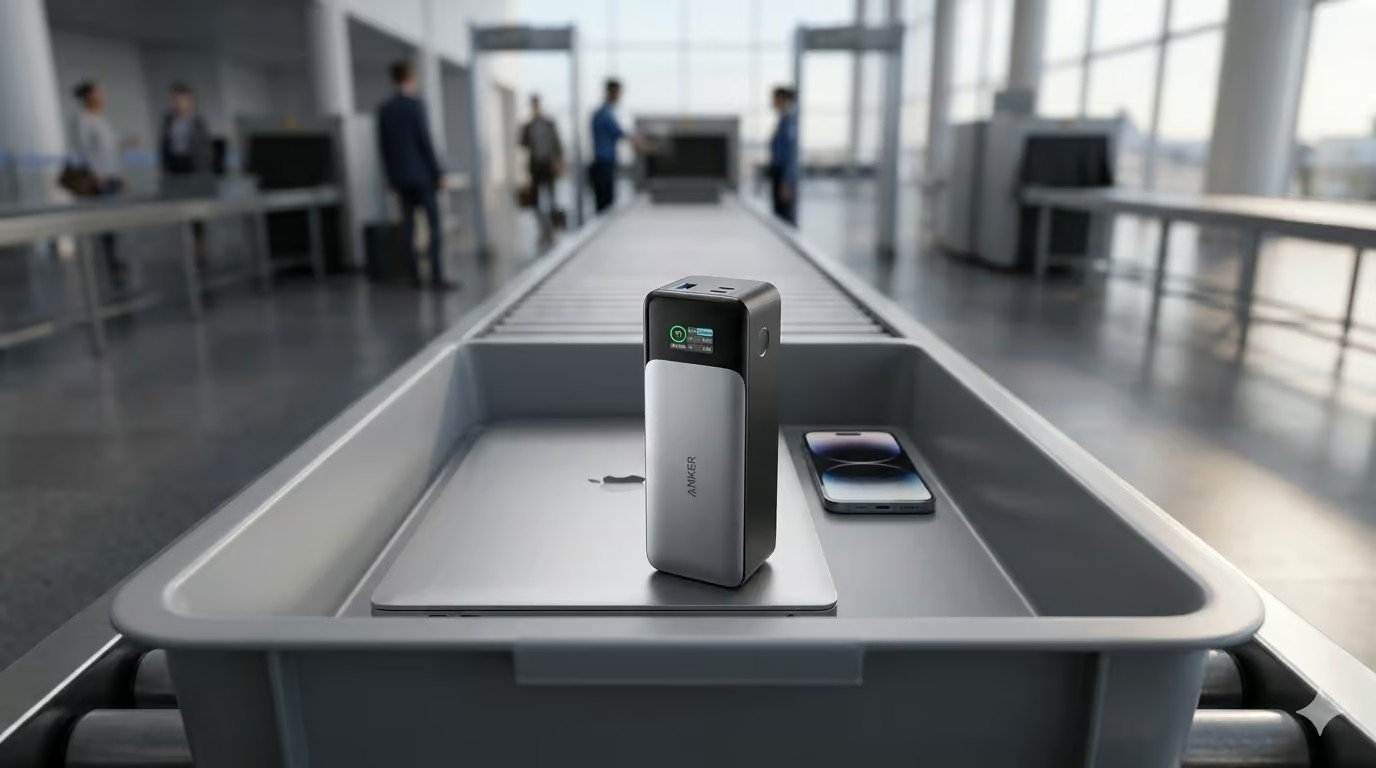
Can you take a power bank on a plane?
The 2026 airline rules: watt-hour limits, how many you may carry, and in-flight use.
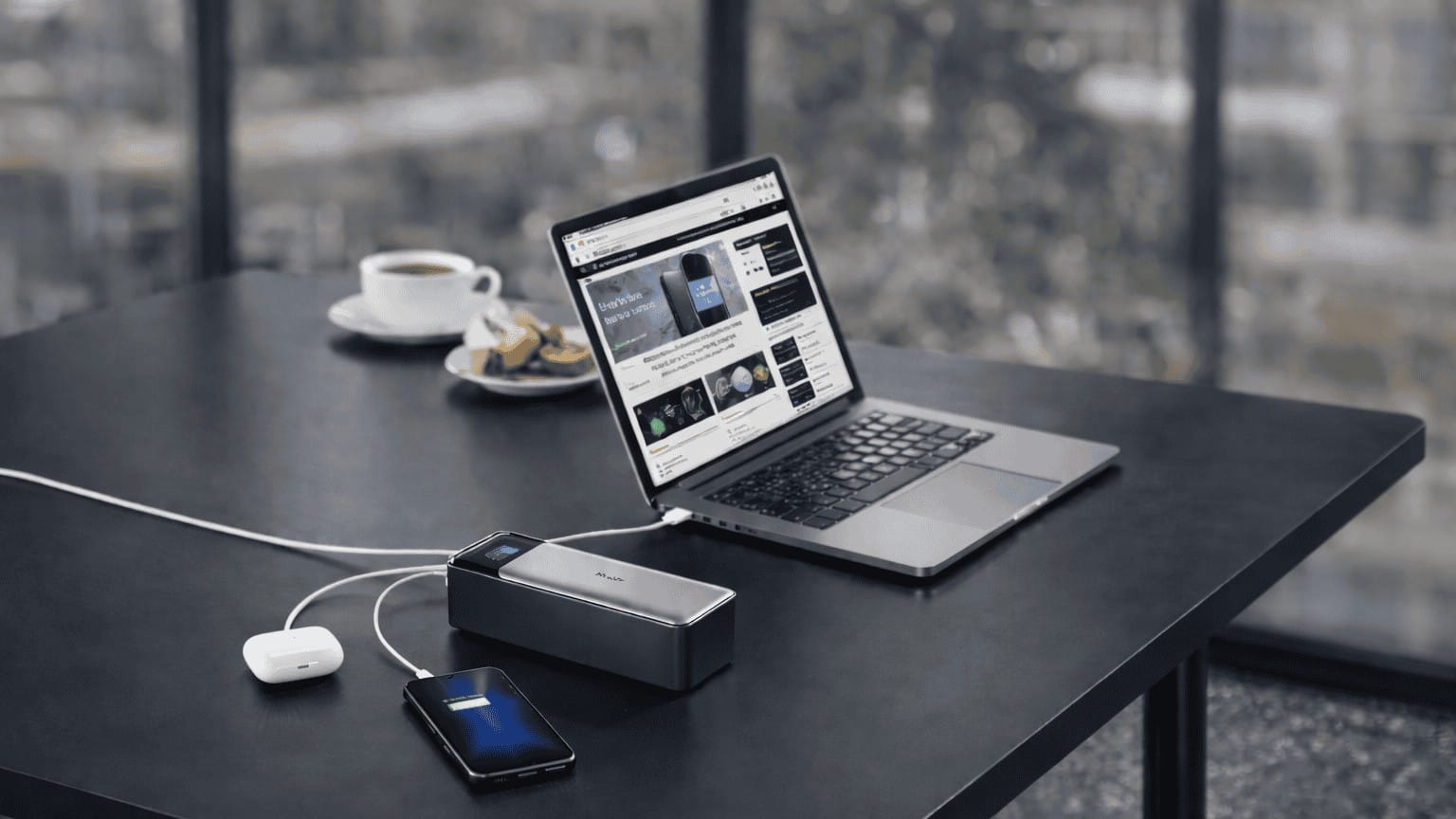
Anker 737. Still the 140W benchmark?
The pack that set the 140W bar, and whether it still holds up against the Prime line.
Anker A1695. A laptop’s wall plug, in your bag.
The 25,000mAh, 165W pack with built-in retractable cables and airline-safe capacity.
Latest from SmartGadgetKit
 Lithium Ion Battery Fire Statistics 2026
 LISEN Power Bank Review: The Qi2.2 25W MagSafe 10000mAh, Measured
 How Long Does a Power Bank Last? Charges, Years and Sizing
 Anker Prime 250W Charger Review: 6-Port Desktop Hub
 Jackery Explorer 2000 v2 Review: The Lightest Way to Carry 2kWh?
 EcoFlow DELTA 3 Max Plus Review: What 2,048Wh Really Gives You
 BLUETTI AC70 Review: What 2,000W Power Lifting Is Worth
 Anker SOLIX C1000 Gen 2 Review: The 49 Minute Recharge Is A Setting, Not The Default
Tested by people who know what the numbers mean
SmartGadgetKit checks every spec against the manufacturer and independent sources, and tells you the trade-offs, not only the wins. Independent testing for this page comes from Macworld, Basic Tutorials and Digital Camera World, credited where each figure appears.