Explainer
Can you take a power bank on a plane?
The rules for 25 airlines, checked against each carrier’s own policy page. The answer is directly below.
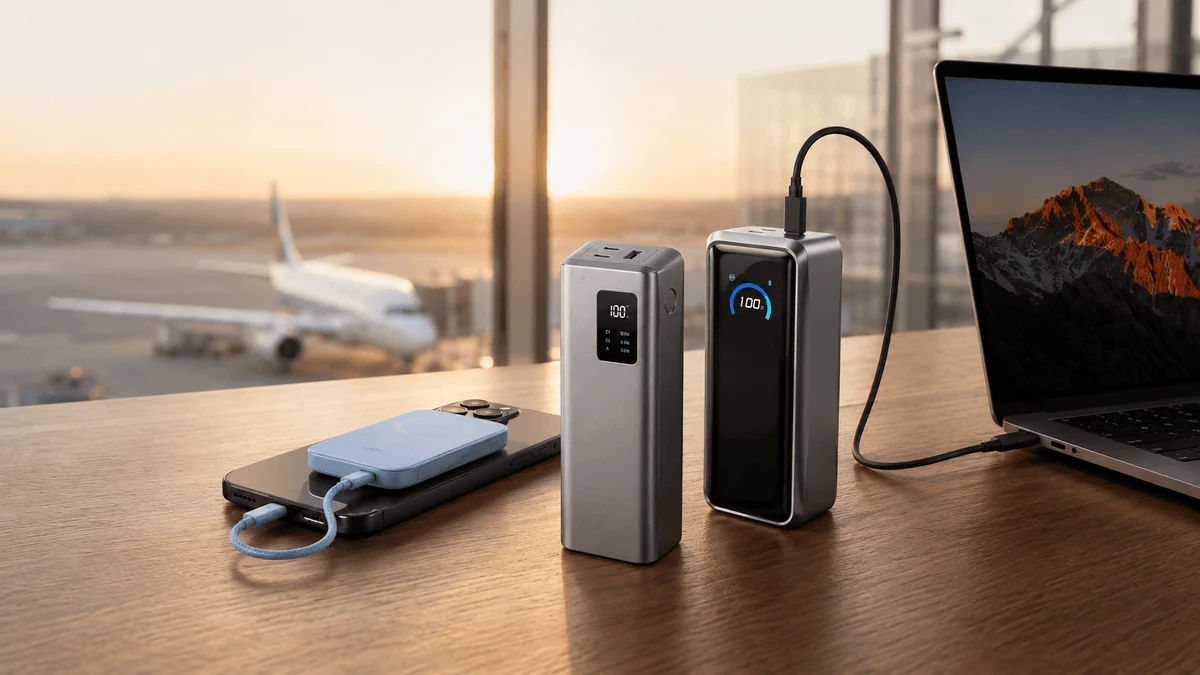
The short answer
Yes, in your hand luggage. Never in the hold.
You can take a power bank on a plane with every airline in our table, as long as it stays in the cabin and under 100Wh (roughly 27,000mAh). Checked luggage is the rule that catches people out: a power bank in a hold bag can get your luggage pulled at any airport in the world.
- Up to 100Wh: allowed in the cabin on all 25 airlines below
- How many: two on most airlines, but only one on Emirates, Wizz Air and Southwest
- Using one in flight: banned on most carriers since the 2026 rule changes, though a few still allow it
Facts checked 15 Jul 2026 against the CAA and each airline’s own policy page. How we test and score.
The short version
The 4 numbers that matter
Everything below unpacks these. If you only remember 4 things, make it these 4.
The foundation
Can you take a power bank on a plane? The core rules
Three rules cover 90 percent of trips. The exceptions are where it gets interesting.
The hand-luggage rule is not airline fussiness. A lithium battery fault produces smoke and heat fast, and in the cabin the crew can reach it in seconds. In the hold, nobody can. That is why the CAA and IATA put spare batteries in the cabin, and every airline follows.
The 100Wh figure is printed on most power banks, and where it is not, you can work it out: multiply the mAh by 3.7 and divide by 1,000. A 20,000mAh bank is 74Wh, comfortably inside the limit.
What changed in 2026 is everything else. After a run of in-flight incidents, regulators tightened the framework in March, and each airline has interpreted it its own way.
Ten airlines now refuse any power bank over 100Wh outright. Six of those go further and treat power banks as their own category, stricter than their rule for spare batteries: British Airways, American, Southwest, Thai, Wizz Air and Emirates.
Three of them allow only one per passenger. That divergence is why the table below exists.
Hong Kong security confiscates and does not return. Cathay Pacific’s restriction is Hong Kong law, not airline preference: a non-compliant power bank taken at HKG security is gone for good, not held for collection.
 Darleene asks
“Mine doesn’t say watt-hours anywhere. It only says 20,000mAh. How am I supposed to know if it’s allowed?”
Alisdair: multiply the mAh by 3.7 and divide by 1,000. So 20,000mAh is 74Wh, comfortably under the limit.
If maths on the way to the airport is not your thing, the rule of thumb is that anything sold as 27,000mAh or less is fine.
One catch since 2026: a few airlines refuse banks with no rating printed on the casing at all, so if yours has worn blank, replace it before you fly.
Plan for the strictest airline on your ticket, not the one you check in with.
What the airlines disagree on
What does every airline allow?
Power bank airline rules for 25 carriers. Every airline name links to that carrier’s own policy page, so you can check any row for yourself.
We checked all 25 against their own published policies in July 2026. There is no single rule.
Figures as at July 2026, from each airline’s own published policy. Every source is linked in the table below.
Where your power bank sits
Airlines measure watt-hours, not milliamp-hours. The number on the box is almost never the number they check.
No approval needed anywhere. Quantity limits still apply.
Where it is allowed you need approval before you travel, usually a form or a phone call. Turning up with one is not enough.
No airline in this table permits a power bank above 160Wh in the cabin, and none may go in the hold.
What that means in mAh
Those figures are what each airline publishes, and we have left them as published. The regulation sets a lower floor.
The UK CAA lists power banks as their own category, capped at no more than two per person whatever their size. Spare batteries under 100Wh carry no equivalent quantity cap, and several carriers still describe power banks under that older spare-battery wording.
So a carrier page offering five, twenty, or no figure at all is describing an allowance the regulation no longer supports for power banks. Carry two and you are inside both.
The sourced reference table
Every airline, row by row
Every airline name links to the exact policy page we read. Each row carries the month we last checked it.
| Airline | Alliance | Max size | How many | Use in flight | Overhead bin | Worth knowing |
|---|---|---|---|---|---|---|
| UK and Ireland | ||||||
| British AirwaysChecked Jul 2026 | oneworld | 100Wh hard cap | 2 (of max 4 spares) | Yes, but not recharging it from seat power | No. Seat pocket or under the seat | The 100 to 160Wh approval form explicitly excludes power banks. Unrated banks refused |
| easyJetChecked Jul 2026 | None | 160Wh, automatic approval over 100 | 2 | No | Keep it visible | Each bank individually protected (case or bag) |
| RyanairChecked Jul 2026 | None | 100Wh, no exceptions | 2 (within 20 spares) | Yes, except taxi, take-off, landing | No | The strictest cap and the loosest use rule on one airline. No recharging the bank itself |
| Jet2Checked Jul 2026 | None | 160Wh, automatic approval over 100 | 2 | No | Under your seat | Banks with no printed rating are forbidden |
| Virgin AtlanticChecked Jul 2026 | SkyTeam | 160Wh (100 to 160: max 2) | Up to 5 under 100Wh | No | No. Somewhere accessible | Helpfully publishes mAh equivalents: 100Wh = 27,000mAh |
| TUI AirwaysChecked Jul 2026 | None | Not published | Not published | Not published | Not published | TUI publishes no power bank policy at all (checked Jul 2026). The CAA baseline applies: cabin only, 100Wh without approval. Ask TUI directly above that |
| Aer LingusChecked Jul 2026 | None | 160Wh (100 to 160: max 2, approval) | 2 | No use or charging | Keep it observable | Dangerous-goods guide current at Rev 5, Apr 2026 |
| Europe | ||||||
| Lufthansa GroupChecked Jul 2026 | Star Alliance | 160Wh (100 to 160: approval form) | 2 | No (medical exception) | No. Under seat, pocket or on you | Group standard for Lufthansa, SWISS, Austrian and Eurowings; verified on SWISS’s page |
| Air FranceChecked Jul 2026 | SkyTeam | 160Wh (100 to 160: approval before the trip) | 2 | No use or recharging | No. Supervised and accessible | Up to 15 devices and 20 spares under 100Wh per person |
| KLMChecked Jul 2026 | SkyTeam | 160Wh (100 to 160: permission first) | 2 (within 20 spares) | No use or charging | No. Keep it with you | Unmarked capacity may be refused |
| Wizz AirChecked Jul 2026 | None | 100Wh for power banks | 1 | No during any phase | No. Under seat or pocket | One bank only, and unmarked banks are forbidden. The 100 to 160Wh band covers other spare batteries, not power banks |
| IberiaChecked Jul 2026 | oneworld | 100Wh for power banks | 2 | No at any time | No. Strictly prohibited | Separate allowance for spare batteries: 4 under 100Wh plus 2 at 100 to 160Wh |
| FinnairChecked Jul 2026 | oneworld | 100Wh (100 to 160: prior approval) | 2 | No and no charging from the outlet | No. Seat pocket or under seat | New limits in force since 24 Jun 2026 |
| North America | ||||||
| American AirlinesChecked Jul 2026 | oneworld | 100Wh for power banks | 2 | Allowed, keep it visible. No seat-power recharging | No | Power banks now have their own stricter rule than spares. Large power stations banned entirely |
| DeltaChecked Jul 2026 | SkyTeam | 160Wh (100 to 160: max 2) | Within 20 spares | Cruise only, no charging the bank | No. Under seat or pocket | One of the few still permitting use at all |
| UnitedChecked Jul 2026 | Star Alliance | 160Wh (100 to 160: up to 2) | Not capped on their page | Yes, keep it within reach | No | The most permissive use rule in this table |
| SouthwestChecked Jul 2026 | None | 100Wh | 1, effective 20 Apr 2026 | Keep it visible, no in-seat charging | No. Personal item under seat | The strictest count anywhere in this table |
| JetBlueChecked Jul 2026 | None | 100Wh | Not stated | Not addressed on their page | Not addressed | No 100 to 160Wh band for consumer batteries at all |
| Middle East and Asia | ||||||
| EmiratesChecked Jul 2026 | None | 100Wh | 1, effective 1 Oct 2025 | No in either direction | No. Seat pocket or under seat | Capacity rating must be clearly visible on the bank |
| Qatar AirwaysChecked Jul 2026 | oneworld | 100Wh (over 100: not allowed at all) | 2 (within 20 spares) | Yes, supervised, no recharging the bank | Not while charging | The only long-haul carrier here still permitting in-flight use |
| Singapore AirlinesChecked Jul 2026 | Star Alliance | 160Wh (100 to 160: prior approval) | 2, effective 15 Apr 2026 | No and no in-seat charging | No. Pocket or under seat | New advisory in force since 15 Apr 2026 |
| Cathay PacificChecked Jul 2026 | oneworld | 100Wh (100 to 160: 2 spare pieces, see their page) | 2 | No. It is Hong Kong law | No. Under any circumstances | Banks confiscated at HKG security are not returned or stored |
| Japan AirlinesChecked Jul 2026 | oneworld | 160Wh, the most generous here | 2 | No | Discouraged, not banned | JAL themselves flag this may drop to 100Wh from Jan 2027; we will update when confirmed |
| Thai AirwaysChecked Jul 2026 | Star Alliance | 100Wh (over 100: forbidden) | 2 | No since 15 Mar 2025 | Not stated | Power banks no longer count as spare batteries, so the bigger spare allowance does not apply |
| Australia | ||||||
| QantasChecked Jul 2026 | oneworld | 160Wh (100 to 160: approval via their DG team) | 2 (within 20 spares) | No use or charging | Fallback only, within reach preferred | The only carrier here that permits the locker at all |
Every airline stays on this page whichever region you pick; the filter only narrows the view. We recheck every row quarterly, and airlines can change rules without notice, which is why every airline name links to the carrier’s own page.
How we checked this
Every row in the table above was read on the airline’s own website, not taken from another guide or a news report. The airline name in each row links to the exact page we read.
- What counts as a source. Only the carrier’s own published policy. Where an airline publishes nothing, we say so rather than applying a guess.
- Ambiguous wording. Where a policy bans recharging the bank but is silent on using it, we record that as use permitted and recharging banned, because that is what the airline has written. British Airways is the clearest example.
- Group carriers. Where a group publishes one standard, we cite the member airline whose page states it. The Lufthansa Group row is verified on the SWISS page.
- Dates. Every row carries the month we last read it. Where an airline has dated its own change, we record that date too.
- Corrections. If we have a row wrong, tell us and we will fix it and note the change in the log below.
Update log
All 25 rows rechecked against each airline’s own page. British Airways clarified: recharging the bank from seat power is banned, using it is not.
Finnair brought in new limits.
Southwest cut to one power bank per passenger, the strictest count in the table.
Singapore Airlines advisory took effect.
ICAO tightened its lithium battery instructions and the UK CAA followed, which is what set off most of the airline changes on this page.
Emirates cut to one power bank per passenger.
Japan Airlines has flagged that its 160Wh allowance may drop to 100Wh from January 2027. We will update this page when it does.
The airline comparison on this page is free to reuse, in whole or in part, with attribution to SmartGadgetKit and a link to this page. The full dataset is available as a CSV on request, along with the methodology above. Journalists wanting the file, a comment, or clarification on any row can reach Alisdair through our contact page.
Flying next week and still need a power bank? Every pick in our roundup is under the 100Wh cabin limit.
See the best power banks we recommendAt the airport
What do I do if security questions my power bank?
Work through these in order. Most cases end at step 1.
Show the Wh marking
Point to the watt-hour figure printed on the casing. If it reads 100Wh or less, that usually ends the conversation.
Do the mAh conversion for them
If only mAh is printed: mAh times 3.7, divided by 1,000. Say the result out loud; officers hear it daily.
Ask for a supervisor before surrendering it
If the marking is worn or missing, a supervisor can accept the manufacturer’s spec page on your phone. A surrendered bank at some airports is not coming back.
The marketing myth
Is there such a thing as a TSA-approved power bank?
Search the phrase and you will find it on hundreds of product listings. No such certification exists.
The TSA screens bags at US airport checkpoints. Its own guidance on power banks runs to two lines, carry-on yes and checked bags no, and it sets out no certification a power bank could hold.
The rules themselves come from elsewhere. In the US it is the FAA, internationally it is ICAO, and the UK CAA follows the ICAO framework. Your airline then layers its own policy on top, and that layer is usually the strictest one on your ticket.
So there is no label to shop for. Four things decide whether your bank flies:
- Watt-hours. Under 100Wh clears every airline in the table above, no approval needed. Convert your bank’s mAh to watt-hours if the rating is not printed.
- Hand luggage. Never the hold, on any airline, at any capacity.
- How many. Two per person is the current international ceiling, and several airlines allow only one.
- A legible printed rating. Security staff can refuse an unmarked bank even when it is well under the limit.
One more reason no badge can promise you anything: the TSA states that the final decision rests with the officer at the checkpoint. A compliant bank is still a judgement call on the day.
A TSA approved badge buys you nothing at the gate. It normally means the bank is under 100Wh, and that is the number that matters most. It tells you nothing about your airline’s quantity limit or whether you can use the bank in flight, which are the rules that catch people out.
Habits
Pack it right, first time
The hand luggage habits that keep you out of the secondary-search queue.
Do
- Keep every power bank in your hand luggage, under the seat where the airline asks for it
- Check the strictest airline on your whole itinerary, not only the first leg
- Keep the printed rating legible, and tape over the terminals of loose spare batteries
Don’t
- Put a power bank in a checked bag, ever
- Charge your phone from it mid-flight unless your airline’s row says you can
- Fly with a swollen, dented or unmarked bank; replace it before the trip
The moving target
What changed, and when
The rules have moved five times in eighteen months. The dates matter if your last flight was a while ago.
Thai Airways bans in-flight use (from 15 Mar 2025), one of the first carriers to split power banks out from ordinary batteries.
Emirates cuts the allowance to one bank per passenger, 100Wh, seat pocket or under the seat only (announced Aug 2025, in force 1 Oct).
ICAO and the CAA tighten the framework (27 Mar). Airlines start rewriting their own policies, each in its own way.
The divergence wave. Singapore Airlines (15 Apr), Southwest (20 Apr) and Japan Airlines (24 Apr) all publish new rules within ten days of each other, and they do not match.
Finnair’s new limits take effect (24 Jun).
Japan Airlines may cut its 160Wh allowance to 100Wh. Flagged on JAL’s own notice; we will update this page when confirmed.
Ten seconds of maths
Is your power bank under the limit?
Check the maths in ten seconds, or use the full calculator.
Not on the list? The full calculator converts any capacity and checks it against the airline bands.
Open the flight calculatorIf you still need one
Three flight-safe picks
All three clear every airline in the table above, with the watt-hour rating printed on the casing.
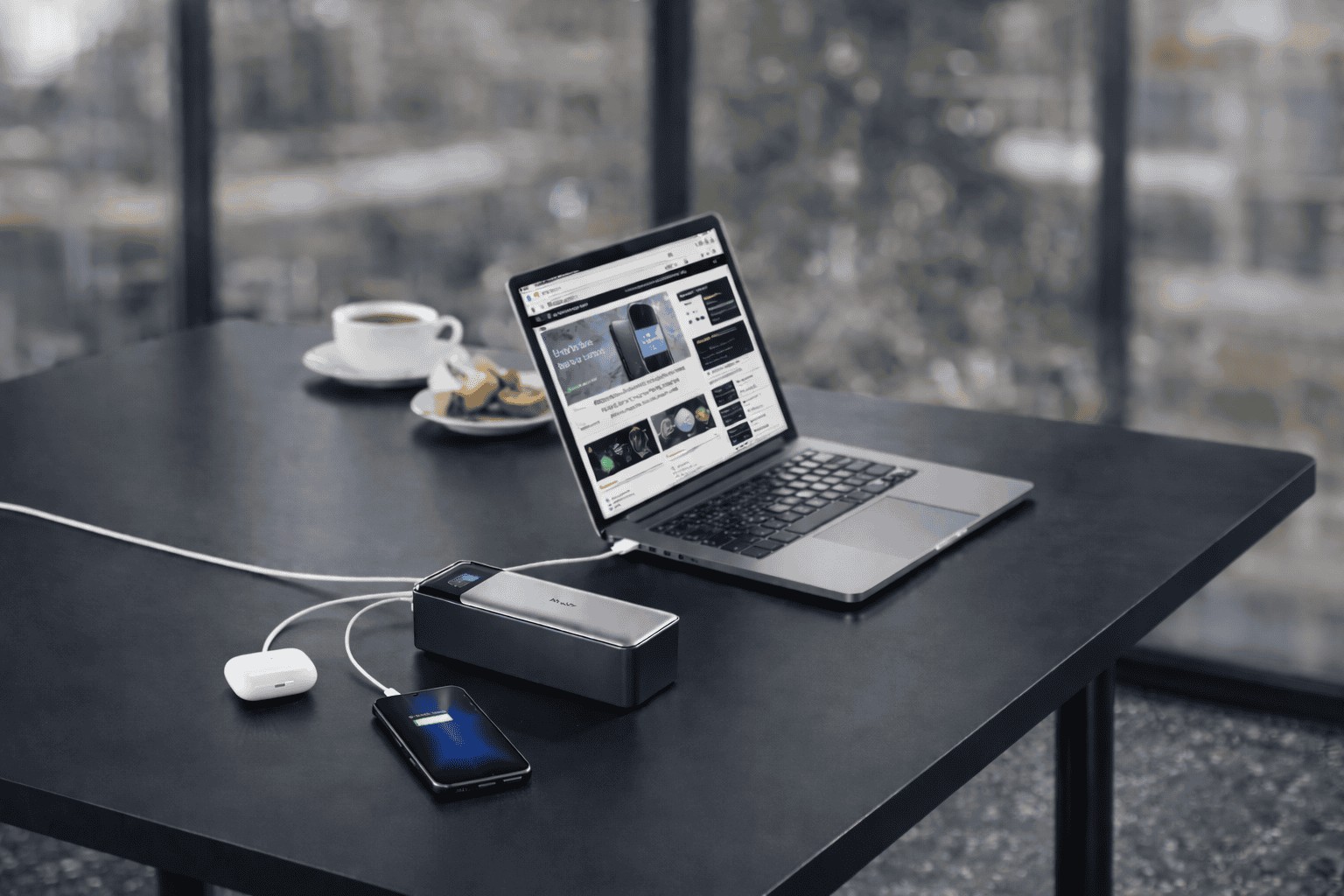
Anker 737 (89Wh)
The biggest bank that still flies everywhere: 24,000mAh, laptop-capable output, and the 89Wh rating printed right on the casing.
Read our review ›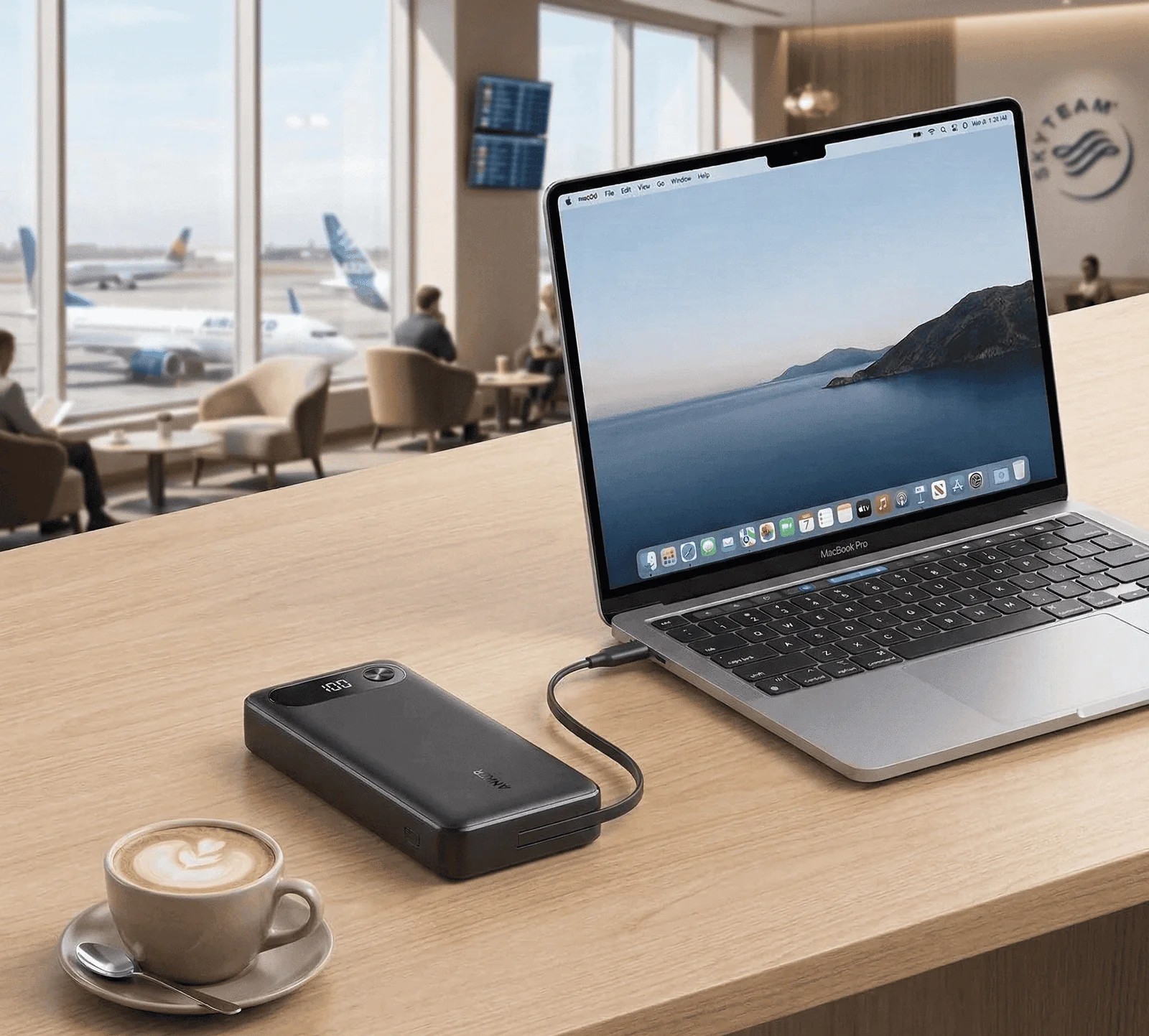
Anker 87W A1383 (74Wh)
20,000mAh with fast charging for a phone and laptop both, and enough headroom under the limit that no security officer looks twice.
Read our review ›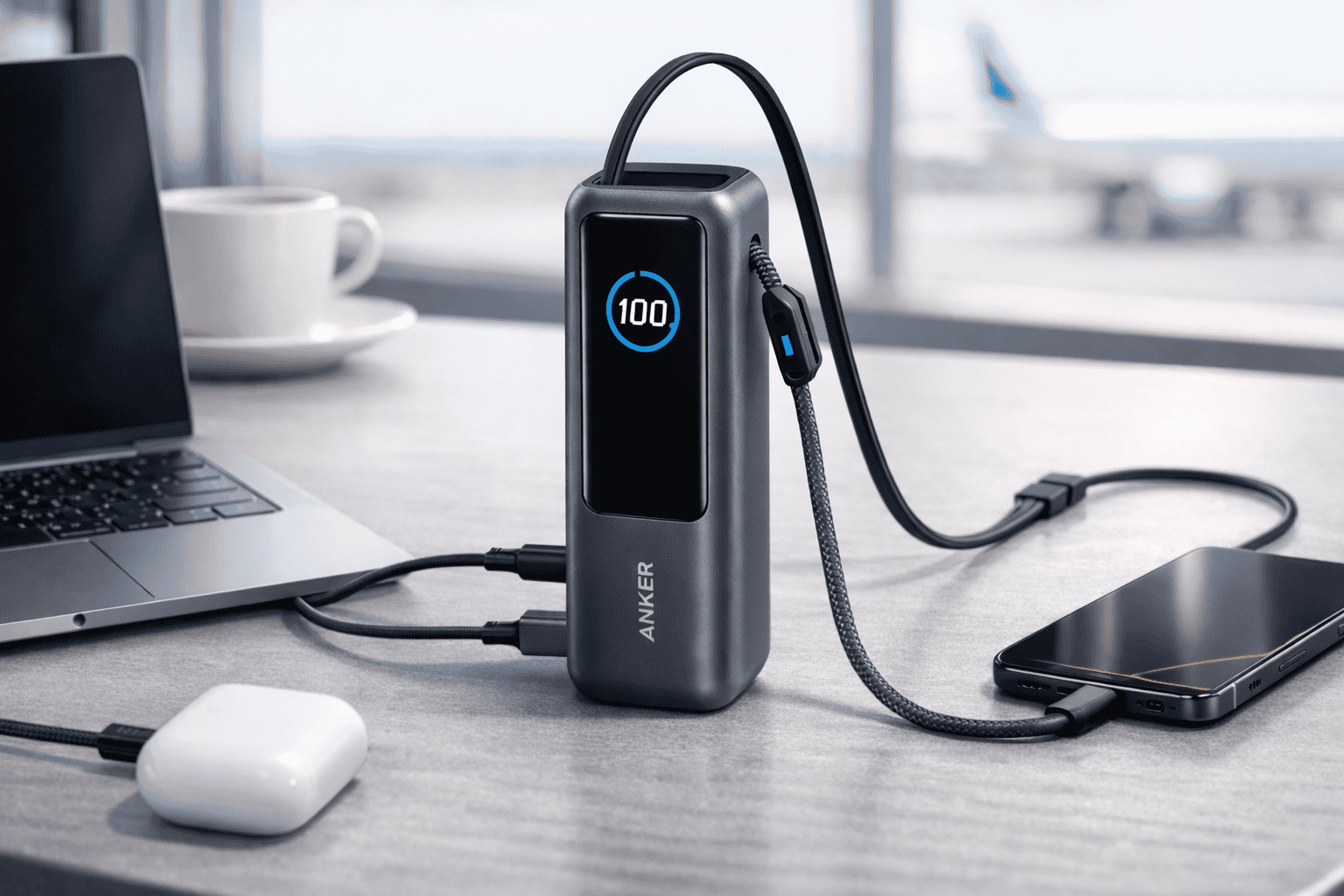
Anker A1695 (90Wh)
Built-in cables mean two fewer things to dig out of your bag at the tray, and 90Wh still clears the universal ceiling.
Read our review ›Keep reading
Where this page’s readers usually go next
Browse all our travel tech guides and reviews.
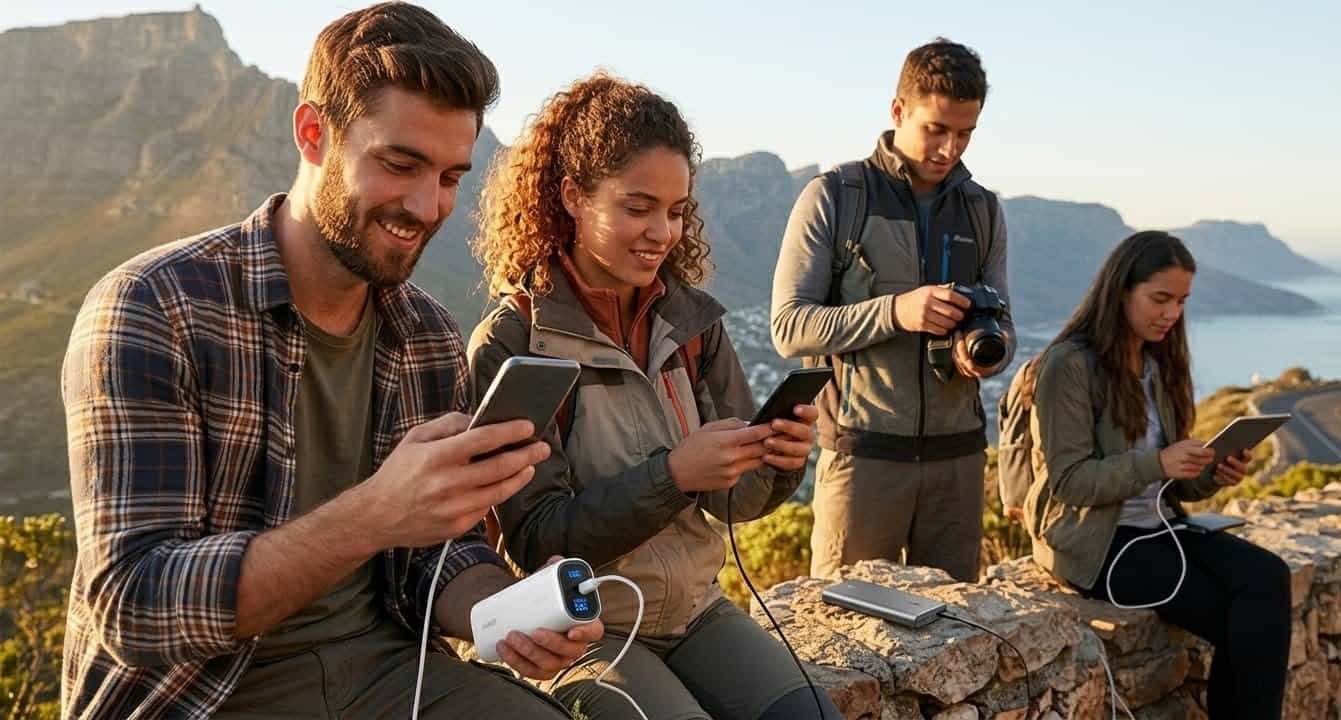
The best power banks you can buy
Every pick is under the 100Wh cabin limit, so anything here flies.
Read the roundup ›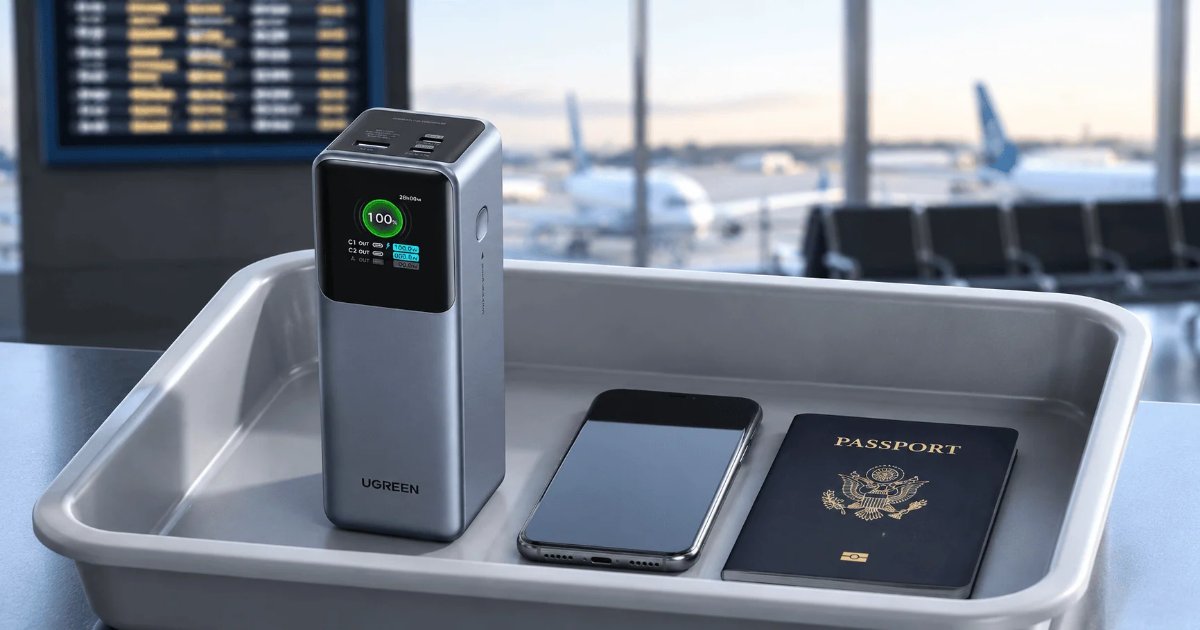
mAh to Wh calculator
Check any power bank against the airline limits in ten seconds.
Open the calculator ›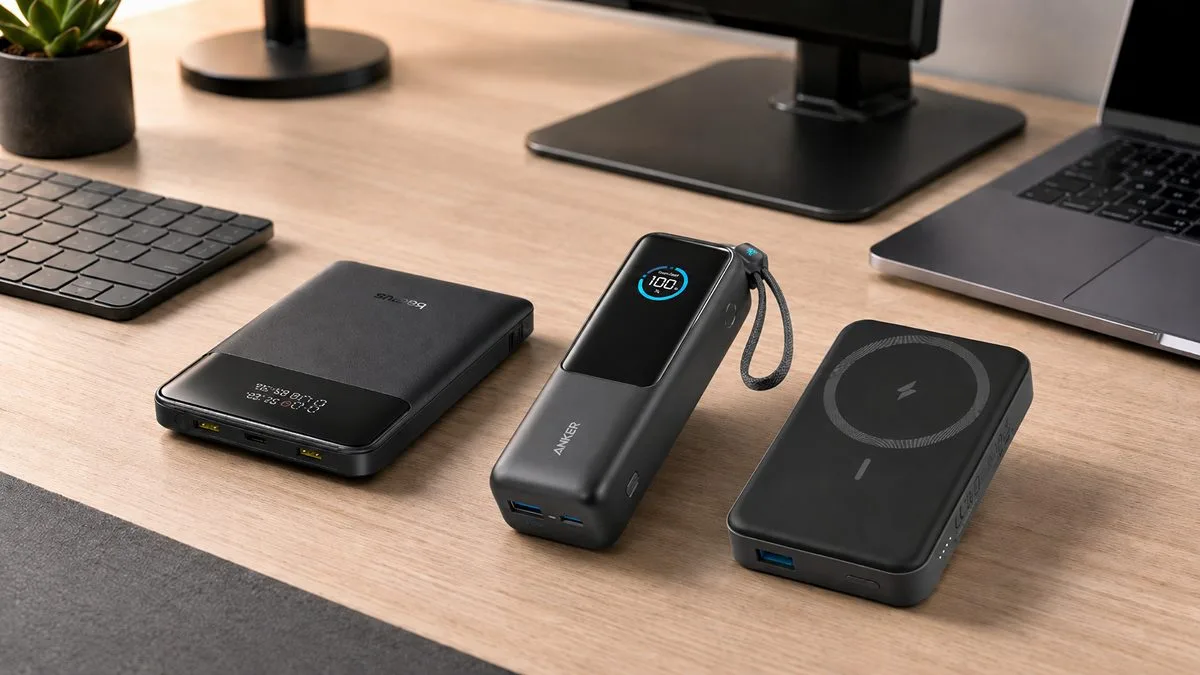
How to choose a power bank
Size, speed and the numbers to shop with, in five minutes.
Read the guide ›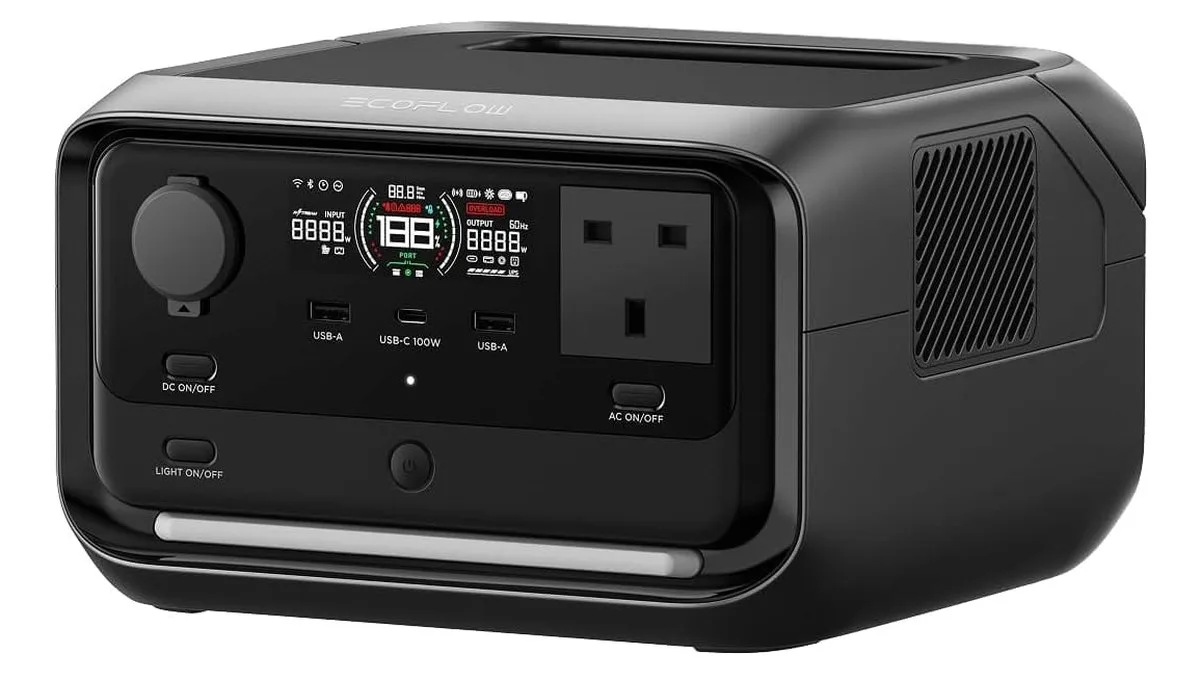
The one that cannot fly
A 286Wh power station is nearly three times the cabin limit, so it stays home. Here is what it does instead.
Read our review ›Facts on this page come from the CAA, IATA and each airline’s own policy pages, linked where each is first mentioned. See how we test and score.
Quick answers
Power banks on planes: your questions, answered
The questions readers ask most, with the direct answer first.
What does TSA approved mean on a power bank listing?
Nothing official. The TSA does not certify power banks, so the phrase is seller marketing. It normally signals the bank is under 100Wh, which is the capacity every airline accepts in hand luggage.
Can I take a 20,000mAh power bank on a plane?
Yes. 20,000mAh is 74Wh, well under the 100Wh limit every airline applies. Keep it in your hand luggage.
What happens if I leave a power bank in my checked bag?
Your bag is likely to be pulled and searched, and the power bank removed. On some routes the bag misses the flight while that happens.
Can I use a power bank during the flight?
On most airlines, no longer. Since the 2026 rule changes most ban it outright. The exceptions in our table: Ryanair and United allow it with conditions, Delta allows it at cruise, American asks you to keep it visible, and Qatar permits supervised use. Check your airline’s row.
How many power banks can I take on a plane?
Two on most airlines. Emirates, Wizz Air and Southwest now allow only one. Ryanair counts them inside its overall 20-spare-battery allowance.
My power bank has no Wh rating printed on it. Will it fly?
Maybe not. British Airways, KLM, Wizz Air, Jet2 and Emirates all say unmarked banks can be refused. You can work out the Wh from the mAh, but the printed rating is what the officer goes by, so replace a worn-blank bank before you travel.
What about connecting flights on different airlines?
The strictest airline on your ticket sets your rule, because your bank has to clear every leg. Fly British Airways into Hong Kong and connect onto Cathay Pacific, and Hong Kong law applies at the transfer even though BA carried it happily on leg one.
Is a 30,000mAh power bank allowed on a plane?
That is about 111Wh, so it is in approval territory at best. easyJet and Jet2 approve up to 160Wh automatically; BA, Ryanair, Wizz Air, Emirates and others refuse anything over 100Wh outright. Check your row before you buy the ticket, not after.
Can I put my power bank in the overhead locker?
Increasingly no. Most carriers in our table now require the seat pocket, under the seat in front, or on your person. Qantas is the only airline here that permits the locker at all, and only as a fallback.
Why did the rules change in 2026?
A run of in-flight battery incidents pushed ICAO and national regulators, including the CAA, to tighten the framework on 27 March 2026. Airlines then rewrote their own policies individually, which is why they now disagree with each other.
Are the UK and US rules different?
The CAA and FAA baselines match: 100Wh in the cabin without approval, up to 160Wh with, nothing in the hold. What bites is the airline layer on top, which is where the one-bank limits and usage bans live.
If security takes my power bank, do I get it back?
Usually not. Surrendered items at UK airports are rarely retrievable, and at Hong Kong security confiscated banks are not returned or stored at all.
What size power bank is best for flying?
The sweet spot is 20,000 to 27,000mAh: big enough for a long-haul trip, still under the 100Wh ceiling every airline accepts. Our best power banks roundup only includes flight-safe picks.
Latest from SmartGadgetKit
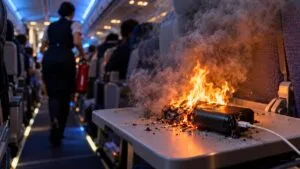 Lithium Ion Battery Fire Statistics 2026
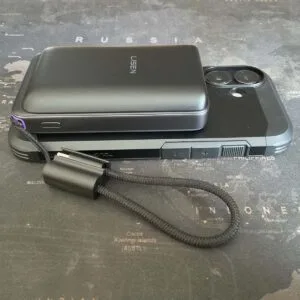 LISEN Power Bank Review: The Qi2.2 25W MagSafe 10000mAh, Measured
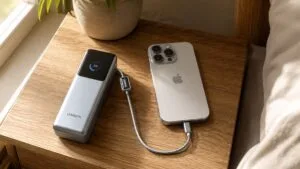 How Long Does a Power Bank Last? Charges, Years and Sizing
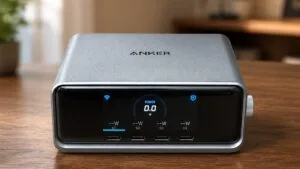 Anker Prime 250W Charger Review: 6-Port Desktop Hub
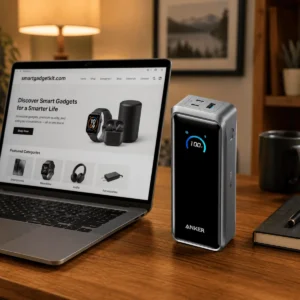 Anker Prime 300W Power Bank Review: Two Laptops, One Socket-Free Table
 Jackery Explorer 2000 v2 Review: The Lightest Way to Carry 2kWh?
 EcoFlow DELTA 3 Max Plus Review: What 2,048Wh Really Gives You
 BLUETTI AC70 Review: What 2,000W Power Lifting Is Worth
Behind this guide
SGK verdicts combine hands-on testing by our team with trusted independent lab data, and we tell you the trade-offs, not only the wins.