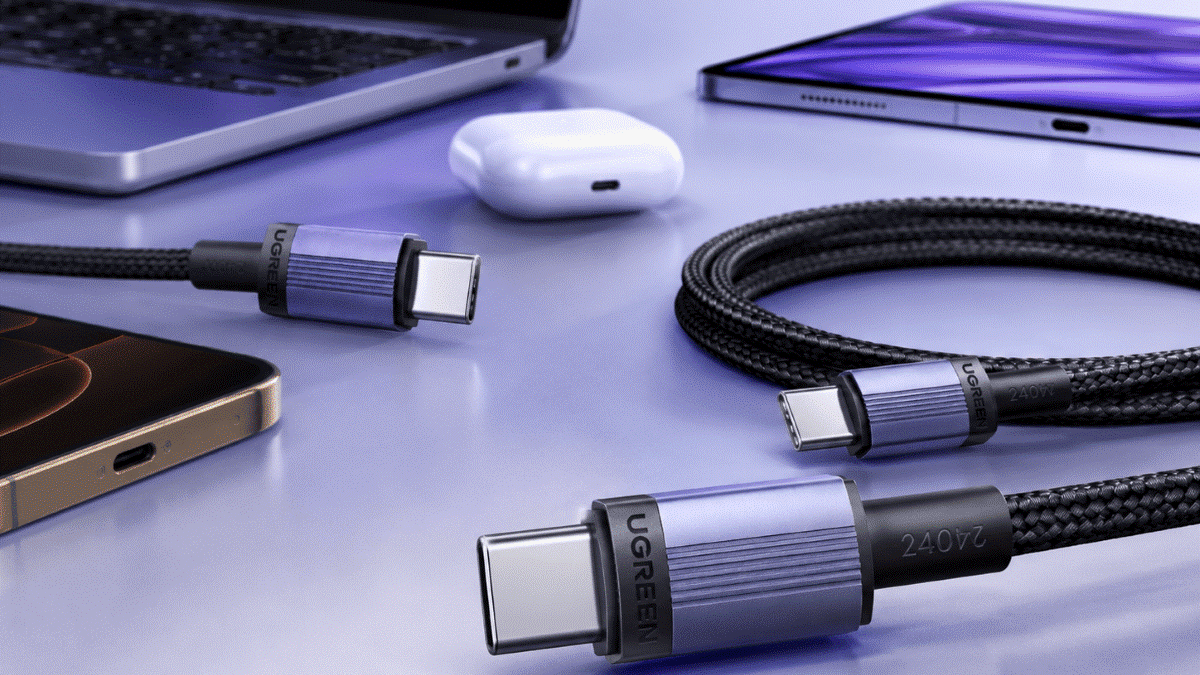
Best Power Banks 2026: Top 8 Picks by Use Case
Ranked by the job, not the hype: the right pick for phones, laptops, travel and magnetic charging, from 10,000mAh to 300W.

Updated 27 September 2026
Affiliate disclosure: if you buy through links on this page we may earn a commission, at no extra cost to you. As an Amazon Associate we earn from qualifying purchases.
Our top pick
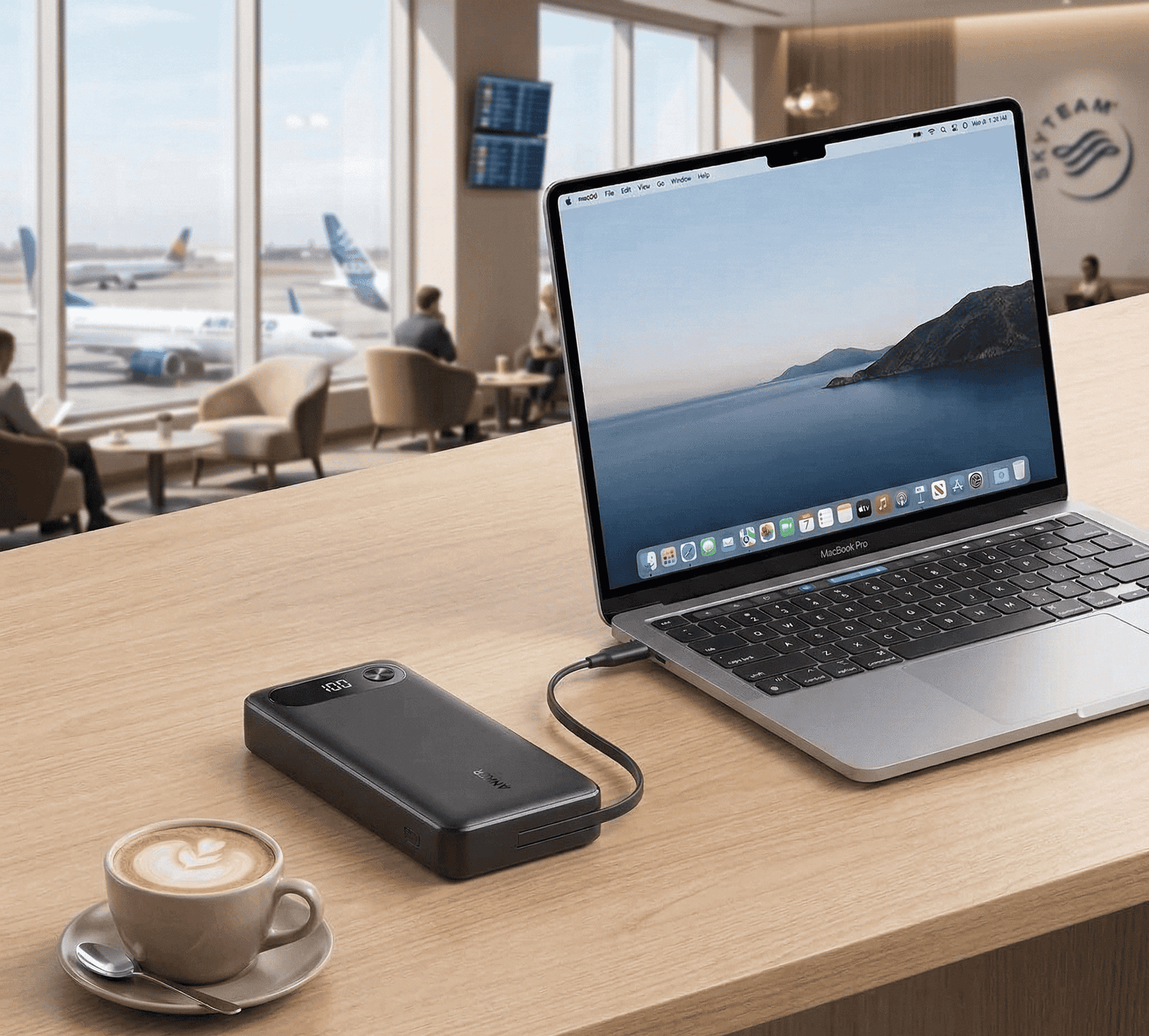
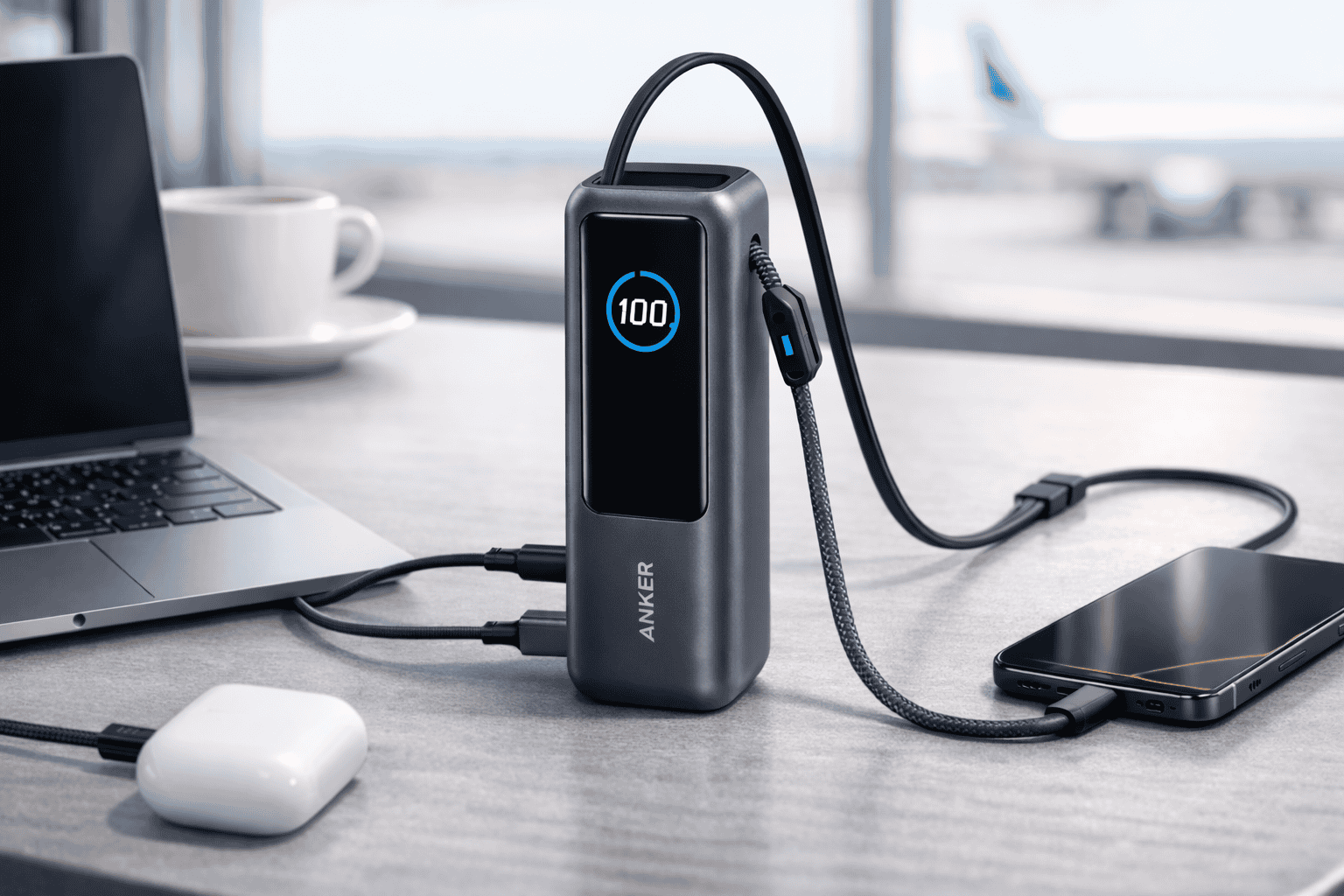
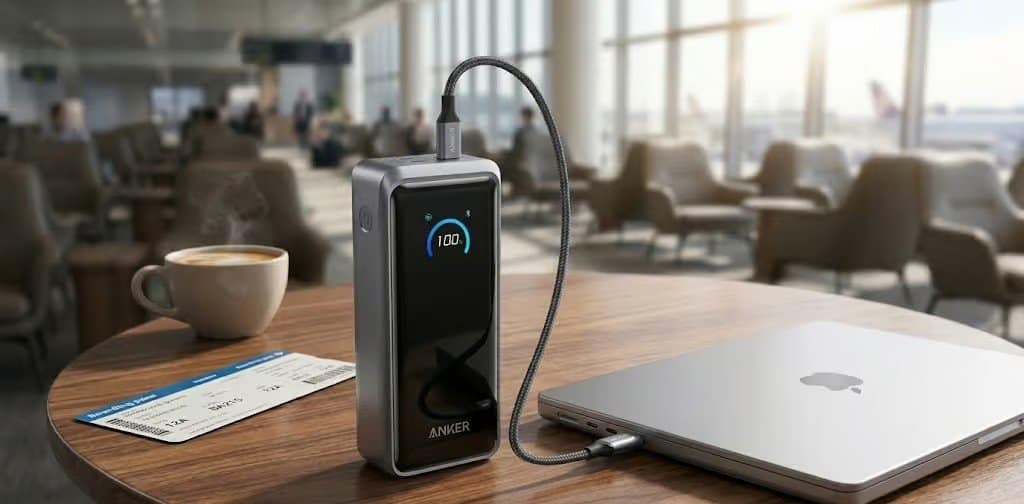
Anker 87W 20K (A1383)
Anker 87W 20K (A1383). 20,000mAh at 87W covers phones, tablets and a 13-inch laptop, with a built-in USB-C cable so there's one less thing to forget at the gate.
On a travel day through Heathrow Terminal 5, Alisdair ran a laptop and a phone from this bank at the same time and both kept charging at a useful rate. Three devices at once, all from a single 431g bank. Full charging numbers are in our Anker A1383 review.
Good
- Built-in cable plus two more ports
- Charges a 13-inch laptop at 65W
- Charges three devices at once
- Airline-safe at 72Wh
Watch
- Heavy for a pocket
- LED dots, not a percentage readout
What changed in this updateWe rechecked all eight picks against the latest independent test data. All eight stay; none added or removed.
- Anker 87W 20K (A1383), kept as best overall: 65W from one port plus a built-in cable, at 72Wh, is still the best balance of laptop power and carry weight here.
- INIU Pocket Rocket P50, kept: Reviewed charged a Galaxy S26 Ultra from 25% to 100% in 43 minutes from this 160g bank.
- NITEBEAM SSB10K, kept with a caveat: still the lightest travel pick at 175g, but independent lab data on this newer brand is thin, so it stays ranked below the big names.
- Anker A1695 25K 165W, kept: Macworld recorded 69W into a MacBook Air M3 and gave it an Editors' Choice award.
- CUKTECH 15 Ultra, kept: 140W from a single port, and Android Authority recorded it recharging to 70% in 20 minutes.
- INIU P41L 10K, kept: a built-in cable in a 179g body. Its 20W figure is INIU's own rating, because independent tests cover its 45W sibling.
- UGREEN MagFlow 10K 25W, kept: Macworld took an iPhone 16 from nearly empty to 50% in about 30 minutes on Qi2 25W.
- Anker Prime 26K 300W, kept: Macworld charged a 14-inch MacBook Pro to 100% with 33% still left in the bank.
How these picks were assessed: our verdicts combine hands-on testing by the SGK team with trusted independent lab data. Every hard figure on this page is credited to the source that recorded it, and each pick is scored on our power bank rubric. See how we test.
Start here
What are you buying it for?
Every pick below is a use-case winner. Tap the job that fits and the matching bank lights up in the shortlist.
The best power banks 2026, at a glance
The winner is above. These seven cover the other jobs, from pocket carry to premium laptop power.
 Best everyday carry
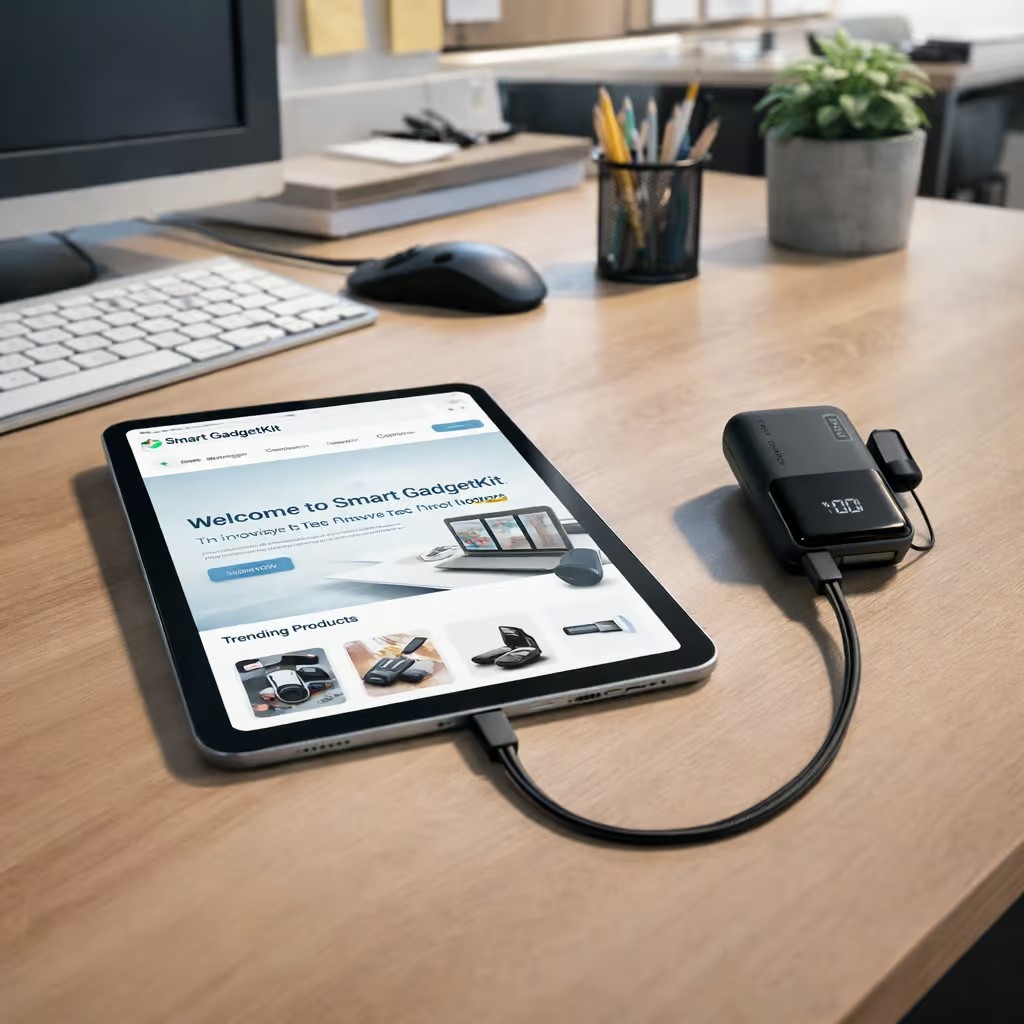
INIU Pocket Rocket P50
The smallest thing that still charges fast.
 Best travel weight
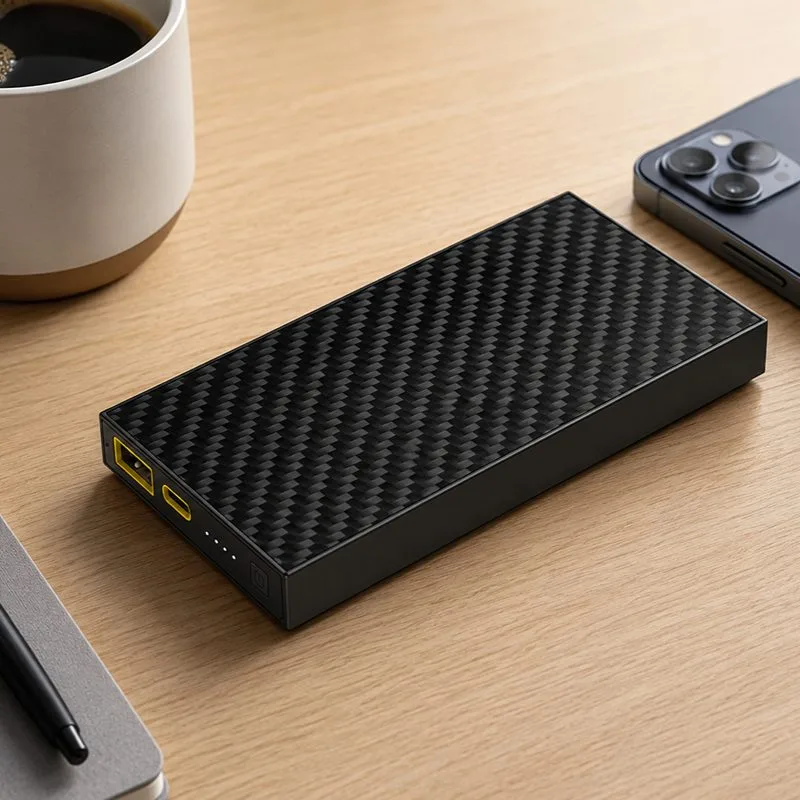
NITEBEAM SSB10K
The lightest, slimmest thing in your bag.
 Best for laptops
Anker A1695 25K 165W
Charging a 15 or 16-inch laptop off your bag.
 Best compact high output
CUKTECH 15 Ultra
High output without a laptop-sized brick.
 Best value
INIU P41L 10K
A cheap, reliable everyday top-up.
 Best magnetic
UGREEN MagFlow 10K 25W
Cable-free iPhone charging.
 Best premium
Anker Prime 26K 300W
Charging a laptop, tablet and phone at full speed together.
Compare
Side by side
The same eight picks as a straight spec comparison. Capacity is the tank, total output is the tap. Stars are editorial; per-product rating markup lives on our standalone reviews, never on a roundup.
Capacity figures are nominal; usable output is lower after conversion losses. Every pick here sits under the usual 100Wh airline carry-on limit.
Why we rank by the job, not the number
Most people buy a power bank on one number: capacity. Bigger mAh, better bank, job done. It's the wrong instinct. The number that decides whether a portable charger is any good for you is output wattage, and it barely gets a mention on the box. That's the lens behind our best power banks 2026 list: we ranked them by the job, not the hype.
The short version: a 20,000mAh bank that pushes 18W won't charge a MacBook. One that pushes 87W will.
Capacity tells you how much energy it holds. Wattage tells you how fast it comes back out, and whether it comes out fast enough for the thing you're charging.
For most people, 20,000mAh in the 80W-plus range is the sweet spot: enough to refill a phone several times or top up a laptop, without turning your bag into a brick.
Two facts worth knowing before you shop. Power banks lose roughly 10 to 20% of their rated capacity to heat and conversion on the way out, so a 20,000mAh bank never hands your phone a full 20,000mAh.
If you fly, most airlines follow the IATA guidance that caps power banks at 100Wh in carry-on, so it's the watt-hours you watch, not the mAh. Our mAh to Wh calculator does that conversion for you.
We picked eight, one for each job. Whether you want the smallest thing that fits a pocket, the lightest thing for a long-haul flight, or the one bank that keeps a laptop, a tablet and a phone alive at once, there's a use case below that matches yours. A note on terms: power bank, portable charger, portable phone charger, portable cell phone charger and battery charger for a phone all mean the same thing, and we use them interchangeably.
Our verdicts combine hands-on testing by the SGK team with trusted independent lab data. See how we test and score, or read who we are and how we are funded.
 Darleene asks
"Why can't I just buy the one with the biggest number?"
Alisdair's answer: because the big number is capacity, and capacity is only half the story.
Picture a water tank. The mAh is how big the tank is. The wattage is how wide the tap is. A huge tank with a narrow tap still fills your glass slowly.
For a phone, almost any of these will do the job. For a laptop, you need a wide tap, 65W or more, or you'll wait hours no matter how big the tank is.
So pick the tap size for the job first, then the tank.
Best overall: Anker 87W 20K (A1383)
One bank that handles a phone, a tablet and most laptops.
This is the one bank that does almost everything without a spare cable in the bag. 20,000mAh is good for two or three full phone charges or a solid laptop top-up, and 87W total (65W from a single port) is enough to charge a 13-inch laptop while you work, not merely slow the drain. There's a built-in USB-C cable too, so that's one less thing to forget at the gate.
On a travel day through Heathrow Terminal 5, Alisdair ran a laptop and a phone from this bank at the same time and both kept charging at a useful rate.
Airline: 72Wh, inside the usual 100Wh carry-on limit. Always check your airline.
Good
- Built-in cable plus two more ports
- Charges a 13-inch laptop at 65W
- Charges three devices at once
- Airline-safe at 72Wh
Watch
- Heavy for a pocket
- LED dots, not a percentage readout
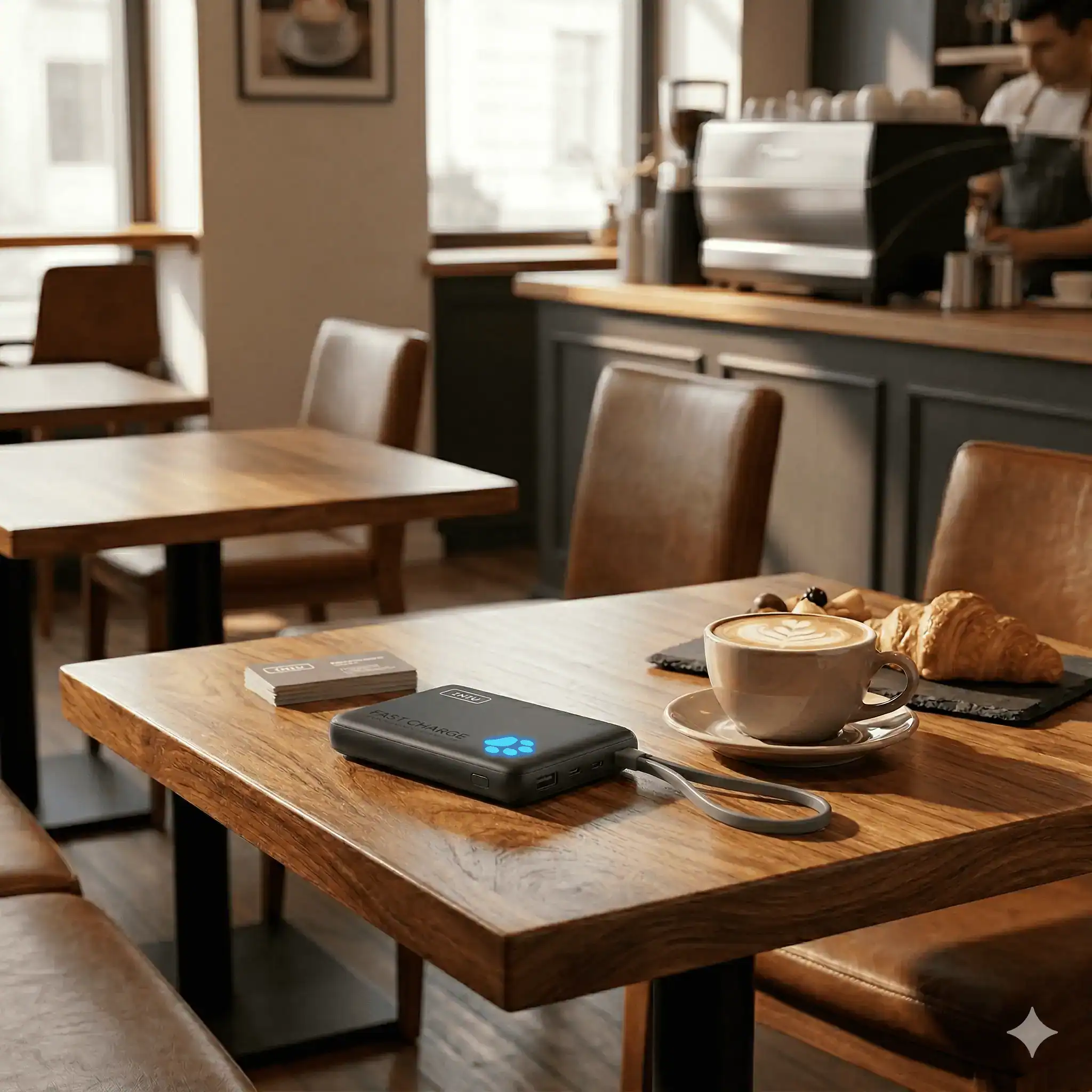
Best everyday carry: INIU Pocket Rocket P50
The smallest thing that still charges fast.
The world's smallest 10,000mAh 45W bank, and it feels it. At 160g it disappears into a pocket, and 45W fast-charges a phone from flat in about half the usual time. A little percentage display tells you exactly what's left, which the cheaper banks never bother with. It won't charge a laptop, and it isn't trying to.
Reviewed charged a Galaxy S26 Ultra from 25% to 100% in 43 minutes, with 54% still left in the bank.
Good
- Small enough for any pocket
- Percentage display
- Three-year warranty
Watch
- Phones and tablets only
- Needs an E-marked cable for full speed
Best travel weight: NITEBEAM SSB10K
The lightest, slimmest thing in your bag.
If every gram counts, this is the interesting one. At 175g in an 11mm carbon-fibre shell, it's barely there.
The headline is the chemistry: solid-state cells instead of the usual lithium pouch. It's a newer name with a thinner track record than the big brands, and we say so plainly, but for an ultralight, phone-focused travel top-up it earns its spot.
Treat it as a phone bank, not a laptop one.
Spec note: the nail, crush and drop safety tests are NITEBEAM's own, and independent lab reviews of this newer brand are still thin. That is priced into where we rank it.
Good
- 175g and 11mm thin, barely there
- Solid-state cells, safer chemistry
Watch
- Newer brand with fewer reviews
- Best kept to phones and tablets
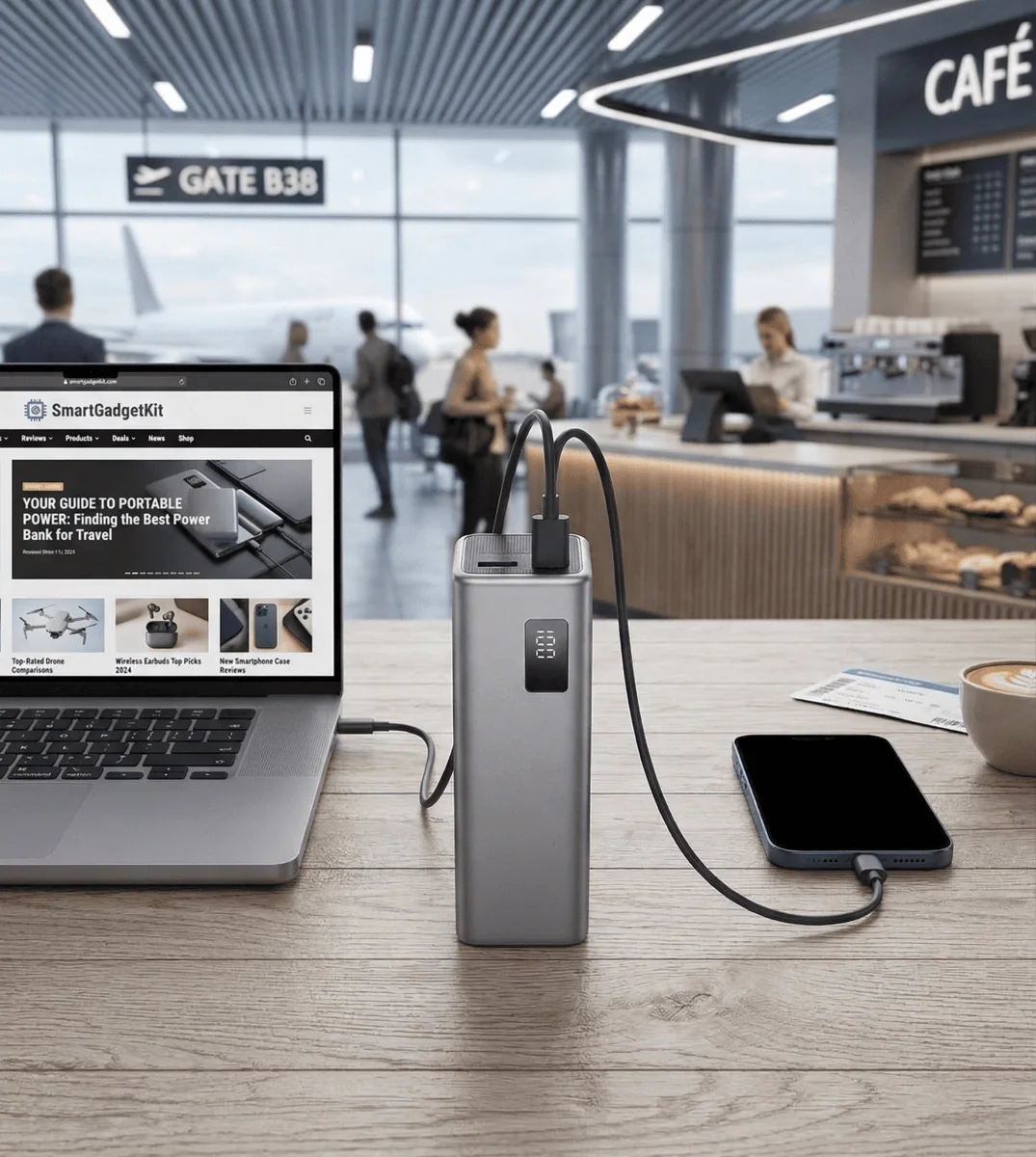
Best for laptops: Anker A1695 25K 165W
Charging a 15 or 16-inch laptop off your bag.
When the job is a laptop, this is the pick. 165W total, with up to 100W from a single port, is enough for a 15 or 16-inch machine, and there are two built-in cables, one fixed and one retractable, so you're never hunting for a lead on the tray table. 25,000mAh sits under the airline line at 90Wh. It's heavy at 595g, but that's the price of running a laptop off your bag.
Macworld measured 69W to a MacBook Air M3 and an iPhone 15 at 53% in 30 minutes, and gave it an Editors' Choice award.
Airline: 90Wh, inside the usual 100Wh carry-on limit. Always check your airline.
Good
- Real laptop wattage
- Two built-in cables
- Refills itself fast
Watch
- 595g is a lot to carry
- 90Wh is near the flight limit
Best compact high output: CUKTECH 15 Ultra
High output without a laptop-sized brick.
Serious power from a 20,000mAh body. Up to 140W from a single port, 165W total, with a small TFT screen that shows live wattage so you can see exactly what it's delivering. The PD 3.1 cable in the box matters here, because you need a rated cable to hit those numbers. At 590g it's heavier than a typical 20K, which is the trade you make for the output.
Android Authority recorded it recharging at over 150W in Beast Mode, back to 70% in 20 minutes.
Good
- 140W from one port
- Live wattage display
- Capable cable included
Watch
- Heavier than most 20K banks
- No built-in cable
Best value: INIU P41L 10K
A cheap, reliable everyday top-up.
The easiest recommendation on the list. You get 20W charging and a built-in USB-C cable in a slim 10,000mAh body, at a price that undercuts the big names. It won't fast-charge like the 45W banks above it, but for keeping a phone topped up through the day it's all most people need, and the built-in cable means there's nothing extra to carry.
Spec note: the 20W output figure is INIU's published rating for this exact model. The independent bench tests you find online cover its 45W sibling, not this one.
Good
- Cheap to buy
- Built-in USB-C cable
Watch
- 20W is slower than the 45W banks here
- LED dots, not a percentage display
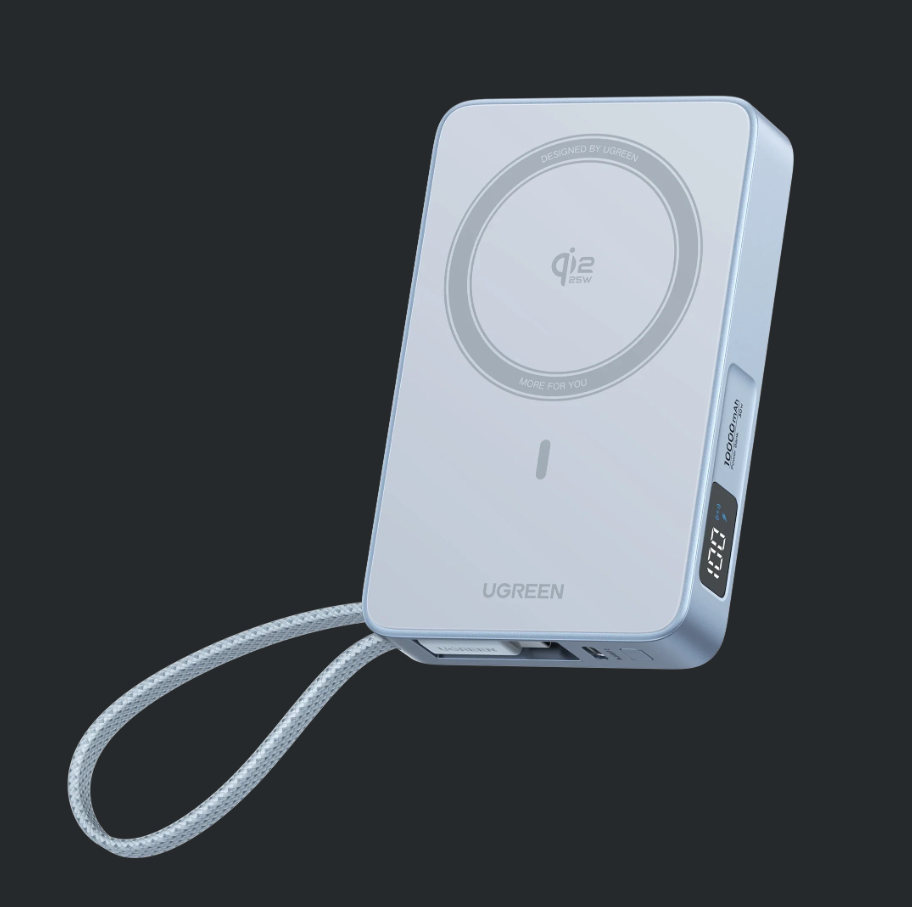
Best magnetic: UGREEN MagFlow 10K 25W
Cable-free iPhone charging.
For iPhone owners who hate cables, this is the tidiest option going. It snaps to the back of an iPhone 12 or newer with a strong 17-magnet hold and charges wirelessly at Qi2 25W, the first magnetic bank to reach that speed (15W on iPhone 12 to 15).
There's a built-in USB-C cable and 30W wired output for when you want it faster, plus a digital display so you're not guessing.
At 254g it isn't the lightest, but nothing else charges an iPhone this neatly. The direct UGREEN store often beats the Amazon price.
Macworld measured an iPhone 16 going from nearly empty to 50% in about 30 minutes on the wireless pad.
Good
- Fastest Qi2 magnetic speed
- Strong magnet hold
- Built-in cable and display
Watch
- Heavier than a bare 10K
- Wireless is slower than wired
- Android gains nothing from the magnets
Best premium: Anker Prime 26K 300W
Charging a laptop, tablet and phone at full speed together.
If you need to charge a laptop, a tablet and a phone at the same time without any of them slowing down, this is it. 300W total and 140W per USB-C port is the most output on this list, with an app-controlled display for the people who like the detail. At 26,250mAh it sits at 99.75Wh, so it's flight-legal with nothing to spare. It's big, heavy and built to match.
Macworld charged a 14-inch MacBook Pro to 100% with 33% still left in the bank, and an iPhone 16 Pro to 50% in under 25 minutes.
Airline: 99.75Wh, inside the usual 100Wh carry-on limit. Always check your airline.
Good
- The most output here
- Runs several devices full-speed
- Premium build
Watch
- Heavy, made for a bag not a pocket
- Right at the flight limit
The bottom line
If you want one bank that does almost everything, get the Anker 87W 20K. It's our Best Overall because 20,000mAh at 87W covers phones, tablets and a 13-inch laptop without a second cable in the bag.
From there, pick by the job. Smallest pocket carry is the INIU Pocket Rocket P50. Lightest for travel is the NITEBEAM SSB10K. Real laptop power is the Anker A1695. Cable-free iPhone charging is the UGREEN MagFlow. Best money for most people is the INIU P41L. And if you want the most output there is, it's the Anker Prime 26K 300W.
Every pick here sits within the usual 100Wh airline carry-on limit, though you should always check your own airline before you fly.
How to choose a power bank
The numbers that matter, in plain English.
Start with the job, not the number. Write down what you charge in a normal day. A phone and earbuds? 10,000mAh covers a full day. Add a tablet or a laptop and 20,000mAh is the right target. Want the full method? Our guide to choosing a power bank walks through the four numbers that decide it: capacity, speed, power-to-weight and the 100Wh airline ceiling.
Mind the efficiency loss. Every bank loses 10 to 20% to heat and conversion, so a 10,000mAh bank gives your phone roughly two full charges, not the three the maths suggests.
Match the wattage to the device. A phone is happy at 20 to 45W. A 13-inch laptop wants 30 to 65W to charge while you use it. A 15 or 16-inch machine wants 65 to 100W.
Built-in cables are convenient until they break. They save you fumbling for a lead, but a damaged built-in cable can't be swapped out. A bank with a built-in cable and a spare port is the safe middle ground.
Magnetic is convenient, not fast. Qi2 at 25W is great for topping up while you scroll. When you need speed, plug in.
How many charges you get
Rough full charges after conversion losses, for guidance rather than exact figures. For your exact phone, see how many mAh it takes to charge an iPhone.
| Bank size | iPhone 16 (~13Wh) | Galaxy S24 Ultra (~19Wh) | iPad Pro 11 (~31Wh) |
|---|---|---|---|
| 10,000mAh | About 2 | About 1.5 | Roughly 1 |
| 20,000mAh | About 4 | About 3 | About 1.8 |
| 25,000 to 26,000mAh | About 5 | About 3.5 | About 2, plus a laptop top-up |
Frequently asked questions
Straight answers to what buyers search for.
What are the best power banks in 2026 for travel?
What size power bank do I need?
Can a power bank charge a laptop?
Are power banks allowed on planes?
Is magnetic charging worth it?
Are bigger power banks always better?
What should I watch out for with cheap power banks?
Is a power bank the same as a portable phone charger?
What is a good battery charger for a phone?
Can a power bank charge a Nintendo Switch 2?
What is a solid-state power bank?
Do wireless power banks charge as fast as cables?
Keep reading
The guides that go deeper on each job. For everything else, browse all our power bank guides and reviews.
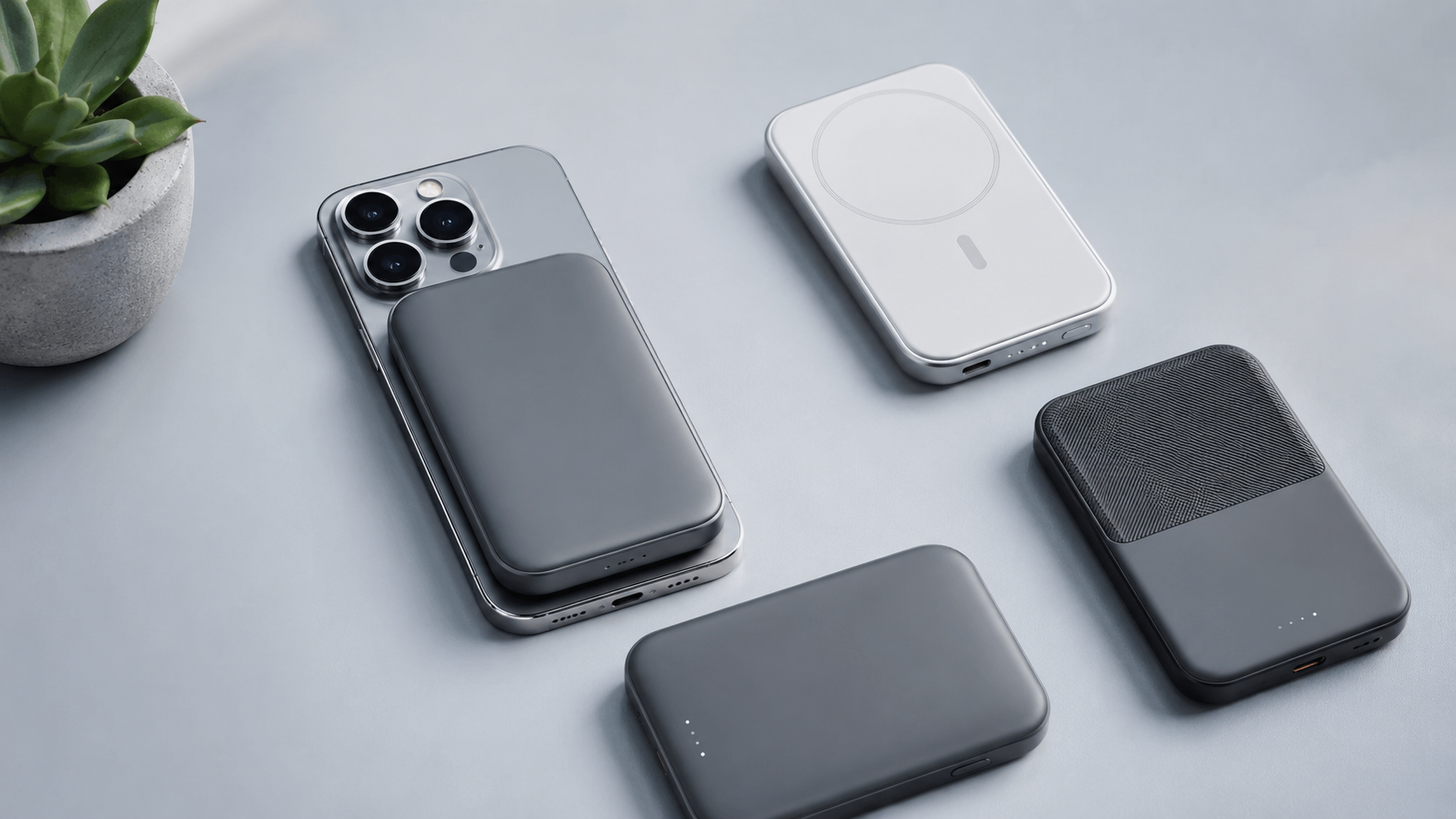
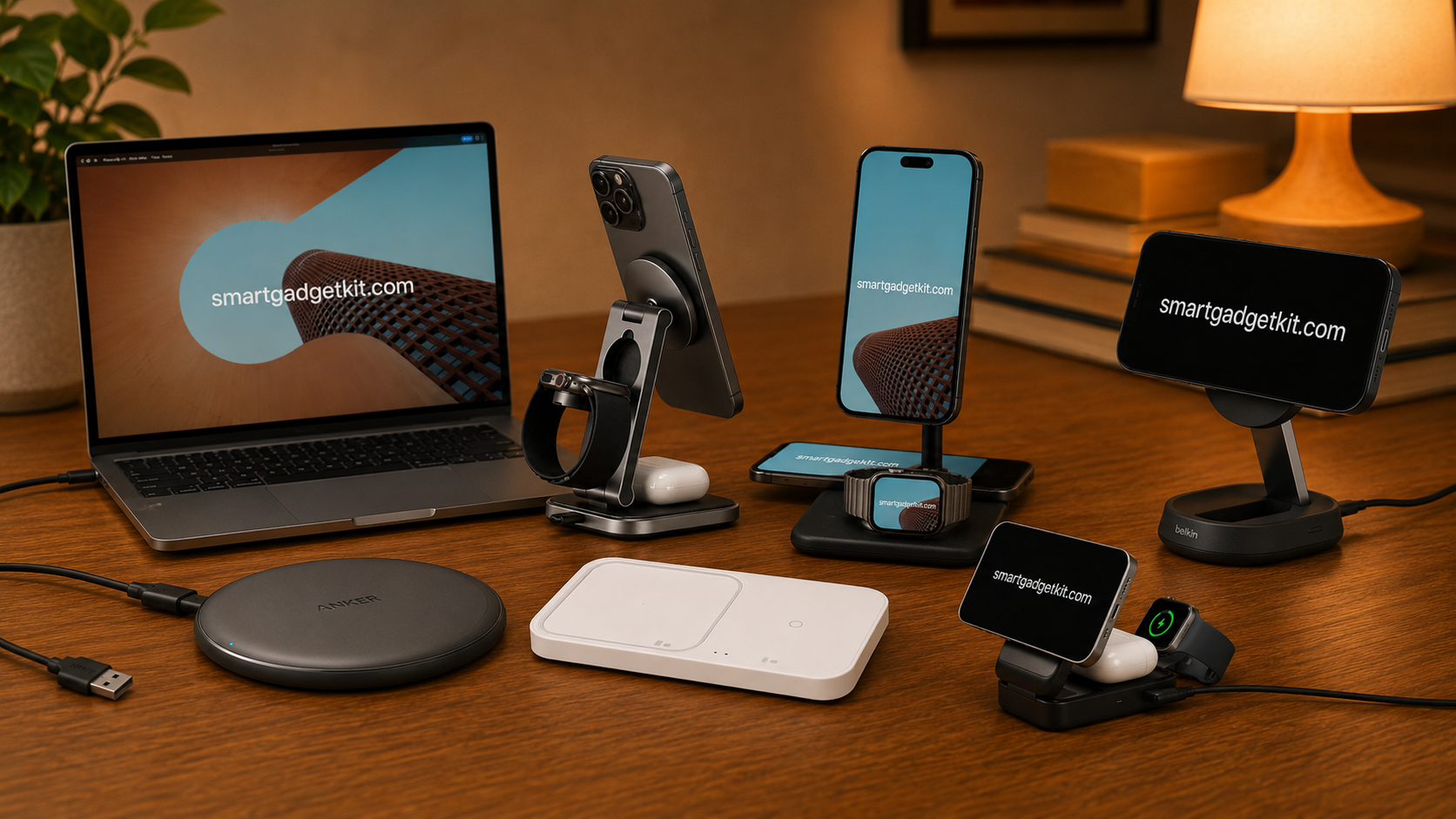
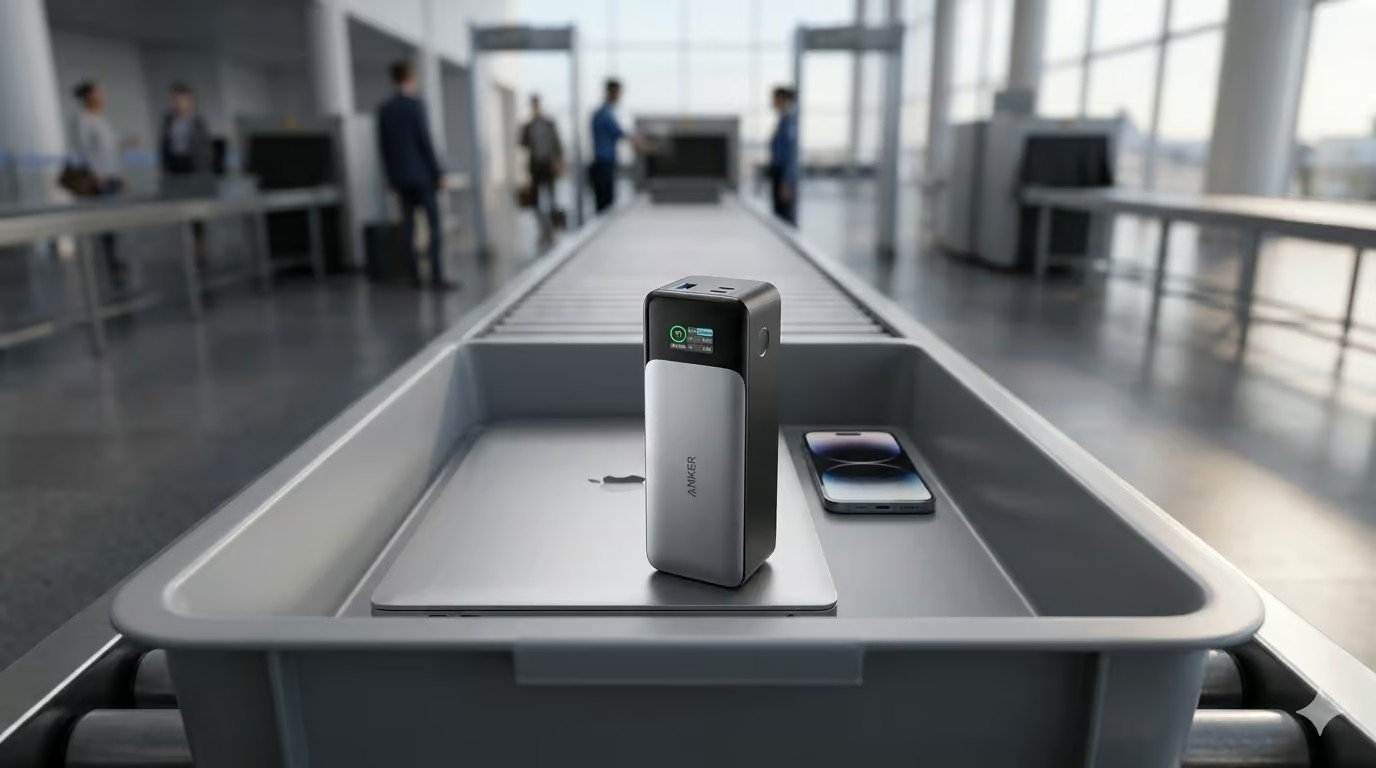
How to choose a power bank
The four numbers that decide it: capacity, speed, weight and the 100Wh limit.
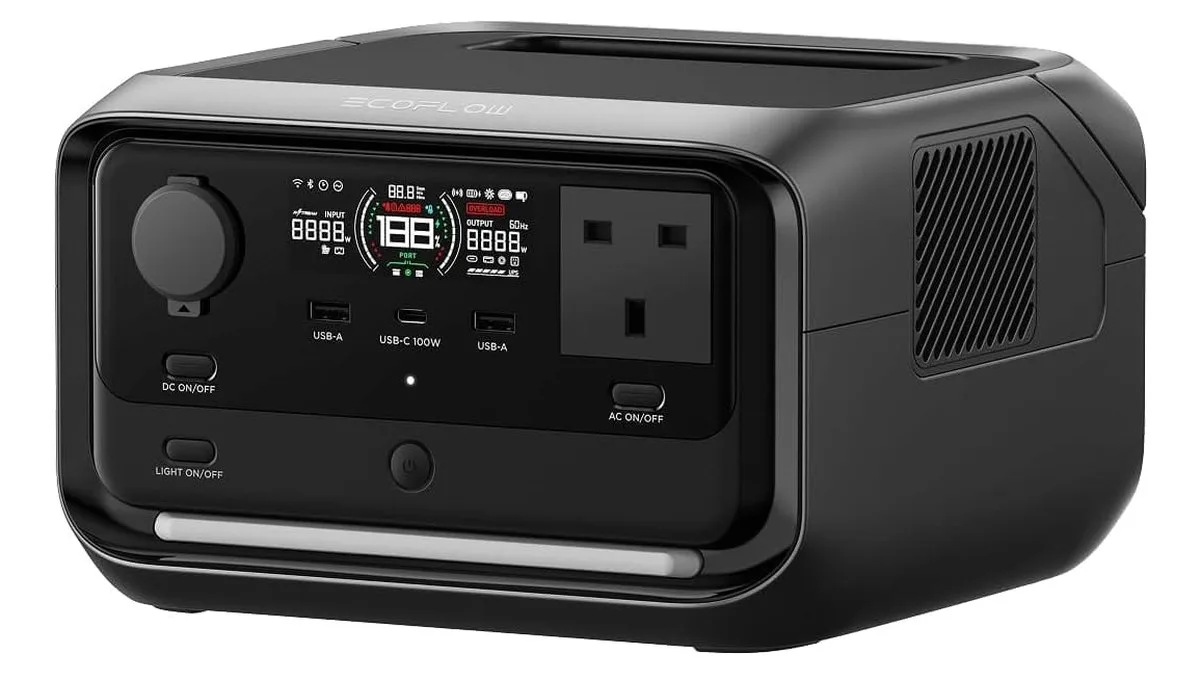
When a power bank is not enough
Mains sockets and backup duty, in the smallest power station we rate.
Latest from SmartGadgetKit
 Lithium Ion Battery Fire Statistics 2026
 LISEN Power Bank Review: The Qi2.2 25W MagSafe 10000mAh, Measured
 How Long Does a Power Bank Last? Charges, Years and Sizing
 Anker Prime 250W Charger Review: 6-Port Desktop Hub
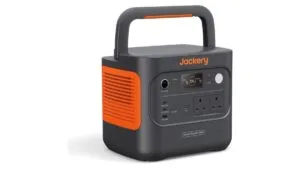 Jackery Explorer 2000 v2 Review: The Lightest Way to Carry 2kWh?
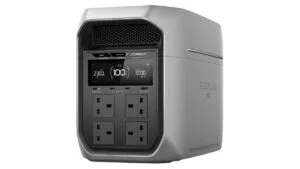 EcoFlow DELTA 3 Max Plus Review: What 2,048Wh Really Gives You
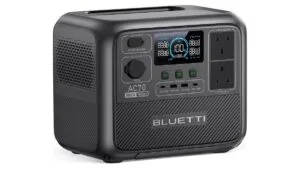 BLUETTI AC70 Review: What 2,000W Power Lifting Is Worth
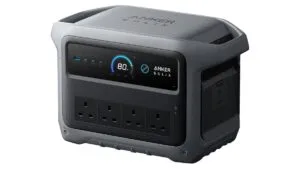 Anker SOLIX C1000 Gen 2 Review: The 49 Minute Recharge Is A Setting, Not The Default