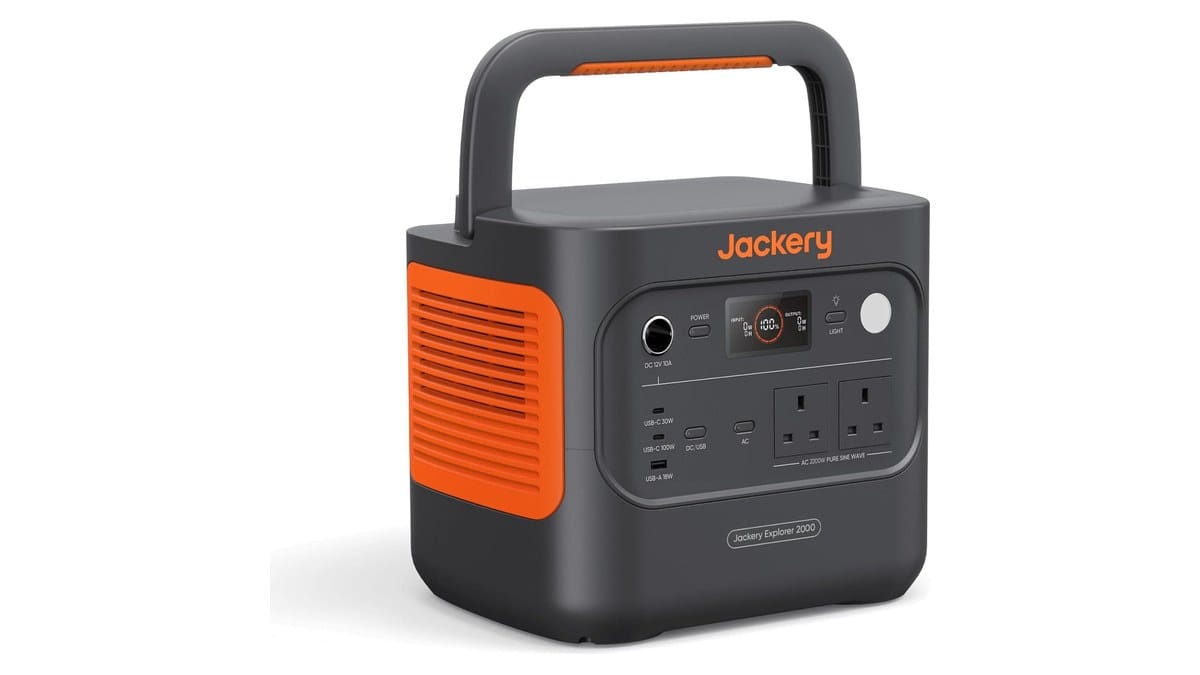
Individual Review · Power stations · Explorer 2000 v2
Jackery Explorer 2000 v2 Review: The Lightest Way to Carry 2kWh?
Jackery says this is the lightest 2kWh power station you can buy. We checked what that weight costs you in output and expansion.

Scored against independent measured testing by The Solar Lab and OutdoorGearLab
SmartGadgetKit is reader-supported. We may earn a commission if you buy through links on this page, at no extra cost to you. We only recommend gear we would carry ourselves.
Expert Score
The lightest genuine 2kWh unit on the market, and the LiFePO4 cells and fast recharge back it up. The catch is fixed: 2,042Wh is the ceiling, because unlike its 2000 Plus sibling this one cannot take extra batteries.
Pros
- The lightest way to carry 2,042Wh, about 17.6 kg as measured by OutdoorGearLab
- The 2,200W inverter held its rated output reliably with no overheating, per The Solar Lab
- LiFePO4 cells rated 4,000 cycles to 70 percent, a genuine decade of regular use
- Fast to refill, about 1.7 hours from the wall and 1.33 hours in Emergency Super Charge
Cons
- Not expandable, so 2,042Wh is the hard ceiling; the 2000 Plus is the model that grows
- The 4,400W surge is a nameplate figure; The Solar Lab measured a real peak nearer 3,100W
Key takeaways
Six numbers that decide whether this is your power station
Quick specs
The paper numbers for the Jackery Explorer 2000 v2
| Capacity | 2,042Wh, LiFePO4 |
| AC output | 2,200W continuous, 4,400W surge (nameplate) |
| Weight | About 17.6 kg |
| AC sockets | 2 at 230V (UK and EU); 3 at 120V (US) |
| Recharge | About 1.7 hours from the wall, 400W max solar |
| Warranty | 5 years (3 plus 2 with registration) |
Specs confirmed against the Jackery and Amazon listings for the Explorer 2000 v2. Performance figures come from independent testing by The Solar Lab and OutdoorGearLab. See how we test and score.
First impressions
It arrives looking less like a battery and more like a small, squared-off carry case, with a folding handle across the top rather than the fixed bar most rivals use.
The first thing you notice is picking it up. OutdoorGearLab describe it as compact and easy to move for its class, and that near-cube shape is why: it stores in a car boot or a locker without wasting space.
A colour display on the front shows what is going in and what is coming out. It dims quickly by default to save power, which OutdoorGearLab flag as a mild annoyance rather than a fault.
In the box you get the unit, a mains charging lead and a car charging lead. Solar cables and panels are sold separately, so plan for that if solar is part of why you are buying.
Design and build
The lightest 2kWh frame, and the port layout that changes by region
It measures about 38.4 by 26.7 by 30.7 cm and weighs around 17.6 kg. For 2,042Wh of LiFePO4, that is light for the capacity: Jackery claims roughly 40 percent lighter and a third smaller than a typical 2kWh unit, and the measured weight backs the direction of that claim.
Inside are lithium iron phosphate cells, the safer and longer-lived chemistry, rated at 4,000 cycles to 70 percent capacity. That is the number that turns a power station from a few-years gadget into a decade-long piece of kit.
The port layout is region-specific, and this trips up a lot of listings. A UK or EU unit carries 2 mains sockets at 230V; a US unit carries 3 at 120V. Across every region you also get two USB-C ports, one 100W and one 30W, a single 18W USB-A, and a 12V car socket.
Jackery specifies the usual battery-management protections for over-charge, over-current and temperature, and rates charging-mode noise at 30dB or under.
 Darleene asks
“Everyone keeps saying LiFePO4 like it means something. Why do I care what the battery is made of?”
Alisdair’s answer: Because it decides how long the thing lasts before it starts holding less charge.
LiFePO4 is a battery chemistry that copes with being charged and drained far more times than the older type in phones and laptops. Jackery rates this one at 4,000 cycles, so you could charge it fully every week for years and still have most of its capacity.
In practice that means you are buying something you keep, not something you replace. For a unit that mostly sits waiting for a power cut, it also means it ages gracefully rather than quietly dying in the cupboard.
When would you not care? If you only ever wanted a battery for one big trip or one event, a cheaper chemistry would do. For anything you plan to own for years, this is the part worth paying for.
Independent testing
What the Jackery Explorer 2000 v2 delivers under test
Two independent reviewers put meters on this power station. Each result below is theirs, named in full and never linked.
Ran a wide range of loads and reported that the inverter delivered its rating reliably, with no struggle and no overheating even at the limit.
Measured roughly 90 percent efficiency, which they called outstanding for a mid-range unit, and a standby draw of 17 watts.
Measured about 1,740Wh reaching devices, roughly 84 percent of the 2,042Wh nameplate, plus a weight of 38.9 lb (17.6 kg).
The headline is 2,200W of continuous output, and it holds. The Solar Lab ran a wide range of loads and reported that the inverter delivered its rating reliably, with no struggle and no overheating even at the limit.
That matters because a rating on the box is not the same as a rating it can hold. Here the two match, which is more than can be said for the surge figure.
Jackery quotes a 4,400W surge for starting motors and compressors. The Solar Lab measured a real-world peak closer to 3,100W, and found it struggled with sustained loads above the 2,200W rating. So treat 4,400W as a brief headroom number, not a second power level you can lean on.
On capacity, OutdoorGearLab measured about 1,740Wh reaching devices, roughly 84 percent of the 2,042Wh nameplate. That is normal conversion loss for the class, and worth knowing before you size it against your own kit.
The Solar Lab also measured about 90 percent efficiency, which they called outstanding for a mid-range unit, and a standby draw of 17 watts, giving roughly five days of idling from a full charge before it empties itself.
No outlet we found put a meter on the fan noise, so we are not going to quote a figure for it; the 30dB charging figure is Jackery’s own.
The one real caveat is the ceiling. At 2,042Wh with no way to add batteries, this is a day-and-a-night unit, not a whole-week-off-grid one.
On balance, it is a 2kWh station that delivers its rated output and its rated lifespan, and asks you to accept a fixed capacity in return for being the lightest of its size.
Darleene’s version: It does exactly what it says on the power, the big surge number is only for a split second, and you cannot bolt on more battery later.
The single figure that decides it for anyone who has to lift it. OutdoorGearLab measured the Explorer 2000 v2 at 38.9 lb, making it the lightest way to carry a genuine 2kWh of LiFePO4 capacity.
If the lightest 2kWh power station is the job you are buying for, the evidence above is the whole argument.
amazonCheck latest priceRecharging
Refilling it, and the app that controls the speed
Refilling is one of this unit’s strong points. Jackery quotes about 1.7 hours from a wall outlet, and OutdoorGearLab measured a charge rate around 817Wh an hour and a full charge in roughly 2.5 hours.
There is a faster Emergency Super Charge mode, about 1.33 hours to full, but The Solar Lab note the full input is gated behind that toggle, and it defaults to a gentler rate to protect the cells over the long run.
Solar tops out at 400W, which Jackery says fills it in about 5.5 hours in good conditions and OutdoorGearLab measured at five to six. The app, over Wi-Fi and Bluetooth, lets you monitor charge and switch that Emergency mode on without walking over to the unit.
Fit for the job
Where the weight actually wins
At about 17.6 kg this is a two-hand lift, but it is the lightest two-hand lift in the 2kWh class, and that changes where it fits into a day. It goes from car boot to campsite pitch, or from cupboard to kitchen worktop during a power cut, without needing a trolley.
That weight is not a compromise so much as the whole point: you are paying for portability, and getting it. A heavier rival with the same capacity stays where you first put it down.
The near-cube footprint and folding handle are what make it liveable. It sits flat in a locker, tucks into a campervan, and stands on a worktop without dominating it.
The number that matters for this context is the 17 watt standby draw The Solar Lab measured: leave it in a cupboard ready for the next outage and it will still be there, near full, five days later.
Taking it on a plane
At 2,042Wh, this is about twenty times the 100Wh limit airlines set for spare batteries in hand luggage. It is nowhere near flight-legal.
To be plain about it: a power station this size cannot fly at all, in the cabin or in the hold, and there is no approval route your airline can offer. Do not plan a trip around taking it through an airport. Always confirm with your airline before you fly.
That does not mean it stays home. This is travel gear, it travels by road: camping, a campervan, a festival, a weekend away, and power at the house when the mains is off.
If your trip involves a plane, the thing that flies is a power bank at or under 100Wh. That is a different class of product with its own job rather than a smaller version of this one. See our best laptop power banks for ones that come with you.
Full rules are in our can you take a power bank on a plane? guide. Check any capacity in seconds with our mAh to Wh calculator.
Specifications
Every figure, with its source attached
Manufacturer figures are specifications or claims. Measured figures belong to the independent outlet named beside them. Nothing on this page was measured by SmartGadgetKit.
| Specification | Figure | Source |
|---|---|---|
| Capacity | 2,042Wh, LiFePO4 (lithium iron phosphate) | Jackery |
| AC output | 2,200W continuous; 4,400W surge nameplate, measured peak nearer 3,100W | The Solar Lab |
| Usable capacity | About 1,740Wh, roughly 84 percent of nameplate | OutdoorGearLab |
| Cycle life | 4,000 cycles to 70 percent capacity | Jackery |
| Weight | About 17.6 kg (measured 38.9 lb) | OutdoorGearLab |
| Dimensions | About 38.4 x 26.7 x 30.7 cm (15.1 x 10.5 x 12.1 in) | Jackery |
| Ports | UK and EU: 2 mains sockets at 230V. US: 3 at 120V. Plus 2 USB-C (100W, 30W), 1 USB-A (18W), 1 12V car socket | Jackery |
| Recharge | Wall about 1.7 hours, Emergency Super Charge about 1.33 hours, solar 400W max | Jackery |
| Backup switchover | Under 20ms EPS, for keeping essentials running through an outage | Jackery |
| Expandable | No. 2,042Wh is fixed | Jackery |
| Warranty | 5 years (3 plus 2 with registration) | Jackery |
| Protection | Battery-management protection for over-charge, over-current, short circuit and temperature | Jackery |
| In the box | Explorer 2000 v2, mains charging lead, car charging lead | Jackery |
Jackery specifies lithium iron phosphate cells with its own battery-management system handling the protection suite above.
Sources: Jackery and Amazon listings (Explorer 2000 v2); independent testing by The Solar Lab and OutdoorGearLab.
Confirm the exact certification marks on the unit and packaging when yours arrives.
If the numbers already make the case for you, the current Amazon listing is one tap away.
amazonCheck latest priceScoring
Why we scored it 7.5 out of 10
Four category scores, fixed by editorial judgement. The overall is not their average.
Add those up as an editorial judgement, not a strict average, and it lands at 7.5: a strong unit at the one thing it is built for, with a fixed ceiling you need to be happy with going in.
Jackery Explorer 2000 v2 review: our verdict
This Jackery 2000 v2 review comes down to one thing it does better than anything else in its class: it puts 2,042Wh of long-life LiFePO4 into the lightest, most liftable package at this size, and The Solar Lab confirmed the output and OutdoorGearLab the weight.
What you give up for that is expansion and outright power. The capacity is fixed, and the 2,200W inverter is the smallest of the 2kWh units, so this is a day-and-a-night station rather than a whole-home, whole-week one.
For the camper, van owner or homeowner who wants serious backup they can move around on their own, and who does not need to grow it later, this is an easy recommendation.
Liftable 2kWh backup is the job it does properly, and it is the only job worth buying it for.
amazonCheck latest priceShould you buy it?
The honest split
Buy it if
- You want real 2kWh backup you can lift and move on your own, for camping or a campervan
- You value a long-life battery you keep for a decade over squeezing out the last watt
- You want a home backup that sits ready for months and refills in under two hours when you need it
Skip it if
- You think you will want more than 2,042Wh later; buy the expandable 2000 Plus instead
- You need to start a big motor or run several heavy appliances at once
- The unit will live in one fixed spot, where its lightness earns you nothing over a cheaper heavyweight
Buy it if you need liftable 2kWh backup, skip it if you will want to grow the system later.
amazonCheck latest priceHow it compares
The two products a reader is most likely weighing against it
| Explorer 2000 v2 | EcoFlow DELTA 3 Max Plus | Jackery Explorer 2000 Plus | |
|---|---|---|---|
| Capacity | 2,042Wh | 2,048Wh | 2,043Wh |
| Continuous output | 2,200W | 3,000W | 3,000W |
| Weight | About 17.6 kg | About 22.1 kg | Heavier still |
| Expandable | No | Yes | Yes, to 12kWh |
| Best for | The lightest 2kWh to carry | Headroom and fast expansion | Growing a whole-home backup |
Comparison figures come from the Jackery, EcoFlow and Amazon listings. Measured claims for the Explorer 2000 v2 come from The Solar Lab and OutdoorGearLab.
If this one is not the fit
Three alternatives, three different readers
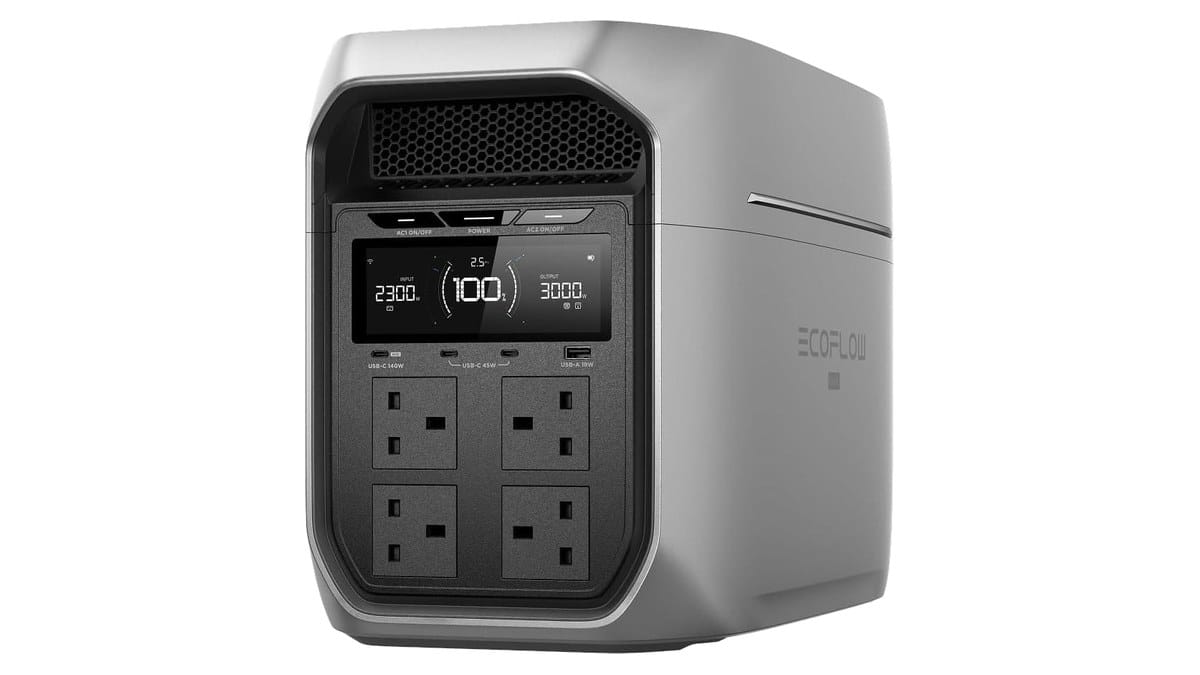
EcoFlow DELTA 3 Max Plus
A bigger 3,000W platform that takes extra batteries and charges faster, for buyers who want headroom this fixed Jackery cannot give. It costs more and weighs more.
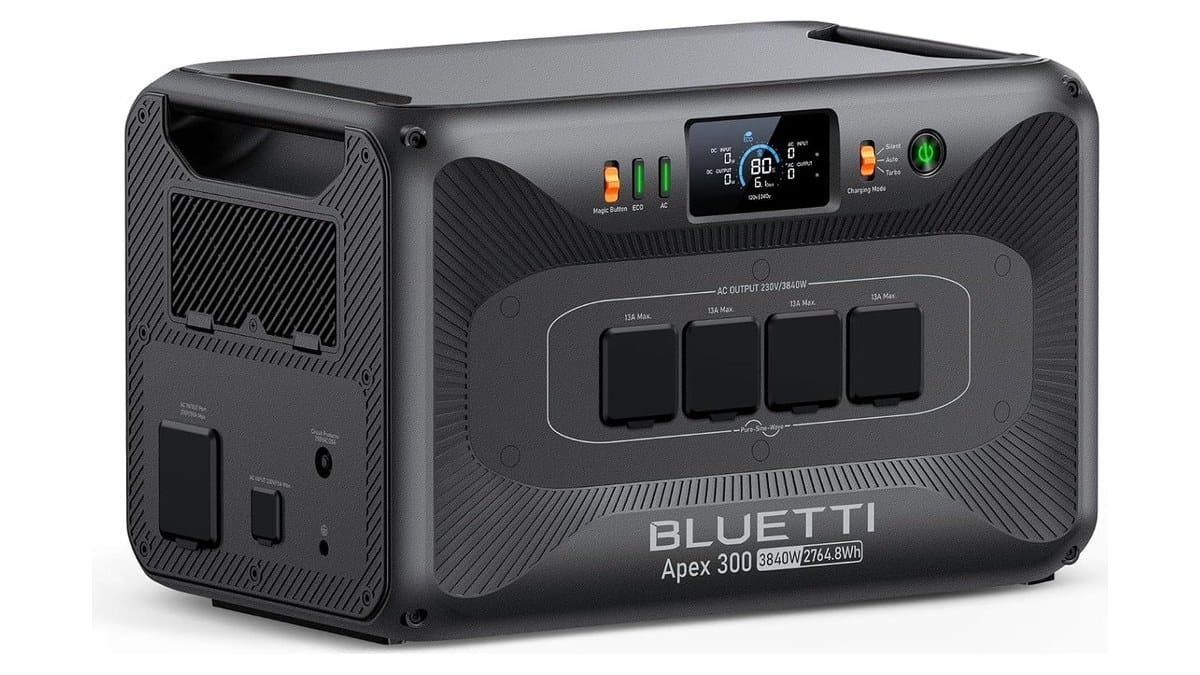
BLUETTI Apex 300
About 2,765Wh and expandable, a step up in capacity and backup runtime for whole-home or long-outage use. Heavier and dearer, and overkill for a weekend of camping.
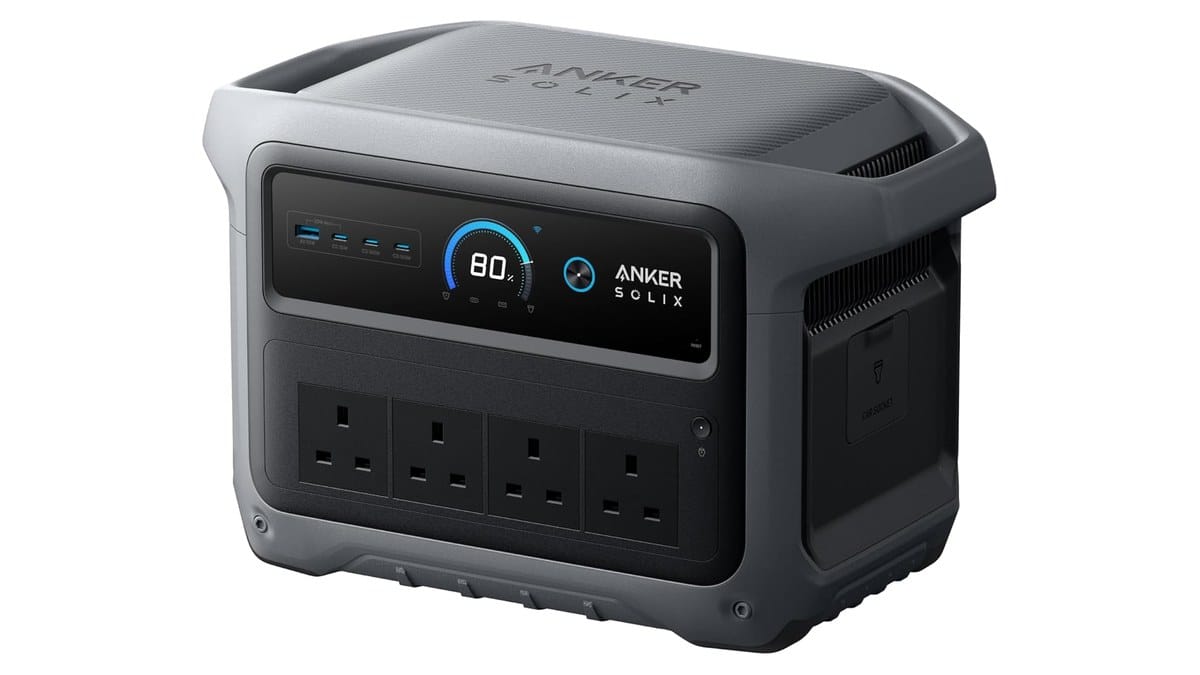
Anker SOLIX C1000 Gen 2
A 1kWh unit at roughly half the weight, for anyone who finds 2kWh more than they need and wants something one hand can carry. Less capacity and lower sustained output.
See every model we rate in our power stations hub.
FAQ
Questions readers ask
Is the Jackery Explorer 2000 v2 any good?
Yes. The Solar Lab found the 2,200W output held reliably with no overheating, and OutdoorGearLab confirmed it is the lightest 2kWh unit of its kind. The compromise is that its 2,042Wh capacity is fixed and cannot be expanded.
Is the Explorer 2000 v2 the same as the 2000 Plus?
No, and this is the main confusion. They hold almost identical capacity, but the 2000 Plus has a bigger 3,000W inverter and expands to 12kWh with extra batteries, while the v2 is the lighter, non-expandable model. Buy the v2 to carry it, the Plus to grow it.
Can the Explorer 2000 v2 be expanded with extra batteries?
No. 2,042Wh is the ceiling. If you expect to want more capacity later, the expandable 2000 Plus is the model to buy instead.
Can you take the Explorer 2000 v2 on a plane?
No. At 2,042Wh it is far over the 100Wh airline limit and cannot fly in the cabin or the hold, with no approval route. It is road-trip and camping gear; for flights you need a power bank at or under 100Wh. See our plane rules guide.
How much of the 2,042Wh can you use?
OutdoorGearLab measured about 1,740Wh reaching devices, roughly 84 percent of the nameplate. That conversion loss is normal for the class and worth allowing for when you size it against your kit.
What comes in the box?
The unit, a mains charging lead and a car charging lead. Solar panels and their cables are sold separately, so budget for those if solar charging is part of your plan.
How long does it take to recharge?
About 1.7 hours from a wall outlet, or roughly 1.33 hours in Emergency Super Charge mode. OutdoorGearLab measured a full charge in about 2.5 hours at the default rate, and solar tops out at 400W.
Will it run a fridge during a power cut?
Yes. With 2,200W continuous output confirmed by The Solar Lab and an under-20ms backup switchover, it will keep a fridge and essentials running. How long depends on the load, but a typical fridge draws far less than its rated output.
How does it compare to the Jackery 2000 Plus?
Choose the v2 if you want the lightest 2kWh unit to move around and will never need more capacity. Choose the 2000 Plus if you want the bigger 3,000W inverter and the option to expand to 12kWh for whole-home backup.
Final word
The lightest way to carry 2kWh
The Jackery Explorer 2000 v2 is the 2kWh power station to buy when you intend to move it: the lightest of its size, with a decade-rated battery and output that holds, confirmed by independent testing from The Solar Lab and OutdoorGearLab.
Shortlist it if you camp, travel by road or want liftable home backup, and you are happy with a fixed capacity. See how we test, or see where it ranks against the rest in our best portable power station roundup.
Keep reading
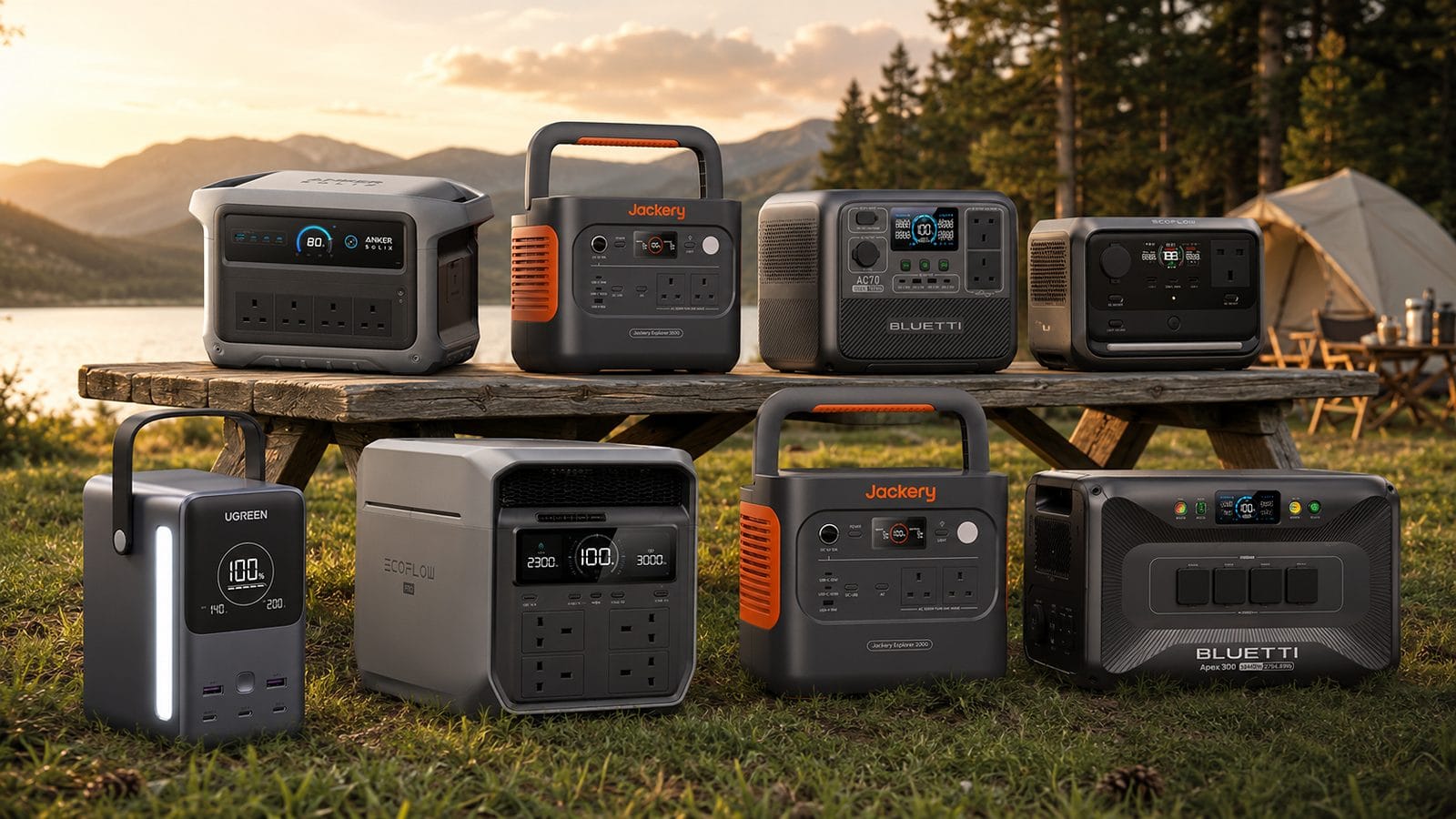
Best portable power station
Where the Explorer 2000 v2 ranks against every rival we recommend.
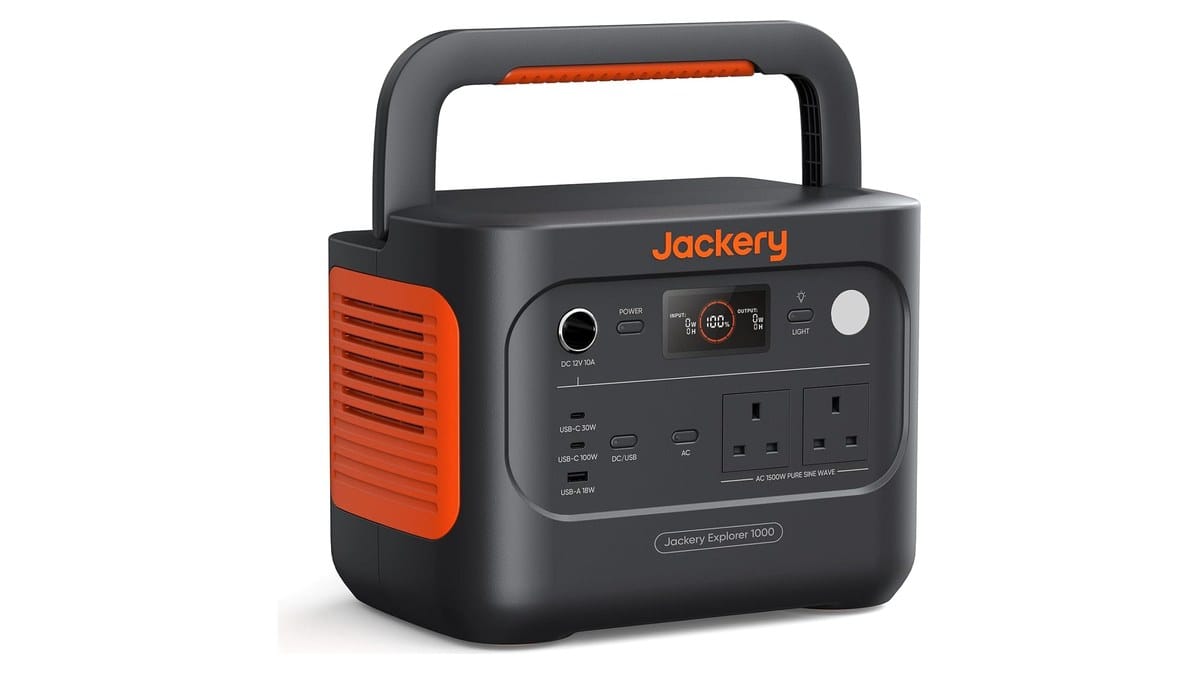
Jackery Explorer 1000 v2
The smaller sibling, if 1kWh is closer to what you need.
EcoFlow DELTA 3 Max Plus
The expandable rival with more output and faster charging.

How we test and score
How SGK checks every spec and score before a review goes live.
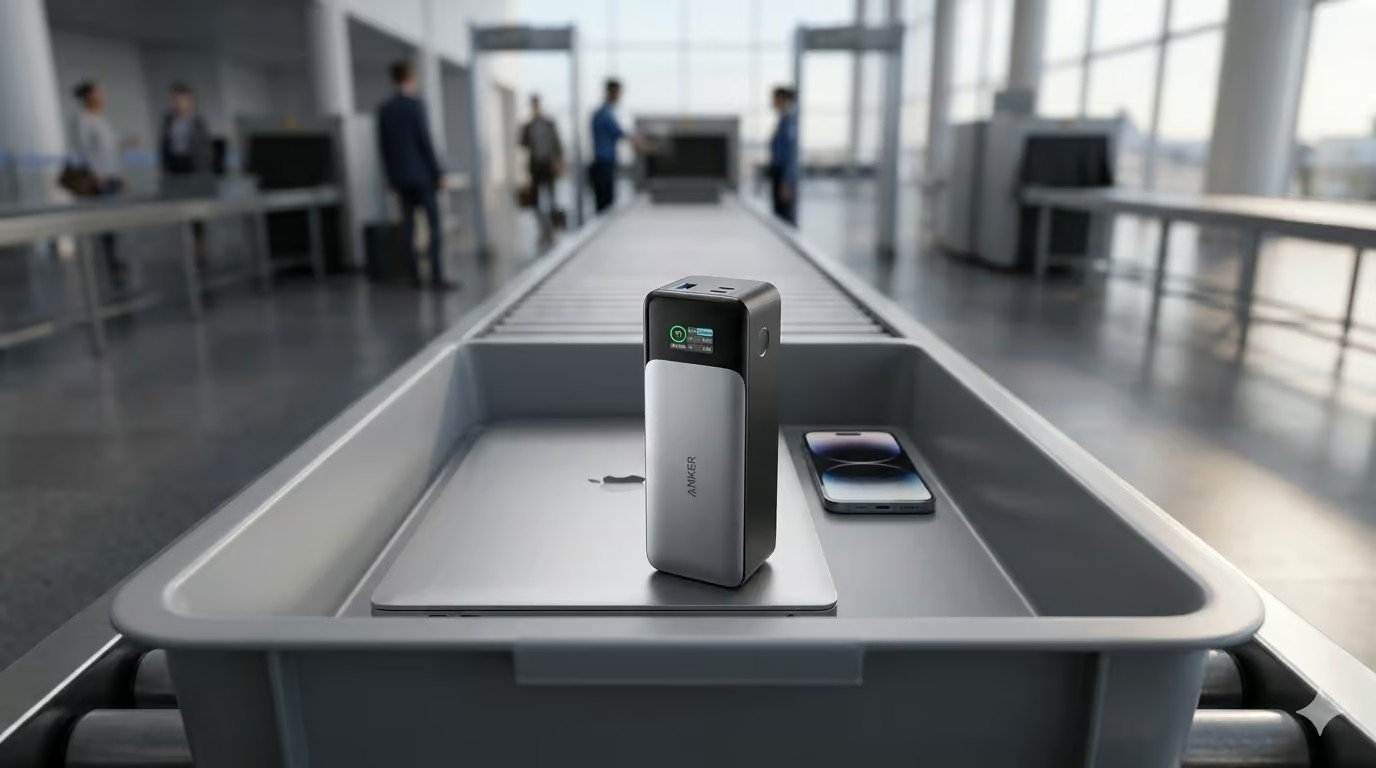
Can you take a power bank on a plane?
The 2026 airline rules: watt-hour limits, how many you may carry, and in-flight use.
Latest from SmartGadgetKit
 Lithium Ion Battery Fire Statistics 2026
 LISEN Power Bank Review: The Qi2.2 25W MagSafe 10000mAh, Measured
 How Long Does a Power Bank Last? Charges, Years and Sizing
 Anker Prime 250W Charger Review: 6-Port Desktop Hub
 Anker Prime 300W Power Bank Review: Two Laptops, One Socket-Free Table
 BLUETTI AC70 Review: What 2,000W Power Lifting Is Worth
 Anker SOLIX C1000 Gen 2 Review: The 49 Minute Recharge Is A Setting, Not The Default
 EcoFlow RIVER 3 Plus Review: The 1200W On The Box Isn’t The Number You Buy
Tested by people who know what the numbers mean
SmartGadgetKit checks every spec against the manufacturer and independent sources, and tells you the trade-offs, not only the wins. Independent testing for this page comes from The Solar Lab and OutdoorGearLab, credited where each figure appears.