INDIVIDUAL REVIEW · Power stations · Explorer 1000 v2
Jackery Explorer 1000 v2 Review: The Lightest Real 1kWh Station
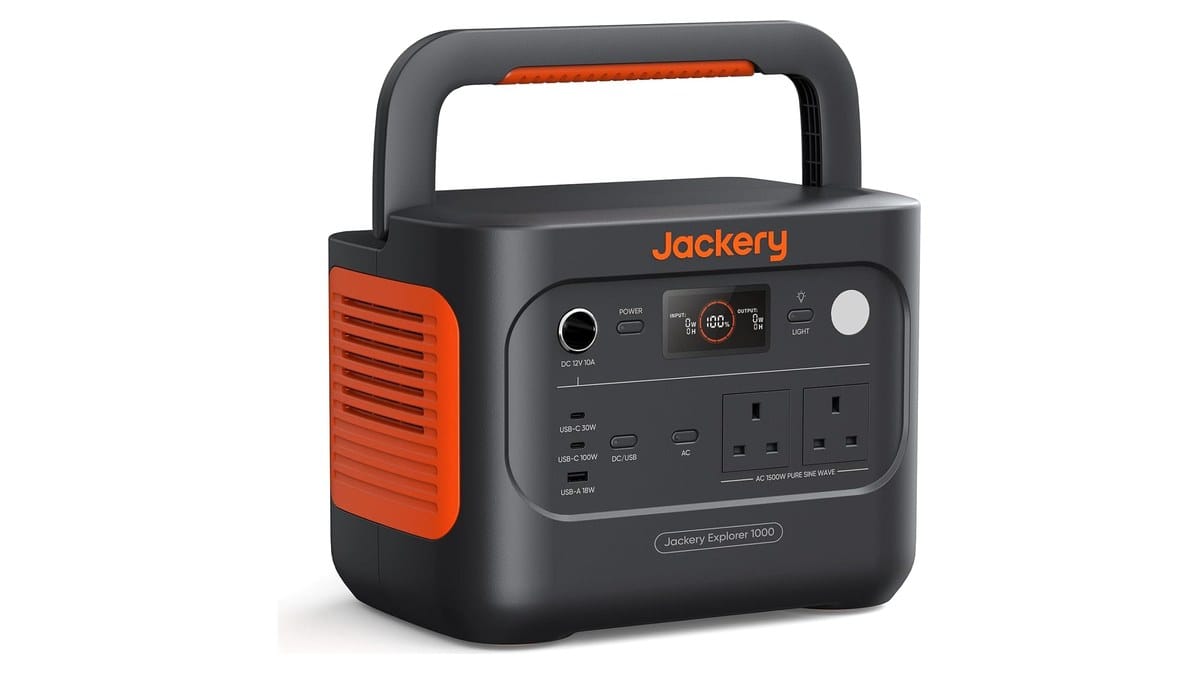
The short version of this Jackery Explorer 1000 v2 review: buy it if you want a full kilowatt-hour you can pick up and carry without planning the lift.

Scored against measured testing by The Solar Lab and The Drive
SmartGadgetKit is reader-supported. We may earn a commission if you buy through links on this page, at no extra cost to you. It never changes which products we pick or what we say about them.
Expert Score
It is light, it is quiet, and it refills faster than almost anything in its class. What you give up is any way to make it bigger later, and that single trade is the whole review.
Pros
- About 11 kg for 1,070Wh, the lightest true 1kWh station on our shortlist
- Refills in well under two hours, independently measured at 30 to 100 percent in under 90 minutes
- LiFePO4 cells rated to 4,000 cycles, so a decade of service rather than a couple of years
- Proper battery backup that takes over in under 20 ms when the mains drops
- Under 22 dB in quiet charging mode, quiet enough for a bedroom
Cons
- No expansion battery, now or ever. The capacity you buy is the capacity you keep
- Two plug sockets on the UK and EU unit, and 1,500W is the lowest output in its capacity class
Key takeaways
Six numbers that decide whether this is your power station.
Quick specs
The paper numbers for the Jackery Explorer 1000 v2.
| Capacity | 1,070Wh |
| Output | 1,500W continuous, 3,000W surge |
| Chemistry | LiFePO4 |
| Plug sockets | 2 on the UK and EU unit, 3 on the US unit |
| USB | 1x 100W USB-C, 1x 30W USB-C, 1x 18W USB-A |
| Weight | About 11 kg |
| Full recharge | 1.7 hours standard, about 1 hour in Emergency mode |
| Expandable | No |
Specs confirmed against Jackery’s official product page and its UK listing. Reviews and retailers often shorten the name to Jackery 1000 v2. See how we test and score.
What it is, and who should be looking at it
A power station is a battery with plug sockets in it. This one holds 1,070 watt-hours, which is roughly a laptop charged eight times over, or a small fridge kept cold for the better part of a day.
Three people should be reading this. The camper who wants mains power at a pitch, the van owner who would rather not run an engine for electricity, and anyone at home who is tired of losing an afternoon’s work every time the power flickers.
It is travel gear. What it cannot do is fly. It camps, it hikes, it goes to a festival and it goes away for the weekend. The airline section further down explains where that line falls and what to take instead.
 Darleene asks
“I’ve already got a power bank that charges my phone four times over. Why would anyone need something this size?”
Alisdair’s answer: Because a power bank charges things through a USB cable, and this charges things through a plug.
Your laptop’s own charger, a fridge in a van, a CPAP machine overnight, a router during a power cut. None of those have a USB socket on them.
Then there’s scale. A large power bank holds around 100 watt-hours. This holds 1,070, so about ten of them in one box you can still lift.
Power output and sockets: check which one you are buying
This is where nearly every review misleads readers outside the United States, so it is worth being precise.
The UK and EU version has two 230V three-pin sockets. The US version has three 120V sockets. Same battery, same output rating, different front panel.
Seen a review that says three sockets? It was looking at the US unit.
Everything else is shared across regions: one 100W USB-C, one 30W USB-C, one 18W USB-A and a 12V car socket. One UK site lists two 100W USB-C ports and two USB-A ports, which does not match Jackery’s own specification.
Rated output is 1,500W continuous with a 3,000W surge, and independent testing backs that up. The Solar Lab held it at 1,560W for ten minutes, above its own rating, then took a 2,200W surge for a couple of seconds before shutting down cleanly rather than failing.
1,500W is an honest figure rather than a generous one. In the same capacity class the Anker SOLIX C1000 Gen 2 delivers 2,000W.
Will the Jackery Explorer 1000 v2 run a kettle?
That depends entirely on where you live, and it is the clearest example of why the regional split matters.
On 230V mains, a full-size kettle draws 2,200W to 3,000W. That is over this unit’s 1,500W ceiling, so it will not run one.
On 120V mains, kettles are built to around 1,500W because the circuit allows no more, so most will run, though close to the limit.
A 1,000W travel kettle works anywhere. So does a coffee machine, a microwave under 1,500W, or a toaster. The Solar Lab measured 87.5 percent inverter efficiency at a 1,479W load, so most of what you put in comes back out.
Recharging, and about that one hour
Jackery’s headline is a full charge in one hour. The figure is real, but it is the Emergency Super Charge mode, not what the unit does out of the box.
In normal mode Jackery quotes 1.7 hours. The Solar Lab measured about 1 hour 35 minutes, and The Drive got from 30 percent to 100 percent in under 90 minutes on a standard wall outlet.
Either way it is quick, and quicker than most rivals. Set your expectation at an hour and a half unless you have opened the app and asked for the faster mode.
Use that mode sparingly. The Solar Lab notes that leaning on it regularly is not kind to the battery over the long run.
Solar
Up to 400W of solar input with MPPT tracking. Jackery cites around three hours in strong sun, and The Solar Lab measured about 4.5 hours.
Under heavy overcast, which is most of the year in northern Europe, the Pacific Northwest and the UK, plan for most of a day rather than an afternoon.
The battery, and why 4,000 cycles matters
The cells are LiFePO4, rated for 4,000 cycles to 70 percent of original capacity.
That is the number most people skip, and the one that decides what this costs you per year of ownership. An older-style NMC pack gives you 500 to 800 cycles before it starts fading.
Charge this one weekly and it is still above 70 percent capacity two decades from now. Jackery backs it with five years of warranty from an authorised seller, Amazon included.
Portability: the reason this model exists
About 11 kg. The Drive put one on a scale and got 24.5 lb against Jackery’s stated 24 lb, so the marketing weight is close to the truth.
That is light for 1,070Wh. The unit is also 18 percent smaller than the model it replaces, and one person lifts it out of a boot without making a plan first.
The handle folds flat, which is what lets it slide under a seat. The Drive’s only complaint: a single handle is less comfortable than two over any real distance.
Using it as home backup
It has a proper EPS and UPS mode, taking over in under 20 ms when the mains drops. Jackery states this is certified to IEC 62040.
In plain terms: plug your router, your desktop or a home office setup into it, leave it connected to the wall, and a power cut interrupts nothing.
One caveat from The Solar Lab’s testing. Pass-through input falls off noticeably when the inverter is working hard, so it refills more slowly while carrying a heavy load.
What it cannot do
Want to add a second battery later? You cannot.
There is no expansion pack, no accessory to buy in a year, no port waiting to be enabled. 1,070Wh is the ceiling for the life of the unit.
Every review we read raises this, and it is the strongest single reason to buy something else. The EcoFlow DELTA 3 Max Plus scales to 10kWh, and the BLUETTI Apex 300 to about 19kWh.
If you know 1,070Wh covers what you need, none of that matters. If you are unsure, it matters more than any other number on this page.
Can you take it on a plane?
No, and no airline will make an exception.
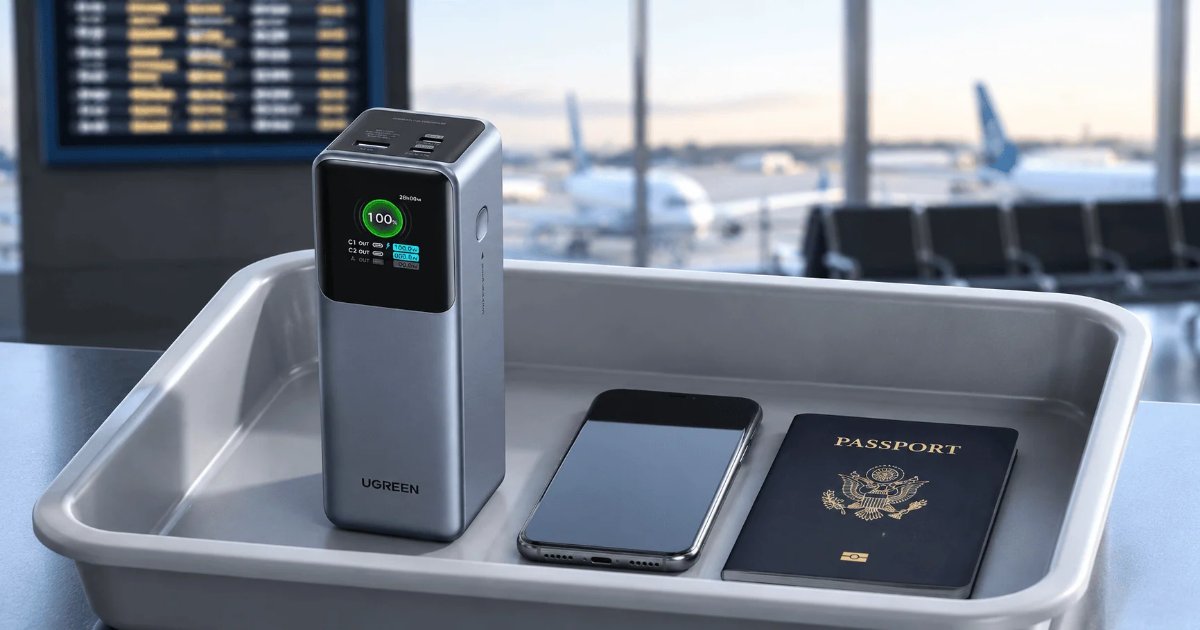
Airlines cap lithium batteries in the cabin at 100 watt-hours, or 160Wh with prior approval. This holds 1,070Wh, more than ten times the limit, and it cannot travel in the hold either.
Need power in the air? That is a job for a power bank, and we have set out the full rules in our can you take a power bank on a plane? guide.
Independent testing
What the Jackery Explorer 1000 v2 delivered under test
Every figure below comes from a named independent source, not from the manufacturer.
The Solar Lab ran it above its own 1,500W rating for ten minutes, then took a 2,200W surge for a couple of seconds before it shut down cleanly rather than failing.
The Drive put one on a scale and got 24.5 lb against Jackery’s stated 24 lb, so the marketing weight is close to the truth.
A standard wall recharge measured at about 1 hour 35 minutes, and solar at about 4.5 hours.
Darleene’s version: it fills up in about an hour and a half normally, or an hour if you tell it to hurry. Telling it to hurry too often wears the battery out sooner.
Specifications
Every figure, with its source attached
Manufacturer figures are specifications or claims. Measured figures belong to the independent outlet named beside them.
| Spec | Value | Source |
|---|---|---|
| Capacity | 1,070Wh | Jackery |
| Continuous output | 1,500W | Jackery |
| Surge output | 3,000W | Jackery |
| Verified sustained load | 1,560W for 10 minutes | The Solar Lab |
| Inverter efficiency | 87.5 percent at 1,479W | The Solar Lab |
| Chemistry | LiFePO4 | Jackery |
| Cycle life | 4,000 cycles to 70 percent | Jackery |
| Plug sockets | 2x 230V (UK and EU), 3x 120V (US) | Jackery |
| USB-C | 1x 100W, 1x 30W | Jackery |
| USB-A | 1x 18W | Jackery |
| Car socket | 1x 12V | Jackery |
| Weight | About 11 kg, scale-measured 24.5 lb | Jackery, The Drive |
| Dimensions | About 32.8 x 22.4 x 24.6 cm | The Drive |
| AC recharge, standard | 1.7 hours | Jackery |
| AC recharge, measured | About 1 hour 35 minutes | The Solar Lab |
| AC recharge, emergency mode | About 1 hour | Jackery |
| Solar input | 400W max, MPPT | Jackery |
| Solar recharge, measured | About 4.5 hours | The Solar Lab |
| UPS switchover | Under 20 ms, IEC 62040 | Jackery |
| Noise | Under 22 dB, quiet charging mode | Jackery |
| Warranty | 5 years, authorised sellers | Jackery |
| Expandable | No | Jackery |
If the numbers already make the case for you, the current Amazon listing is one tap away.
amazonCheck latest priceScoring
Why our Jackery Explorer 1000 v2 review scores it 8.0 out of 10
Built from four sub-scores on our current rubric.
The arithmetic average and our editorial call land in the same place, for a reason worth stating.
Fit for the job scores 9.0 because here the job is being carried. Jackery sells this as the kilowatt-hour you take with you, and at about 11 kg it does that better than anything holding as much. On a station bought to sit in a utility room the same criterion would ask a different question, and weight would barely enter it.
This is an unusually well-matched product for one buyer and a poor one for another. If you want the lightest, quietest, fastest-refilling 1kWh station, and you know 1,070Wh is enough, little else comes close.
Expecting to add a second battery later? Then it is the wrong purchase at any score, because that door is closed permanently.
Our verdicts combine hands-on testing by the SGK team with trusted independent lab data. See how we test.
The verdict
Jackery built this one around a single idea: a kilowatt-hour should be carryable. Everything good about it follows from that, and so does the one real compromise.
The weight, the sub-22 dB fan, the recharge speed and the twenty-year cell rating are class-leading or close to it. Two sockets and a 1,500W ceiling are what that packaging costs.
We would buy it for camping, for a van, and for keeping a home office alive through a power cut. We would not buy it as the foundation of a home battery system, because it can never become one.
Should you buy it?
Should you buy the Jackery Explorer 1000 v2?
The honest split.
Buy it if
- You want mains power at a campsite or in a van, and you will be carrying it yourself
- You want home backup for a router, a desktop or a home office setup
- Quiet matters, because it is going in a bedroom, an awning or a small van
- You want the battery still working in fifteen years
Skip it if
- You want to add capacity later, because you cannot
- You need to run anything over 1,500W, including a full-size 230V kettle or a 3kW heater
- You need more than two plug sockets at once on the UK and EU unit
- You want it for air travel, which no power station of this size allows
Not sure whether 1,070Wh is enough? Work it out before you buy rather than after, because this is the one decision you cannot revise later. Our watt-hour calculator converts your own devices.
How it compares
How it compares: Jackery vs EcoFlow vs Anker
| Jackery Explorer 1000 v2 This review | Anker SOLIX C1000 Gen 2 | Jackery Explorer 2000 v2 | |
|---|---|---|---|
| Capacity | 1,070Wh | 1,024Wh | 2,042Wh |
| Output | 1,500W | 2,000W | 2,200W |
| Weight | About 11 kg | About 11.3 kg | About 17.9 kg |
| Chemistry | LiFePO4 | LiFePO4 | LiFePO4 |
| Best for | Carrying it yourself | Running heavier appliances | Twice the capacity, still liftable |
The Anker is the closest comparison. Near-identical weight and capacity, a third more output, and the reason our roundup lists it as the fast-recharge pick rather than the light one.
Step up to the 2000 v2 only once you have worked out that 1,070Wh runs short, because you are taking on nearly 7 kg to get there.
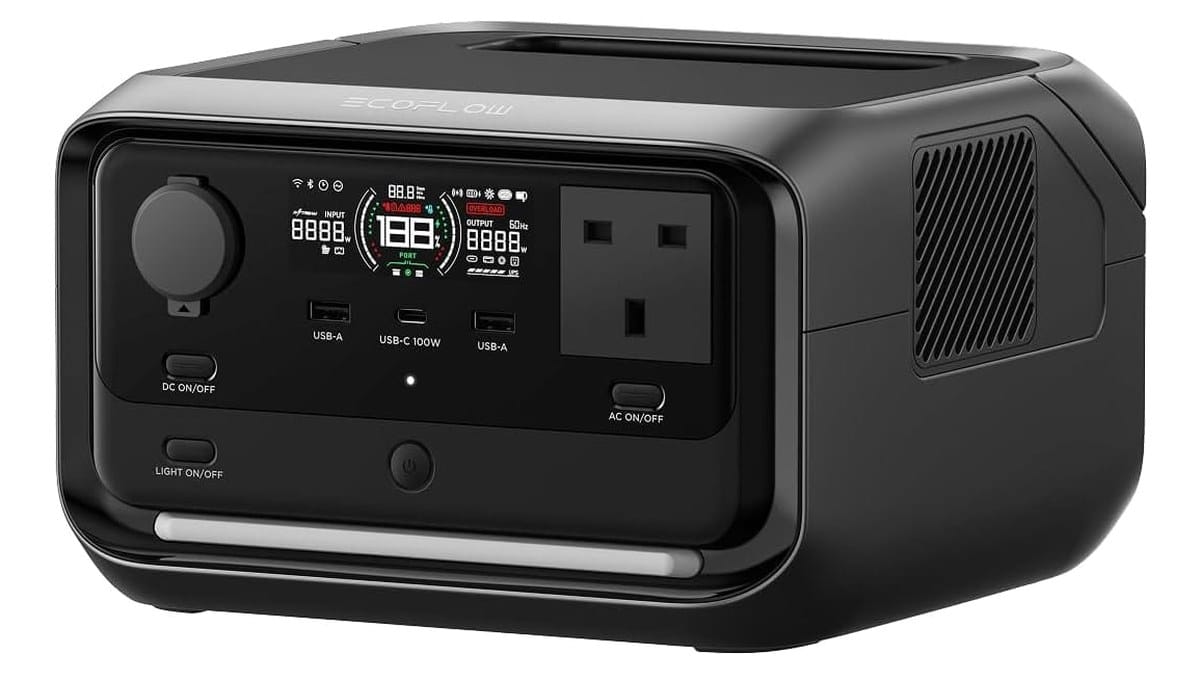
Jackery and EcoFlow split this class between them, and the honest summary is that Jackery sells lightness while EcoFlow sells expandability. If the small end of the class is where you are looking, our EcoFlow RIVER 3 Plus review covers the 286Wh option.
If this one is not the fit
Alternatives worth a look
Where the Explorer 1000 v2 is the wrong fit, one of these is usually right.
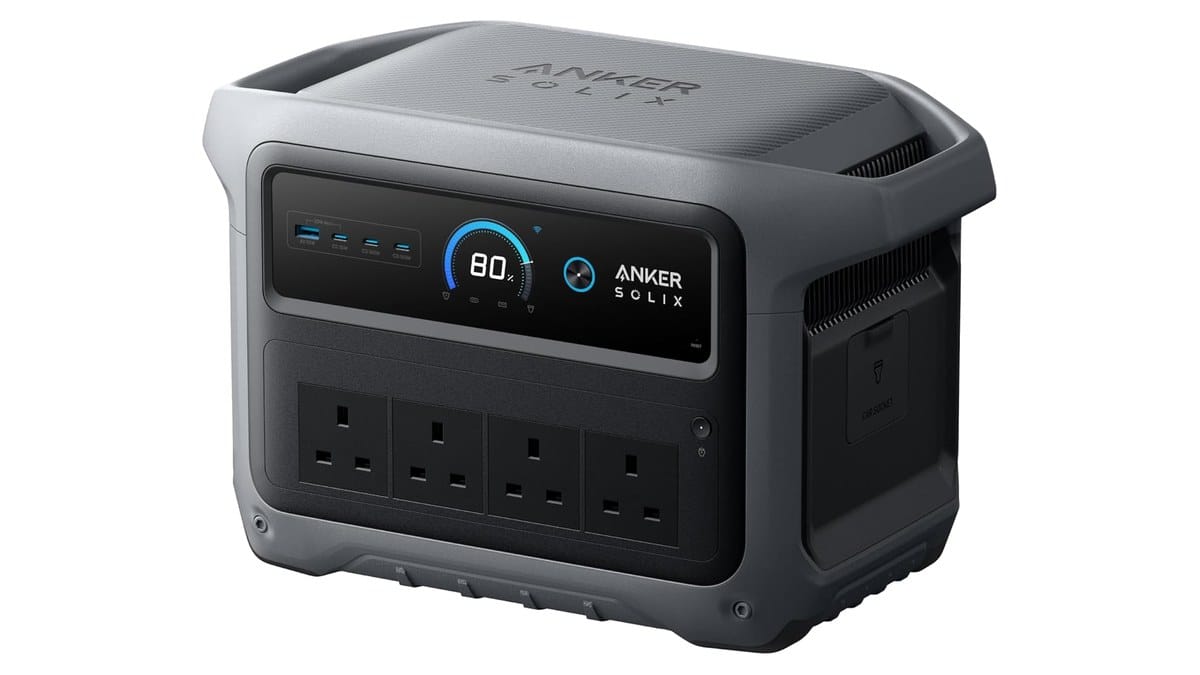
Anker SOLIX C1000 Gen 2
2,000W from a near-identical 11.3 kg package. The one to take if 1,500W is your sticking point.
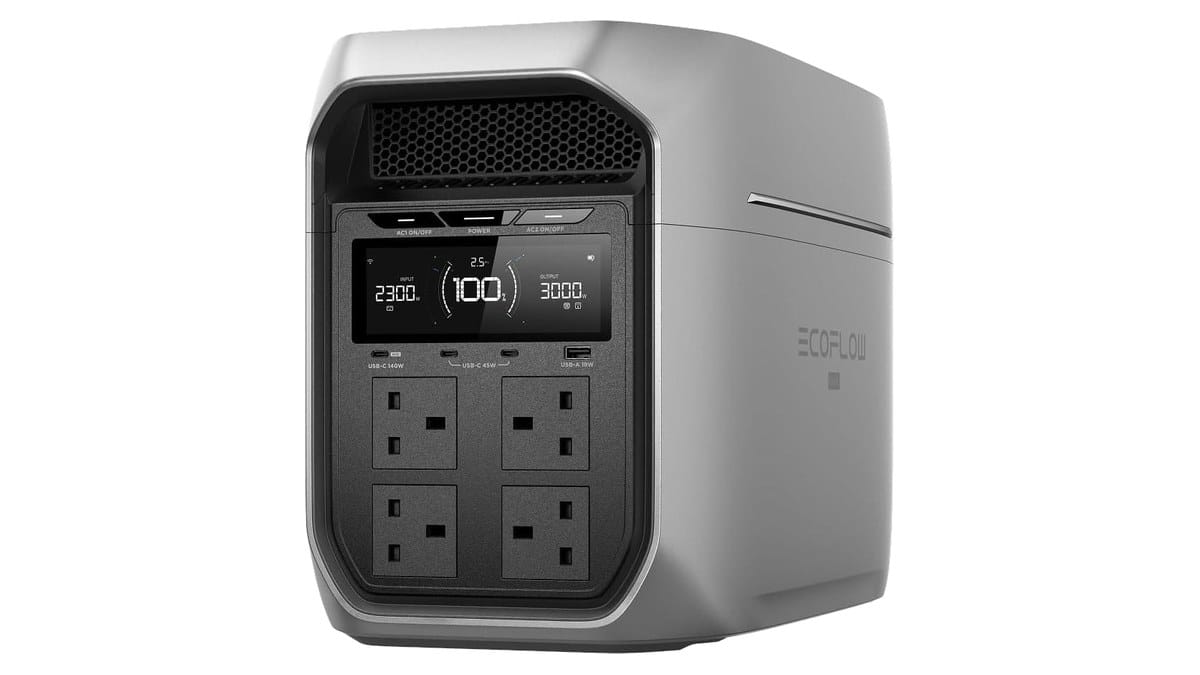
EcoFlow DELTA 3 Max Plus
Scales to 10kWh with add-on batteries. Heavier and larger, but it grows with you.
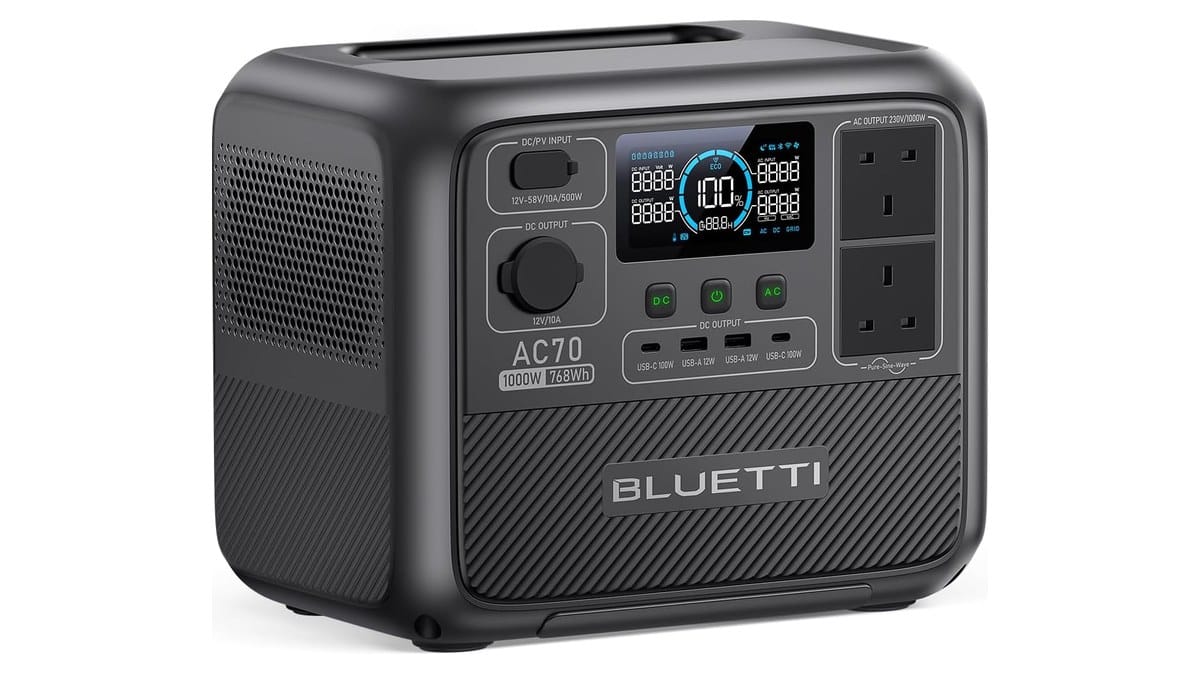
BLUETTI AC70
768Wh and 10.2 kg. Take this if a full kilowatt-hour is more than you need.
All three sit in our portable power station roundup with the full reasoning.
FAQ
Frequently asked questions
Straight answers to what buyers search for.
Can you take the Jackery Explorer 1000 v2 on a plane?
No. Airlines limit lithium batteries in the cabin to 100 watt-hours, or 160Wh with approval. At 1,070Wh this is over ten times that, and it cannot go in the hold either.
How long does the Jackery Explorer 1000 v2 take to charge?
About 1.7 hours in standard mode, and The Solar Lab measured around 1 hour 35 minutes. Emergency Super Charge mode brings it to roughly one hour, though using it often shortens battery life.
Can the Jackery Explorer 1000 v2 run a kettle?
It depends on your mains voltage. A 230V full-size kettle draws 2,200W or more, over this unit’s 1,500W ceiling, so no. Most 120V kettles sit near 1,500W and will run, and a 1,000W travel kettle works anywhere.
Does the Jackery Explorer 1000 v2 work as a UPS?
Yes. It switches over in under 20 ms, which Jackery states is certified to IEC 62040. That is fast enough that a desktop or router will not notice a power cut.
How many sockets does the Jackery Explorer 1000 v2 have?
Two 230V three-pin sockets on the UK and EU unit, and three 120V sockets on the US unit. Both add one 100W USB-C, one 30W USB-C, one 18W USB-A and a 12V car socket.
Is the Jackery Explorer 1000 v2 battery expandable?
No. There is no expansion battery and no plan for one, so 1,070Wh is fixed for the life of the unit.
How long will the Jackery Explorer 1000 v2 last?
The LiFePO4 cells are rated for 4,000 cycles to 70 percent capacity. Charged weekly, it is still above 70 percent two decades on. Jackery covers it for five years from an authorised seller.
How much can the Jackery Explorer 1000 v2 charge?
Roughly eight laptop charges, or a small fridge kept cold for the better part of a day. Our watt-hour calculator converts your own devices.
Final word
This Jackery Explorer 1000 v2 review ends where it started
The Explorer 1000 v2 does the hard thing well. A kilowatt-hour of LiFePO4 at 11 kg, quiet, refilled in an hour and a half, is a set of numbers that did not fit in one box a few years ago.
Know what you are accepting. Two sockets on the UK and EU unit, 1,500W, and a capacity that will never grow.
If those three lines do not rule it out, this Jackery Explorer 1000 v2 review ends where it started: it is the one we would carry.
Keep reading
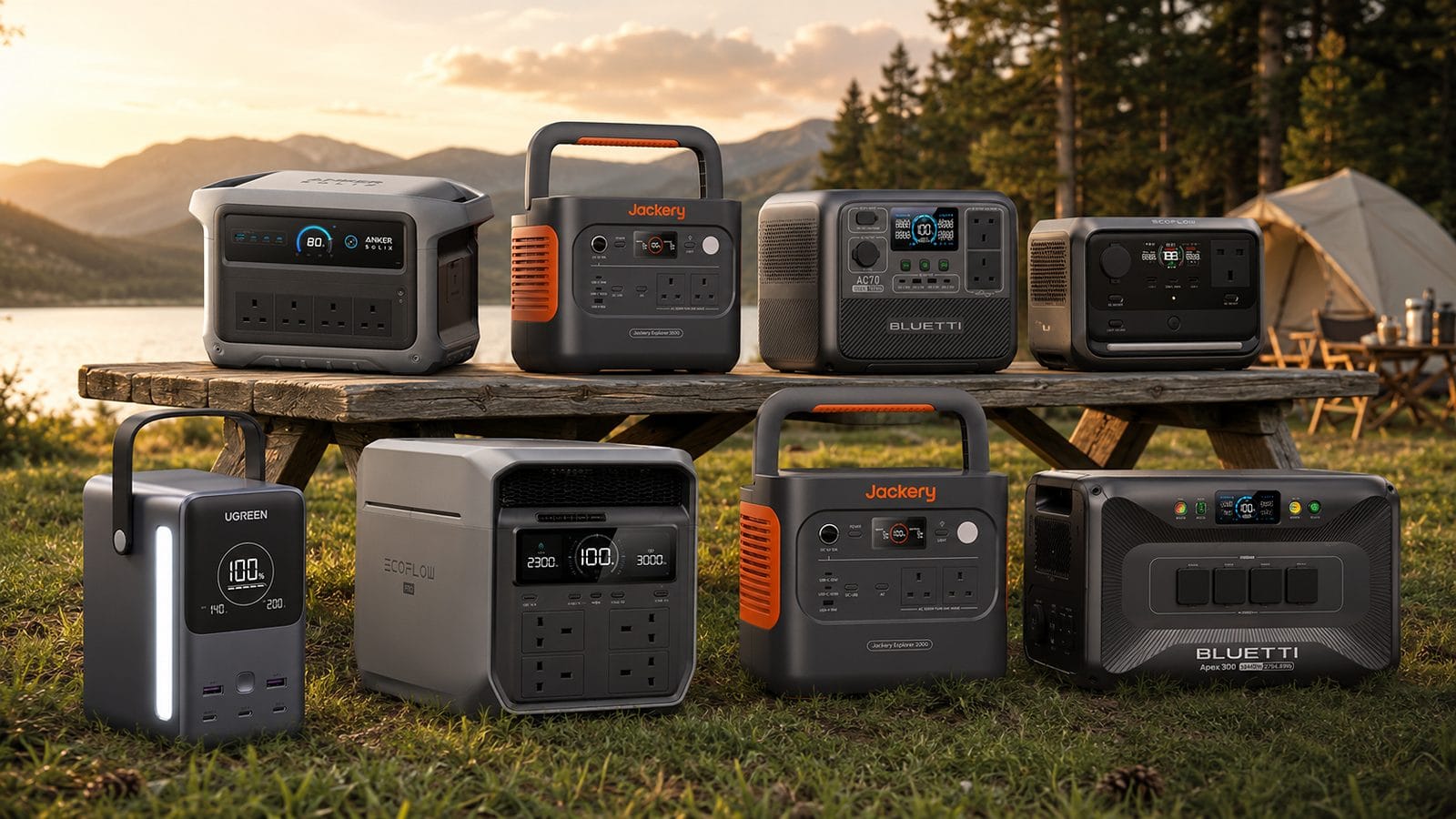
Best Portable Power Station 2026
The full shortlist, and why this one takes Best Overall.
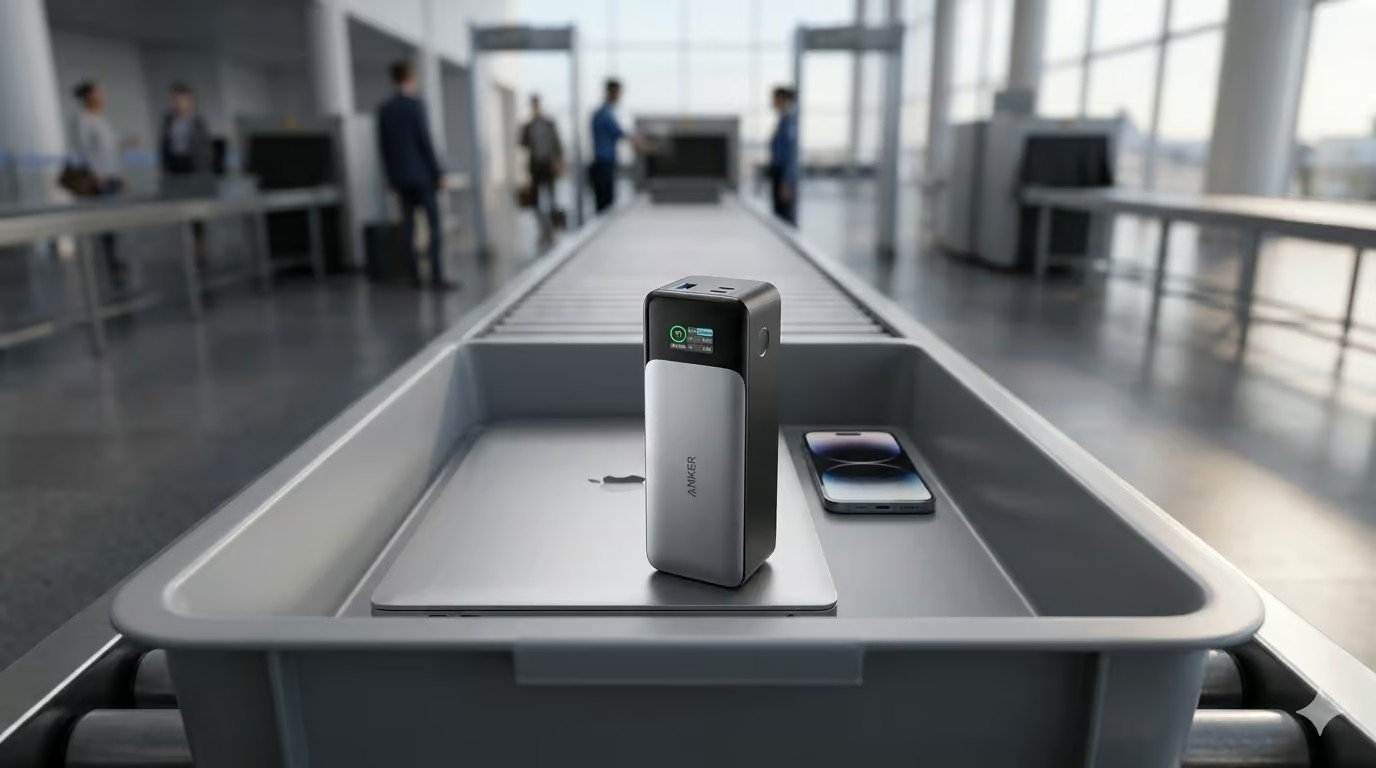
Can You Take a Power Bank on a Plane?
Every carrier’s watt-hour rules in one place.
Best 20,000mAh Power Banks 2026
What to carry when a power station is too much to lift.
mAh to Wh Calculator
Convert your own gear into the unit power stations are sold in.
EcoFlow RIVER 3 Plus Review
The 286Wh option if the small end of the class is where you are looking.

How We Test and Score
Where our numbers come from and where the limits of our process lie.
How we score, and who stands behind it
Independent testing for this page comes from The Solar Lab and The Drive, credited where each figure appears.