

INDIVIDUAL REVIEW | Power stations | DELTA 3 Max Plus
EcoFlow DELTA 3 Max Plus Review: High output home backup and off grid power
This review examines whether the Delta 3 Max Plus provides reliable, high output power for household appliances and long duration off grid use.

Scored against independent measured testing by Trusted Reviews and StorageReview
SmartGadgetKit is reader-supported. We may earn a commission if you buy through links on this page, at no extra cost to you. We only recommend gear we would carry ourselves.
Expert Score
It provides high output and fast charging for home backup, but the X-Boost feature is unavailable when the unit is plugged into a wall outlet.
Pros
- Fast 47 minute charge to 80 percent (UK spec) confirmed by Trusted Reviews
- High inverter efficiency of approximately 87 percent across all loads as measured by Trusted Reviews
- Rapid 8ms UPS switchover time measured by StorageReview, sufficient for desktop PCs and routers
Cons
- X-Boost is unavailable when the unit is charging from a wall outlet
- Approximately 20 percent of the rated capacity is lost during conversion to AC power at the sockets
Key takeaways
Six numbers that decide whether this is your power station.
Quick specs
The paper numbers for the EcoFlow DELTA 3 Max Plus review.
| Capacity | 2,048Wh |
| Inverter Output | 3,000W continuous / 6,000W surge |
| Weight | 22.1kg (approx. 48.7lb) |
| Battery Chemistry | LFP (LiFePO4) |
| X-Boost | Up to 3,900W (UK/EU) or 3,800W (US/JP) |
| UPS Switchover | Under 10ms (claimed), 8ms (measured by StorageReview) |
These EcoFlow DELTA 3 Max Plus specs are confirmed against the EcoFlow and Amazon listings for EF-DL3-MP. Performance figures come from independent testing by Trusted Reviews and StorageReview. See how we test and score.
First impressions
The DELTA 3 Max Plus is a substantial unit with a weight of 22.1kg and dimensions of 494 x 242 x 305 mm. With a capacity of 2,048Wh, it has a large physical presence that reflects its role as a power station for home backup and off-grid use.
As this EcoFlow DELTA 3 Max Plus review found, the build is robust, though the IP20 rating means it is intended for indoor or protected environments. As the top model in the DELTA 3 Max range, it features a large inverter and an expansion path to support demanding applications.
The interface includes four AC sockets and various DC ports, including an Anderson port which is useful for campervan setups. These components signal its position at the top of the DELTA 3 Max line as a unit capable of powering multiple devices at once.
The box contains the power station, one AC charging cable, manuals, and a warranty card. Solar cables and car charging leads are not included in the box and must be purchased separately for use with solar panels or vehicles.
Design and build
The Delta 3 Max Plus weighs approximately 22.1kg and measures 494 x 242 x 305 mm
While it is a substantial unit, its size allows for easy movement within a home or vehicle, even if it requires two hands to carry.
The internal battery uses LFP (LiFePO4) chemistry. EcoFlow claims this technology supports approximately 10 years of use based on their own simulations, while independent testing by Trusted Reviews reports a cycle life of 4,000 cycles to 80 percent.
The unit features ten total outlets. This includes four AC sockets providing up to 3000W of continuous power and a 6000W surge rating. For mobile devices, there are three USB-C ports (one 140W max; two sharing 45W), one 18W USB-A port, a 12.6V 10A car port, and a 12.6V 30A Anderson port.
The manufacturer specifies an IP20 rating for indoor use only. It also includes a surge protection capability of 6000W to handle sudden spikes in power demand.
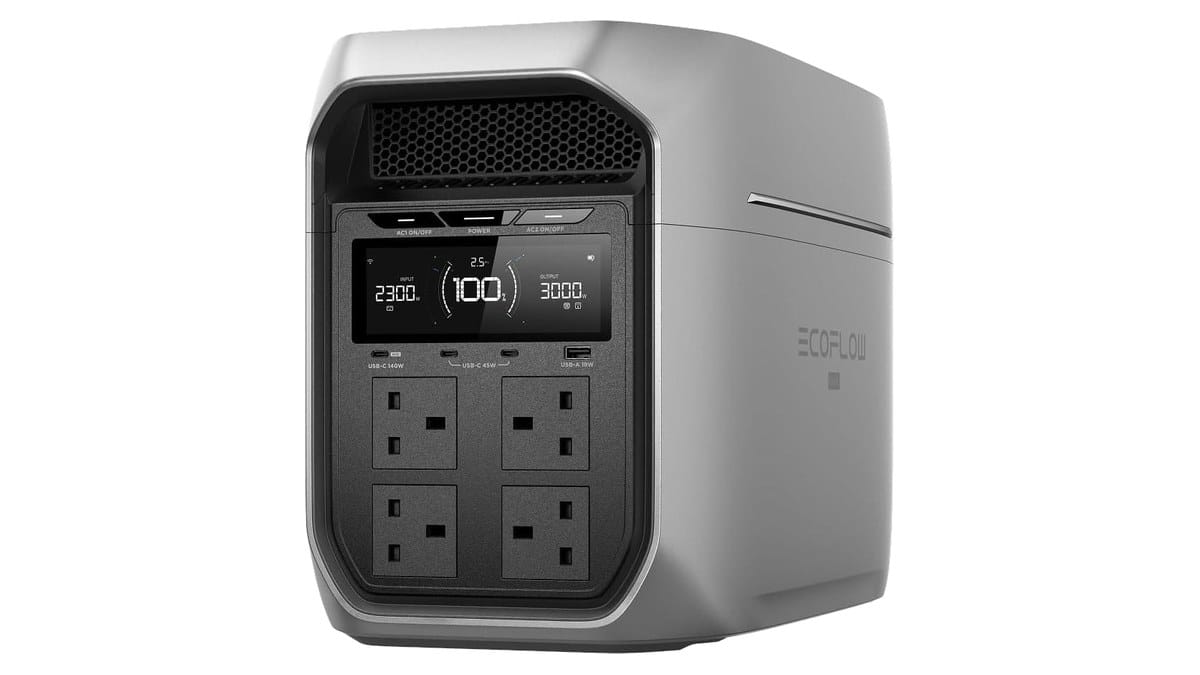
The front panel of the EcoFlow Delta 3 Max Plus.
 Darleene asks
“I see both ‘surge’ and ‘X-Boost’ mentioned in the specs. What does that actually mean for my kettle or heater?”
Alisdair’s answer: Surge handles the initial power spike, while X-Boost provides sustained power for high wattage items.
The 6000W surge rating allows the unit to handle the momentary “kick” when a motor starts or a heating element engages. X-Boost is a different mode that lowers the voltage to run devices above the standard 3000W limit, such as electric blankets or water heaters.
You only need X-Boost for specific high wattage loads like electric blankets or water heaters. Most household appliances will function on the standard output without any extra settings.
Note that X-Boost is unavailable when the unit is plugged into a wall outlet, which is the standard setup for home backup.
Independent testing
High-power performance for home backup
Trusted Reviews and StorageReview put meters on this power station. Each result below is theirs, named in full and never linked.
Measured inverter efficiency at approximately 87 percent across the range from 200W to 3000W, with no significant drop near maximum load.
Measured a switchover time of 8ms against the manufacturer’s claim of under 10ms, fast enough for desktop PCs and routers.
Confirmed the manufacturer’s claim of reaching an 80 percent charge in 47 minutes on a UK unit.
The high-power output claim holds. Trusted Reviews measured inverter efficiency at approximately 87 percent across the range from 200W to 3000W.
This consistency is a notable strength, as many rival units see significant efficiency drops when operating near their maximum capacity.
For home backup applications, StorageReview measured a UPS switchover of 8ms against the manufacturer’s claim of under 10ms.
On the charging side, Trusted Reviews confirmed the manufacturer’s claim of reaching an 80 percent charge in 47 minutes on a UK unit.
The switchover is fast enough to keep a desktop PC or router running through a power cut.
Charging efficiency varies by input; Trusted Reviews measured it at 88.39 percent on a 2400W input and 90.46 percent on a 1200W input.
No independent test has verified the manufacturer’s claim of 4,000 cycles to 80 percent capacity.
The main caveat is that X-Boost is unavailable while the unit is charging from an AC source.
It remains a capable and high-capacity solution for home backup and off-grid use despite this specific limitation of its boost mode.
Darleene’s version: It provides reliable power for your home or van, with a switchover fast enough to keep your router running during a blackout.
UPS and X-Boost functionality
The DELTA 3 Max Plus features an integrated UPS function with a switchover time of under 10ms and an X-Boost mode to support high-power heating loads.
StorageReview measured the UPS switchover at 8ms, which is fast enough to maintain power for devices like routers or desktop PCs during a blackout.
The manual states that X-Boost is unavailable while the unit is charging from an AC source and requires the grid input to exceed the load to ensure the battery charges during backup use.
Portability and placement
Weighing 22.1kg, the DELTA 3 Max Plus is a substantial unit that requires two hands to move. Its footprint of 494 x 242 x 305 mm means it occupies significant space on a workbench or in a storage cupboard rather than fitting into a travel bag.
This weight is the trade-off for its high capacity and power output. It provides 2,048Wh of energy and a 3000W inverter, making it a stable base for home backup or as a primary power source in a campervan where it remains stationary once positioned.
The unit operates at 25dB or less when under a 600W load. This low noise level allows it to sit in a living room or office without being intrusive.
StorageReview measured the UPS switchover at 8ms, which is fast enough to maintain power for a desktop computer or a router during an outage.
Taking it on a plane
At 2,048Wh this is more than twenty times the 100Wh limit that applies to batteries in hand luggage.
It cannot fly at all, in the cabin or in the hold, and no airline offers an approval route for a battery this size. That is the rule for every power station, not a quirk of this one.
That does not make it a stay-at-home product. It travels by road perfectly well, so it camps, it lives in a van, it goes to a festival and it goes away for the weekend, and it is the thing you want at home when the power is off.
If the trip involves a plane, the answer is a different class of product rather than a smaller version of this one. A power bank at or under 100Wh is allowed in the cabin and is built for exactly that job, and our best power banks and best power bank for travel pages cover them.
Full rules are in our can you take a power bank on a plane? guide. Check any capacity in seconds with our mAh to Wh calculator.
Specifications
Full specifications and safety
Manufacturer figures are specifications or claims. Measured figures belong to the independent outlet named beside them. Nothing on this page was measured by SmartGadgetKit.
| Specification | Figure | Source |
|---|---|---|
| Capacity | 2,048Wh | EcoFlow |
| Continuous Output | 3000W (6000W surge) | EcoFlow |
| X-Boost | 3900W (UK and EU), 3800W (US and JP) | EcoFlow user manual for EF-DL3-MP |
| Solar Input | 1000W (two inputs) | EcoFlow |
| AC Output | 230V, 50Hz (AC outlets) | EcoFlow |
| Weight | 22.1kg | EcoFlow |
| Protection | IP20 rating | EcoFlow |
| In the box | The power station, one AC charging cable, manuals and warranty card | EcoFlow |
Sources: EcoFlow’s own published specification for the EU and UK unit and its user manual for model EF-DL3-MP, which is where the regional boost figures and the charging currents come from. Measured figures are credited to Trusted Reviews and StorageReview where they appear.
The unit features LFP (LiFePO4) chemistry for a long cycle life as specified by the manufacturer.
Confirm the exact certification marks on the unit and packaging when yours arrives.
If the numbers already make the case for you, the current EcoFlow listing is one tap away.
ECOFLOWCheck latest price amazonCheck latest priceScoring
EcoFlow DELTA 3 Max Plus review: why we scored it 7.5 out of 10
Built from four sub-scores on our current rubric.
Capacity and recharge takes the highest score. It is a 2,048Wh LFP battery with an expansion path to 10kWh.
Two independent test sets, from Trusted Reviews and StorageReview, put about 80 percent of that rated figure at the sockets. They tested different regional units and landed in the same place.
The charging holds up. Trusted Reviews confirmed the claimed 80 percent in 47 minutes on a 230V unit, so that one is measured rather than repeated.
Power output and ports earned an 8 out of 10. Trusted Reviews measured inverter efficiency at roughly 87 percent across the load range from 200W to 3000W. Furthermore, StorageReview measured a UPS switchover of 8ms, which beats the manufacturer claim of under 10ms.
The fit for purpose score is lower because of practical constraints rather than performance failures. While it provides a quiet and reliable backup solution, X-Boost is unavailable when the unit is charging from an AC source, and the UPS mode requires the grid input to exceed the load to ensure the battery charges properly during use.
Value for money is the weakest score, and it is the one to read before buying. What you are paying the extra for is specific: the 3000W inverter, the expansion path to 10kWh, and the fast input. Rivals hold the same 2,048Wh without any of the three.
The expansion battery, the solar lead and the car lead are all bought separately, and the box holds the unit and a mains cable and nothing else. So if the reason for buying is 2kWh of storage and nothing more, this is the long way round to it. If the reason is the inverter or the expansion path, the score reads differently.
The verdict
At 2,048Wh and 3,000W of continuous output, the EcoFlow DELTA 3 Max Plus is a 2000W portable power station that many buyers shortlist as the best power station for home backup.
The EcoFlow Delta 3 Max Plus provides a high-capacity 2,048Wh battery with a manufacturer-claimed recharge time of 47 minutes to 80 percent on the UK model and an inverter efficiency measured at approximately 87 percent across the load range by Trusted Reviews.
This capability is balanced against its weight of 22.1kg and the fact that X-Boost is unavailable while charging from a wall outlet, plus the requirement to purchase solar and car cables separately.
It is an excellent recommendation for users seeking a reliable home backup system or a campervan power source where high output and expansion potential are priorities.
The high-capacity, expandable pick for home backup and campervan power.
ECOFLOWCheck latest price amazonCheck latest priceShould you buy it?
The honest split.
Buy it if
- You need a high capacity unit with an expansion path to 10kWh and a large 3000W inverter.
- You require reliable home backup; the UPS switchover was measured at 8ms by StorageReview, beating the 10ms specification.
- You need versatile power for campervans or off grid use, including a rare 30A Anderson port.
Skip it if
- You need a lightweight unit for frequent transport; at 22.1kg, this is heavy equipment.
- You require X-Boost functionality while the unit is plugged into the wall; the manual states X-Boost is unavailable during AC charging.
- You want a complete kit with all cables included; solar and car charging leads are not in the box.
If the use case is home backup or campervan power, the EcoFlow listing is the place to check current availability.
ECOFLOWCheck latest price amazonCheck latest priceHow it compares
How the DELTA 3 Max Plus compares
| EcoFlow DELTA 3 Max Plus | Jackery Explorer 2000 v2 | BLUETTI Apex 300 | |
|---|---|---|---|
| Capacity and Output | 2,048Wh; 3,000W inverter | 2,048Wh; smaller inverter | Large inverter for home backup |
| Recharge Speed (UK) | 47 minutes to 80% (manufacturer claim) | Not stated | Not stated |
| UPS Switchover | 10ms specification; 8ms measured by StorageReview | Not stated | Not stated |
| Best for | Versatile home backup and campervans | Portability in a 2kWh class, not an expandable power station | Stationary home backup |
If this one is not the fit
Alternatives worth a look
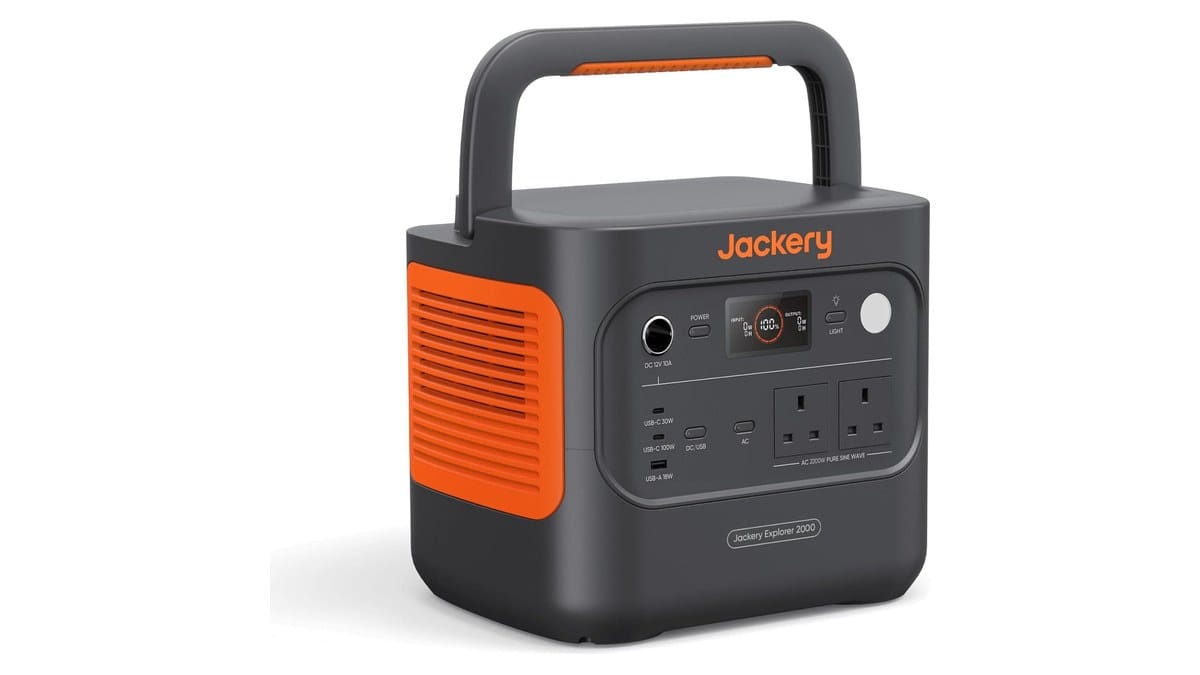
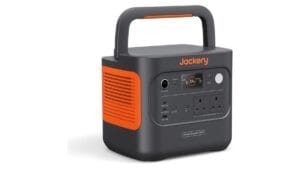
Jackery Explorer 2000 v2
In a straight jackery vs ecoflow match at this capacity, the Explorer 2000 v2 offers the same capacity in a lighter case, but it has a smaller inverter and no expansion path.
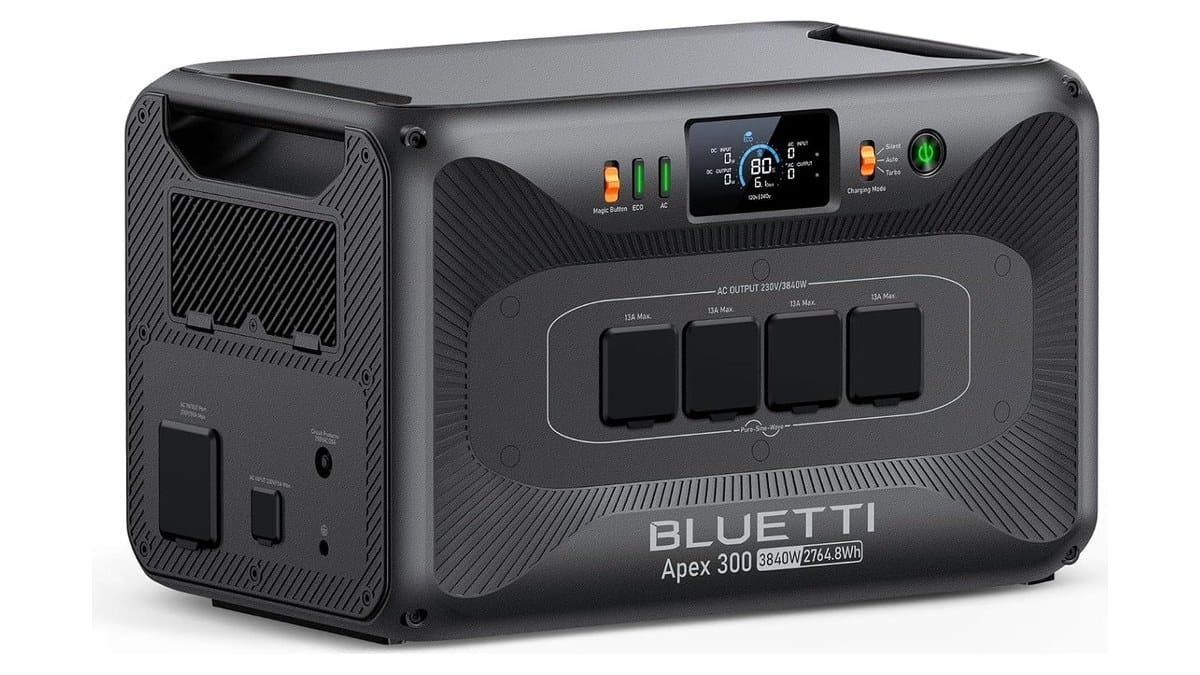
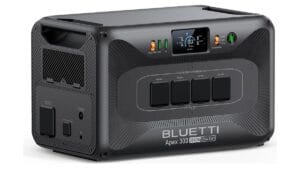
BLUETTI Apex 300
Built for backing up a house with a larger inverter, though its weight makes it unsuitable for moving in a campervan.
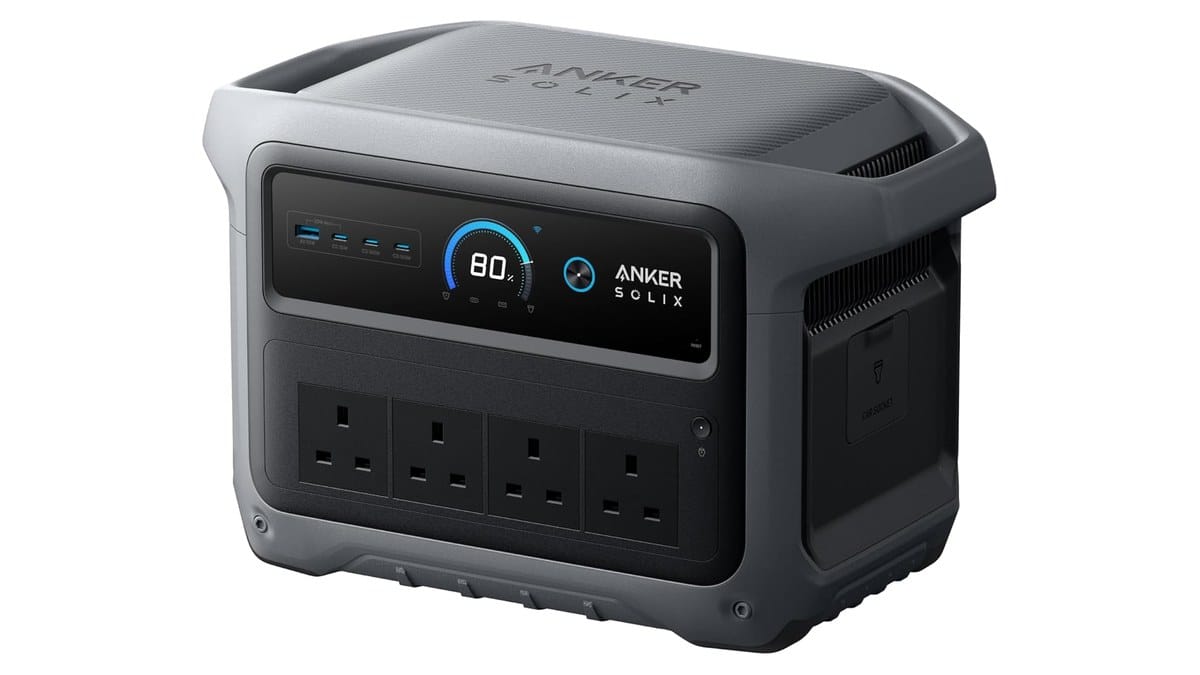
Anker SOLIX C1000 Gen 2
It provides half the capacity and weight, making it suitable for camping or powering a fridge during an outage.
See every model we rate in our power stations hub.
FAQ
Frequently asked questions
Is the EcoFlow DELTA 3 Max Plus any good?
Yes, it is a high-performing unit for home backup and off-grid use. Trusted Reviews confirmed inverter efficiency remains flat at approximately 87 percent from 200W to 3000W. The compromise is that about one fifth of the rated capacity never reaches the sockets due to conversion losses.
Can it run a kettle or a heater?
Yes, it can power high-wattage appliances like electric blankets or water heaters using X-Boost. However, this feature is unavailable when the unit is charging from an AC source.
Will X-Boost work while the unit is plugged into a wall outlet?
X-Boost is unavailable when the unit is charging from an AC source. This means it cannot provide boosted power for high-wattage appliances while it is connected to your home’s grid.
Can I take this on a plane?
No. At 2,048Wh it is more than twenty times the 100Wh limit that applies to batteries in hand luggage, so it cannot fly in the cabin or in the hold, and there is no approval route with any airline. If the trip involves a plane, a power bank at or under 100Wh is the product that is allowed to travel with you. Our can you take a power bank on a plane? guide has the full rules.
How much of the 2,048Wh reaches the sockets?
Two independent reviews from Trusted Reviews and StorageReview measured a round trip of approximately 1.64kWh reaching the outlets.
What comes in the box?
The package includes the power station and one AC charging cable; solar cables and car charging leads are sold separately.
How long does it take to recharge?
On a UK unit, Trusted Reviews confirmed the manufacturer claim of 47 minutes to reach an 80 percent charge from a wall outlet.
Is the UPS switchover fast enough for a PC?
Yes, StorageReview measured the switchover at 8ms, which is faster than the stated 10ms limit and sufficient for desktop PCs or routers.
How does it compare to the DELTA 3 Max?
The Delta 3 Max Plus features a larger inverter and supports expansion up to 10kWh with extra batteries, while the standard Delta 3 Max has a smaller inverter and no expansion path. Choose the Max Plus if you need higher power or future growth.
Final word
The EcoFlow DELTA 3 Max Plus provides a high-capacity power solution for home backup and off-grid use
As this EcoFlow DELTA 3 Max Plus review has shown, it provides a high-capacity power solution for home backup and off-grid use, featuring a 3000W continuous output and an expansion path to 10kWh.
Users requiring a robust home backup system or a capable campervan power source should shortlist this unit. See how we test, or see where it ranks against the rest in our Best portable power station roundup.
Keep reading
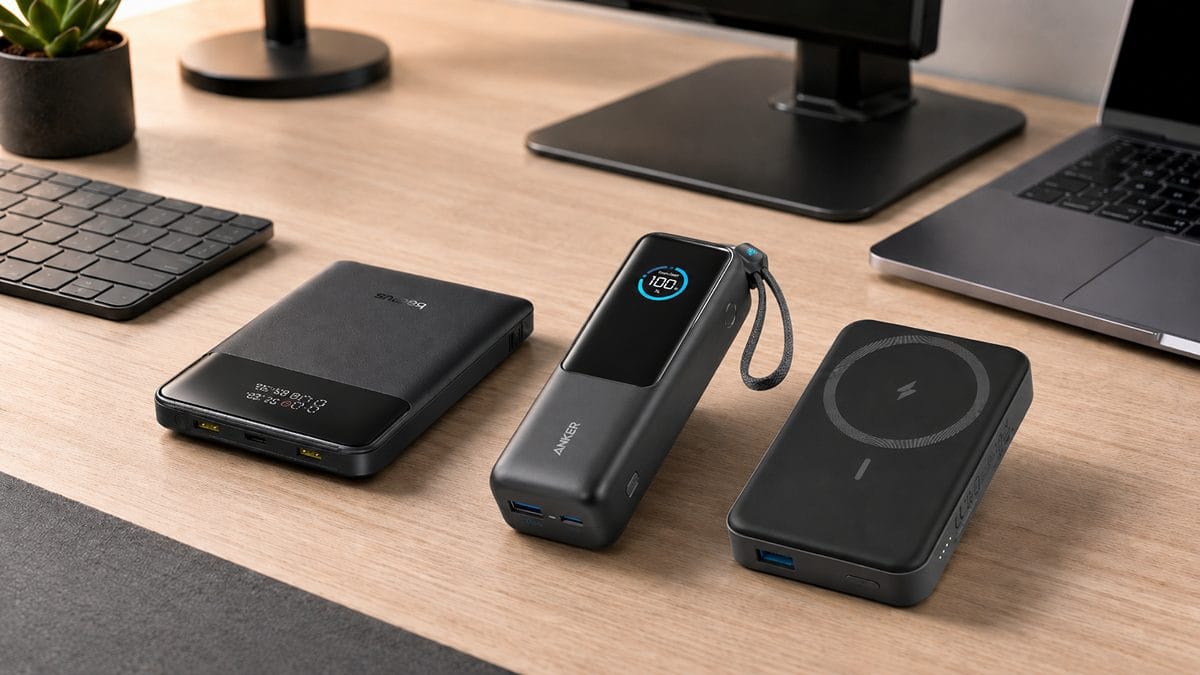
How to choose a power bank
The buying guide that starts from your job rather than the spec sheet.
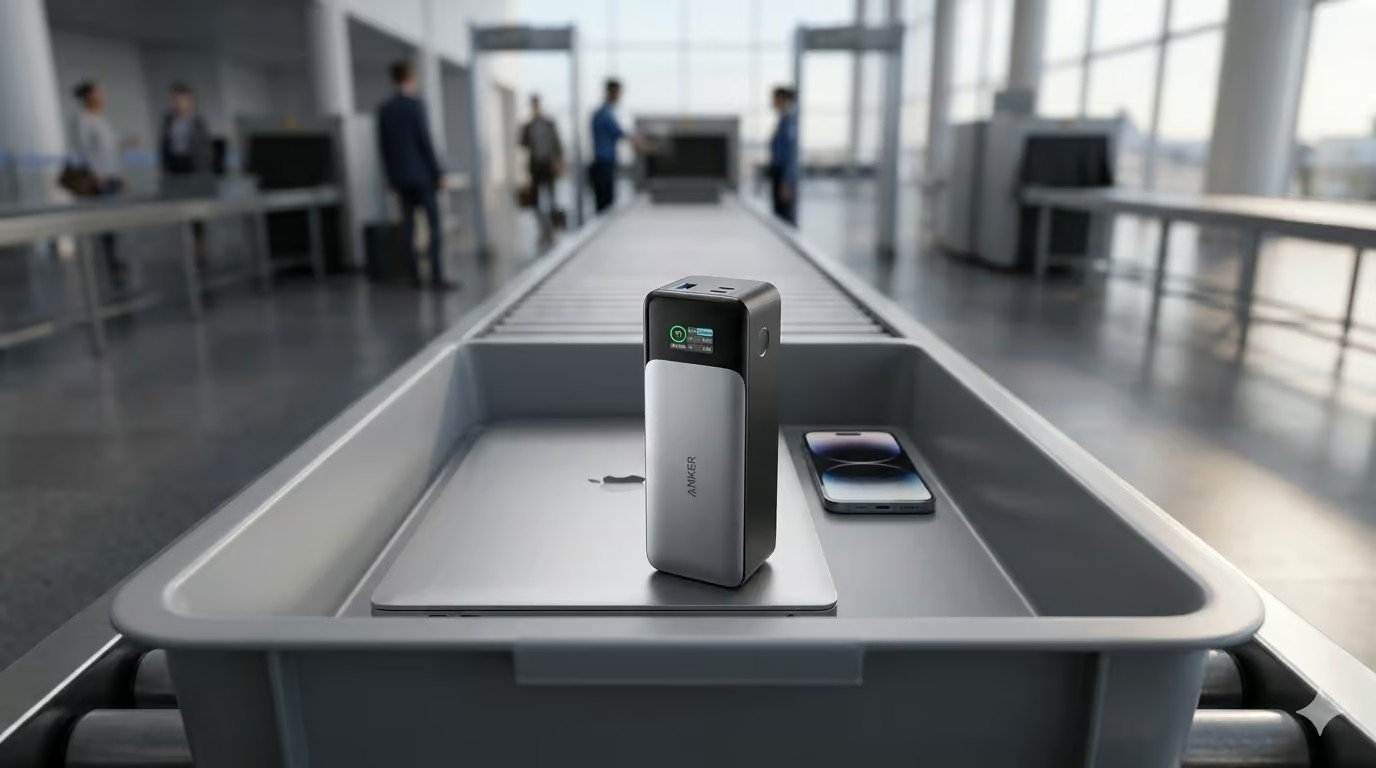
Can you take a power bank on a plane?
The 2026 airline rules: watt-hour limits, how many you may carry, and in-flight use.
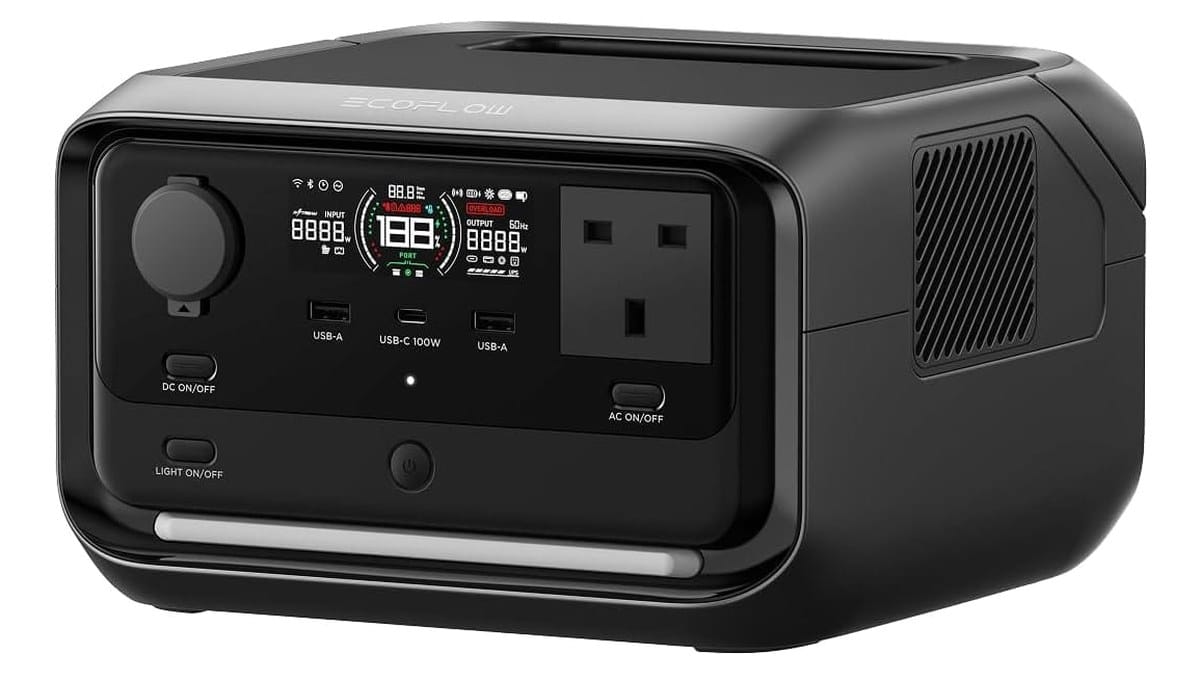
EcoFlow RIVER 3 Plus review
A smaller EcoFlow unit that still covers home backup and off-grid basics.
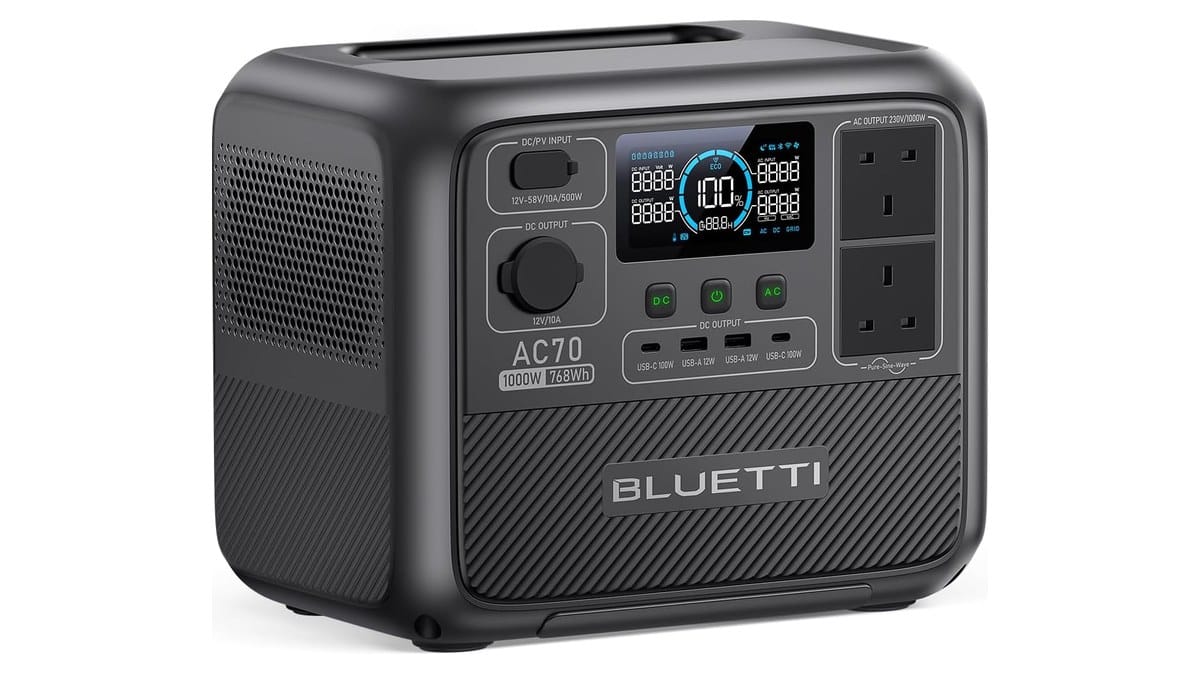
BLUETTI AC70 review
A third of the size, and the same trick of a boost figure that is not what it looks like.
Anker SOLIX C1000 Gen 2 review
Half the battery, and the closest thing in our cluster on recharge speed.
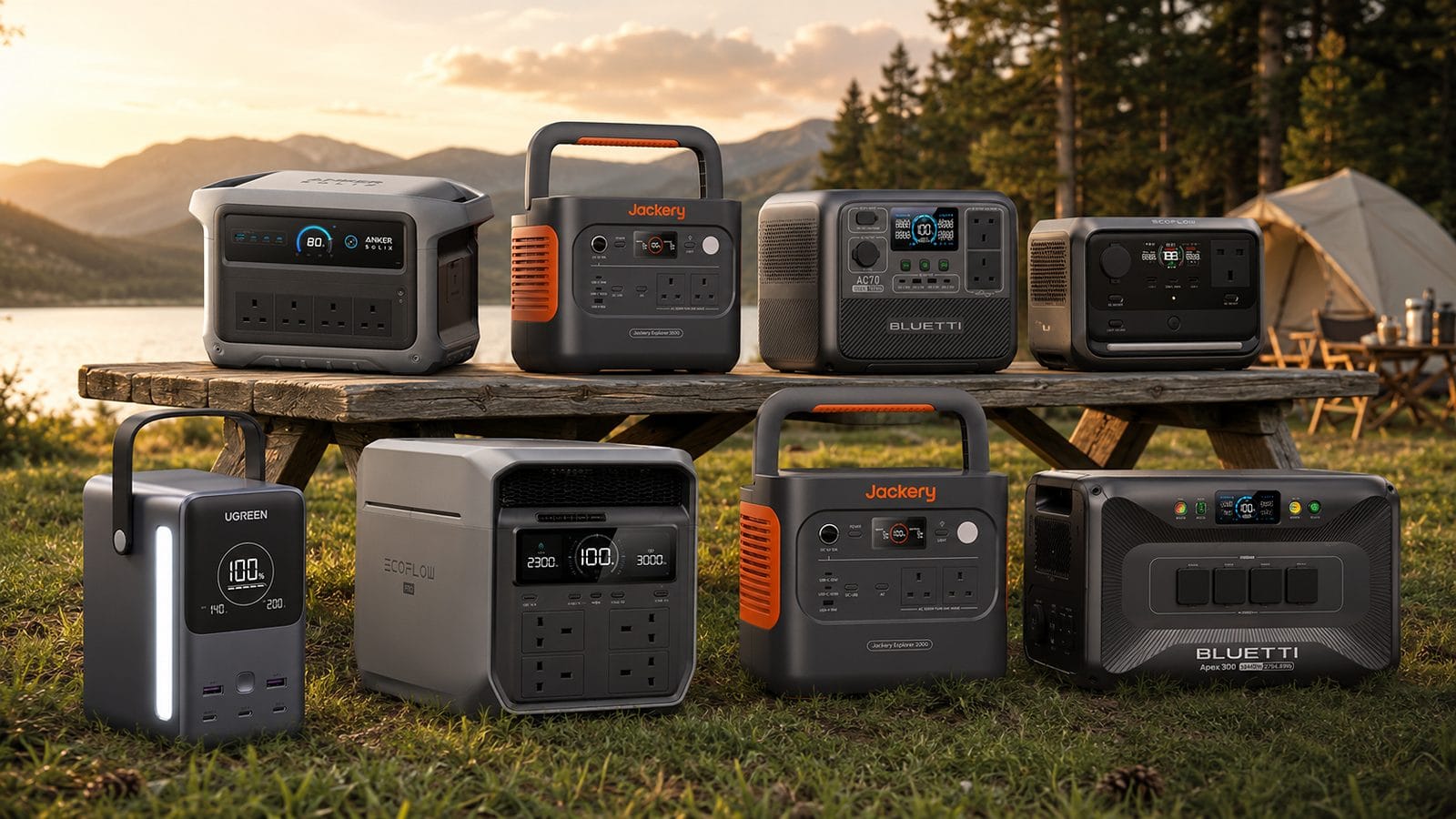
Best portable power station
Where this unit sits against six rivals, sorted by the job you are buying for.
Latest from SmartGadgetKit
 Lithium Ion Battery Fire Statistics 2026
 LISEN Power Bank Review: The Qi2.2 25W MagSafe 10000mAh, Measured
 How Long Does a Power Bank Last? Charges, Years and Sizing
 Anker Prime 250W Charger Review: 6-Port Desktop Hub
 Anker Prime 300W Power Bank Review: Two Laptops, One Socket-Free Table
 Jackery Explorer 2000 v2 Review: The Lightest Way to Carry 2kWh?
 BLUETTI Apex 300 Review: The Two Accessories That Are Not In The Box
 Anker MagGo vs UGREEN MagFlow: which 10,000mAh magnetic bank should you buy?
Tested by people who know what the numbers mean
SmartGadgetKit checks every spec against the manufacturer and independent sources, and tells you the trade-offs, not only the wins. Independent testing for this page comes from Trusted Reviews and StorageReview, credited where each figure appears.
