Review · Power banks · P604
LISEN Power Bank Review: The Qi2.2 25W MagSafe 10000mAh, Measured
This LISEN power bank review is the first SmartGadgetKit page built on our own meter readings. Alisdair put the Qi2.2 25W magnetic portable charger on a WITRN USB power meter across four tests, so the wireless speed, the wired output and the 65W headline are measured here, not copied from the box.

Owned unit, measured on a USB power meter
SmartGadgetKit is reader-supported. We may earn a commission if you buy through links on this page, at no extra cost to you. LISEN sent this unit free for review; that changes nothing about what the meter recorded.
Expert Score
A certified Qi2.2 25W magnetic bank that held its wireless speed on the meter, offers the widest wired power budget of any 10000mAh MagSafe pack we have measured, and adds a USB-A port its two main rivals skip. The 65W on the box is genuine: our meter saw a 63W offer at full charge, and our devices simply never asked for that much.
Pros
- Qi2.2 25W confirmed in the WPC database, and it took an iPhone 17 from 7 to 50 percent in 30 minutes on our test
- A 63W PD budget at full charge with PD 3.2, PPS and AVS on offer, the widest wired offer in this class
- Three outputs, so an iPhone, an Apple Watch and AirPods all charge at the same time; the UGREEN MagFlow and Baseus PicoGo both lack the USB-A port
- Detachable USB-C cable clips onto a woven lanyard, so it cannot go missing and doubles as a carry loop
- 8.2 oz (232 g) on our scale, lighter than the UGREEN MagFlow
Cons
- LED level dots only, no percentage display
- 0.91 in (23.1 mm) thick, 7 mm more than the Baseus PicoGo, and you feel it stuck to a phone
Key takeaways
Six numbers from this LISEN power bank review
Quick specs
The paper numbers for the LISEN Qi2.2 25W MagSafe Power Bank 10000mAh (P604)
| Model number | P604 (regulatory 2E473) |
| Cell capacity | 10000mAh, three cylindrical Li-ion cells |
| Wireless charging | 25W Qi2.2, WPC certified |
| Wired USB-C output | 65W claimed; 63W PD budget at full charge on our meter |
| Wired USB-A output | 22.5W |
| Weight | 8.2 oz (232 g), SGK measured |
Specs from the LISEN and Amazon listings except where marked. Wireless certification confirmed in the WPC product database (QI-ID 26345). Weight and every wired figure measured by SGK on a WITRN USB power meter and a kitchen scale. See how we test and score.
First impressions
The LISEN MagSafe power bank is smaller than the spec sheet suggests. At 4.06 x 2.52 in (103.1 x 64 mm) its footprint is only a little larger than a credit card, about 0.7 in (17 mm) longer and 0.4 in (10 mm) wider, and 8.2 oz (232 g) in the hand feels lighter than magnetic banks that carry more weight and less output.
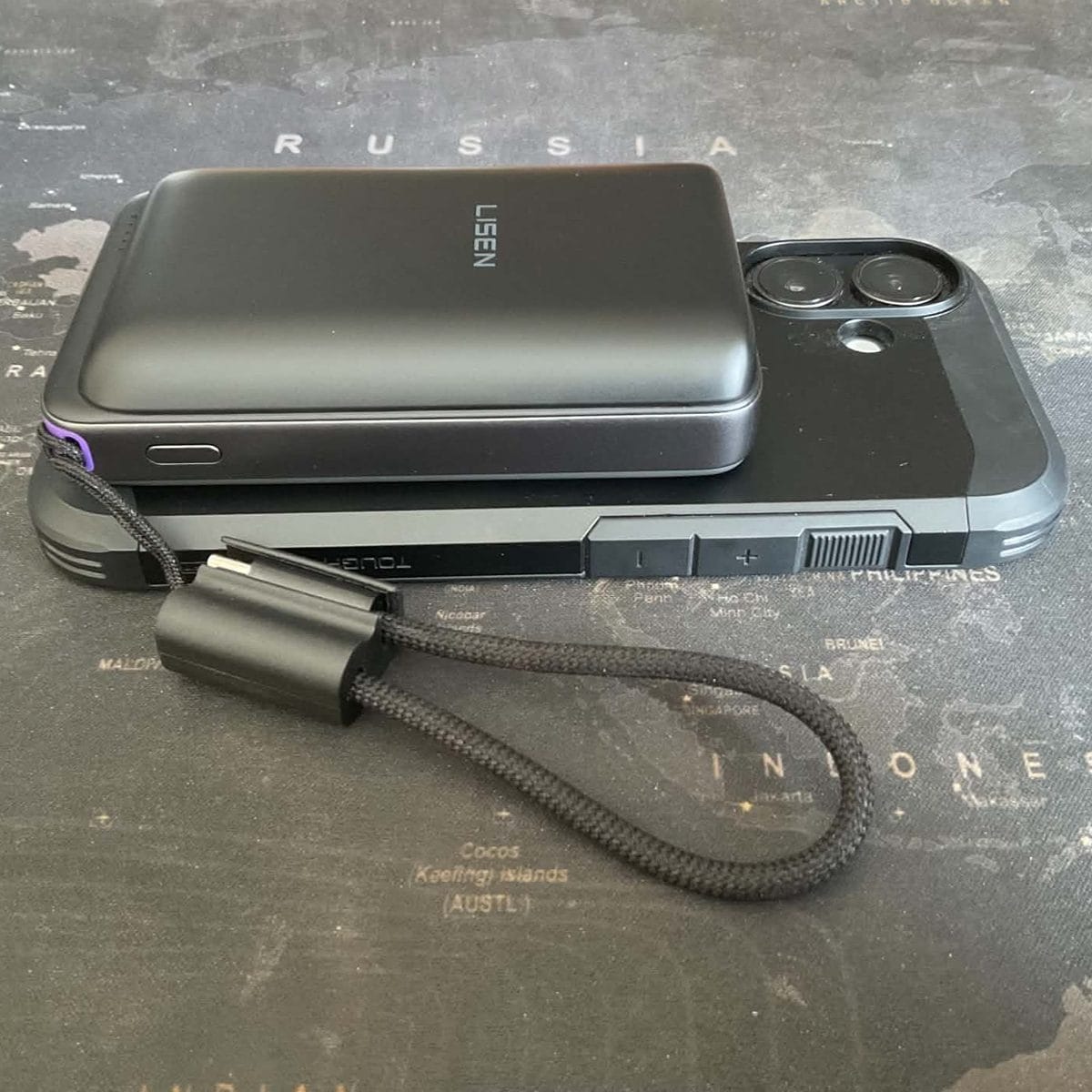
The matte black finish shows fewer marks than the polished shells on some rivals. Nothing creaks or flexes, and the magnets snap to the back of a phone with a click you can hear.
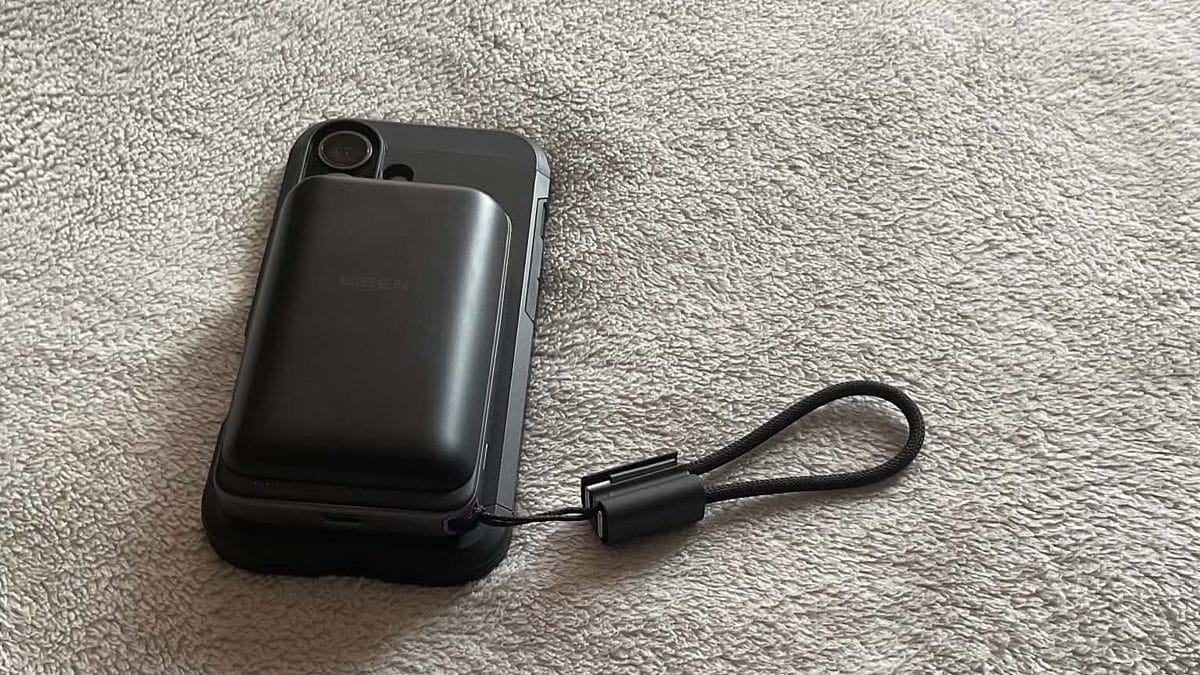
The detachable USB-C cable clips onto a woven lanyard that wraps the body. 9to5Mac called it the best part of the design, and after two weeks I agree: the cable is there when you need it, out of the way when you do not, and it turns the whole MagSafe battery pack into something you can clip to a bag strap.
Design and build
A magnetic bank built around three cylindrical cells and a cable you cannot lose
At 4.06 x 2.52 x 0.91 in (103.1 x 64 x 23.1 mm) this is thicker than the Baseus PicoGo at 0.63 in (16 mm) and about the same footprint as the UGREEN MagFlow. The extra depth comes from three separate cylindrical Li-ion cells in place of a pouch cell, which LISEN frames as a thermal and safety choice on its P604 product page.
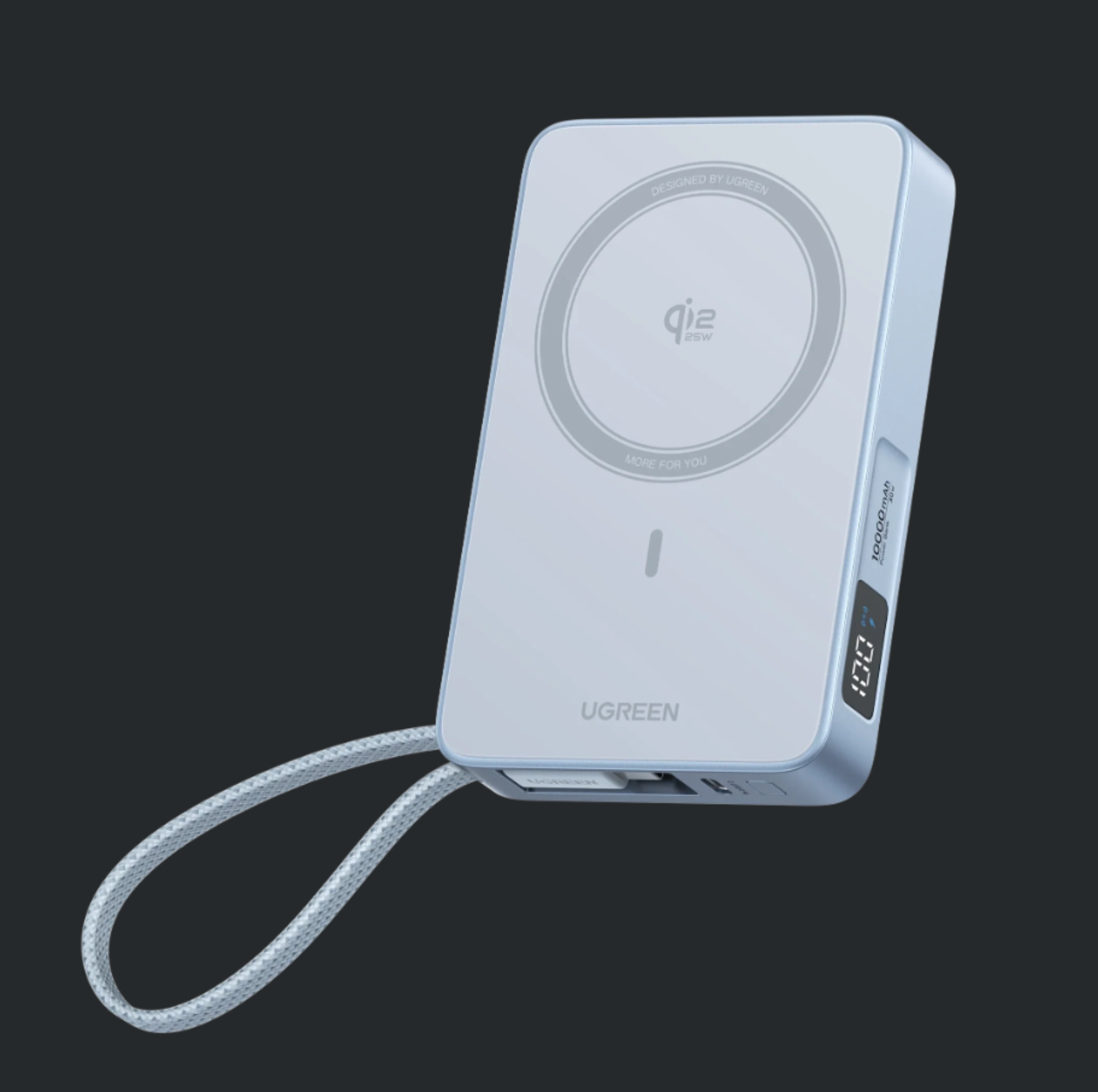
Three outputs: the Qi2.2 pad on top, a USB-C port and a USB-A port rated at 22.5W. That USB-A port is the differentiator in this class. Neither the UGREEN MagFlow nor the Baseus PicoGo has one, so this LISEN wireless power bank can feed a phone on the pad while earbuds or a watch take the USB-A.
It is the feature Alisdair likes most: iPhone on the pad, Apple Watch and AirPods on the two ports, all three charging from one bank at the same time. That is a thought-out detail rather than a spec-sheet line, and neither main rival can do it.
There is no percentage screen. Four LED dots tell you roughly what is left, never exactly, and if you want a number the UGREEN MagFlow prints one.
LISEN quotes 12N of magnetic hold and says it works through cases up to 5 mm thick. Through a standard case on an iPhone 17 the alignment has been immediate every time, with no repositioning and no slipping in a jacket pocket.
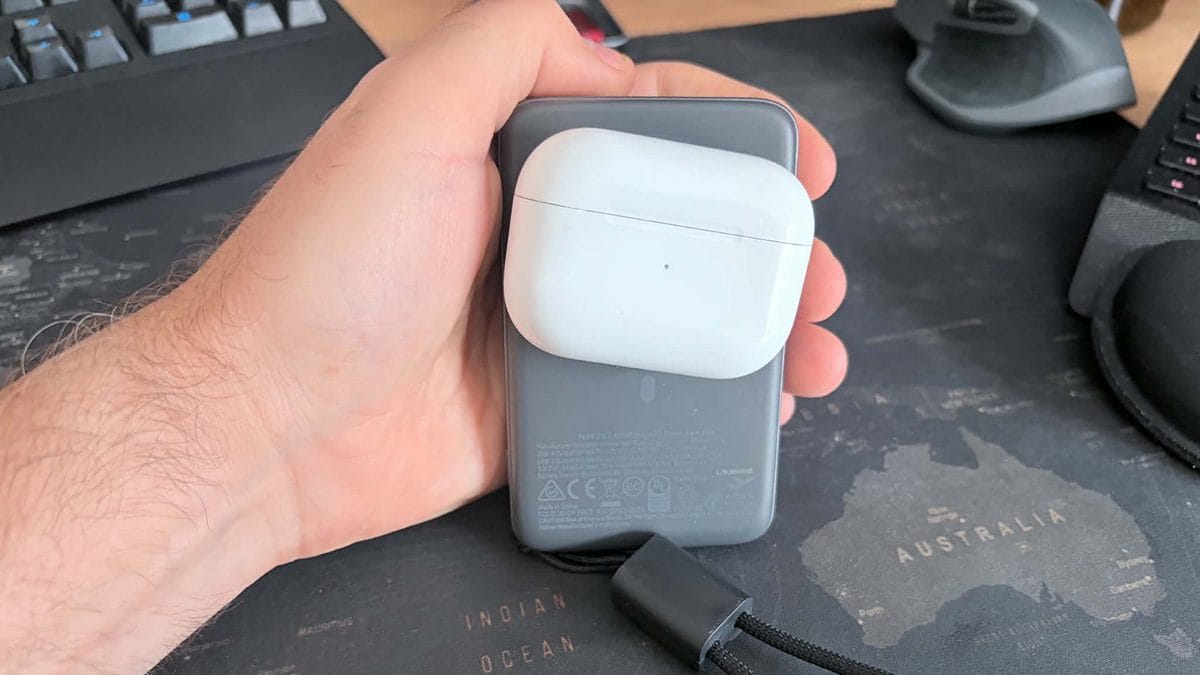
The wireless pad charges more than phones. AirPods Pro sit flat on it and pick up a charge without a cable, making the bank a one-stop top-up for a phone on the pad and earbuds afterwards.
In the box
You get the power bank, an 8 in (20 cm) detachable USB-C to USB-C cable on the woven lanyard, and a user guide. No wall charger is included; LISEN says a 30W charger refills the bank in about an hour and a half.
 Darleene asks
“My magnetic power bank charges my phone on the ward with no cable at all. Why would I care whether the box says Qi2 or Qi2.2?”
Alisdair’s answer: Speed, and how much of your 20 minutes before a shift it uses up. Your bank most likely charges at 7.5W or 15W. This one is certified to push 25W, and on the meter it took an iPhone 17 from 7 to 50 percent in half an hour.
The “2.2” is the version of the Qi standard it was tested against. The Wireless Power Consortium, the body that writes the standard, lists this exact model as a qi2 certified power bank (QI-ID 26345, April 2026). Some brands print Qi2 on the box without the certificate behind it; this one has it.
What it changes for you is simple. Stick it on at 6pm with the phone on 20 percent, and by the time you have found your keys the phone is usable for the evening.
Measured on the meter
What the LISEN power bank delivered on a USB power meter
Four recordings on a WITRN USB power meter, run by Alisdair with a UGREEN 240W cable, plus one wireless session with the bank stuck to an iPhone 17. Every figure below is ours.
10 minutes 55 seconds from a full bank. The phone took the 15V profile at 2.66A and the ripple sat between 58 and 67mV, which is clean power.
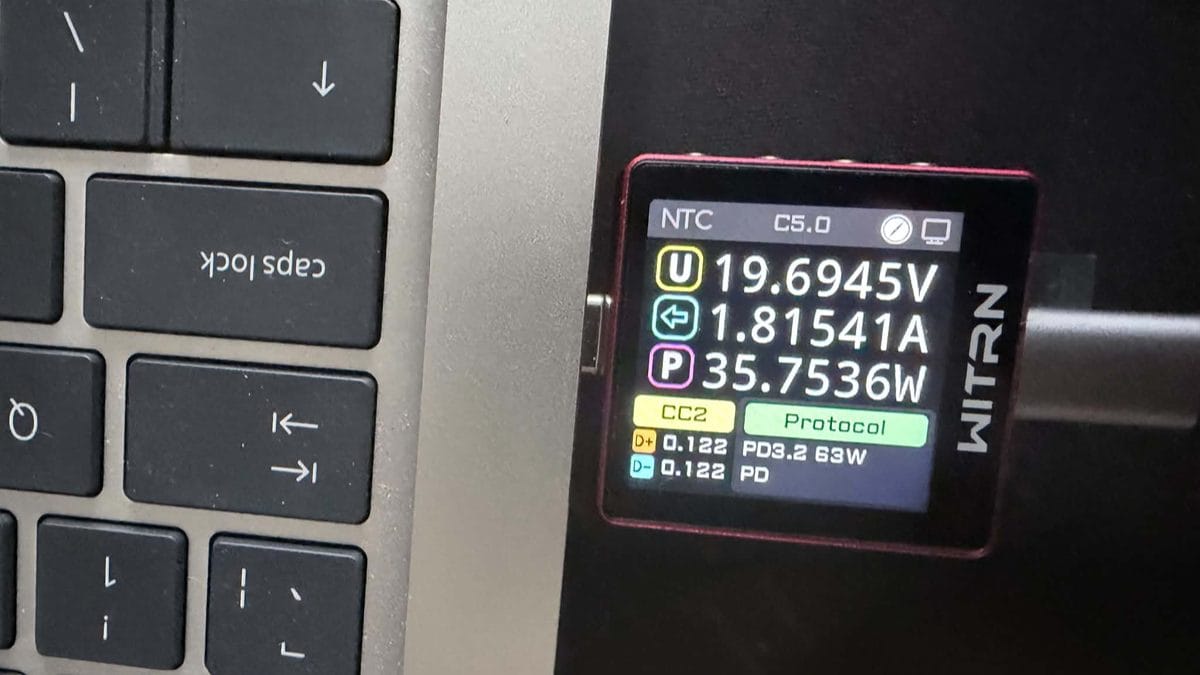
7 minutes 10 seconds with the iPad starting at 33 percent. The highest delivery in any of our tests, again on the 15V profile, ripple 48mV.
No cable, bank stuck to the back of the phone. Mildly warm to the touch, no camera interference, secure hold, and the bank still showed full afterwards.
The number that matters is not on any of those cards, and it needs one distinction: offered against drawn. Before any power flows, a USB-C power bank hands the device a menu of what it is willing to supply; the device picks one line and then draws only what it needs.
With the bank full, on the laptop test, the top line of that menu was 20V at 3A, a 60W offer inside a 63W budget, and that is the 65W on the box, seen on the meter rather than read off the listing. By the phone test the same line had dropped to 20V at 2A, a 40W offer, and it kept falling to 39W and then 34W on the iPad run.
Our devices took what they needed, which was well short of the offer. The iPad drew the most at 35.75W, the iPhone 17 averaged 23.5W, and the nearly full laptop drew 8.4W because it wanted no more.
That gap is the devices, not the bank. A USB-C device picks the profile it wants and draws only what it needs, and no power bank can push more than it is asked for. So the honest summary is a genuine 63W offer at full charge, 35.75W the most anything asked for, and an offer that shrinks as the bank empties.
Power quality was good where it counts. The 15V rail measured 48 to 67mV of ripple across both tests, under the 100mV line we treat as clean; the 20V rail on the laptop test ran noisier at 114 to 119mV, which is typical of a battery pushing its top voltage and not a fault.
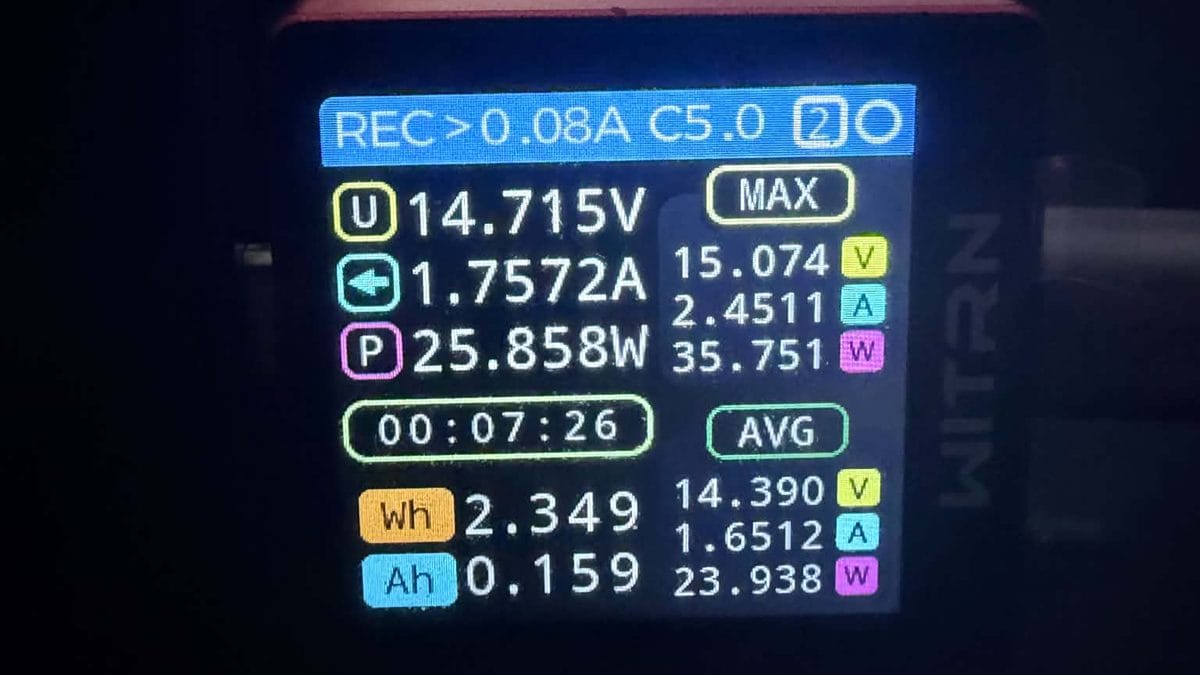 Darleene’s version: The wireless speed is real, and so is the big wired number: the meter watched the bank offer 63W on a full battery. Your phone just does not need that much, so it takes what it wants and leaves the rest.
10000mAh at 3.7V nominal comes to about 37Wh, well under the 100Wh cabin ceiling the TSA, the FAA and the UK CAA all apply. It flies in a carry-on without approval, and it gives an iPhone 17 roughly two full charges.
If measured 25W wireless and a real 35W of wired delivery cover what you need, the listing is one tap away.
LISENCheck latest price amazonCheck latest priceThe headline figure
Does the LISEN power bank really deliver 65W?
Yes, as an offer, and we watched it happen. At full charge the bank put a 63W PD budget on the table, 20V at 3A on its top profile, which is the 65W headline within a couple of watts and wider than the 30W and 45W wired ratings of the UGREEN MagFlow and Baseus PicoGo.
Whether anything draws that much is down to the device on the other end of the cable, and none of ours needed to. A phone, a tablet and a nearly full laptop each picked the profile they wanted and drew between 8.4W and 35.75W. Like most power banks it steps the offer down as the cells drain, normal protective behavior rather than a fault: 63W when full, then 40W, 39W and 34W by the iPad test.
That is the original finding on this page. LISEN’s own UK listing says 45W, its US listing and product page say 65W, and both are true at different states of charge. No other reviewer has put a meter on the P604 and documented the sliding offer.
Here is the full list the bank presented at full charge, read off the meter.
| Profile | Type | Voltage | Current | Maximum |
|---|---|---|---|---|
| 1 | Fixed | 5V | 3A | 15W |
| 2 | Fixed | 9V | 3A | 27W |
| 3 | Fixed | 12V | 3A | 36W |
| 4 | Fixed | 15V | 2.66A | 39.9W |
| 5 | Fixed | 20V | 3A at full charge, 2A later | 60W, then 40W |
| 6 | AVS | 9 to 15V | 2.66A | variable |
| 7 | PPS | 3.3 to 11V | 3A | 33W |
USB PD 3.2 power data objects as advertised by the P604 to a WITRN USB power meter, August 31 to September 1, 2026. Profile 5 is the one that moves: 20V at 3A when full, 20V at 2A once the bank has been used.
Portability and daily carry
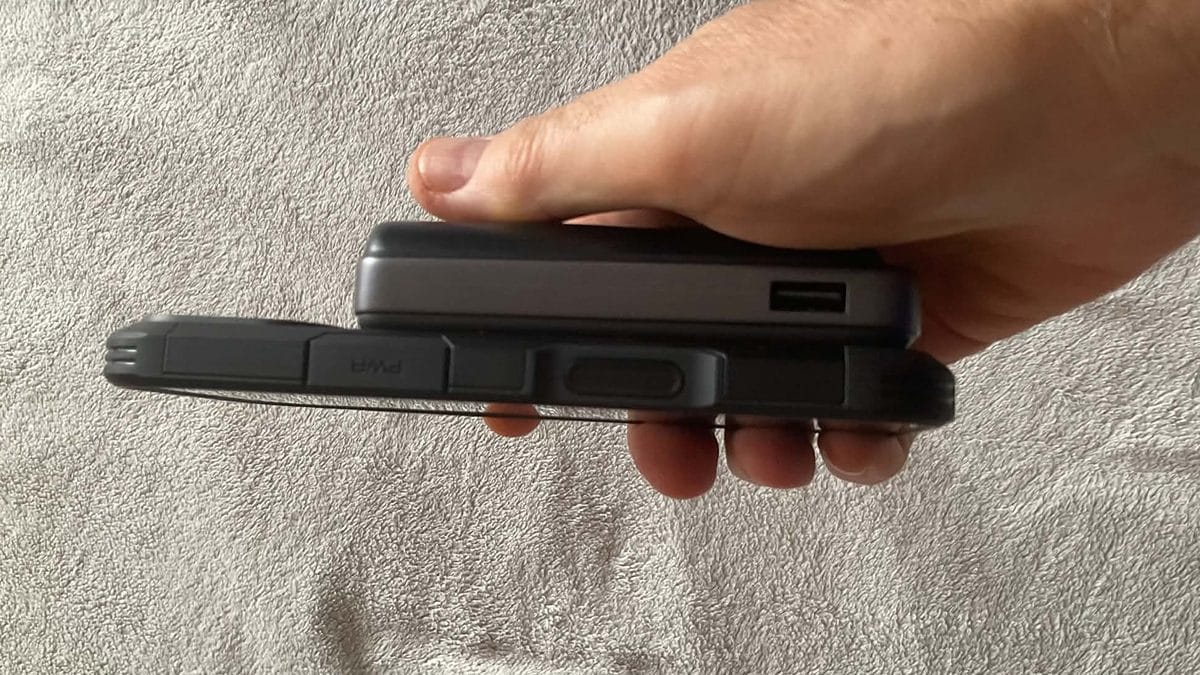
8.2 oz (232 g) sits in a jacket pocket or a small bag without complaint. It is lighter than the UGREEN MagFlow at 254 g and heavier than the Baseus PicoGo at 211 g, which is a fair place to land for a 10000mAh MagSafe power bank that carries a USB-A port the other two skip.
On the SGK carry table for the 10000mAh class, 232 g and 0.91 in (23.1 mm) is mid-band, and that is where the Portability score lands below. The thickness is the part you notice: stuck to a phone it is comfortable for a top-up on the train, less so for a long call held in one hand.
The lanyard changes the sums. Clip it to a bag strap and the weight comes off your wrist entirely, which is not something the built-in-cable rivals can do.
Can you take a MagSafe power bank on a plane?
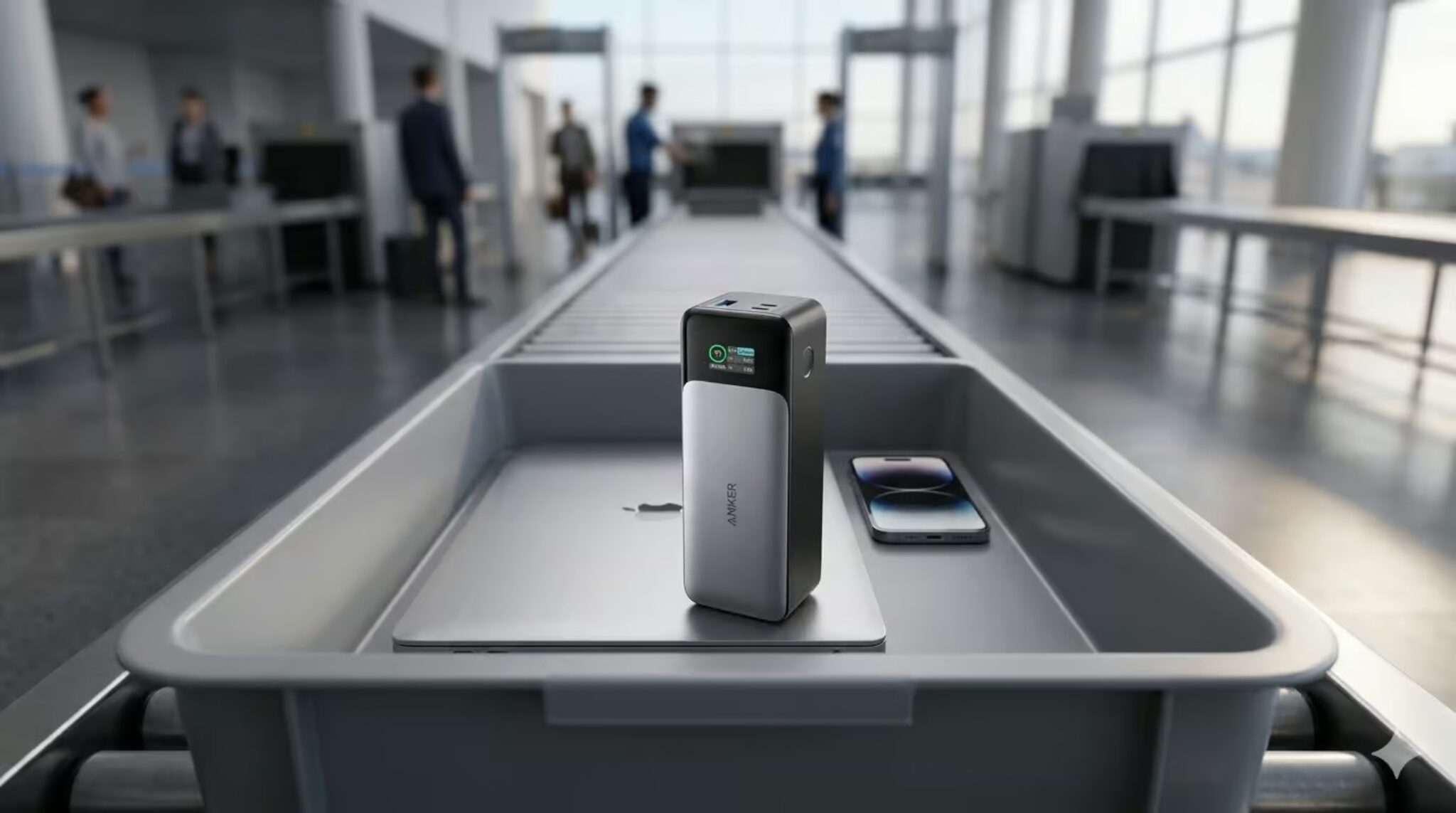
Yes, this one. At about 37Wh (10000mAh at 3.7V nominal) it sits well under the 100Wh ceiling the TSA and the FAA apply in the US and the CAA applies in the UK. Nothing about a magnetic pack changes the battery rule.
It travels in your carry-on, never in a checked bag. For a bank that lives on the back of your phone, that is where it would be anyway.
Airlines set their own limits on how many you may carry and whether you may use one in flight, so check before you fly. Our guide to taking a power bank on a plane covers the cabin rules in detail, and our mAh to Wh calculator checks any capacity in seconds.
Specifications
Every figure, with its source attached
Manufacturer figures are specifications or claims. Measured figures are ours, from a WITRN USB power meter and a kitchen scale. The wireless certification is independently confirmed.
| Specification | Figure | Source |
|---|---|---|
| Model number | P604 (regulatory model 2E473) | LISEN; the Amazon UK listing prints both 2E473 and a 2E437 typo |
| Cell capacity | 10000mAh | LISEN |
| Rated energy | about 37Wh, calculated at 3.7V nominal | SGK calculation; LISEN does not print Wh |
| Wireless charging | 25W Qi2.2 | WPC QI-ID 26345, spec 2.2.1, MPP25, certified April 23, 2026 |
| Wired USB-C, claimed | 65W (US listing, lisen.com); 45W (UK listing) | LISEN |
| Wired USB-C, measured | 63W budget at full charge, falling to 34W; 35.75W highest delivery | SGK, WITRN USB power meter, August 31 to September 1, 2026 |
| Protocols seen on the meter | USB PD 3.2 with PPS (3.3 to 11V, 3A) and AVS (9 to 15V) | SGK, WITRN |
| Wired USB-A output | 22.5W | Notebookcheck, from LISEN |
| USB-C input | about 30W, refill in about 1.5 hours | LISEN |
| Dimensions | 4.06 x 2.52 x 0.91 in (103.1 x 64 x 23.1 mm) | Notebookcheck; Amazon UK lists 10.3 x 6.4 x 2.3 cm |
| Weight | 8.2 oz (232 g) with the lanyard cable | SGK, kitchen scale, August 20, 2026. Notebookcheck prints 138 g, which is wrong |
| Magnetic force | 12N | lisen.com |
| Battery cells | Three cylindrical Li-ion cells | LISEN |
| Display | Four LED dots, no percentage screen | LISEN |
| Certifications | Qi2.2 (WPC), FCC, UL, TUV, DOE, CEC, UN38.3, RoHS | LISEN; Qi2.2 independently confirmed |
| In the box | Power bank, 8 in (20 cm) USB-C cable on a woven lanyard, user guide. No wall charger | LISEN |
| Warranty | 1 year | Amazon UK listing |
One discrepancy to flag. Notebookcheck published 138 g for this model, and our scale reads 232 g with the cable attached. T3 reported 206 g, which may be a different color or a reading without the lanyard, so we trust our own number.
If the numbers already make the case for you, the current Amazon listing is one tap away.
LISENCheck latest price amazonCheck latest priceScoring
How the LISEN Qi2.2 25W scores
Four category scores on the SGK MagSafe rubric, weighted 30, 25, 25 and 20 percent. The preliminary 8.0 we published on August 31 was scored on claims; this is scored on the meter.
The weighted total is 8.2: wireless speed at 30 percent, magnetic hold and portability at 25 each, value at 20. It rises from the preliminary 8.0 because the two things we could not verify in August, the wireless speed and the hold, both held on the meter and in daily use. The wired side proved its 63W offer on the meter too.
The verdict
The LISEN Qi2.2 does three things that set it apart among 25W MagSafe power bank options at 10000mAh: it carries a certification we checked at the source, it held its wireless speed on our meter, and it adds a USB-A port that neither the UGREEN MagFlow nor the Baseus PicoGo offers.
What you give up is a percentage display and a slimmer body. Neither is a fault in daily use; they are the trade for the price tier it sits in.
If you want certified Qi2.2 wireless with three outputs and can live with LED dots, it is an easy recommendation. If you want a number on a screen or the thinnest pack on the back of your phone, the alternatives below are the better fit.
Certified 25W wireless that held on the meter, three outputs, and lighter than the main rival. That is the case for it.
LISENCheck latest price amazonCheck latest priceShould you buy it?
Where it wins, and where it costs you
Buy it if
- You want certified Qi2.2 25W wireless that has been measured, not assumed
- You need a USB-A port beside the pad and the USB-C for earbuds or a watch
- A cable that lives on the bank and cannot be left in a hotel room appeals to you
- You fly often and want capacity comfortably under the 100Wh line
Do not buy it if
- You want a battery percentage on a screen rather than four LED dots
- You want the thinnest pack on the back of your phone; the Baseus PicoGo is 7 mm slimmer
Measured wireless, a wired offer the meter backed up, three outputs, and a page that tells you what your own devices will take from it. That is what you are buying into.
LISENCheck latest price amazonCheck latest priceHow it compares
The two products a reader is most likely weighing against it
| LISEN Qi2.2 25W (P604) | UGREEN MagFlow 10K | Baseus PicoGo 10K | |
|---|---|---|---|
| Wireless | 25W Qi2.2, held on our meter | 25W Qi2.2 | 25W Qi2.2 |
| Wired USB-C | 63W budget at full, 35.75W highest seen | 30W (built-in cable) | 45W (built-in cable) |
| USB-A | 22.5W | None | None |
| Weight | 8.2 oz (232 g), SGK measured | 9.0 oz (254 g) | 7.4 oz (211 g) |
| Thickness | 0.91 in (23.1 mm) | 0.83 in (21 mm) | 0.63 in (16 mm) |
| Display | LED dots | Percentage screen | LED dots |
| Cable | Detachable, on a lanyard | Built in, 30W | Built in, 45W |
| Best for | Measured 25W with three outputs | The screen and the built-in cable | The thinnest profile in the class |
UGREEN weight from Trusted Reviews, Baseus weight and thickness from the Baseus product page. LISEN figures measured by SGK. All other figures from the manufacturer product pages.
If this one is not the fit
Three alternatives, three different readers
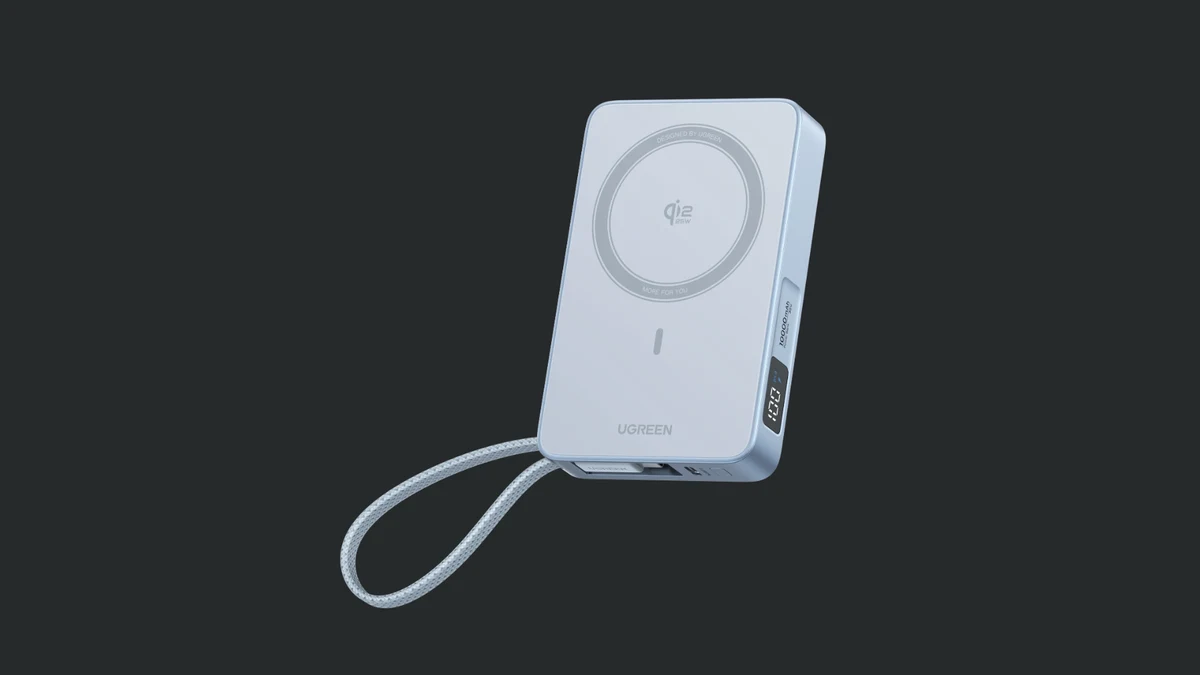
UGREEN MagFlow 10,000mAh Qi2.2 25W
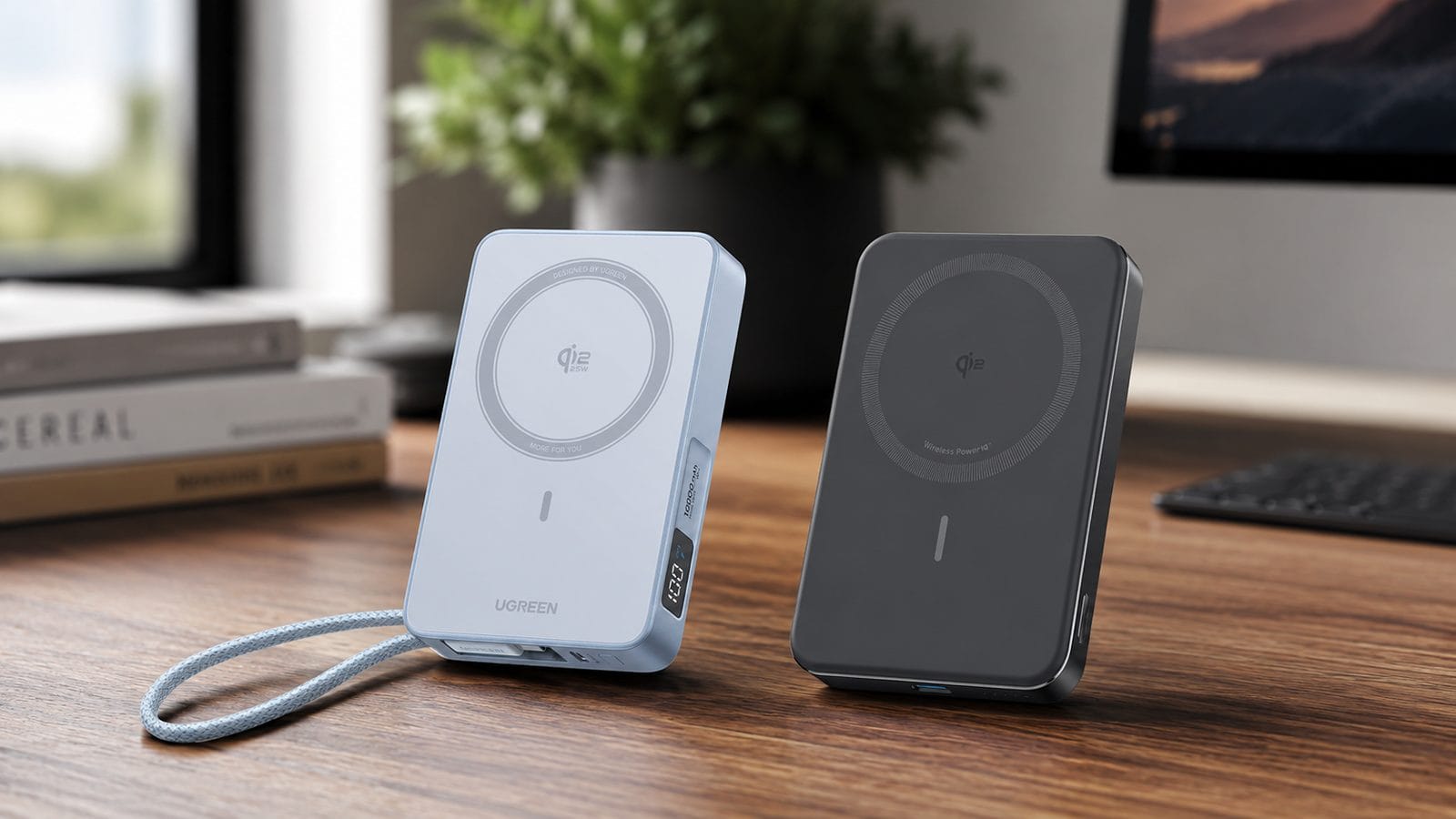
The same 25W Qi2.2 and 10000mAh with a built-in USB-C cable and the percentage display the LISEN lacks. The trade is a 30W wired ceiling, no USB-A, and 254 g against 232 g.
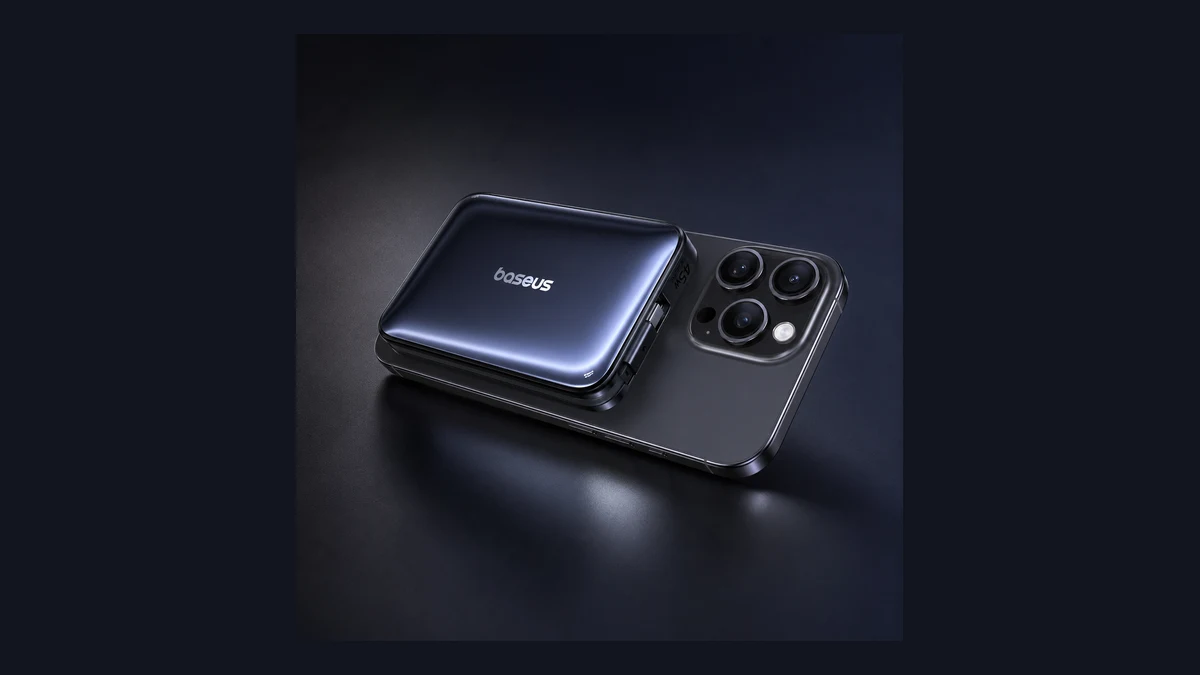
Baseus PicoGo 10,000mAh Qi2.2 25W
Also 25W Qi2.2 and 10000mAh, at 0.63 in (16 mm) against the LISEN’s 0.91 in (23.1 mm), with a 45W built-in cable. No USB-A and a lower wired budget; the pick if the bank lives on the back of the phone all day.
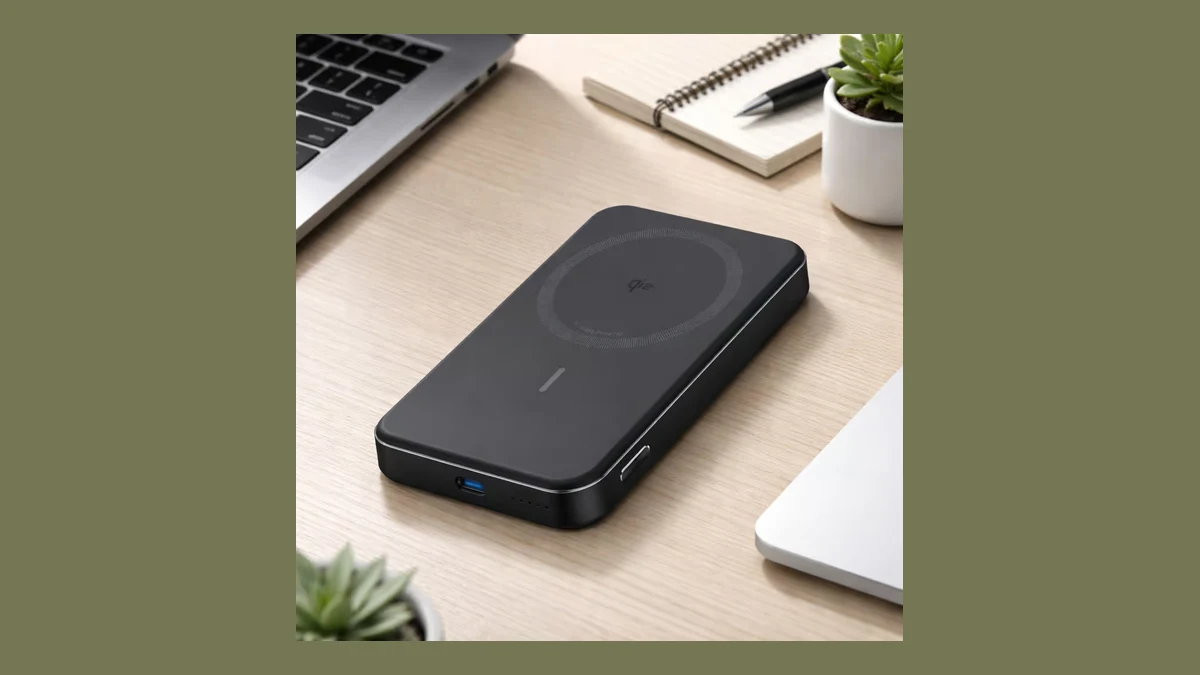
Anker MagGo 10,000mAh Qi2 15W
The safe-brand choice, slim and Qi2 certified, but at 15W wireless rather than 25W Qi2.2, so it charges an iPhone at a little over half the LISEN’s speed. No USB-A. Pick it for the brand and the body, not the numbers.
FAQ
Questions readers ask
Is LISEN a good brand?
For charging accessories, yes, with the usual caveat about a newer name. LISEN sells through Amazon in the US, the UK and Europe, its P604 carries a certificate in the Wireless Power Consortium database rather than a Qi2 logo alone, and the unit we measured delivered what that certificate promises. The 65W wired headline held up too: the meter saw a 63W offer at full charge, shrinking as the bank drains.
What is the difference between Qi2 and Qi2.2?
Qi2 tops out at 15W wireless. Qi2.2 raises the ceiling to 25W through the MPP25 power profile, which is what this bank is certified for. Both use the same magnetic ring, so a Qi2 phone still attaches to a Qi2.2 bank; it charges at the phone’s own limit.
Qi2 vs MagSafe: what is the difference?
MagSafe is Apple’s name for its magnetic charging system on the iPhone. Qi2 is the open industry standard built on the same magnetic alignment, so a qi2 vs magsafe choice is mostly about branding: a Qi2 or Qi2.2 accessory snaps to an iPhone exactly as a MagSafe one does. The practical difference is speed, and that is set by the accessory’s certified profile, 15W for Qi2 and 25W for Qi2.2.
Does the LISEN power bank really deliver 65W?
Yes, as an offer: on our meter the bank advertised a 63W budget at full charge, 20V at 3A on its top profile, so the headline is genuine. How much of it you see depends on the device; ours drew 35.75W at most because that was all they asked for. Like most power banks it steps the offer down as it drains, to 40W, 39W and 34W in our tests, so a laptop gets the most from a freshly charged pack.
Does a Qi2 power bank work with Android phones?
Yes. Qi2 and Qi2.2 are open standards, so a Pixel 9, Pixel 10 or any other Qi2 phone attaches to the ring and charges at its own certified speed. Looking for a MagSafe power bank Android owners can use without a magnetic case? A Qi2-certified bank like this one is the answer, because the magnets are part of the standard rather than an Apple extra.
Can you take a MagSafe power bank on a plane?
Yes, in a carry-on. This one is about 37Wh, well under the 100Wh line the TSA, the FAA and the CAA all use, and the magnets do not change the rule. It never goes in a checked bag; our power bank flight guide covers the per-airline detail.
Does the LISEN power bank charge through a phone case?
Through a standard MagSafe-compatible case, yes. LISEN rates it for cases up to 5 mm thick, and on an iPhone 17 in a normal case it has aligned first time every time. A non-magnetic case or a very thick one will weaken or block the hold.
How fast does the LISEN power bank charge an iPhone 17 wirelessly?
7 to 50 percent in 30 minutes on our test, stuck to the back of the phone with no cable. That is 43 points in half an hour, the bank stayed only mildly warm, and it still showed full afterwards. It is the fastest MagSafe power bank we have measured so far, which at the time of writing is also the only one, so read that as a benchmark rather than a league table.
Is the LISEN Qi2.2 power bank worth it?
If you want certified 25W wireless with a USB-A port at the value end of the class, yes. We score it 8.2 out of 10 on the MagSafe rubric, up from a preliminary 8.0 once the wireless speed and the magnetic hold held on the meter. If you want a percentage screen, the UGREEN MagFlow is the better buy.
How long does the LISEN portable charger take to recharge?
LISEN quotes about an hour and a half from a 30W USB-C wall charger, and there is no charger in the box. We have not timed a full refill on the meter yet, so treat that as the manufacturer’s figure.
Final word
A certified Qi2.2 bank that kept its promises on the meter
The wireless speed is real, the hold is real, the cable system is clever, and the USB-A port gives this LISEN power bank a flexibility neither main rival matches. The 65W on the box is backed by a 63W offer on our meter, and now you know exactly what your own devices will take from it.
See how we test, or see where it ranks against the rest in our best MagSafe power banks roundup, where it carries the Best tested label.
Keep reading
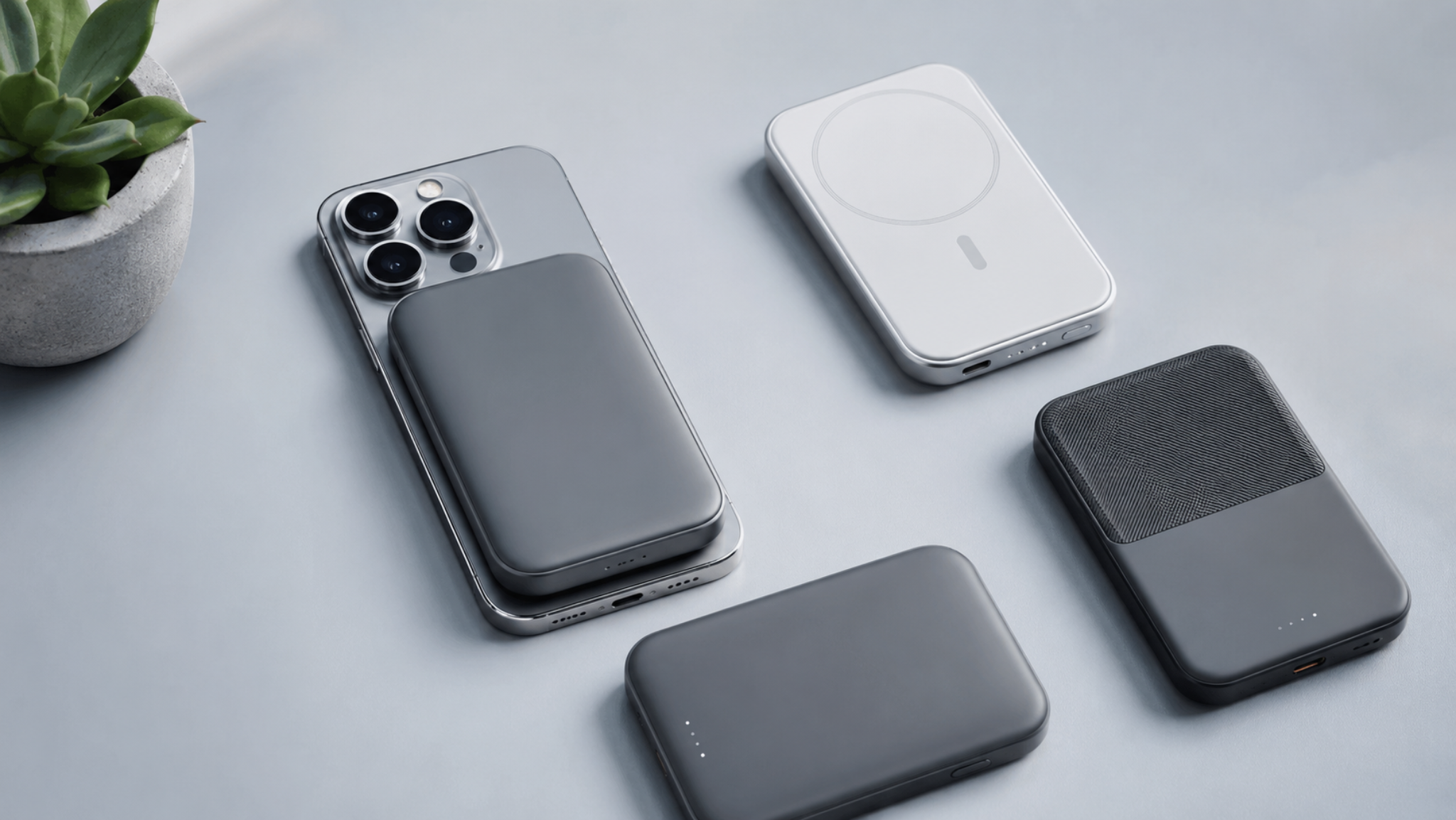
Best MagSafe Power Banks 2026
Seven Qi2 picks ranked, including this LISEN as pick 7.
UGREEN MagFlow Review
The main rival at the same capacity and wireless speed, with the screen this one lacks.
Anker MagGo vs UGREEN MagFlow
The two brand-name magnetic banks head to head, and which one wins for whom.
Can you take a power bank on a plane?
The 2026 airline rules: watt-hour limits, how many you may carry, and in-flight use.
Best Power Banks 2026
The wider roundup across every size, from pocket 10000mAh banks to 300W laptop packs.
How to choose a power bank
The buying guide that starts from your job rather than the spec sheet.
Tested by people who use this kit
SmartGadgetKit checks every spec against the manufacturer and independent sources, and tells you the trade-offs, not only the wins. This page is different from most of ours: the wired output, the wireless speed and the weight were measured on our own meter and scale, and the numbers are credited where each figure appears.