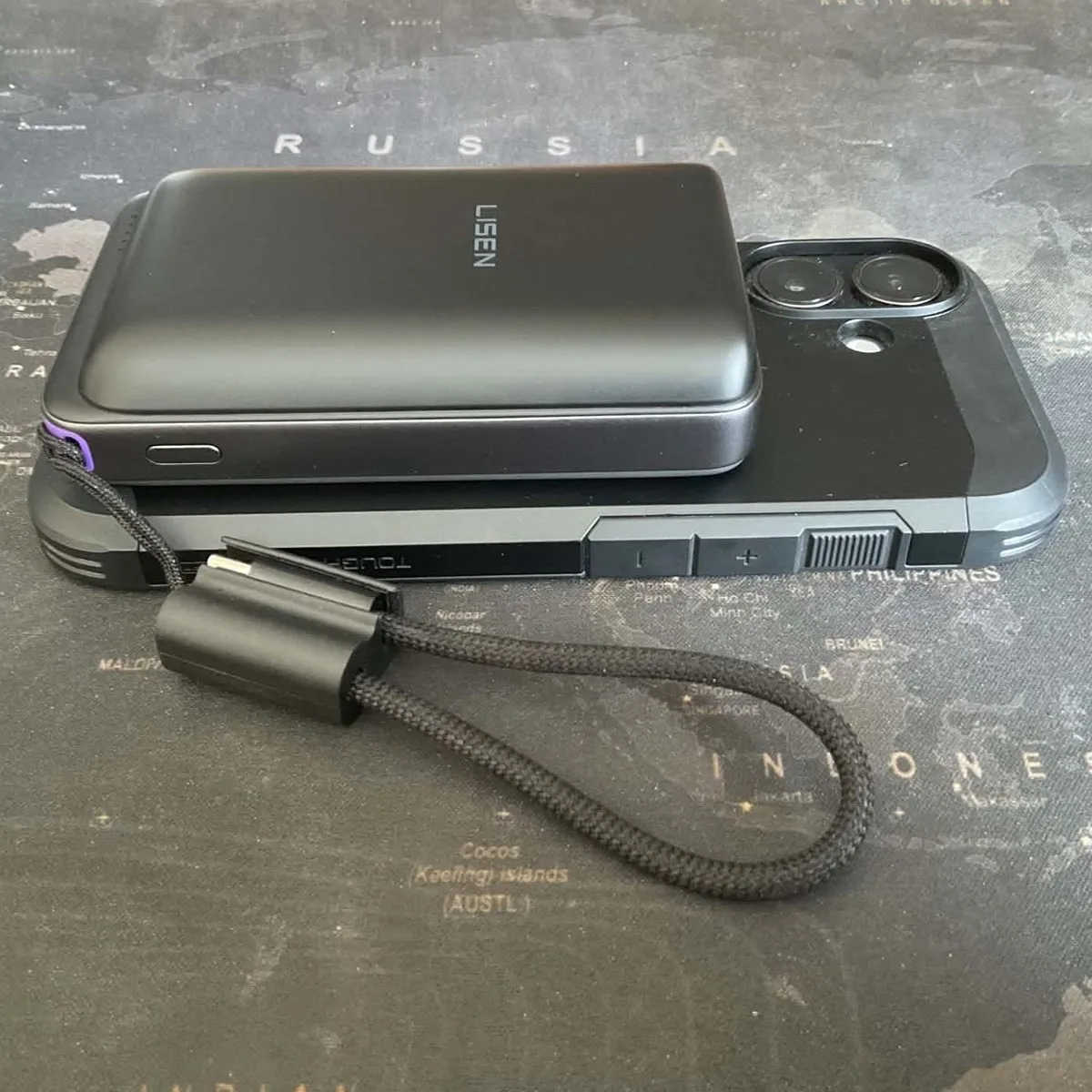
Explainer
Lithium ion battery fire statistics: how often do they catch fire?
Lithium ion battery fire statistics for 2026, from flights to portable charger recalls, with every figure linked to the regulator, standards body or researcher that published it. Power banks, phones, chargers and batteries, all in one sourced table you’re free to cite.
The short answer
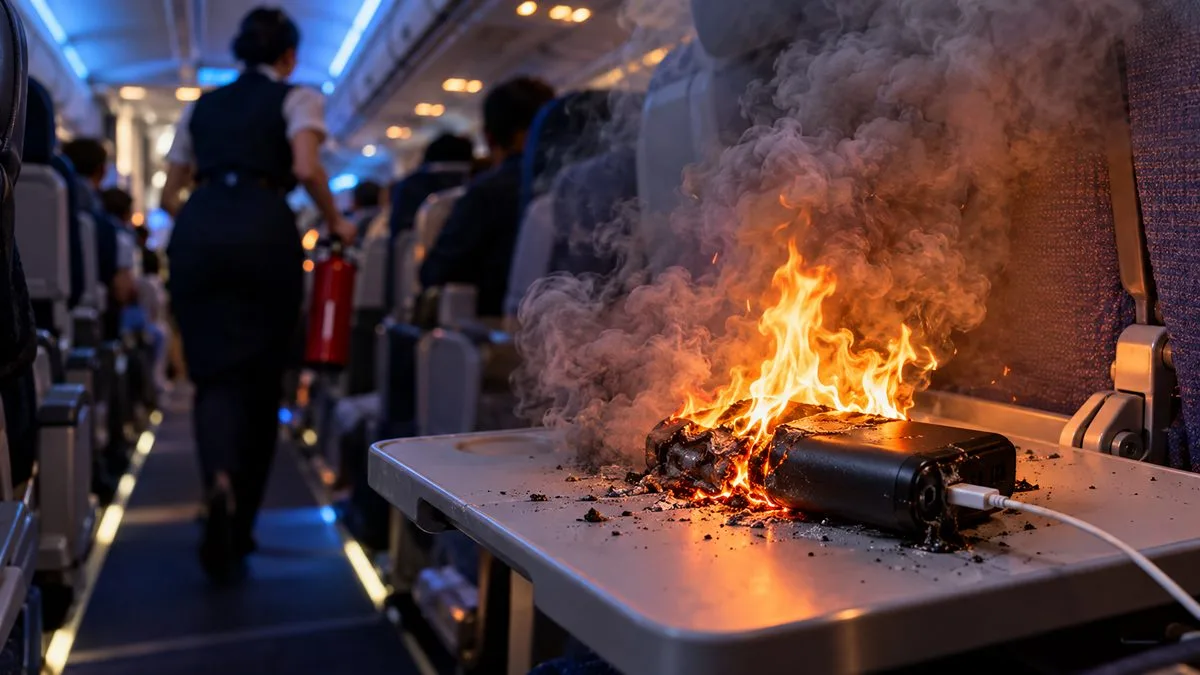
About twice a week on flights. Power banks are one in five.
In 2024 an average of two flights a week had a lithium battery overheat, smoke or fire incident, according to UL Standards and Engagement’s aviation data review. Power banks caused 19 percent of passenger-flight incidents, second only to vapes at 28 percent.
- On planes: 89 percent of incidents happened on the aircraft, and 18 percent forced a diversion, a return to the gate, an evacuation or unplanned deplaning
- At home: two 2025 Anker recalls covered about 1.6 million power banks after 52 reports of fire or explosion between them
- The rule that matters: power banks fly in carry-on only, up to 100Wh each without airline approval
Facts checked September 5, 2026 against UL Standards and Engagement, the FAA, the CPSC and each source linked in the table. How we test and score. Every figure is free to reuse with credit: see the terms.
The short version
The 4 numbers that matter
Everything below unpacks these. Each one is sourced in the table further down.
Fires on planes
How many lithium battery fires happen on planes each year?
The lithium battery fires on planes statistics most often quoted come from two data sets. They count slightly differently, so we don’t add them together.
The fullest breakdown is the UL Standards and Engagement 2024 data review, published in May 2025 from its TRIP incident database. By the end of 2024 that database held 942 incident records across 75 carriers.
Its 2024 count of passenger-flight incidents was the second highest since 2019. Of those incidents, 89 percent happened on the aircraft itself, and 52 percent happened during cruise, when the plane is furthest from an airport.
For FAA lithium battery incidents, the regulator publishes an interactive chart of smoke, fire and extreme heat events it is aware of. The FAA says the chart isn’t a complete list; it was last updated August 11, 2026.
The UL report, citing FAA data, puts the FAA’s 2024 figure 12 incidents higher than 2023, a 16 percent rise. On August 25, 2025 the FAA issued Safety Alert for Operators 25002, voluntary guidance asking airlines to review their passenger messaging on power banks and portable chargers.
The TRIP total and the FAA total are different data sets. The report says the two draw on slightly different inputs, so never add a TRIP figure to an FAA figure or compare them as if they were one count.
Are power banks the main cause?
Not quite, though they’re close. On passenger flights in 2024, vapes caused 28 percent of incidents, power banks 19 percent, phones 18 percent and laptops 15 percent, per the same UL review. So power bank on plane incidents make up about one in five, not the majority.
One figure surprises people: only one incident, 1 percent, involved charging from the aircraft’s own seat outlet.
 Darleene asks
“Two a week sounds scary. Should I stop flying with my power bank?”
Alisdair: no. That is why the rule is carry-on only: if a bank does overheat, the crew can reach it in seconds, which nobody can do in the hold.
Keep it in your carry-on, keep it where you can see it rather than in the overhead bin, and retire any bank that’s swollen, dented or runs hot.
A power bank you can see is a power bank the crew can deal with. Seat pocket, not overhead bin.
Passengers
What percentage of passengers carry a portable charger?
These power bank statistics come from the passenger survey of US travelers published in the same UL Standards and Engagement report.
Survey of US travelers, UL Standards and Engagement, May 2025. Figures are self-reported.
What is the watt-hour limit for a power bank on a plane?
Under FAA PackSafe, spare lithium-ion batteries and power banks go in carry-on bags only, and must come out of any bag checked at the gate. Each one is limited to 100Wh.
Between 101 and 160Wh needs airline approval, with a limit of two spares per person. At the 3.7V cell rating, 100Wh works out to about 27,000mAh, a calculated estimate using Wh = mAh × 3.7 ÷ 1,000.
Checking your own bank? The airline-by-airline rules and a calculator are one click away.
Can you take a power bank on a plane?The sourced reference table
Every statistic, row by row
All the lithium ion battery fire statistics on this page, one per row. Each statistic’s name links to the source we read, and every row carries the month we last checked it.
| Statistic | Figure | Period | Source | Worth knowing |
|---|---|---|---|---|
| Flights and passengers | ||||
| Flights with a lithium battery incidentChecked Sep 2026 | 2 a week, on average | 2024 | UL Standards and Engagement | Thermal runaway incidents, meaning overheating, smoke or fire |
| Incidents on the aircraftChecked Sep 2026 | 89% | 2024 | UL Standards and Engagement | 52 percent happened during cruise |
| Incidents that disrupted the flightChecked Sep 2026 | 18% | 2024 | UL Standards and Engagement | A diversion, return to gate, evacuation or unplanned deplaning |
| Incidents by deviceChecked Sep 2026 | Vapes 28%, power banks 19%, phones 18%, laptops 15% | 2024 | UL Standards and Engagement | Passenger flights only |
| Incidents while charging from the seat outletChecked Sep 2026 | 1 incident, 1% | 2024 | UL Standards and Engagement | The aircraft’s own power was almost never involved |
| TRIP database sizeChecked Sep 2026 | 942 records, 75 carriers | To end 2024 | UL Standards and Engagement | 2024 was the second highest passenger-incident year since 2019. Not the same data set as the FAA’s |
| FAA-recorded incidents, change on 2023Checked Sep 2026 | +12 incidents, +16% | 2024 | UL Standards and Engagement, citing FAA data | The FAA’s own chart is linked in the row below |
| FAA lithium battery incident chartChecked Sep 2026 | Updated August 11, 2026 | Ongoing | FAA | Events the FAA is aware of; the FAA says it is not a complete list |
| Travelers carrying a rechargeable deviceChecked Sep 2026 | 96%, four devices on average | Survey, 2025 | UL Standards and Engagement | Survey of US travelers, self-reported |
| Travelers carrying a power bankChecked Sep 2026 | 29% | Survey, 2025 | UL Standards and Engagement | Survey of US travelers, self-reported |
| Travelers packing lithium devices in checked bagsChecked Sep 2026 | 38% | Survey, 2025 | UL Standards and Engagement | 30 percent of gate-checked passengers were not asked about batteries |
| Travel rules | ||||
| US carry-on limit per power bankChecked Sep 2026 | 100Wh | Current | FAA PackSafe | Carry-on only; remove from any bag checked at the gate |
| Power banks allowed with airline approvalChecked Sep 2026 | 101 to 160Wh, two spares max | Current | FAA PackSafe | 100Wh is about 27,000mAh at 3.7V, a calculated estimate |
| FAA safety alert on power banksChecked Sep 2026 | SAFO 25002 | August 25, 2025 | FAA | Voluntary guidance to review passenger messaging |
| EU common charger rule, phones and small devicesChecked Sep 2026 | USB-C required | From December 28, 2024 | European Commission | Laptops followed from April 28, 2026 |
| Recalls | ||||
| Anker PowerCore 10000 recall (A1263)Checked Sep 2026 | About 1,158,000 units | June 12, 2025 | US CPSC | 19 reports of fire and explosion, two minor burns, 11 of property damage |
| Anker power bank recall (five models)Checked Sep 2026 | About 481,000 units | September 18, 2025 | US CPSC | Models A1647, A1652, A1257, A1681, A1689. 33 reports of fire and explosion, four minor burns |
| Charging | ||||
| Wired charge, energy lost wall to batteryChecked Sep 2026 | 35.9% | April 2024 | iFixit | 18.25Wh drawn to fill a 12.7Wh iPhone 15 Pro battery, using iFixit’s own charger |
| MagSafe versus wired, one chargeChecked Sep 2026 | +24.4% energy | April 2024 | iFixit | 23.33Wh for the same charge |
| Budget 15W Qi pad versus wired, one chargeChecked Sep 2026 | +86% energy | April 2024 | iFixit | 33.93Wh for the charge alone. Over a full day including standby: 57.93Wh, +104% |
| Wall charger efficiency, 20 chargersChecked Sep 2026 | 89 to 93% | June 2026 | Tom’s Hardware (named, not linked) | Two outliers at 85 and 86 percent. All three 140W chargers throttled after 15 minutes |
| GaN versus silicon bandgapChecked Sep 2026 | 3.4 eV versus 1.1 eV | Material property | IEEE Spectrum | Why GaN chargers switch faster and run cooler |
| LISEN Qi2.2 power bank, wired phone outputChecked Sep 2026 | 23.5W average, 33.2W peak | September 1, 2026 | SGK, WITRN meter | Our own reading. LISEN supplied the unit free. Its USB-C offer fell from 63W full to 34W as it emptied |
| Battery life | ||||
| iPhone 15 models, design cycle lifeChecked Sep 2026 | 1,000 cycles to 80% | Current | Apple | Apple’s stated design figure under ideal conditions. iPhone 14 and earlier: 500 cycles |
| Generic lithium-ion cell charged to 4.20VChecked Sep 2026 | 300 to 500 cycles | Reference | Battery University | Each 0.10V lower charge voltage roughly doubles cycle life |
Every statistic stays on this page whichever topic you pick; the filter only narrows the view. We recheck every row quarterly. Tom’s Hardware is a review publication, so it is named rather than linked.
How we checked this
We read every figure above in its original source, not in a news report or on another statistics page. The name in each row links to the exact document we read.
- What counts as a source. Regulators, standards bodies, independent researchers and published measurements. A manufacturer figure appears only as a statement about its own product, and says so.
- Separate data sets stay separate. The TRIP database and the FAA chart count differently, so no sentence here combines them.
- Different measuring points are labeled. iFixit measured wall to battery; Tom’s Hardware measured the charger’s own conversion. Both are right, and they answer different questions.
- Calculated estimates are marked. Where we derive a number, such as the mAh equivalent of 100Wh, the words calculated estimate sit beside it.
- No prices or damage totals. The recall notices carry both; this page reproduces neither.
- Corrections. If we have a row wrong, tell us and we will fix it and note the change in the log below.
Update log
Page published. All 16 sources read in the original and every figure checked against them on September 5, 2026.
The statistics on this page are free to reuse, in whole or in part, with attribution to SmartGadgetKit and a link to this page. The full dataset is available as a CSV on request, along with the methodology above. Journalists wanting the file, a comment, or clarification on any row can reach Alisdair through our contact page.
Suggested credit: Source: SmartGadgetKit, Lithium Ion Battery Fire Statistics 2026, linking to this page.
Want a power bank that flies anywhere? Every pick in our roundup is under the 100Wh carry-on limit.
See the best power banks we recommendRecalls
How many Anker power banks were recalled in 2025?
Two US recalls, both announced by the Consumer Product Safety Commission, are the biggest portable charger fire statistics of the year.
The June 12, 2025 recall covered the PowerCore 10000, model A1263, after 19 reports of fires and explosions, two minor burn injuries and 11 reports of property damage.
The September 18, 2025 recall covered models A1647, A1652, A1257, A1681 and A1689, after 33 reports of fire and explosion, four minor burn injuries and one report of substantial property damage.
The model number is printed on the casing, usually in small type near the ports. If it matches one of the six above, stop using it and follow the instructions on the CPSC notice.
These power bank fire statistics count reported incidents. They do not tell you how likely any single unit is to fail.
Charging
How much energy does wireless charging waste compared with a cable?
The wireless charging statistics below come from one careful set of measurements, and the bases matter.
iFixit measured a wired charge drawing 18.25Wh from the wall to fill a 12.7Wh battery, a 35.9 percent loss that includes the phone’s own charging circuitry. MagSafe drew 23.33Wh for the same charge.
The budget Qi pad drew 33.93Wh for the charge alone. Left on the pad for a full day including standby, it drew 57.93Wh, 104 percent more than wired; that’s a different basis from the single-charge figures, so quote it separately.
Wall chargers on their own waste far less. Tom’s Hardware measured 20 of them in June 2026 and found 89 to 93 percent efficiency for all but two outliers at 85 and 86 percent.
The two figures measure different things. iFixit counts everything from the wall outlet to the battery, while Tom’s Hardware counts only the charger’s own conversion, which is why iFixit’s loss looks so much bigger.
Why do chargers get hot?
Lost energy becomes heat. At 90 percent efficiency a 65W charger sheds about 7W as heat, a calculated estimate using heat = output × (1 ÷ efficiency − 1).
Tom’s Hardware found all three 140W chargers it measured throttled after 15 minutes, while none in the 45 to 68W band did. Gallium nitride helps: its bandgap is 3.4 electron volts against 1.1 for silicon, per IEEE Spectrum, which is why GaN chargers switch faster and run cooler. Our GaN picks are in the best GaN charger roundup.
Our own WITRN meter readings on the LISEN Qi2.2 25W power bank show the power bank side of this. Wired to a phone it averaged 23.5W and peaked at 33.2W; to an iPad, 23.9W average and 35.75W peak. LISEN supplied the unit free.
It also offered 63W over USB-C at full charge and cut that to 34W as it emptied, so the fastest charging comes while the bank is full.
The EU USB-C rule
Under the EU common charger rules, USB-C became the required charging port for phones, tablets, cameras, headphones, speakers, handheld consoles, e-readers, keyboards, mice and navigation devices from December 28, 2024, and for laptops from April 28, 2026.
Battery life
How many charge cycles does a phone battery last?
The phone battery statistics people quote come in two kinds: a maker’s design target and a generic cell figure.
Apple states that iPhone 15 model batteries are designed to retain 80 percent of original capacity at 1,000 complete charge cycles under ideal conditions, and iPhone 14 models and earlier at 500.
Battery University puts a generic lithium-ion cell charged to 4.20V at 300 to 500 cycles, and says each 0.10V cut in charge voltage roughly doubles that. Its depth-of-discharge table counts a cell as worn out at 70 percent capacity, a lower bar than Apple’s 80.
So the two don’t contradict each other. One is a phone maker’s target for its own battery and charging system; the other is what a standard cell does when charged to the top every time.
How many phone charges is your power bank good for? The guide works it out from the Wh rating.
How long does a power bank last?Keep reading
Where this page’s readers usually go next
Browse all our charging guides.
Can you take a power bank on a plane?
The rules for 25 airlines, each checked against the carrier’s own policy page.
Read the guide ›
mAh to Wh calculator
Check any power bank against the 100Wh carry-on limit in ten seconds.
Open the calculator ›
How long does a power bank last?
Charges per bank, years of life, and the Wh math behind both.
Read the guide ›
The best power banks you can buy
Every pick is under the 100Wh carry-on limit, so anything here flies.
Read the roundup ›Figures on this page come from UL Standards and Engagement, the FAA, the CPSC, the European Commission, iFixit, Apple, Battery University and IEEE Spectrum, linked where each is first mentioned. See how we test and score.
Quick answers
Lithium ion battery fire statistics: your questions, answered
The questions readers ask most, with the direct answer first.
How many lithium battery fires happen on planes each year?
About two flights a week had a lithium battery incident in 2024, according to UL Standards and Engagement. The FAA’s own count rose by 12 incidents over 2023, a 16 percent increase. The two data sets count differently, so quote them separately.
Are power banks the main cause of battery fires on flights?
No, but they are close. On passenger flights in 2024 vapes caused 28 percent of incidents and power banks 19 percent, just ahead of phones at 18 percent and laptops at 15.
What is the watt-hour limit for a power bank on a plane?
100Wh per power bank in carry-on bags, under FAA rules. 101 to 160Wh needs airline approval, two spares at most, and power banks never go in checked bags.
How much energy does wireless charging waste compared with a cable?
In iFixit’s measurements on an iPhone 15 Pro, MagSafe used 24.4 percent more energy than a cable for one charge, and a budget 15W Qi pad used 86 percent more.
How many charge cycles does a phone battery last?
Apple designs iPhone 15 models to keep 80 percent capacity at 1,000 cycles under ideal conditions, and earlier iPhones at 500. Battery University puts a generic cell charged to 4.20V at 300 to 500 cycles.
How many Anker power banks were recalled in 2025?
About 1.6 million in two US recalls: roughly 1,158,000 PowerCore 10000 units on June 12, 2025, and about 481,000 across five models on September 18, 2025.
What percentage of passengers carry a portable charger?
29 percent of US travelers surveyed by UL Standards and Engagement carry a power bank, and 96 percent carry at least one rechargeable device.
Is it safe to charge a phone from the plane’s USB port?
The data says the seat outlet is rarely the problem: only one 2024 incident, 1 percent, involved charging from the aircraft’s own power. Some airlines still ban recharging a power bank from seat power, so check your airline’s rules.
Can I reuse these statistics?
Yes. Cite SmartGadgetKit with a link to this page. The full dataset is available as a CSV on request through our contact page.
Latest from SmartGadgetKit
 Anker Prime 250W Charger Review: 6-Port Desktop Hub
 Anker Prime 300W Power Bank Review: Two Laptops, One Socket-Free Table
 Jackery Explorer 2000 v2 Review: The Lightest Way to Carry 2kWh?
 EcoFlow DELTA 3 Max Plus Review: What 2,048Wh Really Gives You
 BLUETTI AC70 Review: What 2,000W Power Lifting Is Worth
 Anker SOLIX C1000 Gen 2 Review: The 49 Minute Recharge Is A Setting, Not The Default
 BLUETTI Apex 300 Review: The Two Accessories That Are Not In The Box
 EcoFlow RIVER 3 Plus Review: The 1200W On The Box Isn’t The Number You Buy
Behind this guide
Our verdicts combine hands-on testing by the SGK team with trusted independent lab data, and every figure on this page names its source.