

Review · Power Stations · Apex 300
BLUETTI Apex 300 Review: The Two Accessories That Are Not In The Box
2,764.8Wh of LiFePO4 and 3,840W of output, built to sit in a utility room or a campervan and wait. The recharge speed on the box, and every USB port on this unit, need parts you don’t get.

Scored against independent measured testing, with every figure credited by name in the review
SmartGadgetKit is reader-supported. We may earn a commission if you buy through links on this page, at no extra cost to you. We only recommend gear we would carry ourselves.
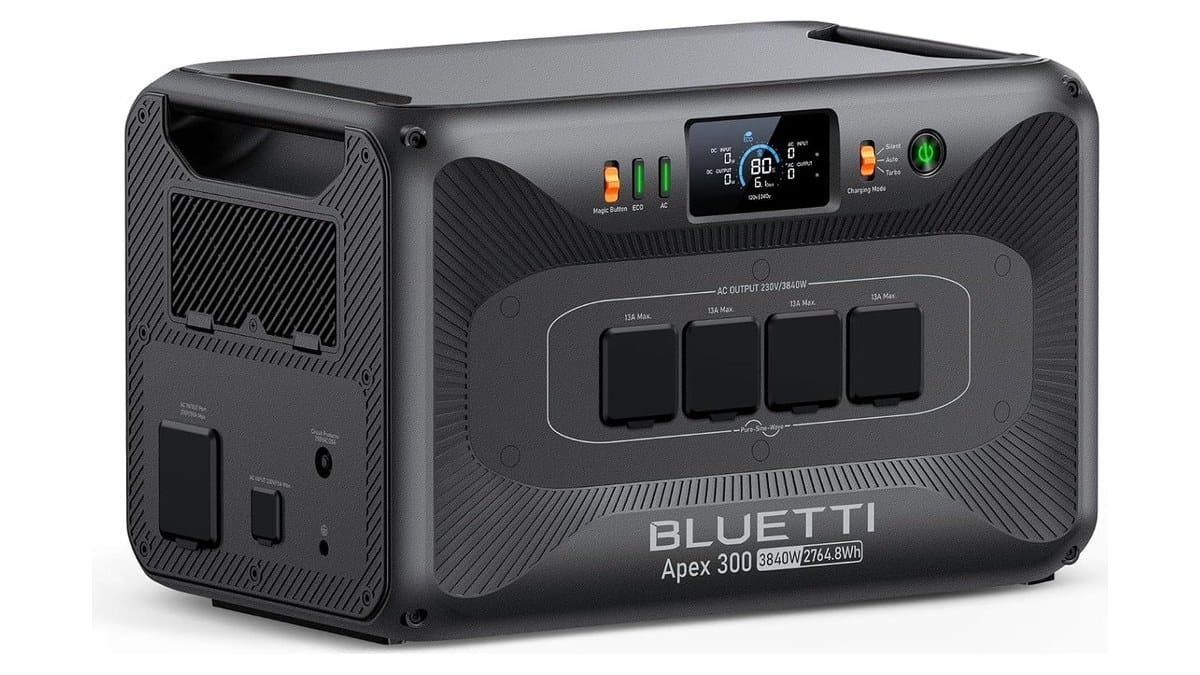
Expert Score
Buy this for a single job and it is excellent, keeping a house or a van running when the mains drops out, but two of its headline features arrive incomplete because both need an accessory that is not in the box.
Pros
- 2,764.8Wh of LiFePO4 rated for 6,000 cycles to 80 percent, with a five-year warranty behind it
- 3,840W across four AC sockets on the 230V unit, which runs kitchen appliances rather than laptops
- 2.55kWh delivered before shutdown at rated load in independent testing, about 92 percent of rated
- Expands past 19kWh on a single unit, and up to three units run in parallel
Cons
- The advertised 80 percent in 45 minutes needs the Hub A1, which isn’t supplied
- No USB ports and no 12V DC output at all without the Hub D1, also not supplied
- Time-of-Use mode measured a 48 percent drain over 12 idle hours, and Silent charging ran at roughly half efficiency
- The supplied car charging cable is capped near 120W
Key takeaways
Six numbers that decide whether this is your home backup battery
Quick specs
The paper numbers for the BLUETTI Apex 300
| Capacity | 2,764.8Wh |
| Battery | 51.2V / 54Ah LiFePO4 |
| AC output, rated | 3,840W, 230V, 50/60Hz |
| AC sockets | 4 on the 230V unit |
| USB and DC, base unit | None. Both require the Hub D1 |
| Weight | 38kg |
Specs confirmed against BLUETTI’s own user manual and the Amazon listing for the Apex 300. Every performance figure below is credited to the outlet that measured it. See how we test and score.
What the Apex 300 is sold to do
BLUETTI sells the Apex 300 as home battery backup, and that’s the honest description of it. This is a utility room, garage and campervan unit: something you put down once and forget about until the lights go, and then it keeps the fridge, the freezer and a few sockets alive.
That framing matters for everything below. Judge a power station against the wrong job and it scores badly for no useful reason, so we’ve asked one question throughout: does it do the job it is sold for?
Every performance figure on this page is attributed to the named source that measured it.
The 45 minute recharge needs a part that isn’t in the box
BLUETTI’s headline recharge is 80 percent in 45 minutes at 3,840W. The catch sits inside the manufacturer’s own specification table, which lists AC charging at 3,840W maximum and states, on the same line, that it requires the Hub A1.
The Hub A1 isn’t in the box. Turn to the manual’s What’s in the Box page and you get the unit, an AC charging cable, a car charging cable, a grounding screw and the paperwork. No hub.
As shipped, the AC input ceiling is 2,300W. Trusted Reviews measured a mains recharge of 95 minutes in Turbo mode, and around two hours in Standard mode at 1.4kW.
Those two numbers agree with each other, which is what makes them convincing. A 2,300W ceiling is what produces a 95 minute recharge. A 3,840W input is what produces a 45 minute one. The difference between them is an accessory, not a manufacturing tolerance.
Nobody in the top search results leads with this. The 45 minute figure gets repeated as though it describes the product that arrives on your doorstep.
A second source watched the same ceiling
Digital Reviews Network, working with an Australian 230V unit on the other side of the world, watched AC input start near 1,350W, peak close to 2,200W, then taper off as the battery filled.
Two reviewers, two countries, two units, one ceiling. The 2,300W limit isn’t one site’s odd reading.
 Darleene asks
“It says 80 percent in 45 minutes. Why wouldn’t mine do that?”
Alisdair’s answer: because that 45 minutes is measured with an accessory called the Hub A1 plugged in, and the hub is sold separately.
Without it, the unit draws a maximum of 2,300 watts instead of 3,840. Same battery, narrower pipe.
Independent testing puts the real figure at about 95 minutes. For a battery this size that’s still quick. It just isn’t the number on the box.
There are no USB ports on the base unit, and no 12V either
The Apex 300 has no USB ports. Not a slow one, not a single one. It has no 12V DC output either.
Both need the Hub D1, a second accessory, also sold separately. The manual’s Power Your Devices page states plainly that a Hub D1 is required for DC output, then lists the USB figures underneath it.
Attach the Hub D1 and you get USB at up to 100W per port, plus 12V and 24V DC and a high-current option. Without it, this battery charges nothing over USB. Not a phone, not a head torch, nothing.
Trusted Reviews in the UK and Digital Reviews Network in Australia both raise it unprompted, which tells you how surprising it is in person. Anyone arriving from a power bank or a smaller power station will assume USB-C is there, and the retail listing does nothing to correct them.
What comes in the box
The unit, an AC charging cable, a car charging cable, a grounding screw, and the manual and warranty card. That’s the whole list, taken from the manufacturer’s own manual.
The car charging cable is capped near 120W, and Trusted Reviews calls it close to useless. They have a point. At 120W, filling this battery from empty would take more than 20 hours of engine running, which is not a thing anyone is going to do.
What it runs, and where it stops
Rated AC output is 3,840W at 230V, across four AC sockets on the 230V unit. Per-socket current limits change by region: 16A each in the EU, 13A each in the UK, 15A each in Australia.
Digital Reviews Network put real kitchen appliances through it rather than a resistive load bank. Single items, a microwave, a kettle, an air fryer, a toaster, gave it no trouble at all.
Two running together drew about 3,500W sustained and the unit held. Three together pushed past 5,000W and it shut down.
So 3,500W is the figure to plan around. The 7,680W on the box is Power Lifting mode and applies to resistive loads only, which makes it a headline rather than a planning number.
How much of the 2,764.8Wh you get back
Trusted Reviews measured 2.55kWh delivered before shutdown at rated load, against 2,764.8Wh rated. That’s about 92 percent, and it’s an honest return for a battery this size.
Output efficiency on its own measured 92 percent at the full 3.8kW and 93.5 percent at a 2kW half load. Both are strong.
The loss sits on the charging side instead. Charging efficiency measured 81.7 to 82.4 percent across Turbo and Standard, and that’s what drags round-trip efficiency down to 75.6 percent.
Darleene’s version: for every four units of electricity you put in, you get about three back out again. The battery’s fine. It’s the filling where the waste happens.
Runtime on real appliances
Digital Reviews Network’s multi-day figures are the most useful numbers published on this product, because they’re the ones that answer what people ask.
A fridge and freezer together over 24 hours took the pack from 100 percent down to 25 percent, with roughly nine more hours available once it reached a 5 percent state of charge.
A washing machine on a 40 degree cycle for one hour cost 35 percent. A heat pump dryer for 90 minutes cost a further 45 percent.
Read those together and you get a clear picture: this is a unit that carries a fridge and freezer through a long outage without drama, and that covers one hot appliance cycle. One. Not a laundry day.
Two modes that cost you energy
Trusted Reviews found the Time-of-Use mode drained 48 percent of the battery over 12 hours while the unit sat otherwise idle. For a mode whose entire purpose is shifting cheap energy into expensive hours, that’s a serious finding, and it undercuts the feature’s whole reason for existing.
They also measured the Silent charging mode running at roughly half efficiency, consuming more than 1.7kWh to charge a battery that was only a third full.
Idle self-consumption measured 9W, which is better than the 20W BLUETTI advertises. The point isn’t that the claim fails, because it doesn’t.
It’s the one Trusted Reviews makes: even at 9W, standing loss across days adds up on a battery sold to sit and wait.
Solar: the ceiling, and what two panels give you
On paper the Apex 300 takes 2,400W of solar across two XT60 ports, 1,200W per port, at 12 to 60V.
Battery Skills measured 380 to 395W combined from two 200W panels in full sun, against a 400W nameplate. The panels behaved themselves. There were only two of them.
Reaching that ceiling needs an array most buyers will never own. The 2,400W figure describes the socket, not your roof.
UPS mode, and how far it expands
The Apex 300 has a UPS mode, documented in the manual alongside Grid Self-Adaption.
No switchover time has been published by BLUETTI or measured by any independent source, so this review doesn’t give one. If a millisecond figure matters to the kit you’re protecting, treat it as unknown rather than fast.
A single Apex 300 expands past 19kWh with up to six battery packs, and up to three units can run in parallel. The pack to look for now is the B500K, which supersedes the B300K our earlier pages name.
BLUETTI’s larger marketing figure assumes several units, each carrying its own packs. That isn’t a single-unit number, and this page won’t print it as one.
Placement and fit for the job
The Apex 300 weighs 38kg and measures 525 by 327 by 320mm. You don’t carry this anywhere. You place it.
In a utility room or a garage, that costs you close to nothing. One person can’t reposition it alone, which is worth knowing before you choose the spot, and that’s the whole of the penalty at home.
In a campervan or a caravan the sums look different, and almost no competing review raises it. That 38kg comes straight off a legal payload allowance, sitting alongside water, gas, bikes and everything else you’re already counting before a weighbridge.
Against that allowance the Apex 300 gives 72.8Wh per kilogram, from our own arithmetic on the published capacity and weight.
The EcoFlow DELTA 3 Max Plus gives 92.7 and the Jackery Explorer 2000 v2 gives 114. So the weight is not merely the price you pay for the extra capacity, and in a van that difference is real.
If you’re camping and hauling gear from a car to a pitch, this is the wrong unit, and our portable power station roundup has lighter picks built for exactly that. Sending you elsewhere isn’t a mark against the Apex 300. It’s a different job.
Taking it on a plane
At 2,764.8Wh this is roughly 27 times the 100Wh limit airlines apply to batteries in the cabin. No approval process brings it anywhere near, so it cannot fly in the cabin or in the hold.
That does not make it a stay-at-home product. It travels by road perfectly well, so it goes in a van, to a pitch or to a site, and it is the thing you want at home when the power is off. It never flies.
If the trip involves a plane, the answer is a different class of product rather than a smaller version of this one. A power bank at or under 100Wh is allowed in the cabin and is built for exactly that job.
Full rules are in our can you take a power bank on a plane? guide. Check any capacity in seconds with our mAh to Wh calculator.
Specifications
Every figure, with its source attached
Manufacturer figures are specifications or claims. Measured figures belong to the independent outlet named beside them. Nothing on this page was measured by SmartGadgetKit.
| Specification | Figure | Source |
|---|---|---|
| Capacity | 2,764.8Wh | BLUETTI |
| Battery | 51.2V / 54Ah LiFePO4 | BLUETTI |
| Cycle life | 6,000 cycles to 80 percent | BLUETTI |
| AC output, rated | 3,840W, 230V, 50/60Hz, 16.7A max total | BLUETTI |
| AC output, surge | 7,680W, Power Lifting, resistive loads only | BLUETTI |
| AC sockets | 4 on the 230V unit. Per socket: EU 16A, UK 13A, AU 15A | BLUETTI |
| USB ports, base unit | None. Requires the Hub D1 | BLUETTI |
| DC output, base unit | None. Requires the Hub D1 | BLUETTI |
| USB and DC via Hub D1 | Up to 100W per USB port, 5V/3A; DC 12V/10A, 24V/5A; 12V/50A or 24V/25A high current | BLUETTI |
| AC input, base unit | 2,300W max | BLUETTI |
| AC input with Hub A1 | 3,840W max, 80 percent in 45 minutes | BLUETTI |
| Solar input | 2,400W total, 2 x XT60PM-M, 1,200W per port, 12 to 60V, 20A max | BLUETTI |
| Expansion | Past 19kWh on one unit with up to six packs. Up to 3 units in parallel | BLUETTI |
| Weight | 38kg | BLUETTI |
| Dimensions | 525 x 327 x 320mm | BLUETTI |
| Ingress rating | IP20 | BLUETTI |
| Charging temperature | 0C to 40C | BLUETTI |
| Discharging temperature | -20C to 40C | BLUETTI |
| Connectivity | WiFi and Bluetooth 5.0 | BLUETTI |
| Warranty | 5 years | BLUETTI |
Specifications from the BLUETTI Apex 300 User Manual V3.0. Socket count is the 230V figure and is confirmed by two hands-on reviewers in two countries.
Independent test data
| Figure | Result | Source |
|---|---|---|
| Delivered capacity at rated load | 2.55kWh before shutdown | Trusted Reviews |
| Round-trip efficiency | 75.6 percent | Trusted Reviews |
| Output efficiency | 92 percent at 3.8kW, 93.5 percent at 2kW | Trusted Reviews |
| Charging efficiency | 81.7 to 82.4 percent, Turbo and Standard | Trusted Reviews |
| Mains recharge, as shipped | 95 minutes Turbo, about 2 hours Standard | Trusted Reviews |
| Idle self-consumption | 9W | Trusted Reviews |
| Time-of-Use drain | 48 percent over 12 idle hours | Trusted Reviews |
| Silent charging efficiency | About 50 percent | Trusted Reviews |
| Sustained appliance load | About 3,500W held on two appliances; shutdown past 5,000W on three | Digital Reviews Network |
| AC input curve | Started near 1,350W, peaked near 2,200W | Digital Reviews Network |
| Fridge and freezer, 24 hours | 100 percent to 25 percent | Digital Reviews Network |
| Washing machine, 40 degrees, 1 hour | 35 percent | Digital Reviews Network |
| Heat pump dryer, 90 minutes | 45 percent | Digital Reviews Network |
| Two 200W solar panels, full sun | 380 to 395W combined | Battery Skills |
The pack is LiFePO4 in a 51.2V, 54Ah configuration, rated by BLUETTI for 6,000 cycles to 80 percent of its original capacity and covered by a five-year warranty.
Confirm the exact certification marks on the unit and packaging when yours arrives.
If the numbers already make the case for you, the current Amazon listing is one tap away.
bluettiCheck latest priceamazonCheck latest priceScoring
How the BLUETTI Apex 300 scores
Four category scores, fixed by editorial judgement. The overall is not their average.
The overall lands at 7.5 rather than lower because the audience this suits is narrow and the hardware is strong. It is an editorial judgement about who should buy it, not an average of the four bars above.
BLUETTI Apex 300 review: the verdict
Want one battery to carry a house or a van through a power cut, and have somewhere to put it? The Apex 300 does that job well.
The capacity is real, the delivered figure is honest, and the cycle life and warranty are the best in our line-up.
Buy it with clear eyes about the two accessories. The unit you receive recharges in about 95 minutes, not 45, and it charges nothing over USB until you add the Hub D1.
Neither is a fault in the hardware. Both are a gap between the marketing and the box, and pricing the two hubs into your decision is the difference between a good buy and a nasty surprise.
Should you buy it?
Where it wins, and where it costs you
Buy it if
- You want fixed backup for a house, garage or campervan, and the unit will stay in one place
- You need to run kitchen appliances rather than laptops and phones
- LiFePO4 longevity and a five-year warranty matter more to you than weight
- You expect to add battery packs later
Skip it if
- You want the 45 minute recharge and don’t intend to buy the Hub A1
- You need USB or 12V output and don’t intend to buy the Hub D1
- You’ll be carrying it from a car to a pitch
- Payload in a small campervan is already tight
Buy it if fixed household or campervan backup is the job, skip it if you need the two headline features without the two hubs.
bluettiCheck latest priceamazonCheck latest priceIf this one is not the fit
Four alternatives, four different readers
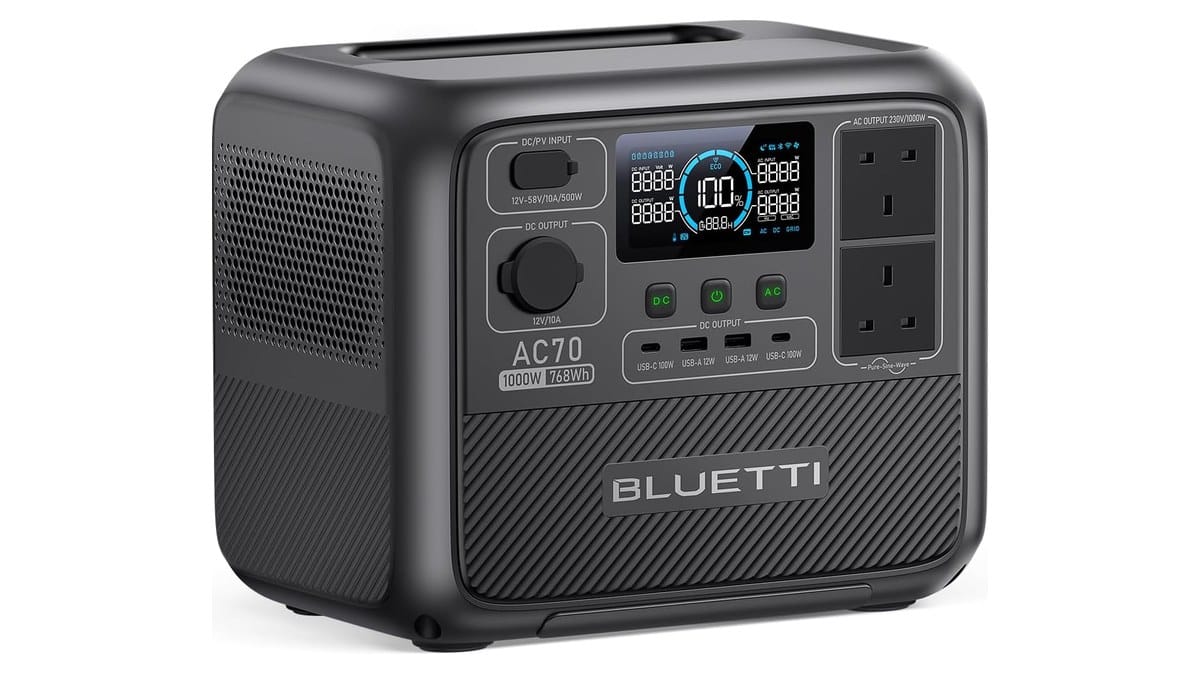
BLUETTI AC70
Same brand, far smaller at 768Wh. Fast charging, plenty of USB-C ports, and it travels without a vehicle. The pick when the Apex 300 is more battery than the job needs.
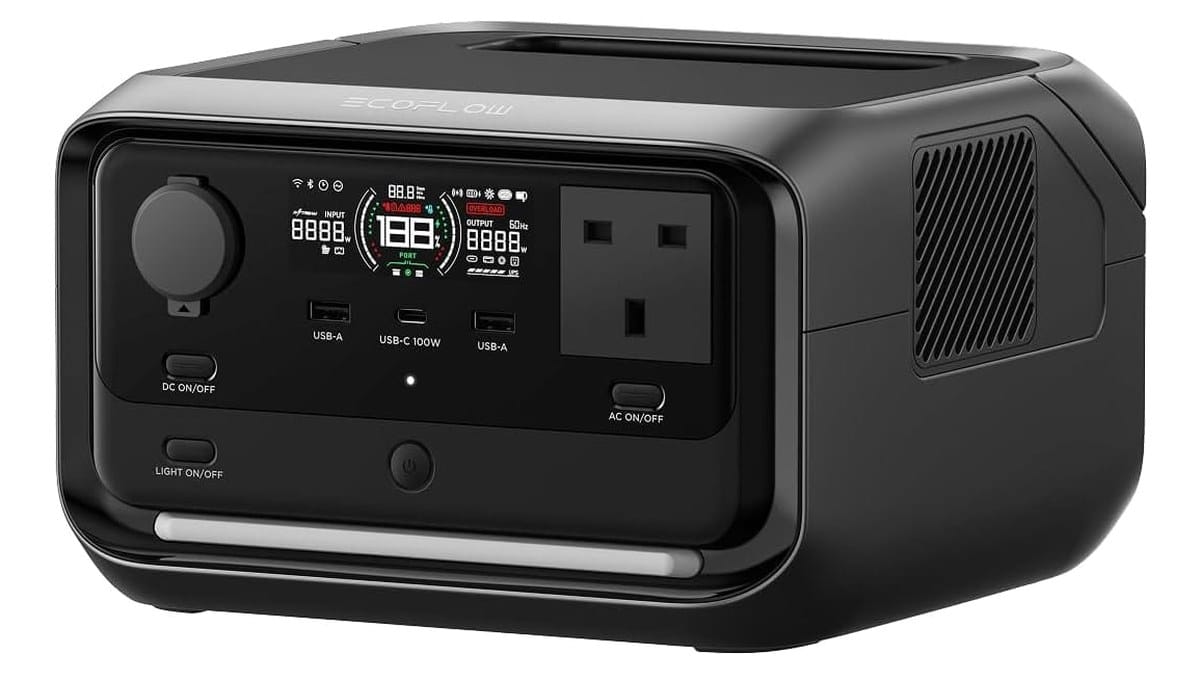
EcoFlow RIVER 3 Plus
Far smaller at 286Wh, and one person lifts it without thinking. The pick for camping and short outings, where the Apex 300 is far more battery than the job needs.
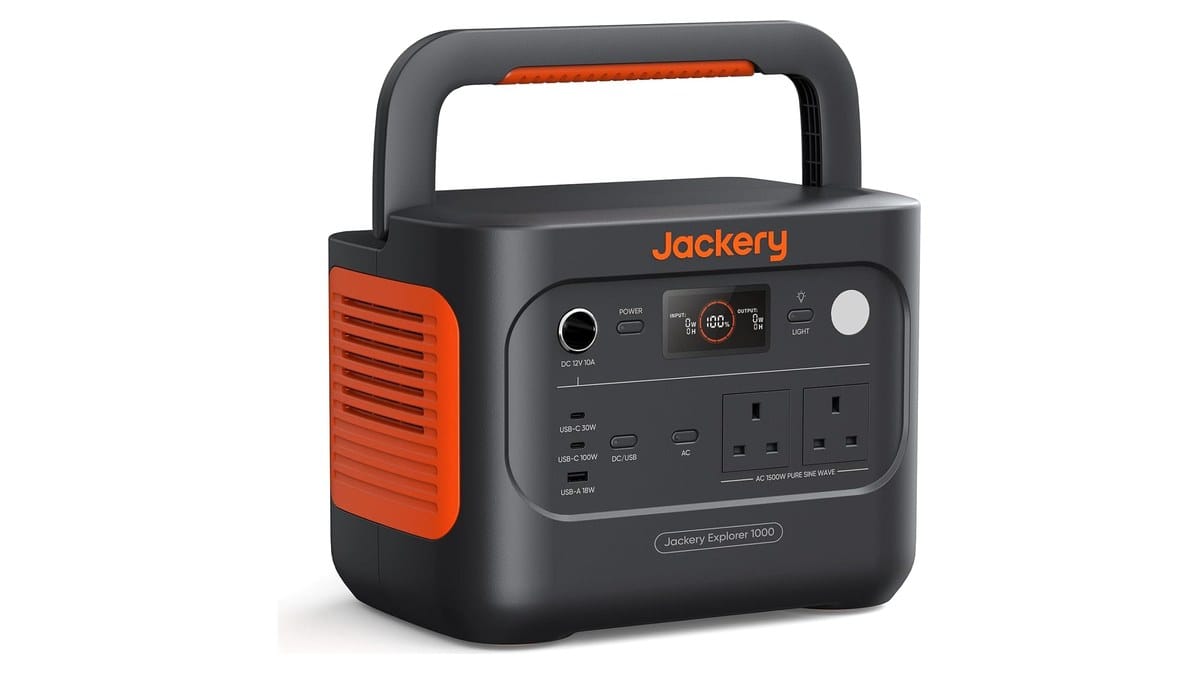
Jackery Explorer 1000 v2
The middle ground: enough capacity for a weekend, still built to be carried. The pick if you want one unit that works at home and travels.
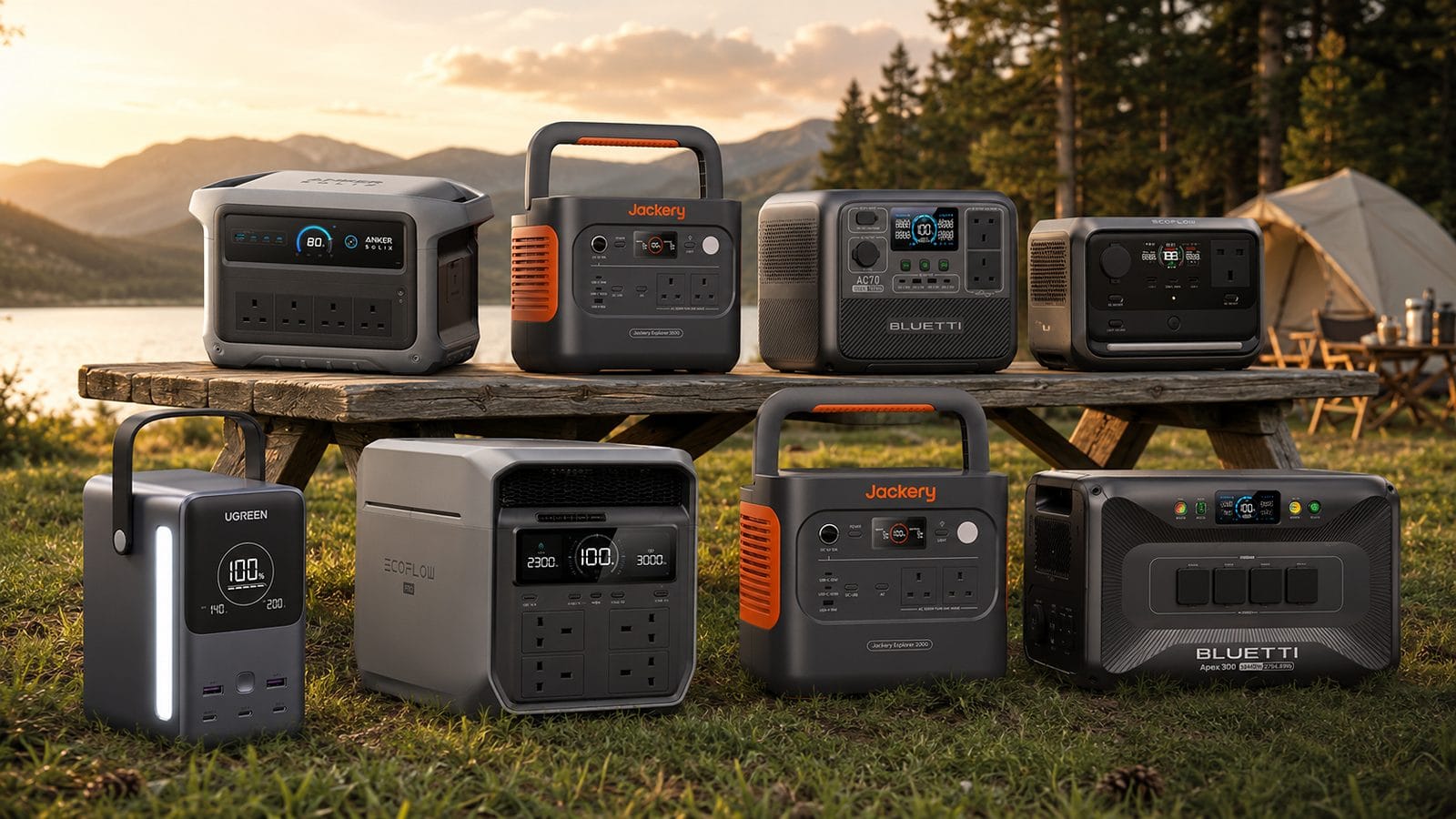
Best portable power stations
Every unit we rate, ranked and matched to a use case, so you can size a battery to the job instead of to a headline number.
FAQ
Questions readers ask
Does the BLUETTI Apex 300 charge in 45 minutes out of the box?
No. That figure needs the Hub A1 accessory, which is sold separately and isn’t included. As shipped, the AC input ceiling is 2,300W, and Trusted Reviews measured a recharge of 95 minutes in Turbo mode.
Does the BLUETTI Apex 300 have USB ports?
No. The base unit has no USB ports and no 12V DC output. Both require the Hub D1 accessory, which is also sold separately.
How many AC sockets does the BLUETTI Apex 300 have?
Four on the 230V unit sold in the UK, Europe and Australia. Per-socket current limits differ by region: 16A each in the EU, 13A each in the UK and 15A each in Australia. The 120V variant may differ.
How much power do you get out of a BLUETTI Apex 300 in practice?
Trusted Reviews measured 2.55kWh delivered before shutdown at rated load, against 2,764.8Wh rated, which is about 92 percent. Round-trip efficiency measured 75.6 percent, with most of the loss on the charging side.
Can the BLUETTI Apex 300 run a house?
It runs parts of one. Digital Reviews Network took a fridge and freezer through 24 hours and still had about nine hours left at a 5 percent state of charge. It’s backup for selected circuits and appliances, not whole-home supply.
Can the BLUETTI Apex 300 run a washing machine or a tumble dryer?
Yes, one at a time. Digital Reviews Network measured a 40 degree wash cycle at 35 percent of the battery for one hour, and a heat pump dryer at a further 45 percent over 90 minutes. That’s one hot cycle, not a laundry day.
How heavy is the BLUETTI Apex 300?
38kg, per BLUETTI’s own manual and confirmed by two hands-on reviewers. It’s designed to sit in one place, and one person can’t reposition it alone.
How far can the BLUETTI Apex 300 be expanded?
A single unit takes up to six battery packs and passes 19kWh. Up to three units can run in parallel. Larger figures in the marketing assume several units, each with its own packs.
Is the BLUETTI Apex 300 a UPS?
It has a UPS mode, documented in the manual alongside Grid Self-Adaption. No switchover time has been published or independently measured, so treat that figure as unknown.
Can you take the BLUETTI Apex 300 on a plane?
No. At 2,764.8Wh it’s roughly 27 times the 100Wh cabin limit, and no airline approval covers it. Our guide to power banks on planes covers what you can fly with.
Final word
One battery for the house, with two accessories to price in
The Apex 300 is a strong home and campervan backup battery with a marketing problem rather than an engineering one. Its capacity, cycle life and output all hold up under independent testing.
What doesn’t hold up is the impression the listing creates. The recharge speed and the entire USB and DC output belong to two accessories in separate boxes, and the manual admits it while the headline never does.
Know that going in and this is a good unit. Find it out afterwards and it’s an expensive surprise. See how we test, or see where it ranks against the rest in our best portable power stations roundup.
Keep reading
Browse all our power station guides and reviews.
Best portable power stations
Every station we rate, ranked and matched to a use case.
Can you take a power bank on a plane?
The cabin rules, airline by airline, and what the 100Wh limit means.
mAh to Wh calculator
Convert any battery capacity and check it against the cabin limit in seconds.
EcoFlow RIVER 3 Plus review
The one-handed 286Wh camping unit, and where it fits against larger backups.
Jackery Explorer 1000 v2 review
The middle-ground unit that works at home and is still built to travel.
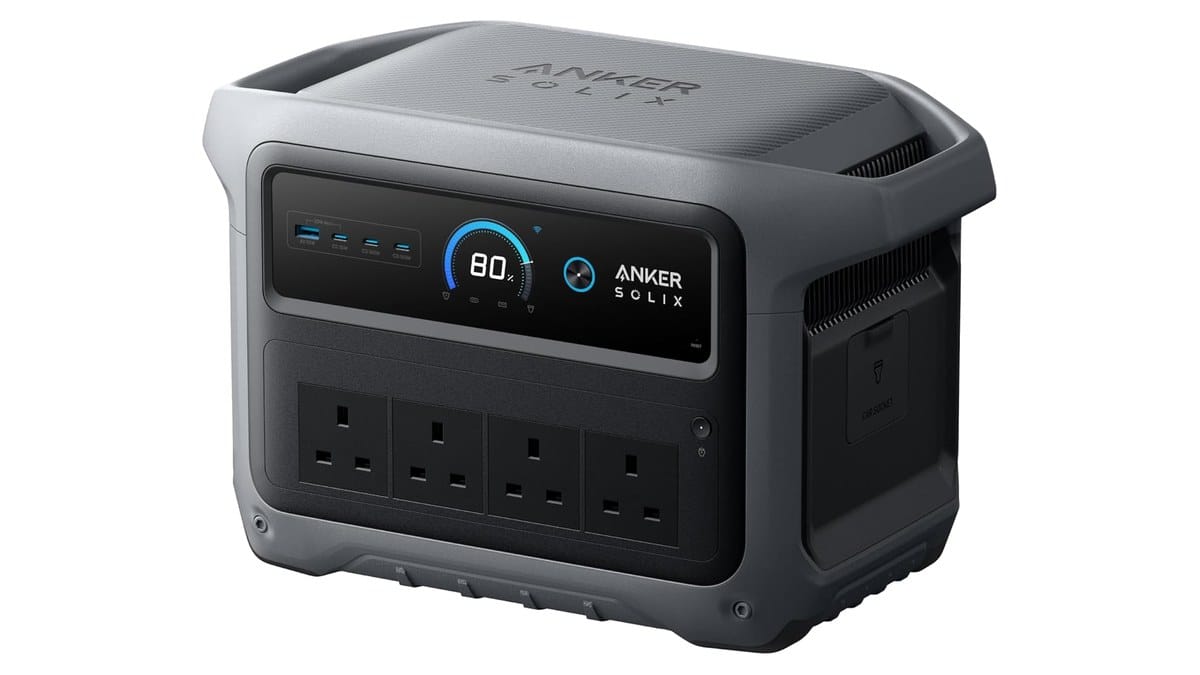
Anker SOLIX C1000 Gen 2 review
The faster-charging 1kWh option, and who it suits instead of the Apex 300.
Latest from SmartGadgetKit
 Lithium Ion Battery Fire Statistics 2026
 LISEN Power Bank Review: The Qi2.2 25W MagSafe 10000mAh, Measured
 How Long Does a Power Bank Last? Charges, Years and Sizing
 Anker Prime 250W Charger Review: 6-Port Desktop Hub
 Anker Prime 300W Power Bank Review: Two Laptops, One Socket-Free Table
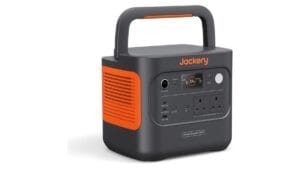 Jackery Explorer 2000 v2 Review: The Lightest Way to Carry 2kWh?
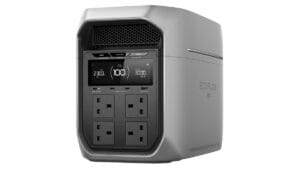 EcoFlow DELTA 3 Max Plus Review: What 2,048Wh Really Gives You
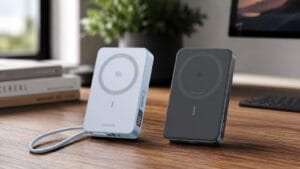 Anker MagGo vs UGREEN MagFlow: which 10,000mAh magnetic bank should you buy?
How we score, and who stands behind it
Our verdicts pair manufacturer and retailer specs with named independent testing from outlets like Trusted Reviews and Digital Reviews Network. We tell you the trade-offs, not only the wins. See how we test.
