
The Anker A1695 review starts with a simple question: is this actually a good travel power bank for laptop charging, or just a convenience first multi device charger?
This article contains affiliate links. If you buy through our links, we may earn a commission at no extra cost to you.
Most power banks are easy to understand.
They are either small enough to carry without thinking about them, or large enough to feel like a serious bit of kit for longer days and bigger devices. The Anker A1695 sits firmly in the second camp, but it tries to make that extra size feel more worthwhile by building convenience into the design.
That is really what makes it interesting.
On paper, with the Anker A1695 we get 25,000mAh, up to 165W total output, a live display, and two built in USB C cables. That sounds great, especially if we travel with a laptop, phone, earbuds, and the usual cable mess that seems to multiply in every bag.
The problem is that power bank pages often stop there. They throw numbers around, say “laptop charging” a few times, and leave buyers to work out whether the thing is actually useful in real life.
That is the question we care about here.
In this Anker A1695 review, that is the real question: is it genuinely a good travel laptop power bank, or is it mainly a convenience first multi device charger that happens to support laptops reasonably well?
Why the Anker A1695 Still Makes Sense
The A1695 still makes sense because it is trying to solve a practical problem, not just win a spec sheet argument.
A lot of bigger power banks can deliver useful output, but still expect us to carry the right cables, keep track of them, and untangle them every time something needs charging. On the other side, smaller and neater models are easier to live with, but are often far less convincing once a laptop enters the picture.
The A1695 lands somewhere more useful in the middle.
What stands out is not just the battery size. It is the combination of laptop relevance, multiple charging paths, a live display, and two built in USB C cables. For the right buyer, that can be a genuine quality of life upgrade.
If we regularly travel with a laptop, phone, earbuds, and maybe a tablet or handheld, the A1695 looks far more practical than a standard high capacity brick that still leaves us rummaging through a bag for cables.
Anker A1695 Review: Quick Verdict
We think the Anker A1695 looks strongest as a travel and commuting power bank for people who want laptop capable charging and built in cable convenience in one unit.
Our Anker A1695 review points to a product that makes the most sense for travellers and remote workers who value convenience as much as raw output.
Its biggest strength is not raw output alone. It is the fact that it combines useful capacity, flexible charging, and fewer cable headaches in a format that makes sense for flights, trains, commutes, and remote work.
If that sounds like your use case, it looks like a strong option. If you want the lightest everyday carry power bank or the most performance focused laptop charger for the money, there are better fits.
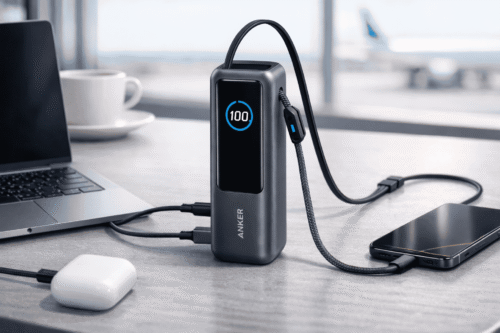
A high capacity travel power bank with built in USB C cables and useful laptop support
✅ Up to 165W total output
✅ Built-in USB-C cable
Reasons to Buy
- Two built in USB C cables reduce bag clutter
- 25,000mAh capacity is useful for travel and longer days out
- Three USB C charging paths plus one USB A output gives strong flexibility
- Live display looks genuinely useful
- Better suited to laptop plus phone travel than many ordinary power banks
Reasons to Avoid
- Heavy for a portable charger
- Better in a bag than for casual everyday carry
- 165W needs careful real world context
- Built in cable durability should be treated carefully
- Best value may come when discounted rather than at full price
Key Numbers That Matter
- Capacity: 25,000mAh
- Maximum output: up to 165W total in specific conditions
- USB C charging paths: 3
- USB A outputs: 1
- Built in cables: 2 USB C
- Weight: about 594g to 595g
- Recharge input: up to 100W
- Best for: travel, commuting, remote work, and multi-device charging from a bag.
Specifications at a Glance
| Feature | What it means in real life |
|---|---|
| Capacity | Large enough to matter for laptop and multi device top ups, not just phones |
| Maximum output | Laptop capable, but better treated as a peak figure than a simple promise of sustained output |
| Ports | Three USB C charging paths and one USB A output gives plenty of flexibility |
| Built in cables | Very useful if you want less cable clutter while travelling |
| Display | More informative than a basic light indicator and helps you see what is happening |
| Weight | Fine in a backpack or laptop bag, but heavy for casual carry |
| Recharge input | Up to 100W means it should recharge reasonably quickly with the right charger |
| Best use | Travel, commuting, remote work, and topping up several devices on the move |
You can check the official Anker product page for the latest specifications, charging claims, and model details.
Why the Built In Cables Matter
This is one of the biggest reasons the A1695 deserves a proper look.
A lot of power banks are technically powerful enough, but still leave us carrying the same messy cable setup we already had. The A1695 tries to reduce that friction with two built in USB C cables, including one retractable cable and one short lanyard style cable.
That matters more than it sounds.
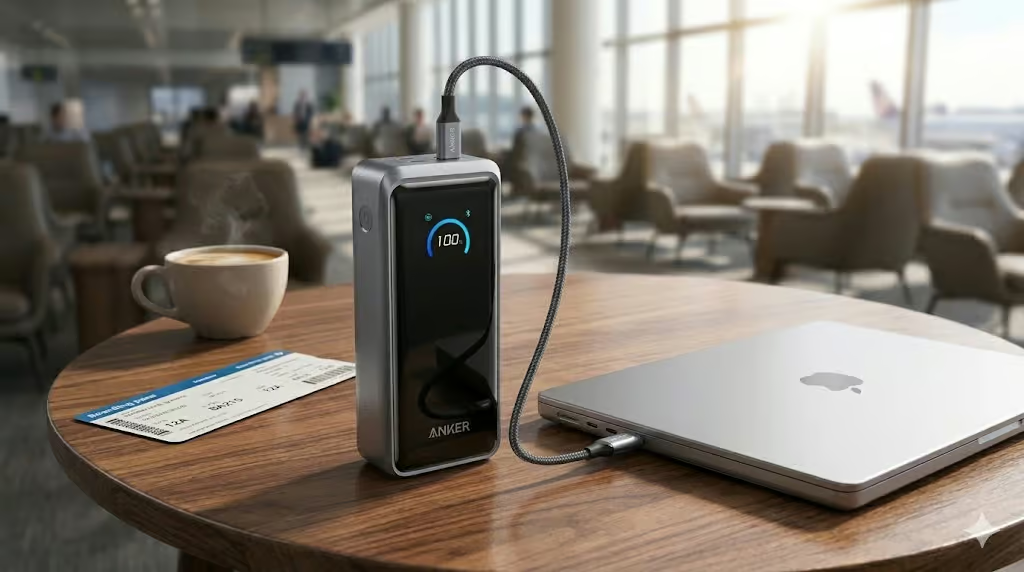
For airport travel, trains, cafés, and shared workspaces, built in cables mean one less thing to remember, one less thing to lose, and one less point of irritation when we just want to plug in and keep moving.
That does not automatically make the A1695 the best option overall, but it does give it a more practical identity than some rivals that focus harder on raw output and less on real life convenience.
The obvious caution is long term reliability. Built in cables are brilliant until they are not. So this is a real strength, but also one of the areas where careful wording matters.
How Useful Is the Anker A1695 for Laptop Charging?
This is the section that matters most.
Anker clearly positions the A1695 as a laptop friendly power bank, and the hardware is strong enough on paper to make that reasonable. But we would not reduce the whole product to the 165W figure.
The better way to look at it is this.
The A1695 appears well suited to USB C laptop users who want practical charging support while travelling, commuting, or working away from a socket. It looks especially useful for topping up a laptop during a day out, supporting lighter to mid demand workflows, and handling several devices from one battery.
That makes it relevant for people using machines such as MacBook Air class devices and many other USB C laptops that charge happily at 65W to 100W.
Where buyers need to be careful is sustained output expectation. The official maximum figure should not be treated as a guarantee that every laptop user will get the same high level of performance under all conditions.
Our view is simple.
The A1695 looks like a convenience first travel power bank that is genuinely relevant for laptops, not a magic brick that somehow escapes weight, heat, and battery drain.
How We Tested
We do not think there is much value in dressing this up with fake lab language.
The A1695 only matters if it works in real situations, so this is the sort of use we care about most:
- charging a USB C laptop during travel or remote work
- topping up a phone and earbuds while the laptop is also connected
- carrying it in a backpack or sling during a real travel day
- using the built in cables repeatedly rather than treating them as a side feature
- recharging it with a proper high wattage wall charger between uses
What matters most here is:
- whether laptop charging feels genuinely useful in practice
- whether output changes significantly when multiple devices are connected
- whether the built in cables actually make life easier
- how noticeable the weight feels in real carry
- whether the retractable cable feels sturdy or like a future weak point
- how warm the unit gets under heavier use
- how practical the recharge time feels between trips
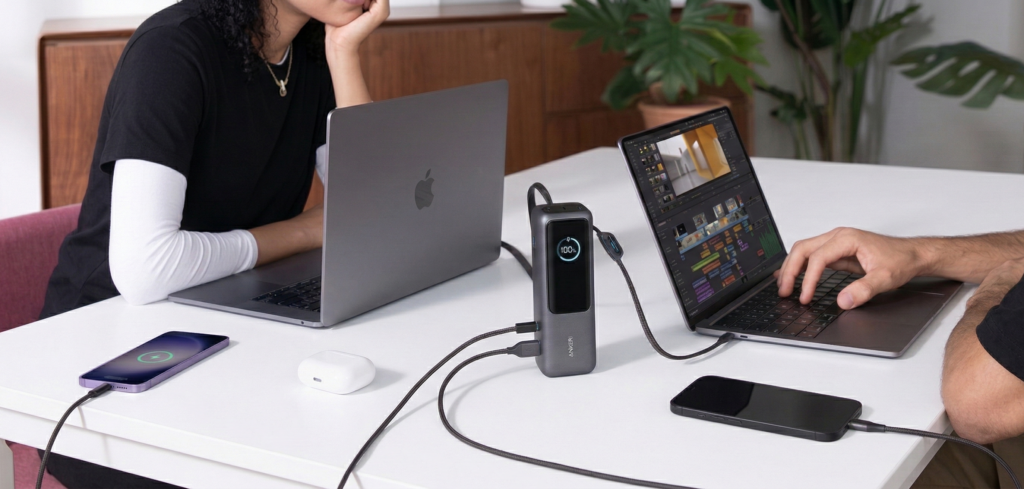
Test Results at a Glance
- Laptop charging: looks genuinely useful, but should be framed as travel support rather than limitless sustained high power
- Multi device charging: one of the strongest parts of the product
- Carry experience: much better in a backpack or laptop bag than as a casual everyday carry option
- Recharge behaviour: decent with the right charger, but not standout
- Convenience: built in cables look like the most meaningful real world advantage
Review Score
Overall score: 8.5/10
Why We Rated It 8.5/10
We rate the A1695 well because it appears to solve a genuine problem in a practical way.
This is not just a big battery with a flashy number slapped on the front. It combines useful capacity, laptop relevance, multiple charging paths, a live display, and built in cable convenience in a format that makes sense for travel and work.
Versatility is where it looks strongest. The mix of laptop support, multi device charging, and built in cable convenience makes it more usable than many basic power banks.
Portability is where it gives ground back. At nearly 600g, this is not outrageous for the category, but it is enough to put it firmly in bag carry territory rather than casual carry.
Value depends heavily on pricing. At a discount, it looks much stronger. At full price, the convenience story needs to matter to us enough to justify the premium.
What Stands Out
The convenience angle is real
This does not look like one of those products where convenience is just lazy marketing padding. The built in cables and flexible charging setup appear to make a genuine difference for travel use.
The weight matters
This is not something most people will happily drop into a pocket and forget about. It makes much more sense in a backpack, laptop bag, or carry on setup.
The 165W headline needs translating
The number is not meaningless, but it is far more useful when explained as a peak capability than as a simple promise of real world performance.
Real World Testing: Flights, Commuting, and Remote Work
Airport and train travel
This is probably where the A1695 makes the most sense.
If we have a laptop, a phone, maybe earbuds, maybe a tablet, and no interest in carrying a pouch full of charging extras, the A1695 starts to look genuinely appealing.
Café and remote work sessions
If we work away from home regularly and want one battery that can support a laptop while also topping up smaller devices, the A1695 looks strong. The display becomes more useful here because we can actually see what is happening rather than guessing.
Commute and daily carry
This is where the product becomes more selective. If a commute includes a laptop and long stretches away from mains power, it makes sense. If not, it starts to feel like too much weight and too much battery for the job.
Size and Weight: Is It Too Much for Everyday Carry?
For casual everyday carry, yes, probably for a lot of people.
The A1695 is much easier to justify if we already carry a backpack or laptop bag. In that context, the weight is easier to forgive because the product is doing enough to earn its place.
For pocket carry or lighter sling setups, it is a much harder sell. That is really the dividing line here. It makes more sense as a travel and work battery than as a general everyday backup charger.
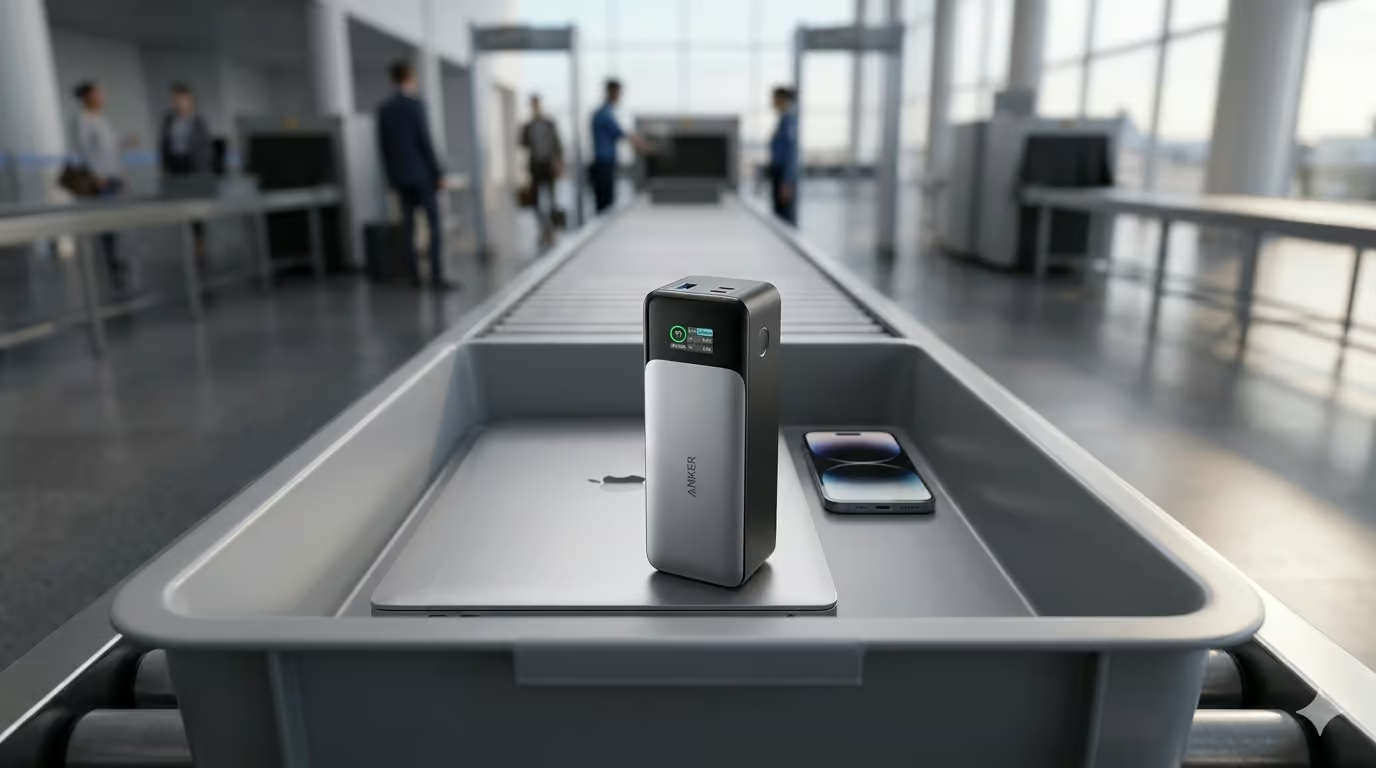
The Anker A1695 is intended for carry-on travel, but airline rules can vary. Keep it in your carry-on bag, not checked luggage, and check your airline’s latest power bank guidance before flying.
Value at Today’s Price
We would not frame this as a no brainer at any price.
It looks strongest when discounted, especially for buyers who will genuinely benefit from the built in cable setup and laptop relevance. At a premium full price, the convenience story needs to matter enough to justify the spend.
If all we need is a phone power bank or something light for casual carry, this is poor value. If we regularly travel with a laptop and want fewer moving parts in the charging setup, the price starts to make much more sense.
Anker A1695 vs Anker 737
This is one of the most important comparisons for this page.
The A1695 looks like the better fit for buyers who want convenience, built in cable usefulness, and a more travel first multi device charging setup.
The Anker 737 looks like the better fit for buyers who care more about stronger laptop first performance, less compromise, and a more obvious power user feel.
If you are also looking at the 737, read our Anker 737 review to see how it compares in day to day use.
Choose the Anker A1695 if
- you want built in cable convenience
- you travel often
- you carry several USB C devices
- you want a more self contained bag setup
Choose the Anker 737 if
- your priority is stronger laptop first performance
- you care less about built in cable convenience
- you want the more established flagship style option
- you are happy using separate cables for more flexibility
This is really a battle between convenience and performance emphasis.
Who Should Buy the Anker A1695?
- Travellers who regularly carry a USB C laptop
- Commuters spending long stretches away from mains power
- Remote workers who want one battery for laptop, phone, and accessories
- Buyers who genuinely value built in cable convenience
- People who already carry a backpack or laptop bag
Who Should Skip It?
- Anyone who mainly charges only a phone
- Buyers who want the lightest everyday carry option
- Users who care most about sustained high output laptop charging
- People who dislike integrated cable designs
- Buyers who only see value in headline wattage numbers
Practical Tip
If you buy the A1695, pair it with a proper high wattage USB C wall charger so the recharge time feels reasonable. A product like this makes much more sense when it can be topped up properly between uses.
If you still need a charger, see our guide to the best travel chargers for laptops.
Recommended Accessories
Best Wall Charger Pairing
A 100W class USB C charger makes far more sense here than a cheap low wattage plug.
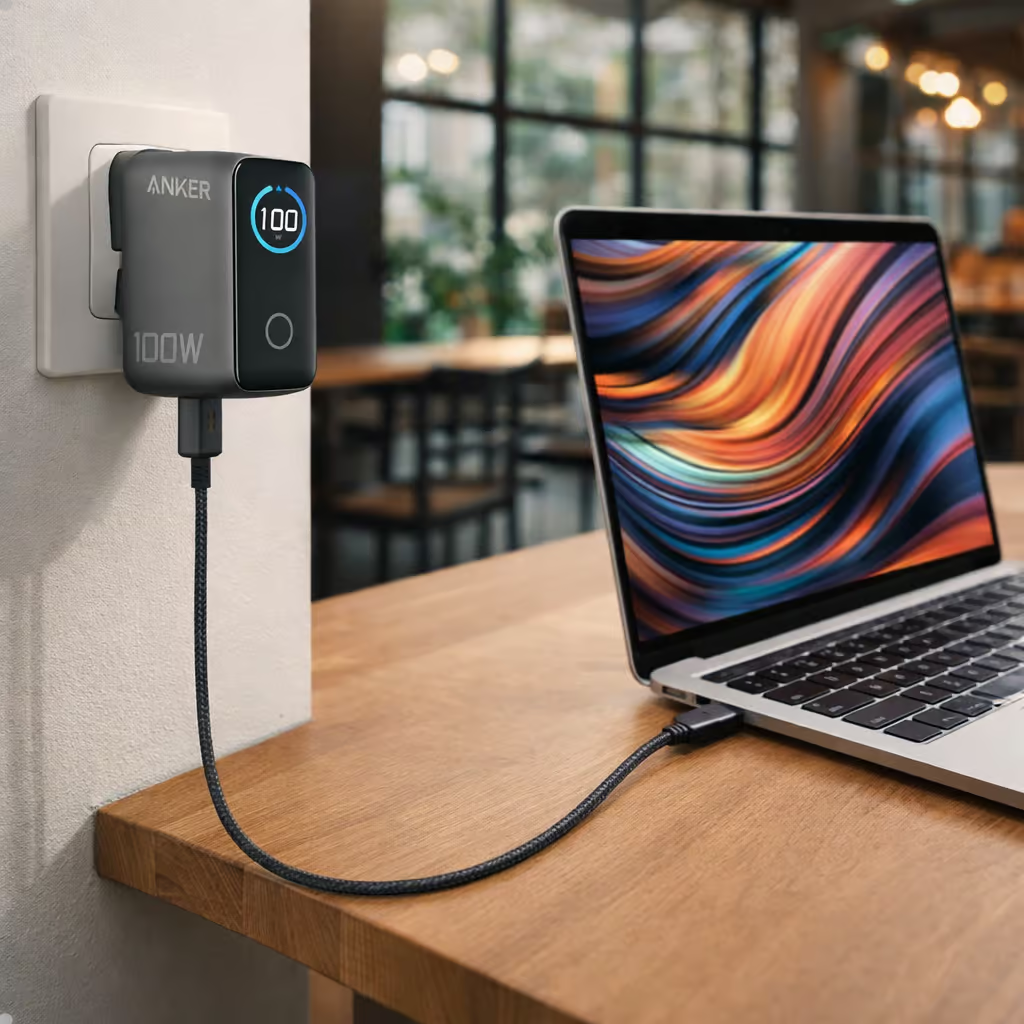
Anker 100W Max USB C Charger, 3-Port GaN
Best Backup Cable
Even with built in cables, it still makes sense to keep one good quality short USB C cable in the bag in case your setup changes.
You can also see our picks for the best USB C cables for laptop charging if you want a proper backup.
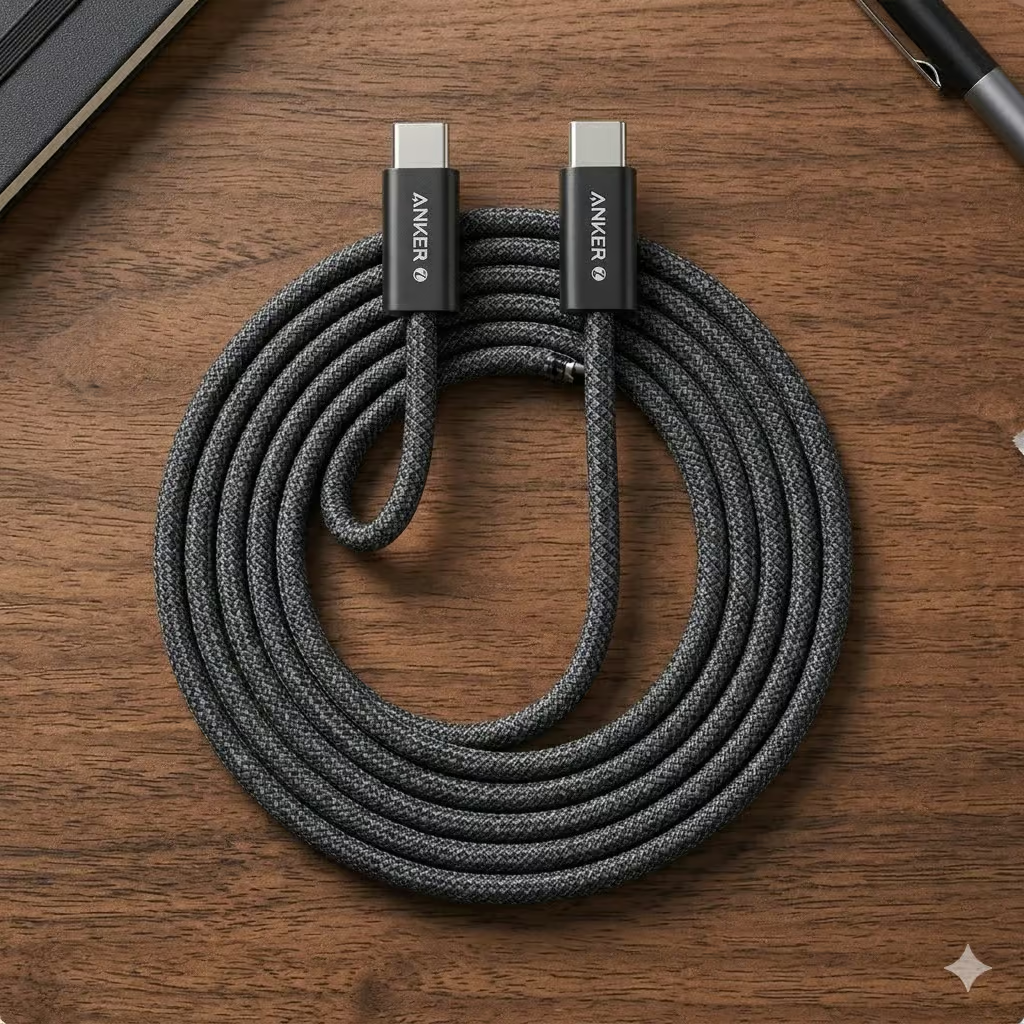
Anker Zolo 240W Fast Charging USB C to USB C Cable
Frequently Asked Questions
Is the Anker A1695 good for charging a laptop while travelling?
Yes, it appears well suited to travel support for USB C laptops, especially for topping up during commuting, flights, or remote work sessions.
Can the Anker A1695 charge a MacBook Air or MacBook Pro?
It looks relevant for USB C MacBook users, but actual usefulness depends on the model and what workload you expect it to support.
Does the Anker A1695 really output 165W?
That should be treated as a maximum official claim, not a simple everyday promise of sustained real world output.
How many devices can the Anker A1695 charge at once?
It supports up to four devices at once.
Is it too heavy for everyday carry?
For many people, yes. It is much better suited to a bag than a pocket.
How long does it take to recharge?
It supports high wattage recharging, but real world recharge time should still be framed carefully unless tested directly.
Are the built in cables actually useful?
Yes, that looks like one of the strongest practical reasons to buy it.
Is it flight approved?
Anker markets it as flight approved for travel, but travellers should still check airline rules.
Is it worth buying at full price?
It depends how much you value the convenience angle. It looks stronger as a buy when discounted.
What is the difference between the Anker A1695 and Anker 737?
The A1695 leans more toward travel convenience and built in cable practicality, while the 737 looks better for buyers who want a more performance focused laptop power bank.
Do Not Buy the Anker A1695 If
This is a strong product for a specific type of buyer, not a universal best choice.
- you mainly want a light phone charger
- you only care about the biggest wattage number
- you dislike built in cables and prefer detachable ones
- you want the lightest daily carry option
Final Verdict
The Anker A1695 looks like a smart travel focused power bank for people who want laptop relevance, multi device flexibility, and fewer cables to carry.
Overall, this Anker A1695 review suggests it is a strong fit for bag carry, travel, and laptop top ups, but less convincing as a lighter everyday carry option.
Its real strength is convenience, not just output. The built in cables, useful display, and flexible charging setup give it a more practical identity than a lot of generic high capacity power banks.
The trade off is clear. You are accepting more weight, more bag carry than everyday carry, and some caution around how aggressively the maximum output story should be interpreted.
If your priority is a cleaner travel charging setup for a laptop, phone, and accessories, the A1695 looks like a strong option. If your priority is the lightest carry or the most laptop first performance for the money, look elsewhere.
If you are still comparing sizes, weights, and charging options, our guide to the best laptop power banks gives you a broader view of the strongest alternatives.





[…] Anker Laptop Power Bank A1695 Review: Is It Worth It for Travel and Laptop Charging? […]
[…] Anker A1695 (90Wh) – best for built-in cable convenience. Read the full Anker A1695 review: https://smartgadgetkit.com/anker-a1695-review/ […]
[…] our full Anker A1695 review. Or see our best laptop power banks for […]