
We independently review travel-friendly tech. If you buy through our links, we may earn a commission at no extra cost to you.
Most power banks are built for phones. The moment you add a laptop or try charging two things at once, a lot of them quietly fall apart slower speeds, messy cable juggling, and that classic airport ritual of hunting for a working wall socket.
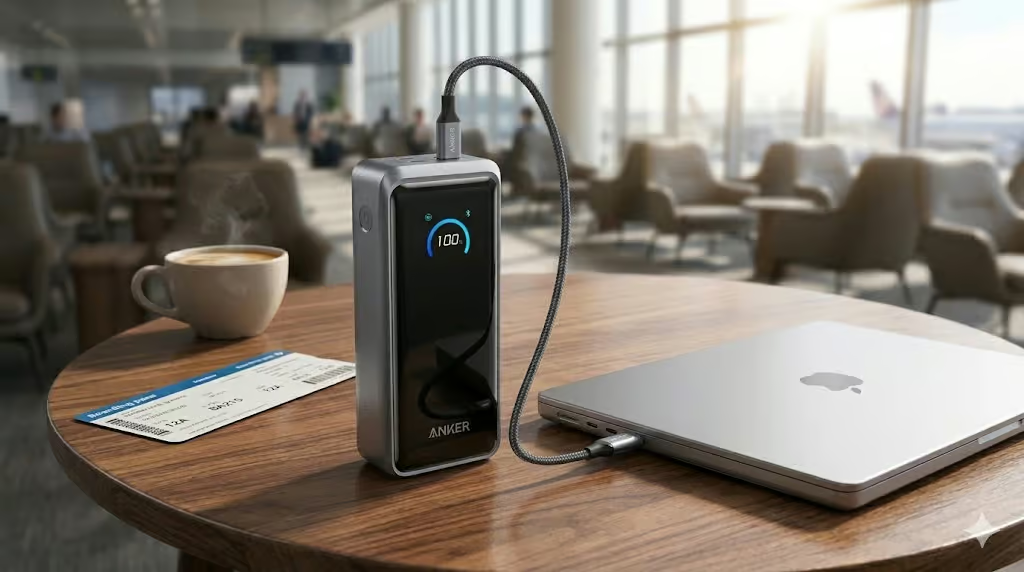
The Anker 737 (PowerCore 24K) is for a different person: someone travelling with multiple devices who wants one reliable battery pack that can handle laptop-capable USB-C charging and still keep the smaller stuff topped up.
It’s powerful, airline-friendly, and genuinely useful but it’s also heavier than pocket power banks and priced accordingly.
So the real question is simple:
Is the Anker 737 the best “buy once” travel power bank in 2026… or just an expensive battery brick?
Why the Anker 737 Still Makes Sense in 2026
The Anker 737 isn’t the newest model on the market and that’s actually part of why it makes sense in 2026.
Newer “Prime” style options can offer higher peak numbers, but they often cost more. The 737 still delivers the thing most people actually need: reliable high-output charging for laptops and multiple devices, without turning your travel bag into a science project.
If you travel with a laptop (or you’re simply sick of power banks that panic under load), this remains one of the strongest value picks.
Quick Verdict
If you want a single power bank to cover travel + remote work + multi-device days, the Anker 737 is one of the safest choices you can make in 2026.
It handles laptop charging comfortably, charges multiple devices without drama, and the smart display makes it far easier to manage power during long days away from sockets.
If you want ultra-light pocket carry or you only ever charge a phone, this is overkill. But for serious portable power, it earns its place.
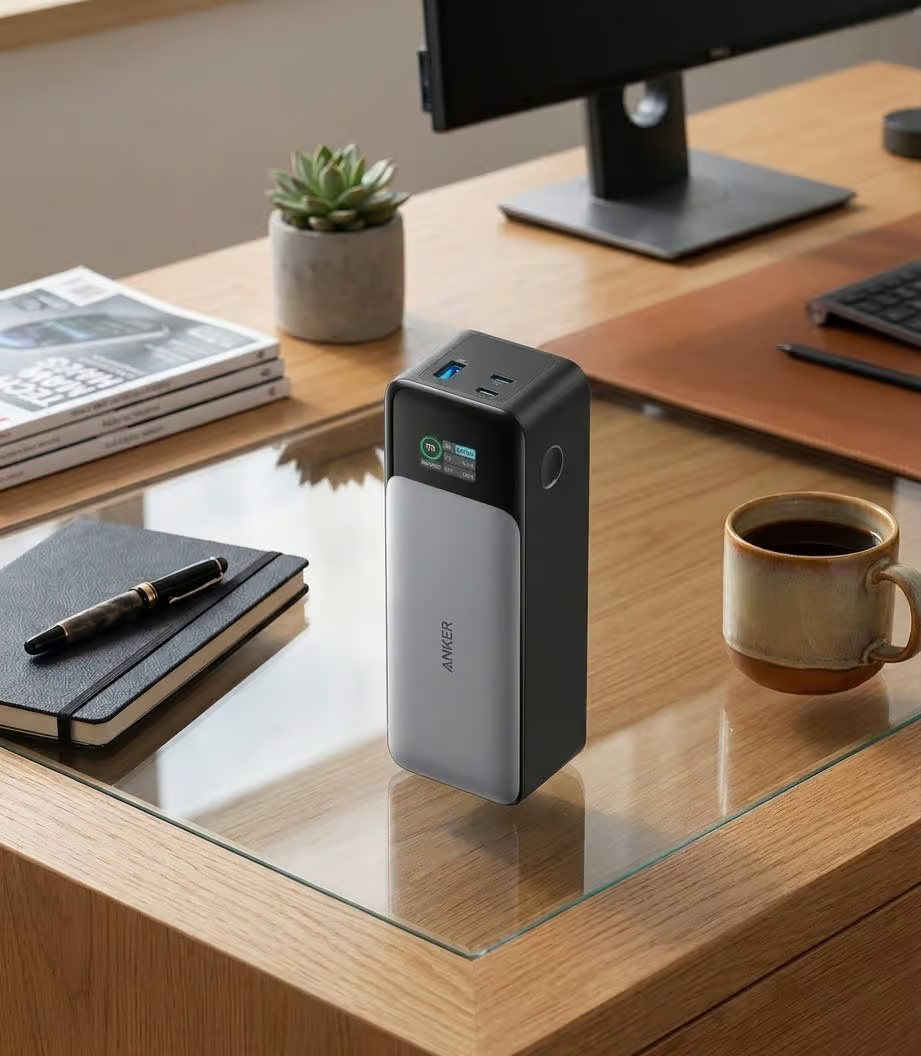
Anker 737 Power Bank (140W, 24,000mAh) Best Overall
Anker 737 Specifications
| Feature | What it means in real life |
|---|---|
| Capacity | 24,000mAh class (high-capacity travel power) |
| Max output | Up to 140W (laptop-capable) |
| Ports | USB-C + USB-C + USB-A (multi-device friendly) |
| Airline carry-on | Typically under 100Wh limits (always check airline rules) |
| Display | Shows real-time charging/power data (not just “dots”) |
| Best use | Laptop travel + multi-device days |
Charging Stability and USB-C Power Delivery (engineer’s take)
As a network engineer, I care less about marketing numbers and more about stability under load the practical difference between “it charges my laptop” and “it charges my laptop reliably while also topping up my phone”.
USB-C charging involves a negotiation (“handshake”) between charger and device. When that negotiation is flaky, devices can drop into slower modes or behave inconsistently.
In real use, the Anker 737 handles this well: laptops and tablets tend to draw power consistently, and it stays composed when you’re charging multiple devices.
One more non-obvious reality: charging performance also depends on the USB-C cable. A cheap cable can silently cap speeds. If you want the best results, use a properly rated USB-C cable (often described as e-marked for higher power).
How We Tested the Anker 737 Power Bank
We didn’t run lab-style benchmarks. We tested it the way most people actually use a travel power bank:
- Charging a laptop during airport layovers
- Powering a remote work session in a café
- Carrying it inside a travel backpack for flights
- Charging multiple devices in the same session (phone + earbuds + tablet, sometimes laptop)
We focused on:
- Stability while charging more than one device
- Heat during extended charging
- Practical carry experience (weight, bulk, cable faff)
- Whether the display is genuinely helpful or just decoration
Anker 737 Review Score: 9.1 / 10
Why We Rated It 9.1/10 (Score Breakdown)
We score across five practical areas:
- Charging performance: confidently handles higher-output charging; feels stable rather than stretched
- Versatility: runs mixed-device charging well (phone + earbuds + tablet, and still laptop-capable)
- Portability: not pocket carry but manageable in a backpack where it belongs
- Build quality: solid casing, dependable ports, feels built for travel
- Value: not cheap, but for laptop travellers it’s extremely practical
What Surprised Me
Two things stood out after using the Anker 737 for travel and remote work days.
1. The display is genuinely useful
Most power banks just show a vague battery percentage.
The 737’s display shows real-time charging information, which makes it much easier to understand what’s happening when multiple devices are plugged in.
2. It handles mixed-device charging well
In real use you rarely charge just one device.
Laptop, phone and headphones often end up plugged in together — and the 737 handles that kind of mixed charging reliably.
Real-World Testing: Airports, Remote Work and Travel Days
Airport Layover Test: 11 Hours in Delhi
On a recent trip to Singapore to visit Darleene, my flight was delayed and I missed my connection in Delhi. I ended up spending around 11 hours waiting in the airport for the next available flight.
That turned into a real test for the Anker 737.
During that delay it powered my phone, iPad, AirPods and Sony WH-1000XM5 headphones, while still leaving enough charge for another long call before boarding.
Instead of circling the terminal looking for a spare socket, everything stayed charged directly from the power bank inside my bag.
Situations like that are exactly where a high-capacity travel power bank proves its value.
Remote Work Sessions
In café work sessions, the 737 handles laptop charging while topping up smaller devices without becoming fussy. It won’t replace a wall charger forever — but it’s strong enough to keep you productive when you’re away from sockets for long stretches.
Travel Carry
This isn’t pocket-sized. Treat it like a travel tool: it lives in your backpack or carry-on. If you’re doing lighter travel days, smaller power banks make more sense.
Size and Weight in a Travel Bag
The Anker 737 weighs about 630 g, which means it’s not designed for pocket carry.
In practice, it works best inside a backpack or carry-on bag alongside your cables and charger.
If you mainly travel with a phone, smaller power banks will feel more convenient.
But if your travel kit includes a laptop and several accessories, the extra capacity is worth it.
Anker 737 vs Anker A1695: Which Power Bank Is Better?
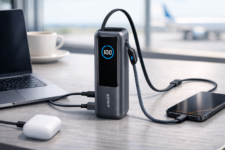
How to read this comparison
The A1695 wins on a couple of raw specs like peak output and built-in cables.
But the Anker 737 is the more balanced choice for everyday travel use: stable multi-device charging, excellent charging visibility via the display, and a “do-it-all” feel that suits most travellers and remote workers.
If your priority is maximum laptop-focused power and built-in cables, the A1695 is a strong pick.
If you want a safer all-round travel power bank, the 737 earns the higher score.
When the Anker Nano 10K Makes More Sense
The Nano 10K is a completely different category. It’s designed for:
- pocket carry
- phone charging
- lightweight travel days
If you mainly need emergency phone power, the Nano is easier to live with.
If you want laptop capable power and multi-device stability, the 737 is in a different class.
Who This Power Bank Is For
- Travellers carrying a laptop
- Remote workers
- Multi-device users (phone + earbuds + tablet/watch)
- Anyone who wants one reliable travel battery rather than a drawer of regrets
Who Should Skip It
- Phone-only users
- Anyone who wants ultra light pocket carry
- Buyers shopping purely for the cheapest option
Charging Tip: Use a 100W Wall Charger
To recharge the Anker 737 efficiently, pair it with a high-wattage USB-C wall charger.
Using a standard phone charger will work, but it can take ages to refill a high-capacity pack. A proper USB-C charger makes the whole experience far more practical for travel.
Pro Tip (cables matter)
If you’re not seeing the charging speed you expected, the culprit is often the USB-C cable. Use a cable rated for higher power to avoid silent speed caps.
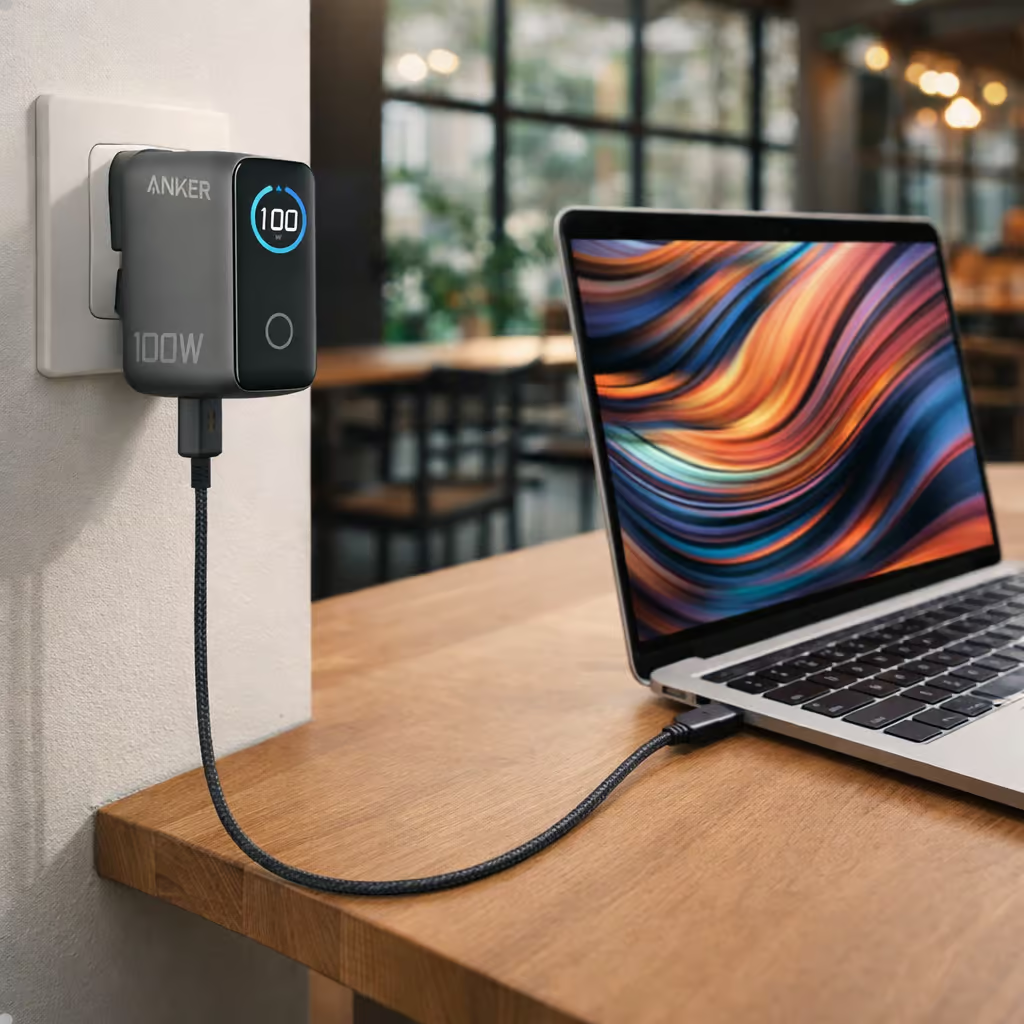
Anker 100W Max USB C Charger, 3-Port GaN
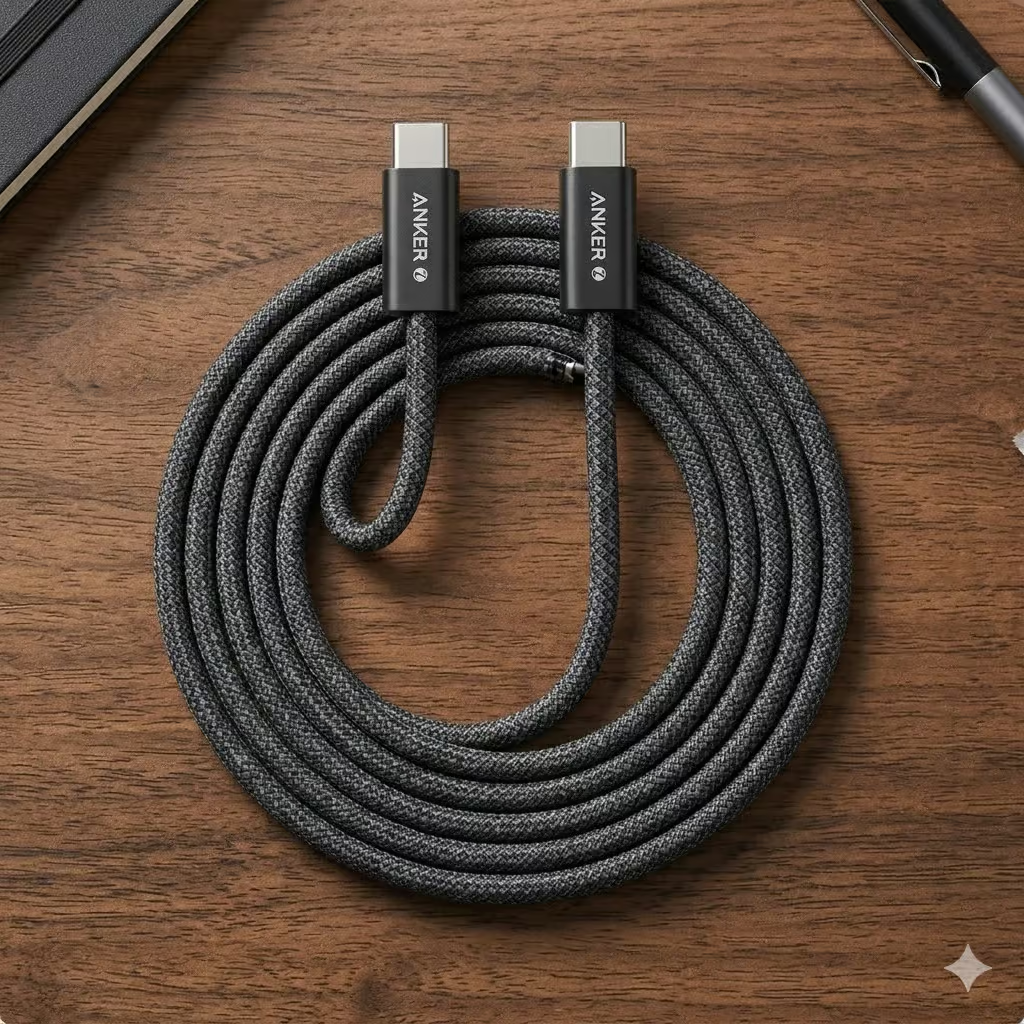
Anker Zolo 240W Fast Charging USB C to USB C Cable
Frequently Asked Questions
Is the Anker 737 allowed on airplanes?
Yes. At 24,000mAh it falls under the typical airline limit of 100Wh for carry-on batteries.
Can it charge a laptop?
Yes. The 737 supports high-output USB-C Power Delivery suitable for many modern laptops.
Is it too heavy for travel?
Not for backpack travel. But it’s noticeably heavier than small pocket power banks.
Is 24,000mAh enough?
For most users it’s more than enough for travel days and multi-device charging.
Is it worth the price?
If you regularly charge a laptop or multiple devices on the move, yes.
Don’t Buy the Anker 737 If…
The Anker 737 is powerful, but it isn’t the right choice for everyone.
You may want a different power bank if:
• You only charge a phone occasionally
• You want something that fits easily in a jacket pocket
• You’re looking for the cheapest option available
In those cases, smaller power banks like the Anker Nano 10K may be a better fit.
Final Verdict
The Anker 737 remains one of the most reliable high-output travel power banks available.
It’s powerful enough for laptop charging, versatile enough for multi-device days, and the smart display genuinely improves real travel usability.
It isn’t light but if you want serious portable power you can depend on, it’s one of the safest buys in 2026.
Anker 737 Power Bank (140W, 24,000mAh) BEST OVERALL
- 8 Best Power Banks for 2026: Tested and Ranked by Use Case
- Best GaN Chargers for Travel in 2026: 5 Picks That Actually Earn Their Place in Your Bag
- Anker Nano 10K Review: A1259 (30W) vs A1638 (45W) – Don’t Buy the Wrong One! (2026)
- Can You Take a Power Bank on a Plane? UK Rules for 2026
- Best Laptop Power Banks for 2026: Top Picks for Travel and Remote Work


[…] Read our Anker 737 full review → […]
[…] you are also looking at the 737, read our Anker 737 review to see how it compares in day to day […]
[…] → ADD INTERNAL LINK BLOCK: Read our full Anker 737 review → https://smartgadgetkit.com/anker-737-power-bank-review/ […]
[…] Anker 737 (89Wh) – our best overall pick for travel and laptop charging. Read the full Anker 737 review: https://smartgadgetkit.com/anker-737-power-bank-review/ […]
[…] Read our full Anker 737 review: https://smartgadgetkit.com/anker-737-power-bank-review/ […]
[…] Read our full Anker 737 review. […]