Best Power Banks 2026: Tested and Ranked by Use Case

This page contains affiliate links. If you buy through them, we may earn a small commission at no extra cost to you. As an Amazon Associate I earn from qualifying purchases.

By Alan, Network Engineer (9 years, 60+ travel days/year) | Last updated: April 2026

7.8
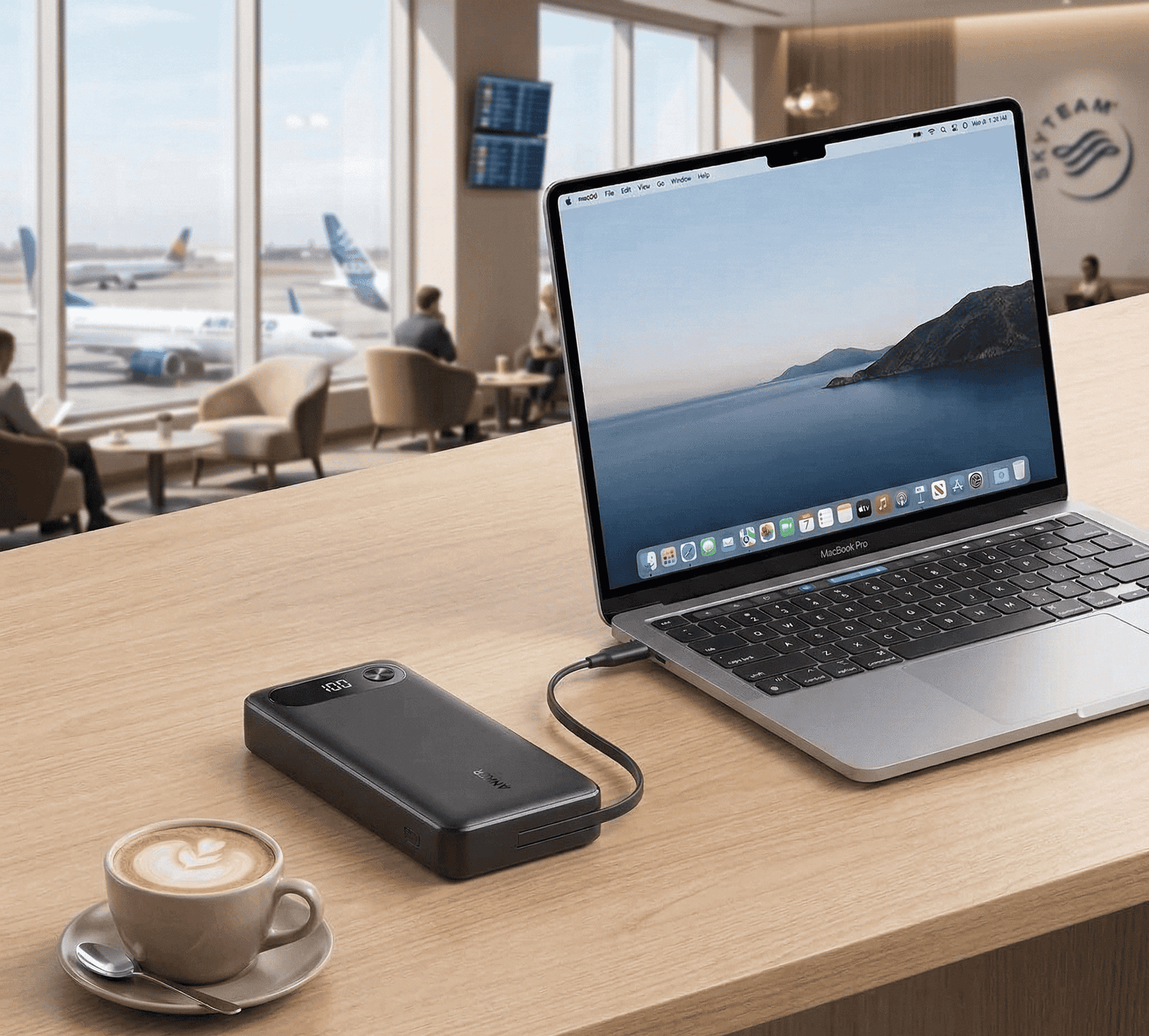
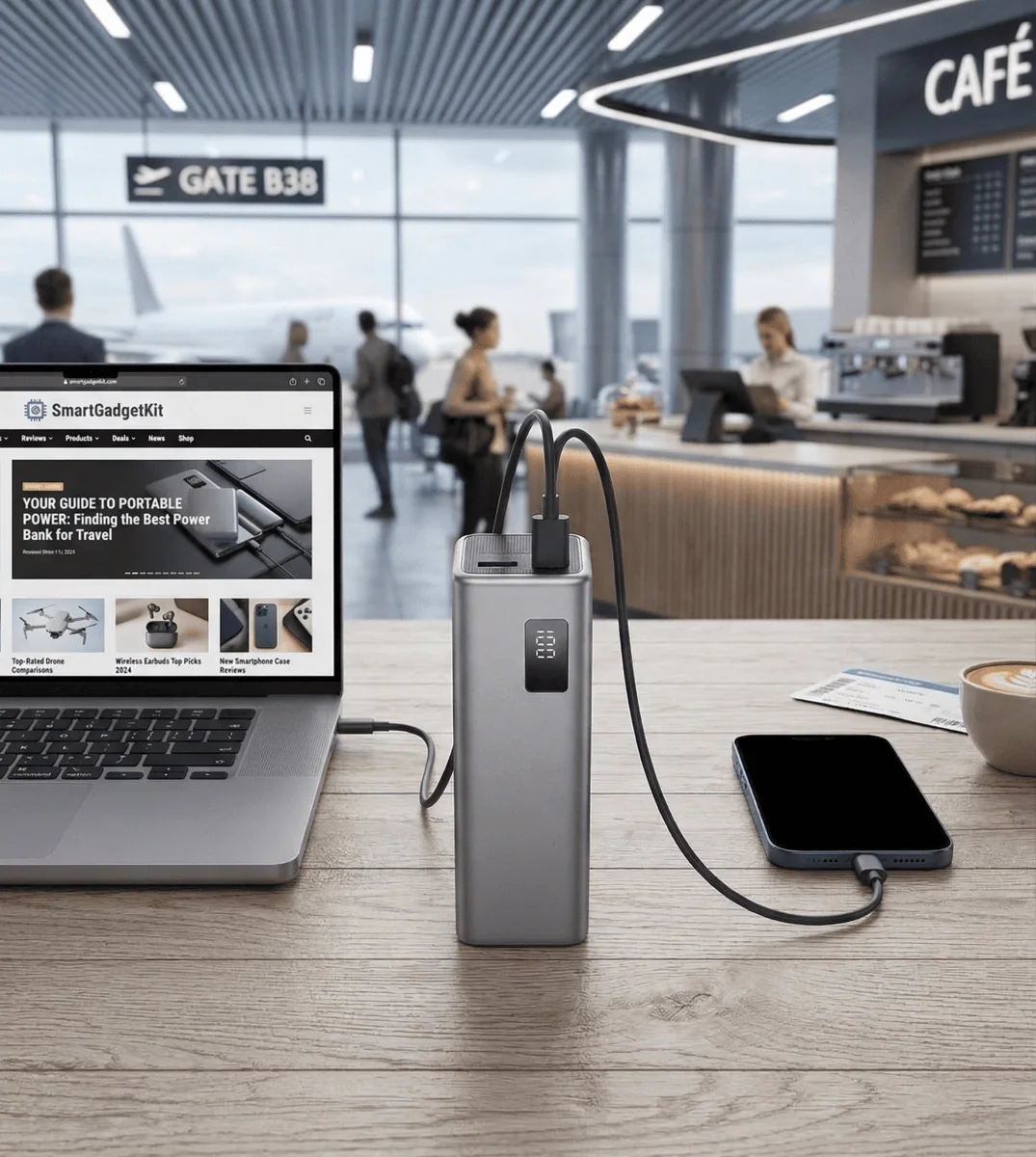
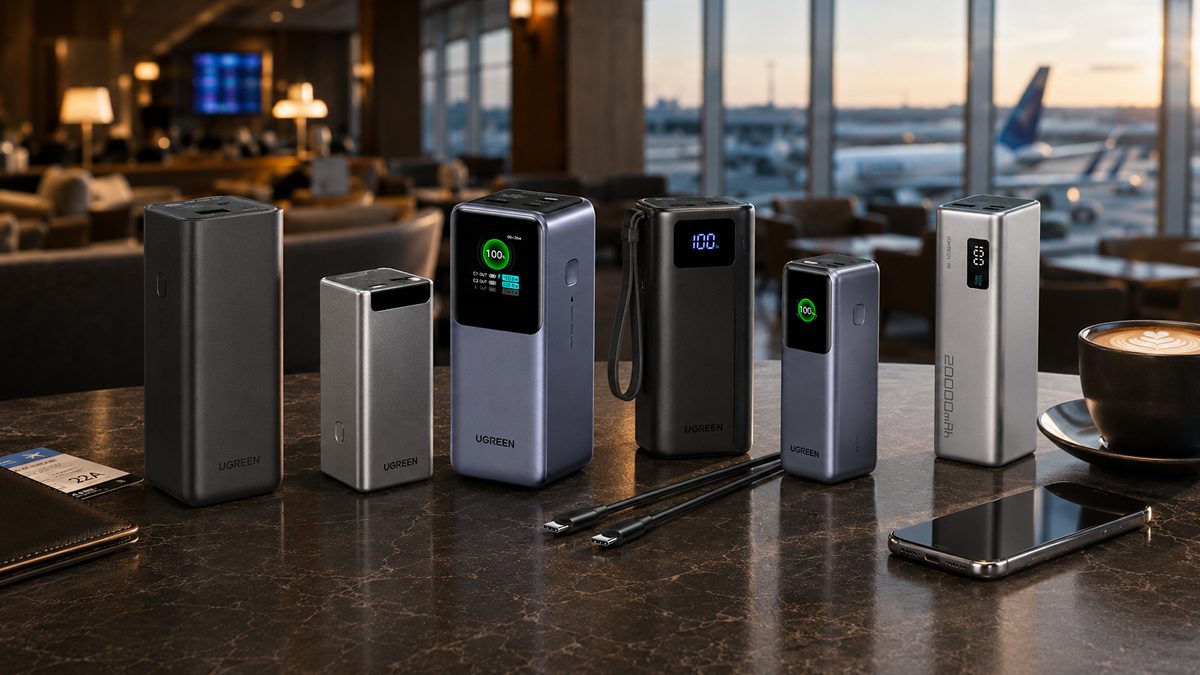
Best power banks 2026 lineup tested for travel, Anker A1383 87W charging a laptop in an airport lounge

Anker 87W 20K (A1383) Best Overall

The one bank that handles phones, tablets, and most laptops without needing a separate cable. Built-in USB-C, 65W single-port output, 20K, and airline-safe at ~74Wh

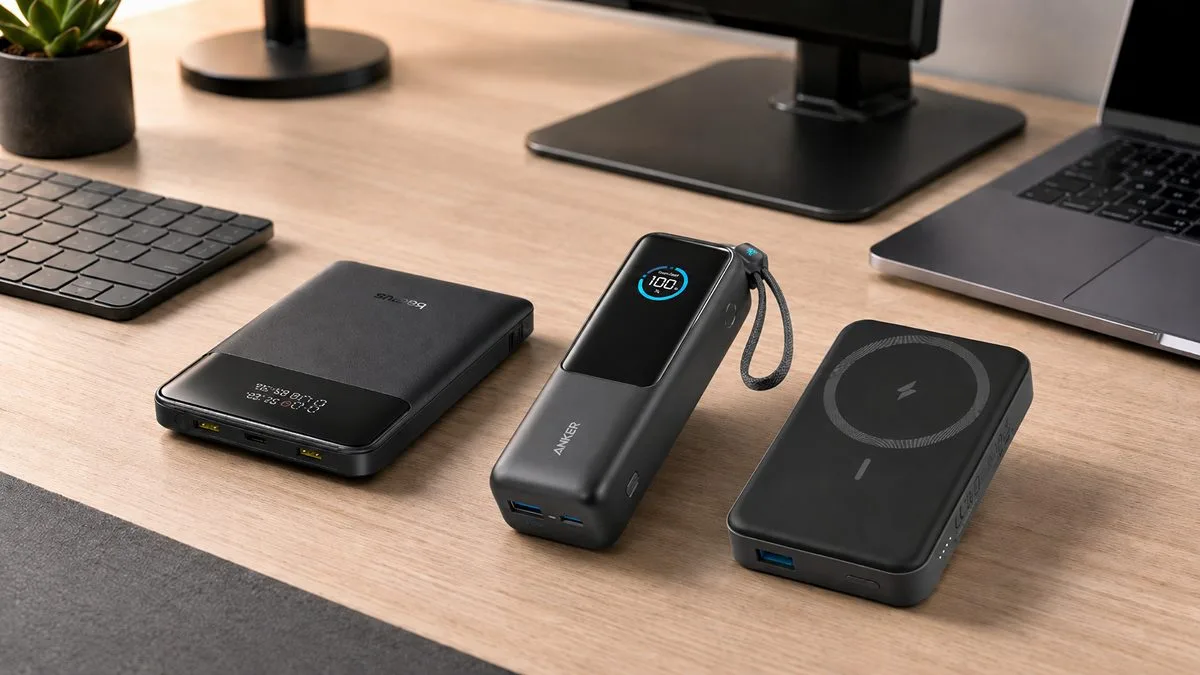
Finding the best power banks 2026 sounds simple until you’ve bought the wrong one. I’ve spent nine years testing charging gear in airports and on the road, and the biggest mistake people make is picking by mAh alone. Capacity tells you how much it holds, not how fast it charges your devices or whether it’ll make it through security. This guide cuts through the noise with eight picks matched to specific use cases, tested against real travel conditions.

  • 20,000mAh in the 80W+ output range is the sweet spot for most people who carry a phone and tablet
  • Output wattage matters as much as capacity. A 20,000mAh bank at 18W won’t charge your MacBook; one at 87W will
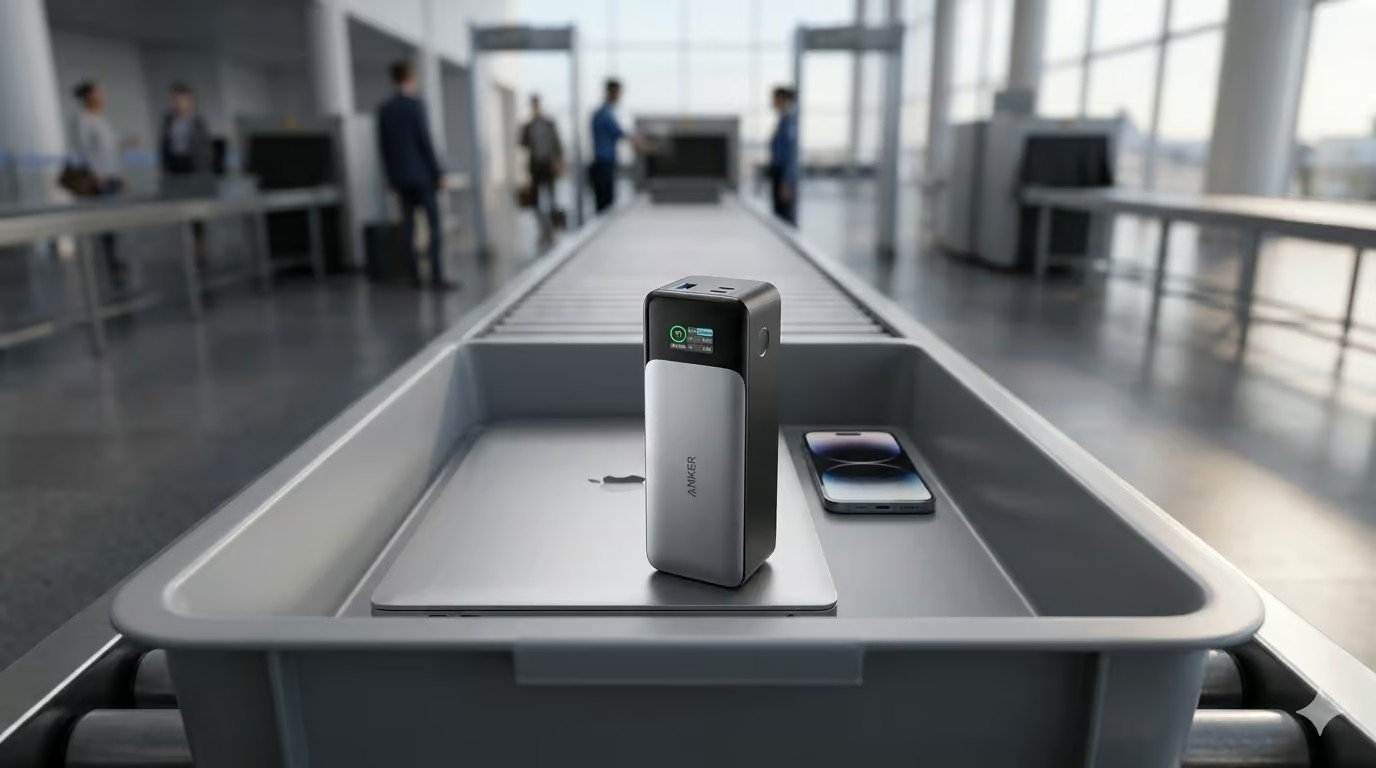
  • Most picks here sit under the 100Wh airline carry-on threshold, but always verify with your airline before you fly

Quick Picks

Bottom Line
Pros
Cons
Best Overall
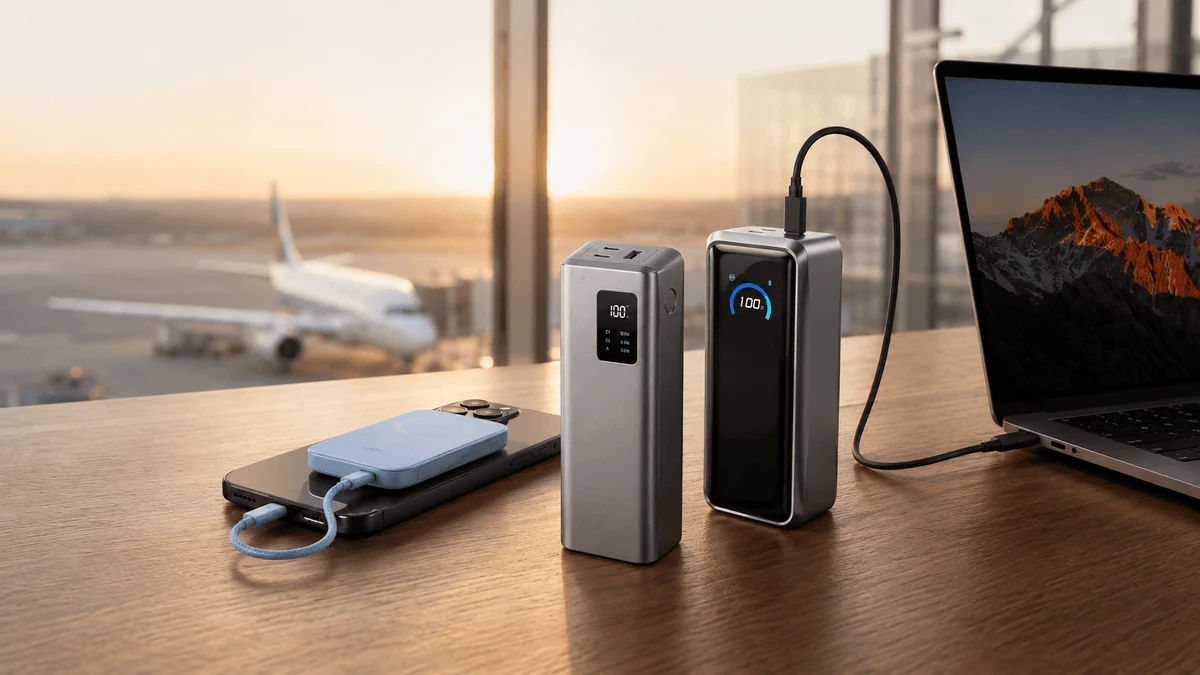
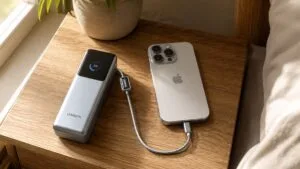
Black Anker A1383 87W power bank charging a silver MacBook on a wooden table in an airport lounge, sitting next to a cup of coffee.
Anker 87W 20K (A1383)
Check latest price
Bottom Line
The one bank that handles phones, tablets and laptops without needing a separate cable
Pros
โž• Built-in 65W cable
โž• 20K capacity
โž• 3 ports
โž• Airline safe
Cons
โž– 431g
โž– LED only
โž– no Percentage display
Best Everyday Carry
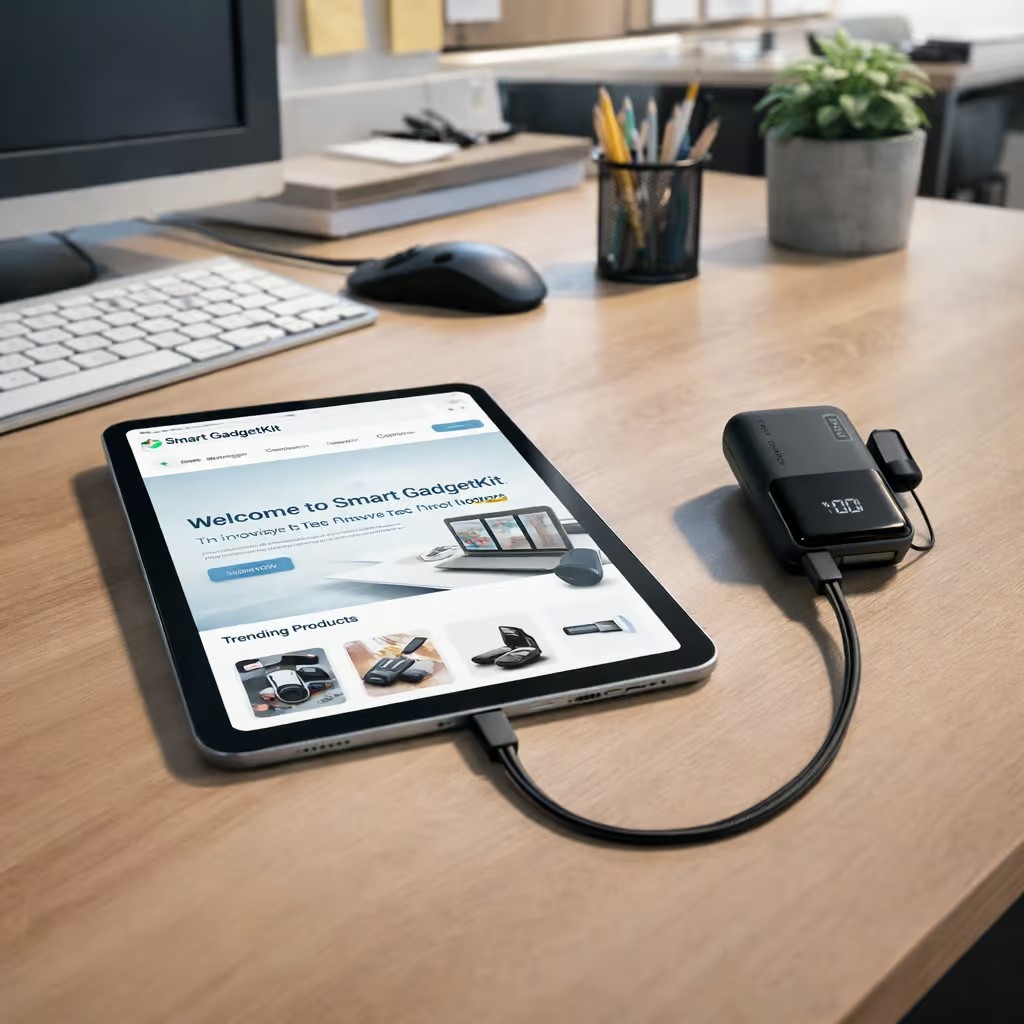
Black INIU P50 (P50-E1) 10000mAh mini power bank with LED display charging a tablet on a desk. Best 45W portable charger for travel.
INIU Pocket Rocket P50
Check latest price
Bottom Line
World’s smallest 10K 45W bank. Genuinely pocket-sized at 160g
Pros
โž• 160g
โž• Detachable lanyard cable
โž• Percentage display
โž• 3-year warranty
Cons
โž– Won’t charge laptops
โž– 45W
โž– Needs E-Marker cable
Best for Travel Weight
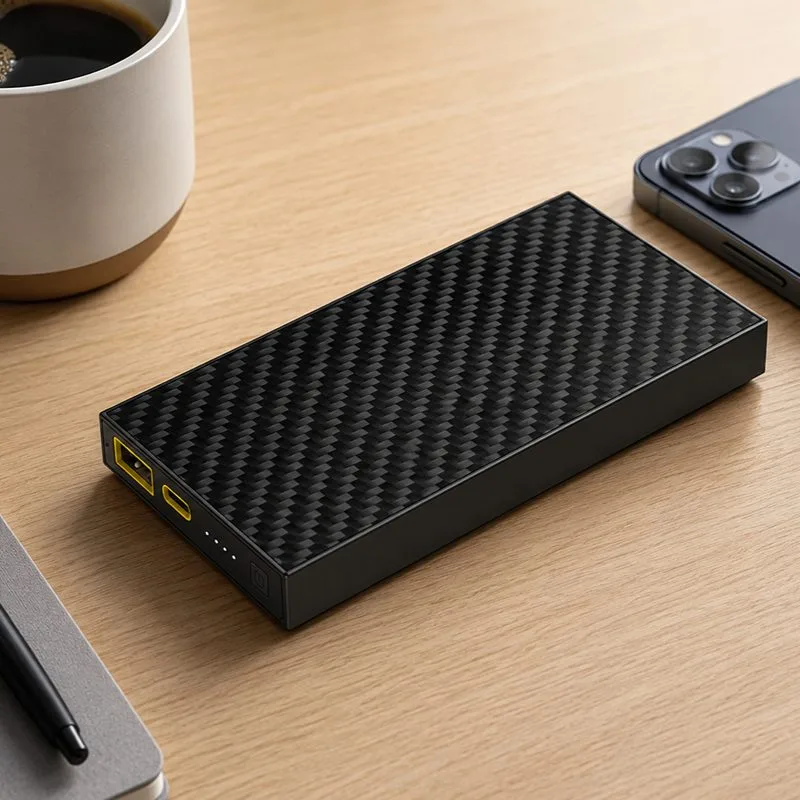
Nitecore NB10000 Gen 4 ultralight carbon fiber power bank on a cafe table next to a coffee cup, showing its slim design
Nitecore NB10000
Gen 4
Check latest price
Bottom Line
143g with IPX7 waterproofing. The benchmark for ultralight travel
Pros
โž• 143g
โž• IPX7 rated, silicon-carbon cells
โž• Built-in lanyard cable
Cons
โž– 22.5W
โž– Won’t fast-charge laptops
โž– Not on Amazon yet
Best for Laptop
Anker A1695 25,000mAh Laptop Power Bank with built-in retractable USB-C cables charging a laptop and phone.
Anker A1695 25K 165W
Check latest price
Bottom Line
Triple 100W ports with fixed and retractable built-in cables โ€” the serious laptop pick
Pros
โž• 3x 100W USB-C โž• Retractable cable โž• 30% charge in 20 mins
โž• Smart display
Cons
โž– 595g
โž– 90Wh needs airline check
Bottom Line
Pros
Cons
Best Compact Output
CUKTECH 15 Ultra 20,000mAh power bank isolated on a clean background, featuring a sleek silver metallic finish and a digital LED status display showing 100% charge. ๐Ÿ”‹
CUKTECH 15 Ultra
20K
Check latest price
Bottom Line
140W from a single port with a live wattage display
Rare at this price
Pros
โž• 140W single port.
โž• TFT wattage display
โž• PD 3.1 cable included
Cons
โž– 590g
โž– No built-in cable
โž– Actual stats need to be verified.
Best Value
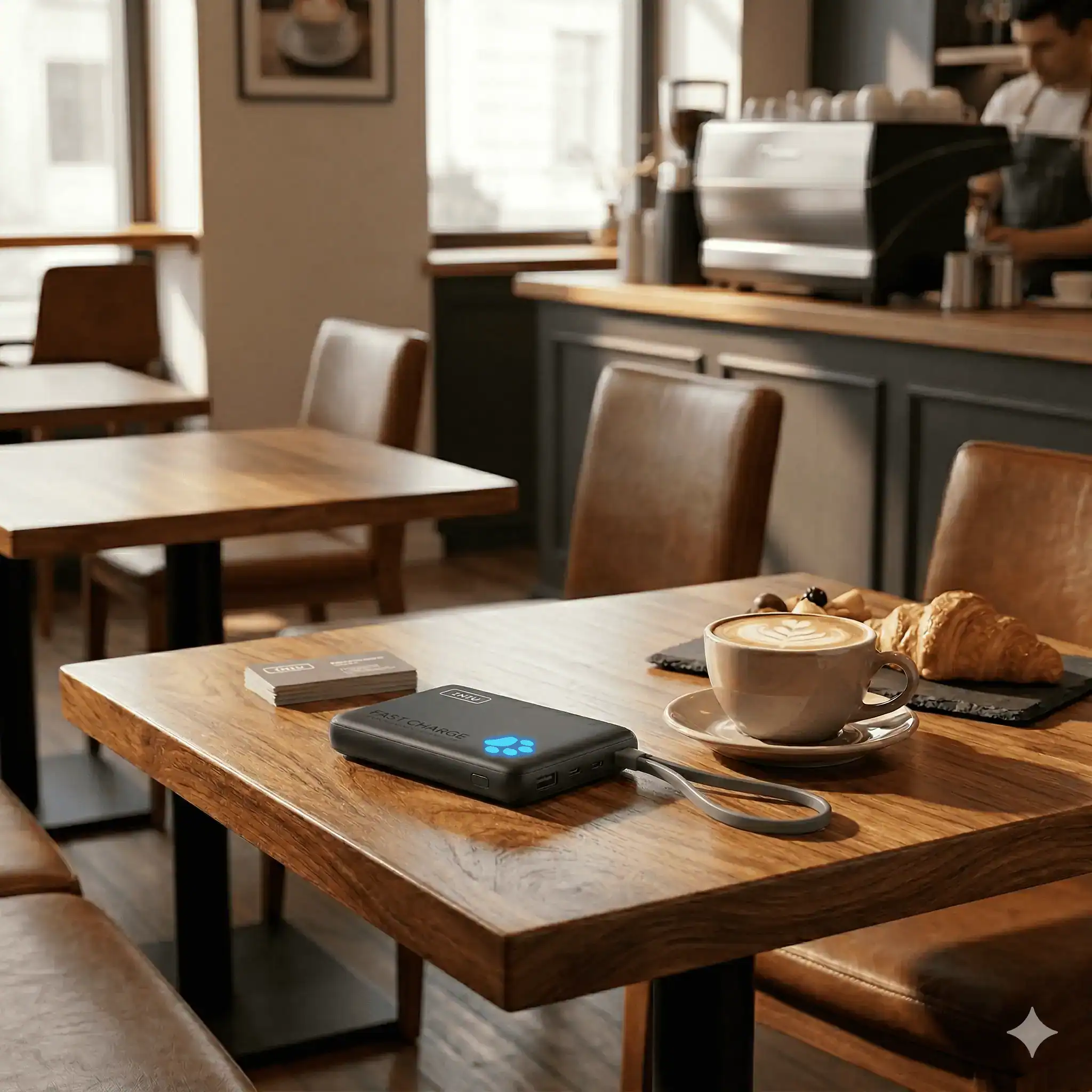
INIU P41L 10,000mAh 45W power bank with a glowing blue paw print indicator on a wooden cafe table next to a latte.
INIU P41L 10K
45W
Check latest price
Bottom Line
45W with a built-in cable at budget pricing. The easiest recommendation in this list
Pros
โž• Budget priced
โž• Built-in 45W cable
โž• Slim at 18mm
โž• 2x USB-C
Cons
โž– Paw print LED only
โž– no Percentage display
โž– 179g
Best magnetic
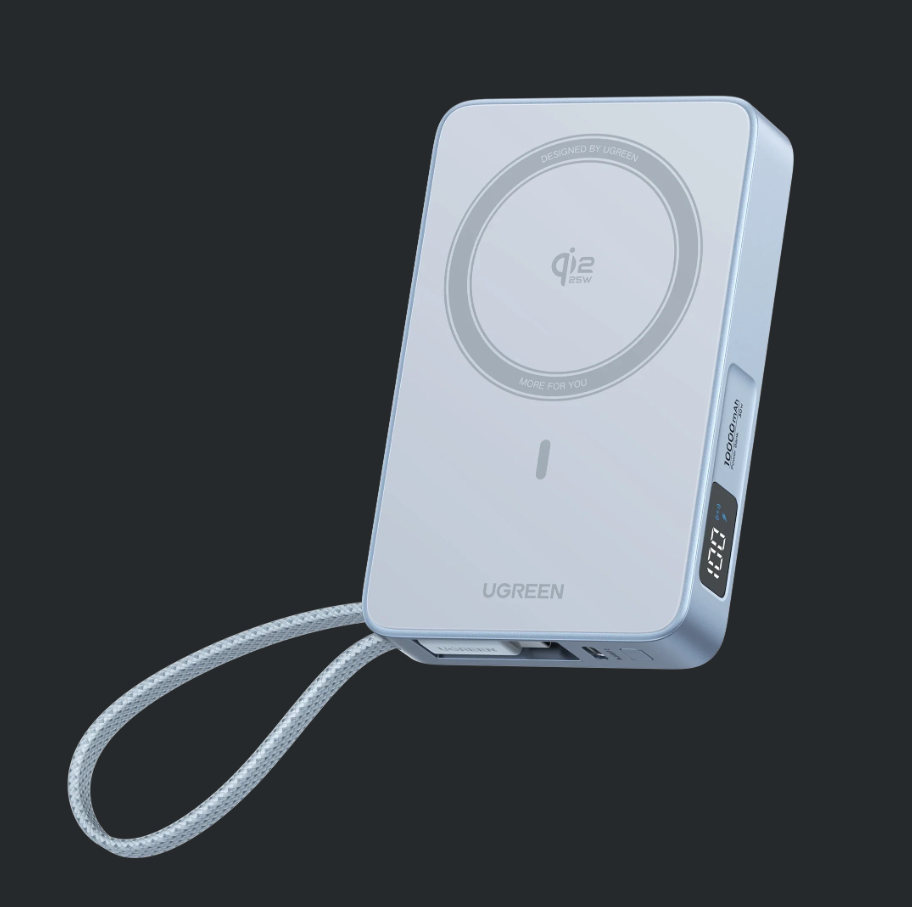
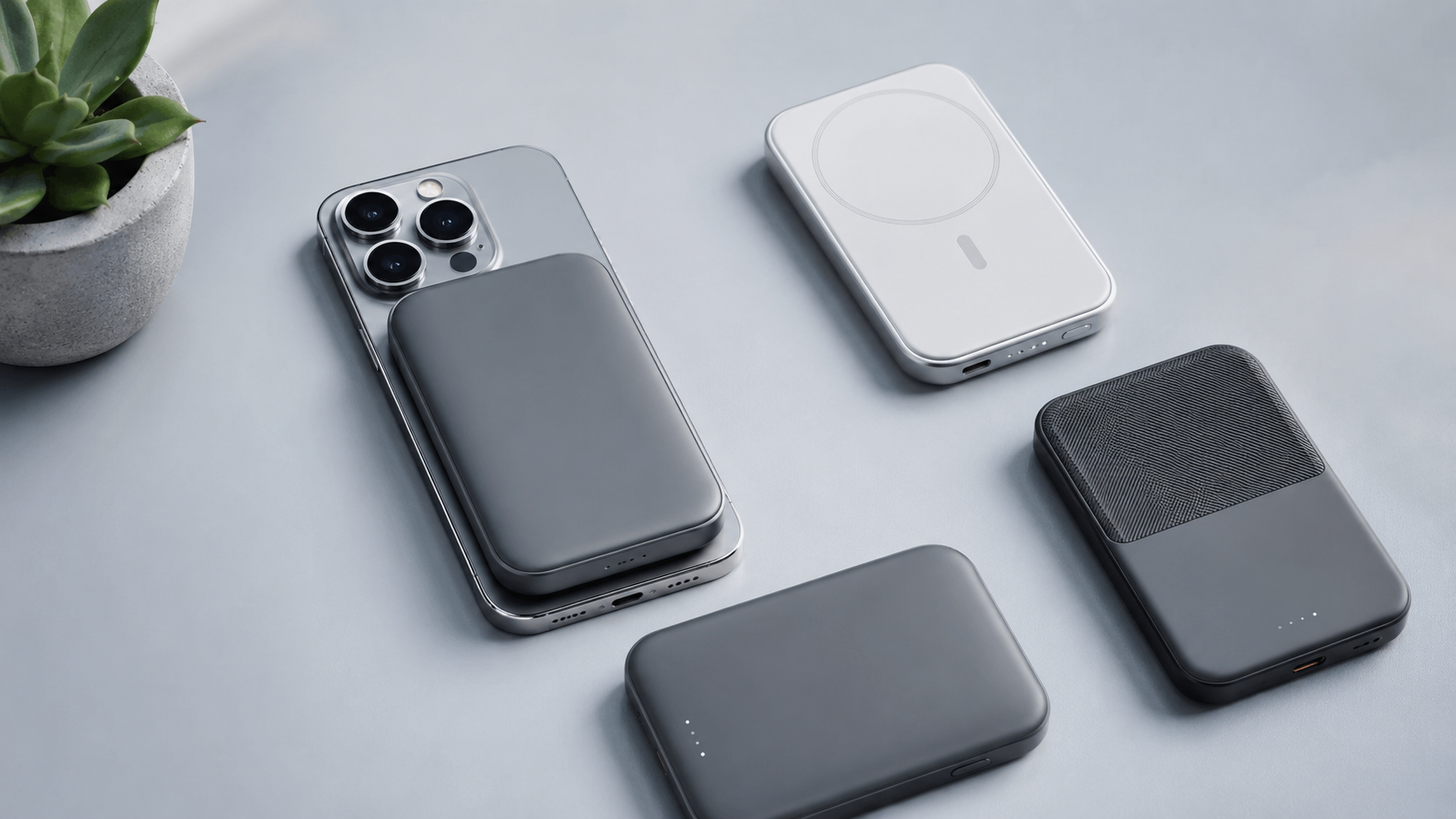
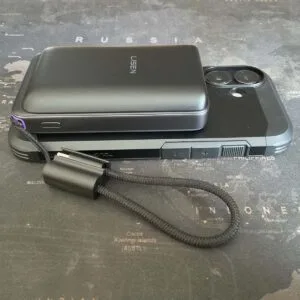
Smartphone resting on a slim Anker MagGo 10000mAh Qi2 magnetic power bank on a desk next to a notebook. Best travel charger.
Anker MagGo 10K Slim (A1664)
Check latest price
Bottom Line
The tidiest MagSafe power bank for iPhone users who hate cables. Snaps on and charges wirelessly while you use your phone.
Pros
โž• MagSafe snap-on wireless charging
โž• 30W wired USB-C output
โž• Slim profile
Cons
โž– 15W wireless is slower than wired
โž– Android users get no benefit from the mag mount
Best premium
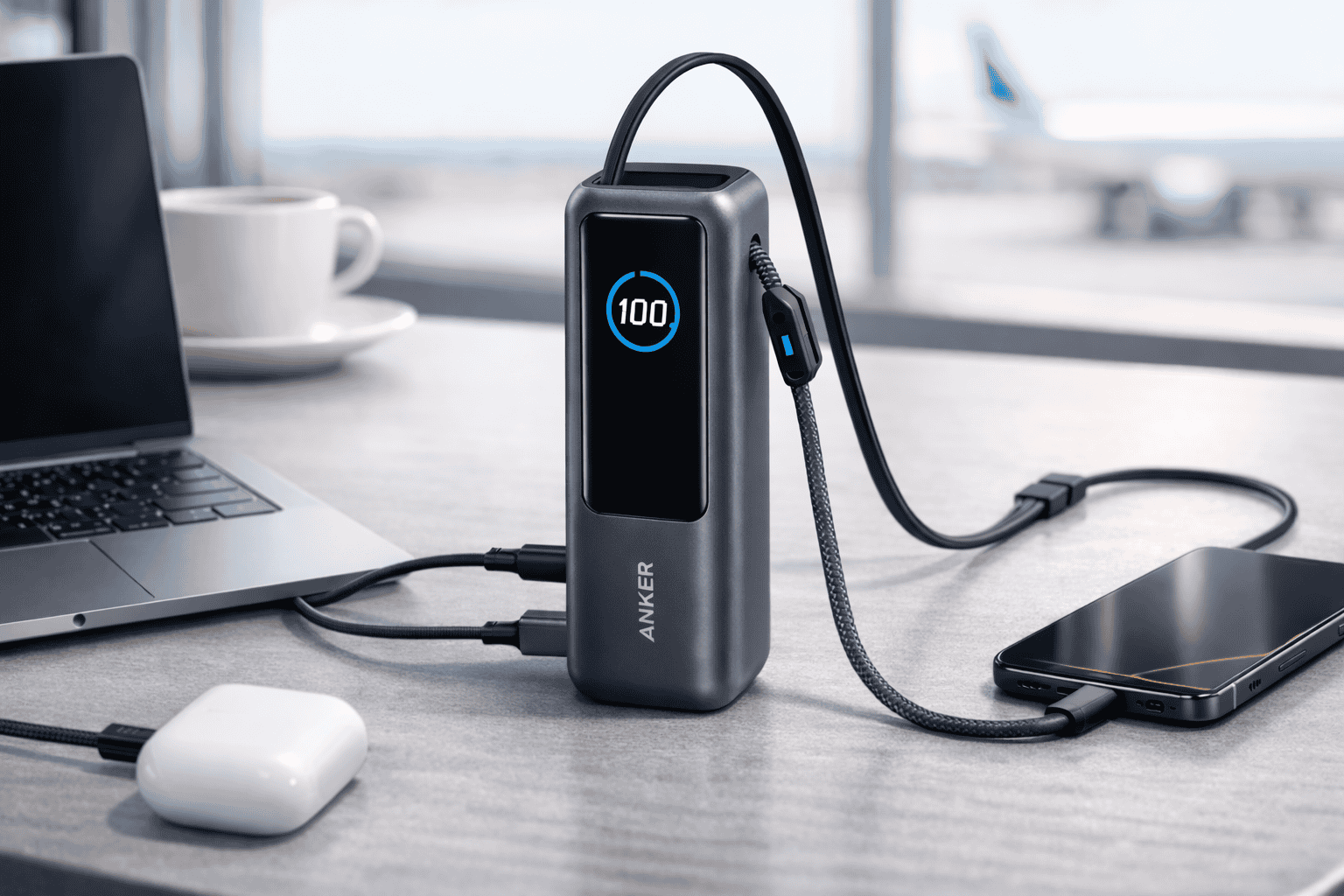
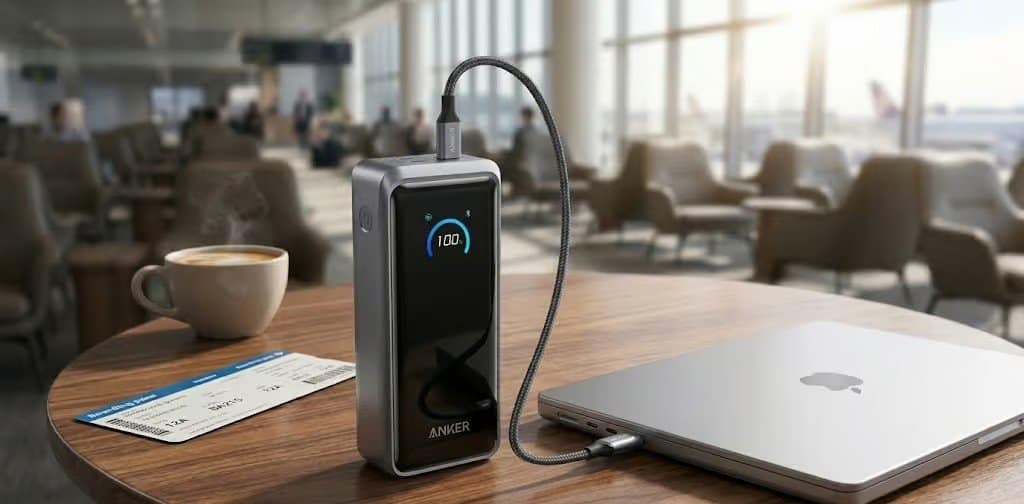
Best laptop power banks 2026 travel comparison. Anker 737 charging a laptop and phone at an airport.
Anker Prime 26K 300W
Check latest price
Bottom Line
If you need to charge a laptop, tablet, and phone at the same time without slowing any of them down, this is the one.
Pros
โž• 300W total output โž• Charges full-size laptops at full speed
โž• 26K
โž• Smart app with power tracking
Cons
โž– Expensive / Heavy โž– This is a bag item, not a pocket item

Scroll down for the full breakdown on each pick, including verified specs, who each one is for, and who should skip it.


Pick 1: Anker 87W 20,000mAh (A1383) | ๐Ÿ… Best Overall

Best power banks 2026 lineup tested for travel, Anker A1383 87W charging a laptop in an airport lounge
The Anker 20,000mAh Power Bank (87W) provides enough high-speed output to charge a laptop on the go. โšก
7.9
Best power banks 2026 lineup tested for travel, Anker A1383 87W charging a laptop in an airport lounge

Anker 87W 20K (A1383) Best Overall

The one bank that handles phones, tablets, and most laptops without needing a separate cable. Built-in USB-C, 65W single-port output, 20K, and airline-safe at ~74Wh.

Finding the best power banks 2026 has to offer means cutting through dozens of near-identical listings and working out which ones actually perform when you need them. I’ve tested eight power banks across airport layovers, long-haul flights, and multi-day trips, matching each one to a specific use case rather than just ranking on capacity. Every pick below has verified specs pulled straight from the manufacturer, plus honest notes on where each one shines and where it falls short.

It’s 87W total output with a 65W single-port max, which means it’ll charge a MacBook Air at a useful rate and get an iPhone from flat to full in around 90 minutes. That’s the combination that matters for most people..

Key takeaways

  • Built-in USB-C cable means you’re never caught without a lead.
  • 65W single-port max is enough to meaningfully charge most laptops.
  • 20,000mAh (~74Wh) sits within standard airline carry-on limits.

Who it’s for

Anyone who carries a phone and laptop daily and wants one power bank that handles both without needing to pack a separate cable. It’s also ideal for anyone who’s ever reached the bottom of their bag looking for a lead at a bad moment.

Who should skip it

If you fly frequently and want something under 200g, the 431g weight will feel significant. Go for Pick 2 or Pick 3 instead.

Verified specs

SpecValue
Capacity20,000mAh
Wh rating~74Wh typically within carry-on limits, always check your airline
Max output (total)87W
Max output (single port)65W USB-C
Charging protocolsUSB-C PD 3.0 (65W), PPS, QC 3.0, SCP (22.5W USB-A)
Ports2x USB-C + 1x USB-A
Built-in cableYes, fixed USB-C (65W)
Weight430.91g
Dimensions157.5 x 73.5 x 26mm
DisplayLED indicator

Specs source

Real world charge estimates

This bank holds 74Wh. After transfer losses (about 15%), you get roughly 63Wh of usable energy (calculated estimate). Here’s what that means in full charges:

DeviceBatteryFull charges
iPhone 16~13Wh~4.8
Samsung Galaxy S24 Ultra~19Wh~3.3
iPad Pro 11-inch~31Wh~2.0

Figures are calculated estimates based on 85% transfer efficiency. Real-world results vary by cable, protocol negotiation, and device age.

Carry rating notes

The A1383 is a bag bank, not a pocket one. At 431g and 157.5 x 73.5 x 26mm it’s close in footprint to a deck of cards but noticeably heavier, you’ll feel it in a jacket pocket and it’ll sag a thin coat. In a backpack, laptop bag, or tote it disappears into the mix. If you carry a daily bag anyway, this is a perfect fit. If you’re trying to go bagless with just a jacket, pick something lighter.

7.8Expert Score
BEST OVERALL

Reliable all-day performance with a built-in cable, three ports, and enough capacity for a full travel day.

Charging Speed
9
Carry Rating
6
Value for Money
9
Cable Design
7
Expert Score
7.8
Pros
  • Built-in cable eliminates the most common travel fumble.
  • 65W single-port output charges most laptops at a useful rate
  • 20,000mAh capacity covers two full phone charges and a tablet top-up
  • Three ports let you run two USB-C devices plus a USB-A device simultaneously
Cons
  • 431g makes it noticeably heavier than compact 10K picks
  • LED indicator only, no percentage readout
  • Fixed cable can't be swapped if damaged
7.8
Best power banks 2026 lineup tested for travel, Anker A1383 87W charging a laptop in an airport lounge

Anker 87W 20K (A1383) Best Overall

The one bank that handles phones, tablets, and most laptops without needing a separate cable. Built-in USB-C, 65W single-port output, 20K, and airline-safe at ~74Wh

Pick 2: INIU Pocket Rocket P50 (P50-E1) | ๐Ÿ…Best Everyday Carry

Black INIU P50 (P50-E1) 10000mAh mini power bank with LED display charging a tablet on a desk. Best 45W portable charger for travel.
At 160g, the INIU P50 genuinely disappears into a jacket pocket, one of the smallest 10,000mAh 45W banks on the market.

The P50 is the answer to a very specific question: what’s the smallest 10,000mAh bank with fast charging that you’ll actually keep in your bag every day? At 160g and 83 x 52 x 26mm, it genuinely disappears into a jacket pocket. INIU’s TinyCell Pro technology is doing real work here, not just marketing. The energy density is measurably better than older 10K designs at similar weight.

The detachable lanyard cable is a good idea executed well. It’s 3A-rated and works fine for phone charging. If you want to push the full 45W from the main port, bring your own E-Marker USB-C cable. The included one won’t bottleneck regular use, but it won’t hit peak output either.

Key takeaways

  • One of the smallest 10,000mAh 45W power banks currently available
  • Detachable lanyard cable is a genuine convenience, not gimmick
  • Six colour options if you care about that kind of thing

Who it’s for

Daily commuters, light travellers, or anyone who wants a 10K bank in their pocket every day without noticing it’s there. TechRadar ranked it #2 overall in 2026 for this exact reason.

Who should skip it

If you need to charge a laptop or run multiple devices simultaneously, you want Pick 1 or Pick 4. The P50 is a phone-and-earbuds bank, not a multi-device one.

Verified specs INIU Pocket Rocket P50

SpecValue
Capacity10,000mAh
Wh rating~37Wh, typically within carry-on limits, always check your airline
Max output45W (single USB-C)
Ports2x USB-C (in/out), 1x USB-A
Charging protocolsPD, QC, Samsung SFC 2.0 (PPS)
Built-in cableDetachable lanyard USB-C to USB-C
Weight160g
Dimensions83 x 52 x 26mm
Display0.5mm monochrome % readout
Cell techTinyCell Pro
Warranty3 years (INIU Care)

Specs source

Real world charge estimates

This bank holds 37Wh. After transfer losses (about 15%), you get roughly 31Wh of usable energy (calculated estimate). Here’s what that means in full charges:

DeviceBatteryFull charges
iPhone 16~13Wh~2.4
Samsung Galaxy S24 Ultra~19Wh~1.6
iPad Pro 11-inch~31Wh~1.0

Figures are calculated estimates based on 85% transfer efficiency. Real-world results vary by cable, protocol negotiation, and device age.

Carry rating notes

The P50 is a true pocket bank. At 160g it’s about the weight of a deck of cards, and 83 x 52 x 26mm makes it roughly the size of a credit card with some thickness. It fits cleanly in a jeans pocket, a jacket pocket, or a shirt pocket without sagging the fabric. The detachable lanyard cable means it can hook onto a bag strap or keychain if you prefer. This is a bank you’ll actually carry every day without thinking about it.

8Expert Score
INIU Pocket Rocket P50 (P50-E1)

Place here Description for your reviewbox

Charging Speed
8
Carry Rating
8
Value for Money
8
Cable Design
8
Expert Score
8
Pros
  • 160g makes it one of the lightest 10K 45W banks available
  • Detachable lanyard cable removes the "no cable" problem without adding bulk
  • Real-time percentage display is genuinely useful
  • Real-time percentage display is genuinely useful
Cons
  • 45W peak requires an E-Marker cable beyond the included lanyard
  • Single-port max limits multi-device simultaneous fast charging
  • 10,000mAh won't cover a tablet and phone on a long-haul flight
8
Black INIU 10000mAh mini power bank with LED display charging a tablet on a desk. Best 45W portable charger for travel.

INIU Pocket Rocket P50 BEST EVERYDAY CARRY

The smallest 10,000mAh 45W bank on the market. 160g, detachable lanyard cable, real-time percentage display. The bank you’ll actually carry daily.

Pick 3: Nitecore NB10000 Gen 4 | ๐Ÿ… Best for Travel Weight

Nitecore NB10000 Gen 4 carbon fiber power bank charging a GPS bike computer on a wooden table with mountain bikes and alpine peaks in the background
At 143g with a carbon fibre shell and IPX7 rating, the Gen 4 is the lightest 10,000mAh power bank available.

The Gen 4 launched on 29 January 2026 and it’s the first consumer power bank to use silicon-carbon anode cells. That matters because silicon-carbon has a higher energy density than standard lithium-ion, which is why you get 10,000mAh in a 143g body that’s thinner than most phones. Every previous Nitecore NB10000 was already the benchmark for travel weight at this capacity. The Gen 4 makes it better.

The 22.5W output is up from Gen 3’s 20W, and the new 9V high-voltage platform pushes usable output by around 20% compared to the previous generation. It’s IPX7 water-resistant, the first in the NB series to hit that rating, and comes with a built-in USB-C lanyard cable that charges at up to 60W input. For pure weight-versus-capacity in a travel context, nothing in this list competes.

Key takeaways

  • 143g / 10,000mAh is the best weight-to-capacity ratio at this output level
  • IPX7 water resistance is unique at this size
  • Silicon-carbon cells deliver around 20% more usable energy than Gen 3

Who it’s for

Anyone comparing the best power banks 2026 has delivered for ultralight travel will keep coming back to this one. Trail runners, hikers, frequent flyers who measure carry-on weight down to the gram, and anyone with a genuine pack-weight constraint. The carbon fibre body handles being thrown around without adding mass.

Who should skip it

If you need to charge a laptop or multiple devices, the 22.5W max output won’t cut it. This is a precision tool for weight-conscious travellers, not a workhorse multi-device bank.

Verified specs

SpecValue
Capacity10,000mAh
Wh rating39Wh, typically within carry-on limits, always check your airline
Max output22.5W per port
Charging protocolsUSB-C PD 3.0 (22.5W), QC 3.0
Ports2x USB-C
Input22.5W max
Built-in cableYes, USB-C lanyard (60W input capable)
Weight143g
Dimensions116 x 46.8 x 14.5mm
Cell technologySilicon-carbon anode
Water resistanceIPX7
Body materialCarbon fibre
Specs source

Real world charge estimates

This bank holds 39Wh. After transfer losses (about 15%), you get roughly 33Wh of usable energy (calculated estimate). Here’s what that means in full charges:

DeviceBatteryFull charges
iPhone 16~13Wh~2.5
Samsung Galaxy S24 Ultra~19Wh~1.7
iPad Pro 11-inch~31Wh~1.1

Figures are calculated estimates based on 85% transfer efficiency. Real-world results vary by cable, protocol negotiation, and device age.

Carry rating notes

The Gen 4 is the lightest pocket bank in this roundup. At 143g it’s lighter than most flagship phones, and at 14.5mm thick it’s genuinely thinner than most phones too. It vanishes into a jeans pocket, a jacket pocket, or a hip belt pocket without noticing. The carbon fibre shell handles being thrown around, and the IPX7 rating means it’s fine in a bag with a water bottle or a rain jacket that got a bit wet. For hikers, runners, or minimalist travellers, this is the one to reach for.

7.8Expert Score
BEST FOR TRAVEL WEIGHT

The lightest 10,000mAh bank available, with silicon-carbon cells, IPX7 water resistance, and a carbon fibre shell.

Charging Speed
6
Carry Rating
10
Value for Money
7
Cable Design
8
Expert Score
8
Pros
  • 143g is lighter than most flagship phones, you won't notice it in your bag
  • IPX7 rating handles rain, humidity, and water bottle leaks
  • Silicon-carbon cells deliver genuinely better usable capacity than standard li-ion at this size
  • Carbon fibre shell is durable without adding weight
Cons
  • 22.5W max output won't fast-charge a laptop
  • Not yet on Amazon at time of publishing
  • Higher price per mAh than budget alternatives
7.8
Nitecore NB10000 Gen 4 carbon fiber power bank charging a GPS bike computer on a wooden table with mountain bikes and alpine peaks in the background

Nitecore NB10000 Gen 4 Best for Travel Weight

143g with a carbon fibre shell and IPX7 waterproofing. The benchmark for ultralight travel โ€” lighter than most phones, tougher than most power banks.

Pick 4: Anker A1695 25K 165W | ๐Ÿ… Best for Laptop Charging

Anker A1695 140W power bank charging two laptops and a phone, showing its high capacity for travel.
Three 100W USB-C ports, a fixed and retractable built-in cable, and 30% self-charge in 20 minutes. Anker’s designated 737 successor for laptop charging.

The A1695 is Anker’s current answer to the question of what replaces the 737 for people who need to charge a laptop on the go. Three USB-C ports, each capable of 100W, a real-time smart display, and both a fixed and retractable built-in cable. It’s a well-thought-out package for the use case. Expert Reviews endorsed it in their 2026 roundup, which makes the value case hard to argue with.

The self-charge speed is worth highlighting: 30% in 20 minutes at 100W input. If you find a plug for 20 minutes at the airport, you’re walking away with meaningful capacity. At 90Wh, it’s technically above the common 100Wh airline threshold, so check your airline’s specific policy before you fly.

Key takeaways

  • Three USB-C ports at 100W each lets you run a laptop and two phones simultaneously
  • Retractable plus fixed built-in cables cover most cable-forgetting scenarios
  • 30% self-charge in 20 minutes makes short airport stops genuinely useful

Who it’s for

Business travellers and anyone who needs to charge a MacBook, Dell XPS, or similar laptop away from a plug. If your laptop is your main work tool and you travel regularly, this is the pick to shortlist.

Who should skip it

At 90Wh, the A1695 sits within standard carry-on limits but close to the 100Wh threshold where some airlines require approval. Always check your airline’s policy before travelling. If you only need to charge phones and tablets, the A1383 at Pick 1 is a better fit.

Verified specs

SpecValue
Capacity25,000mAh
Wh rating90Wh, typically within carry-on limits, always check your airline
Max output (total)165W (two devices) / 130W (three devices)
Max output per port100W USB-C
Charging protocolsUSB-C PD 3.0 (100W), PPS, QC 3.0, SCP, UFCS, AFC, Apple 2.4A
Ports3x USB-C + 1x USB-A (33W)
Built-in cablesYes, 1x fixed USB-C + 1x retractable USB-C
Weight595g
Dimensions157 x 54 x 49mm
Self-charge speed30% in 20 minutes at 100W input
DisplayReal-time smart display
SafetyActiveShield 2.0 temperature monitoring

Specs source: anker.com

Real world charge estimates

This bank holds 90Wh. After transfer losses (about 15%), you get roughly 77Wh of usable energy (calculated estimate). Here’s what that means in full charges:

DeviceBatteryFull charges
iPhone 16~13Wh~5.9
Samsung Galaxy S24 Ultra~19Wh~4.0
iPad Pro 11-inch~31Wh~2.5

Figures are calculated estimates based on 85% transfer efficiency. Real-world results vary by cable, protocol negotiation, and device age.

Carry rating notes

The A1695 is a backpack bank, not a pocket one. At 595g and a chunky 157 x 54 x 49mm, it’s the heaviest pick in this list. In a dedicated laptop bag or a decent backpack it sits next to your charger and cables without issue, but you won’t want this in a jacket pocket or a thin tote. This is a travel-day bank: pack it, use it, don’t try to carry it casually. If your daily kit already includes a bag with a tech pouch, it’s a perfect fit.

8Expert Score
BEST FOR LAPTOP CHARGING

Three 100W USB-C ports, retractable and fixed cables, and a real-time display. Anker’s designated 737 replacement.

Charging Speed
10
Carry Rating
3
Value for Money
9
Cable Design
10
Expert Score
8
Pros
  • Three 100W USB-C ports covers a laptop plus two phones
  • Retractable cable is a cut above fixed built-in cables on most rivals
  • Smart display shows accurate remaining capacity
  • ActiveShield 2.0 thermal monitoring is reliable in-bag safety
Cons
  • 90Wh is close to the 100Wh airline limit, verify before flying
  • 165W total output over three devices requires all three ports active
  • 595g is the heaviest pick in this list
8
Anker A1695 140W power bank charging two laptops and a phone, showing its high capacity for travel.

Anker A1695 25K 165W Best FOR LAPTOP CHARGING

Three 100W USB-C ports, fixed plus retractable built-in cables, 30% self-charge in 20 minutes. The laptop-charging benchmark.

Pick 5: CUKTECH 15 Ultra 20K | ๐Ÿ… Best Compact High Output

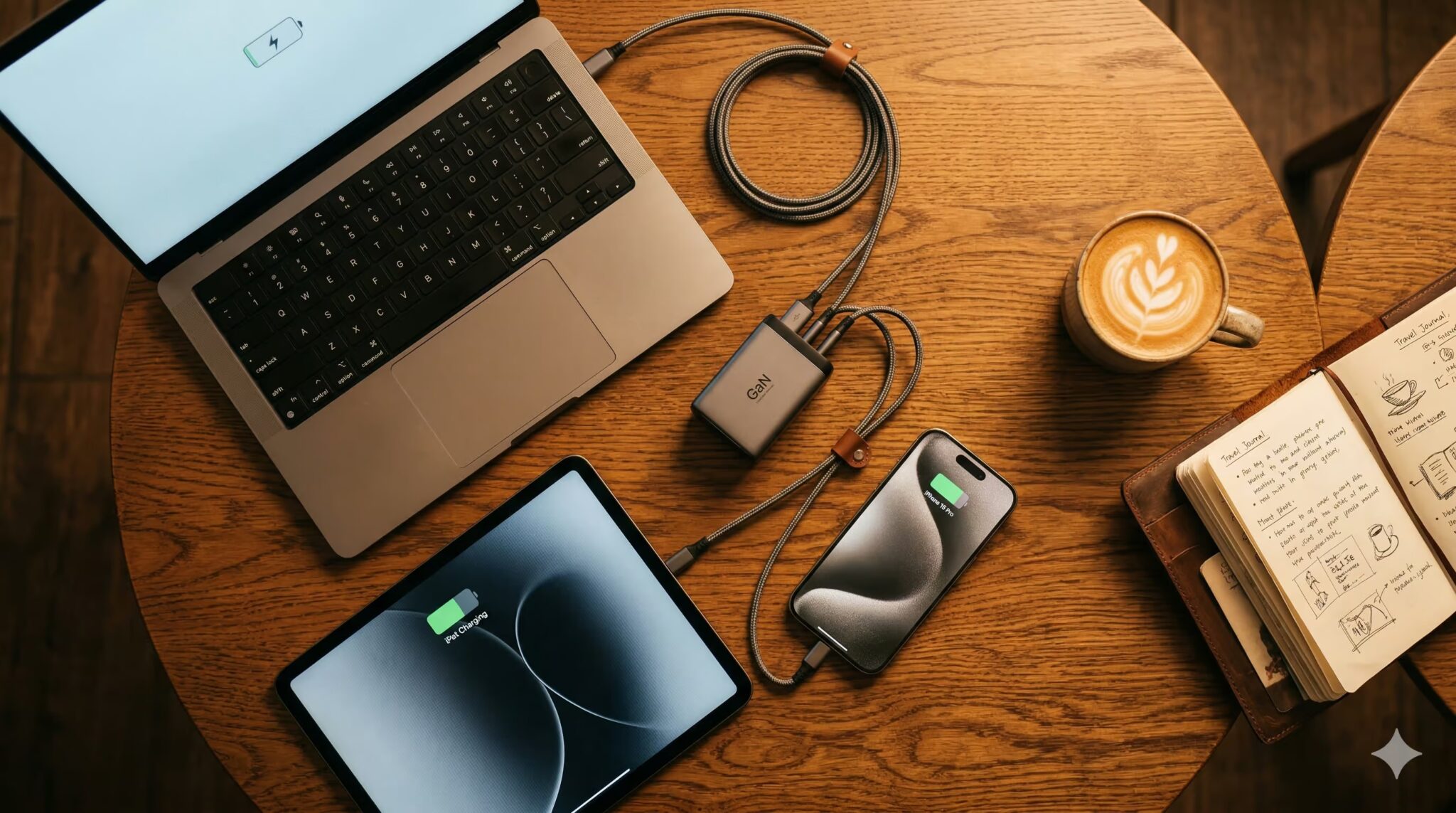
CUKTECH 15 Ultra 165W power bank charging a laptop and smartphone on a cafe table. Ideal for remote work and travel.
165W total output, 140W single-port PD 3.1, and a 1.3-inch TFT display in a compact 20K body.

165W total output and 140W from a single port is a number you’d expect from a half-kilo slab. The CUKTECH 15 Ultra delivers it in a body that’s meaningfully more compact than most high-output 20K banks, with a TFT display that shows actual wattage in real time. That display detail isn’t cosmetic. When you’re troubleshooting a USB-C negotiation issue at a hotel desk, seeing 140W confirmed on screen is genuinely useful.

It launched in February 2025 and has been consistently available on Amazon since. The in-box PD 3.1 cable is worth keeping. Most power banks at this output level don’t include a cable that can actually hit the rated wattage.

Key takeaways

  • 140W single-port output supports full-speed charging for most USB-C laptops
  • TFT display shows real-time wattage, not just a percentage bar
  • Comes with a PD 3.1 cable capable of hitting rated output

Who it’s for

People who need high-wattage laptop charging without the bulk of a 25K bank. Strong choice for creatives running power-hungry machines, or anyone who wants a single bank that handles a MacBook Pro, iPad Pro, and phone in one session.

Who should skip it

If weight is your first concern, this is heavier than it looks for 20K. The Nitecore Gen 4 at Pick 3 is the better call if grams matter most.

Verified specs

SpecValue
Capacity20,000mAh
Wh rating72Wh, typically within carry-on limits, always check your airline
Max output (total)165W
Max output (single port)140W USB-C
Charging protocolsPPS, UFSC, QC, PD 3.1, FCP, SCP, MiPPS (Xiaomi 120W), Apple 2.4A, Samsung AFC
Ports2x USB-C + 1x USB-A
Built-in cableNo, PD 3.1 USB-C cable in box
Weight590g
Dimensions152 x 44.5 x 57.1mm
Display1.3-inch TFT colour screen (real-time wattage)

Specs source: Amazon

Real world charge estimates

This bank holds 72Wh. After transfer losses (about 15%), you get roughly 61Wh of usable energy (calculated estimate). Here’s what that means in full charges:

DeviceBatteryFull charges
iPhone 16~13Wh~4.7
Samsung Galaxy S24 Ultra~19Wh~3.2
iPad Pro 11-inch~31Wh~2.0

Figures are calculated estimates based on 85% transfer efficiency. Real-world results vary by cable, protocol negotiation, and device age.

Carry rating notes

The CUKTECH 15 Ultra is a bag bank, full stop. At 590g and 152 x 44.5 x 57.1mm it’s built like a brick, the trade-off for cramming 165W output into a 20K body. The narrow depth means it slides into a laptop sleeve reasonably well, but the weight rules out casual carry. Treat this one the same way you’d treat a laptop charger: it lives in your bag for travel days and work sessions, not in your pocket.

7Expert Score
BEST COMPACT HIGH OUTPUT

165W total output, 140W single-port PD 3.1, and a real-time TFT wattage display in a 20K body.

Charging Speed
10
Carry Rating
3
Value for Money
9
Cable Design
6
Expert Score
7
Pros
  • 140W single-port output handles nearly every USB-C laptop at full charging speed
  • Real-time wattage display is a practical tool, not just an aesthetic feature
  • PD 3.1 cable included, most competitors at this price don't bother
  • Broad protocol support covers Xiaomi, Huawei, and Samsung fast-charge modes
Cons
  • Heavier than the "compact" label implies when compared to sub-200g 10K options
  • 165W total output only achievable with specific port combinations
  • Sits at the upper end of the 20K market on price
7
CUKTECH 15 Ultra 165W power bank charging a laptop and smartphone on a cafe table. Ideal for remote work and travel.

CUKTECH 15 Ultra 20K Best COMPACT HIGH OUTPUT

165W total output, 140W single-port PD 3.1, and a 1.3-inch TFT wattage display. The highest-output compact 20K bank available.

Pick 6: INIU P41L 10,000mAh 45W | ๐Ÿ… Best Value

INIU P41L 10,000mAh 45W power bank with a glowing blue paw print indicator on a wooden cafe table next to a latte.
INIU P41L 10,000mAh 45W fast charging with a built-in USB-C lanyard cable, the best value in this roundup.

The P41L is what you recommend to someone who asks what power bank to buy and doesn’t want a long conversation about it. It’s 10,000mAh, 45W output, a built-in USB-C lanyard cable, two USB-C ports, one USB-A, and it’s been consistently stocked and reviewed through March 2026. At this output tier, 45W with a built-in cable is genuinely hard to beat.

The current model is the P41L-E2 (ASIN B0DCHWWBNS). INIU’s naming across the P41 range is confusing but this is the confirmed latest version.

Key takeaways

  • 45W fast charging with a built-in cable at budget pricing is genuinely hard to beat
  • TinyCell body is compact and lighter than older P41 variants
  • Built-in USB-C lanyard means one less thing to pack

Who it’s for

First-time power bank buyers, anyone on a tight budget, or people who just want something reliable for daily phone charging without overthinking it. Also a good second bank to leave in a bag permanently.

Who should skip it

If you need to charge a laptop or want USB-C PD wired output beyond 45W, step up to Pick 1. If you want the absolute smallest and lightest 10K bank, the P50 at Pick 2 edges it out on form factor.

Verified specs

SpecValue
Capacity10,000mAh
Wh rating38.5Wh, well within carry-on limits, always check your airline
Max output45W (USB-C / built-in cable)
Charging protocolsUSB-C PD 3.0 (45W), PPS, QC 4.0/3.0, SCP, FCP, AFC, Apple 2.4A
Ports2x USB-C + 1x USB-A
Built-in cableYes, integrated USB-C lanyard (45W in/out)
Weight179g (verify)
Dimensions110 x 70 x 18mm
Cell technologyTinyCell
Model / ASINP41L-E2 / B0DCHWWBNS

Specs source: iniushop.com

Real world charge estimates

This bank holds 38.5Wh. After transfer losses (about 15%), you get roughly 33Wh of usable energy (calculated estimate). Here’s what that means in full charges:

DeviceBatteryFull charges
iPhone 16~13Wh~2.5
Samsung Galaxy S24 Ultra~19Wh~1.7
iPad Pro 11-inch~31Wh~1.0

Figures are calculated estimates based on 85% transfer efficiency. Real-world results vary by cable, protocol negotiation, and device age.

Carry rating notes

The P41L is comfortable pocket carry for most jackets and most trouser pockets. At 179g it’s a touch heavier than the P50 at Pick 2, and the 18mm thickness makes it a bit more noticeable in a thin pocket, but 110 x 70mm keeps the footprint small. In a bag, tote, or sling it disappears. The built-in lanyard cable makes it easy to clip onto a bag strap or a keychain. Good fit for commuters, students, and anyone who wants a reliable daily bank without fuss.

8Expert Score
BEST VALUE

45W fast charging with a built-in USB-C lanyard cable at budget pricing. The best-value pick in this list.

Charging Speed
8
Carry Rating
6
Value for Money
10
Cable Design
8
Expert Score
8
Pros
  • 45W with a built-in cable at budget pricing is the best value in this list
  • Built-in USB-C lanyard supports full 45W, not a compromise cable
  • Two USB-C ports means you can charge in and out simultaneously
  • Consistently available and well-reviewed
Cons
  • No percentage display, LED paw print indicator only
  • 10,000mAh won't cover two full phone charges for flagship-sized batteries
  • 179g is noticeably heavier than the P50 at Pick 2
8
INIU P41L 10,000mAh 45W power bank with a glowing blue paw print indicator on a wooden cafe table next to a latte.

INIU P41L 10,000mAh 45W Best VALUE

45W fast charging, built-in USB-C lanyard cable, 10,000mAh, at budget pricing. The safest first power bank recommendation.

Pick 7: Anker MagGo 10K Slim (A1664) |๐Ÿ… Best Magnetic

Smartphone resting on a slim Anker MagGo 10000mAh Qi2 magnetic power bank on a desk next to a notebook. Best travel charger.
Qi2-certified 15W wireless at 14.7mm depth, the slimmest fast MagSafe-compatible 10K power bank.

TechRadar ranked the MagGo Slim their overall #1 power bank for 2026, and it’s not difficult to see why if you’re an iPhone user. Qi2-certified 15W wireless output is the fastest MagSafe-compatible charging available on a power bank, and the 14.7mm profile means it doesn’t turn your phone into a brick when it’s attached. TechRadar’s testing had it charging an iPhone 13 Pro from near-dead to full in under two hours.

The 30W wired USB-C port is there for when you want to charge faster than Qi2 allows, or when you need to top up a non-Apple device. The MagGo Slim and the MagGo with kickstand and display are different products. This is the slim one, and it’s the right call if you want something that attaches cleanly to the back of your phone without the bulk.

Key takeaways

  • Qi2-certified 15W wireless output is the fastest MagSafe charging available in a power bank
  • 14.7mm depth doesn’t add noticeable bulk to an iPhone in hand
  • 30W USB-C wired port covers non-wireless use cases

Who it’s for

iPhone 12 or newer users who want hands-free charging without cables. If you spend a lot of time navigating, watching, or on calls while charging, the magnetic attachment makes that practical.

Who should skip it

Android users, anyone without a MagSafe-compatible case, or anyone who charges primarily via cable. The wired 30W port is fine but there are better picks at similar prices if wireless isn’t the reason you’re here.

Verified specs

SpecValue
Capacity10,000mAh
Wh rating38.7Wh, well within carry-on limits, always check your airline
Wireless output15W (Qi2)
Wired output30W USB-C
Wired charging protocolsUSB-C PD 3.0 (30W), QC 3.0, Apple 2.4A
Built-in cableNo
Weight200g
Dimensions104 x 70.6 x 14.7mm
CertificationQi2
CompatibleiPhone 12 and newer (MagSafe), all Qi2 devices

Specs source: anker.com

Real world charge estimates

This bank holds 38.7Wh. After transfer losses (about 15%), you get roughly 33Wh of usable wired energy (calculated estimate). Wireless charging drops efficiency further to around 65% due to magnetic coupling losses, which is why wireless charge counts are lower. Here’s what that means in full charges:

DeviceBatteryWired chargesWireless charges
iPhone 16~13Wh~2.5~1.9
Samsung Galaxy S24 Ultra~19Wh~1.7~1.3
iPad Pro 11-inch~31Wh~1.1N/A

Figures are calculated estimates. Wireless charging efficiency is lower due to magnetic coupling losses.

Carry rating notes

The MagGo Slim lives on the back of your phone. At 14.7mm depth it’s actually thinner than some phone cases, so when magnetically attached it turns your iPhone into a slightly chunkier phone rather than adding a separate device to your pocket. 200g is noticeable when stuck to the back of the phone for extended use, but for a 10K bank attached magnetically, it’s lighter than most alternatives. Off the phone, it slides into any pocket. The main carry compromise: it only makes sense attached to a MagSafe-compatible iPhone or case.

6Expert Score
BEST MAGNETIC

Qi2-certified 15W wireless charging in a 14.7mm profile, the slimmest fast MagSafe-compatible power bank.

Charging Speed
6
Carry Rating
8
Value for Money
7
Cable Design
3
Expert Score
6.2
Pros
  • Qi2-certified 15W is the fastest wireless charging in this category
  • 14.7mm profile keeps the phone-plus-bank combination manageable
  • No alignment fidgeting, magnets snap it into the right position
Cons
  • 200g adds noticeable weight when attached to a phone for extended use
  • No display, no way to check remaining capacity without charging a device
  • Limited value for non-iPhone users
10
Smartphone resting on a slim Anker MagGo 10000mAh Qi2 magnetic power bank on a desk next to a notebook. Best travel charger.

Anker MagGo 10K Slim (A1664) BEST MAGNETIC

Qi2-certified 15W wireless, 14.7mm profile, 10,000mAh. The slimmest fast MagSafe-compatible power bank available.

Pick 8: Anker Prime 26K 300W | ๐Ÿ… Best Premium

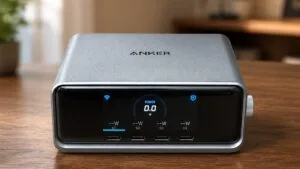
Anker Prime 26K 300W power bank with a digital display showing 100%, charging a silver laptop on a wooden table in an airport lounge next to a coffee cup and boarding pass
300W total output, 140W per USB-C port, app-controlled display, 99.75Wh. The most capable bank in this roundup.

The Prime 26K is what you buy when you genuinely need to charge a 16-inch MacBook Pro, a Windows gaming laptop, a tablet, and a phone in one session and you don’t want to think about running out. 300W total output, 140W per USB-C port, an app-controlled digital display, and 99.75Wh of capacity. It’s the most capable bank in this list by a significant margin.

Expert Reviews currently names it their best-in-class for premium, and it’s been widely reviewed through February 2026. A 2026 “Full Protocol Edition” with added Xiaomi and Huawei protocol support has been announced in China, but wider availability is unconfirmed as of April 2026. The current retail model is the A110A, and it’s the right buy right now.

Key takeaways

  • 300W total output handles the most power-hungry USB-C laptops at full speed
  • App-controlled display lets you check and manage charging behaviour remotely
  • 99.75Wh stays just under the 100Wh airline carry-on threshold, typically within carry-on limits, always check your airline

Who it’s for

Power users, content creators, and anyone who carries a high-wattage laptop and multiple devices on a regular basis. It’s a considered purchase, but if charging anxiety on long work trips is a real problem for you, it solves it.

Who should skip it

Anyone who mainly charges phones. The A1383 at Pick 1 handles that job at a fraction of the cost. The Prime is overkill unless you specifically need 100W+ laptop charging.

Verified specs

SpecValue
Capacity26,250mAh
Wh rating99.75Wh, typically within carry-on limits, always check your airline
Max output (total)300W
Max output per USB-C port140W
Charging protocolsUSB-C PD 3.1 (140W), PPS, QC 3.0, PowerIQ 4.0
Input250W max (dual USB-C) / 150W Pogo Pin
Ports3x USB-C + 1x USB-A (22.5W)
Built-in cableNo
Weight600g
Dimensions159.9 x 38 x 62.7mm
DisplayApp-controlled digital display
TSA approvedYes
ModelA110A

Specs source: anker.com

Real world charge estimates

This bank holds 99.75Wh. After transfer losses (about 15%), you get roughly 85Wh of usable energy (calculated estimate). Here’s what that means in full charges:

DeviceBatteryFull charges
iPhone 16~13Wh~6.5
Samsung Galaxy S24 Ultra~19Wh~4.5
iPad Pro 11-inch~31Wh~2.7

Figures are calculated estimates based on 85% transfer efficiency. Real-world results vary by cable, protocol negotiation, and device age.

Carry rating notes

The Prime 26K is a backpack bank. At 600g and 159.9 x 38 x 62.7mm it’s on the heavier end, though the thinner depth (38mm) means it slides more easily into a laptop sleeve than the CUKTECH. This isn’t a bank you toss into a jacket pocket or a small sling. It lives in a dedicated tech pouch alongside your laptop charger and a couple of cables. If you’re carrying a business bag or a travel backpack with space for a MacBook Pro charger, this fits right in. If you’re trying to travel light, pick something smaller

5.6Expert Score
Awesome

300W total output, 140W per port PD 3.1, app control, and 99.75Wh capacity. The most capable bank in this roundup.

Charging Speed
10
Carry Rating
3
Value for Money
8
Cable Design
1
Expert Score
6
Pros
  • 300W total output is the highest in this roundup and handles any current USB-C laptop
  • App control gives you remote monitoring and settings adjustment
  • 99.75Wh is as close to the 100Wh airline limit as you can get while staying under
  • 250W input means a fast recharge when you do find a socket
Cons
  • A significant outlay, only justified if you regularly need the output headroom
  • The app adds a dependency for advanced features
  • Heavier and bulkier than any other pick in this list
10
Anker Prime 26K 300W power bank with a digital display showing 100%, charging a silver laptop on a wooden table in an airport lounge next to a coffee cup and boarding pass

Anker Prime 26K 300W Best PREMIUM

300W total, 140W per port PD 3.1, app-controlled display, 99.75Wh. The highest-output bank you can still fly with.

How to choose the best power bank for travel in 2026

Choosing between the best power banks 2026 has delivered comes down to matching capacity, wattage, and weight to how you actually travel. The picks above cover different use cases. This section explains the reasoning behind those choices so you can apply it to any future comparison.

Start with the job, not the number

Every buying mistake I’ve seen with power banks starts the same way: picking by mAh because it’s the biggest number on the box. But a 30,000mAh bank that charges at 18W is going to take four hours to top up your MacBook, if it’ll charge it at all. The question isn’t how much it holds, it’s what it needs to do.

Write down the devices you’re actually charging. A phone and earbuds is a completely different brief from a laptop plus two phones. The job determines the capacity, the output wattage, and the form factor. Start there.

Capacity: what mAh actually means

mAh tells you how much energy the cells hold, not how much ends up in your device. Power banks lose 10 to 20% through heat and conversion inefficiencies during transfer. A 20,000mAh bank at 85% efficiency delivers roughly 17,000mAh of usable output, still enough for multiple charges, but not a one-for-one ratio.

For a practical rule of thumb: a modern iPhone 16 has around 3,600mAh. A 10,000mAh bank gives you about 2.3 full charges. A 20,000mAh bank gives you about 4.5. Android flagships run larger at 5,000 to 6,000mAh, so adjust your estimate accordingly.

Output wattage: why it matters more than most guides say

This is where most buying guides let people down. A 20,000mAh bank charging at 18W will take about six hours to deliver its full capacity. The same capacity at 65W takes under three hours. If you’re on a day trip and you need your laptop usefully charged by the time you land, the wattage number is what matters.

Check two things: the maximum wattage on the bank’s USB-C port, and the wattage your laptop needs to charge meaningfully. Most 13-inch laptops need 30 to 65W for a useful charge rate. 15-inch and 16-inch machines often need 65 to 100W to charge at full speed.

Airline rules

Before you travel, check whether your power bank is within your airline’s limits. For more detail, see our guide: Can you take a power bank on a plane?

Built-in cables

Built-in cables remove one of the most common travel fumbles, like leaving your charging lead in the hotel room. The A1383 at Pick 1 and the A1695 at Pick 4 both include them. The trade-off is that a damaged built-in cable can’t be swapped, and some built-in cables are rated for lower wattage than the bank’s ports can deliver. Check the specs before assuming the included cable is the bottleneck.

Magnetic vs wired

Magnetic (MagSafe/Qi2) charging is genuinely convenient for iPhone users who want to charge while using their phone. It’s slower than wired at 15W vs 65W+ for a good wired port, and it only works with compatible cases and phones. If wireless charging isn’t a priority, a wired 30 to 65W bank will charge faster for less money.


Frequently asked questions

The best power banks 2026 has launched balance capacity, charging speed, and real-world portability. Our top overall pick is the Anker A1383 for most travellers because it charges phones, tablets, and most laptops from a single bank with a built-in cable. For ultralight travel the Nitecore NB10000 Gen 4 wins on weight. For serious laptop charging the Anker A1695 delivers three 100W ports. Match the bank to your actual devices and travel pattern rather than picking by capacity alone.

For most people carrying a phone and earbuds: 10,000mAh is enough for a full day. If you’re also carrying a tablet or laptop, 20,000mAh is the right target. Anything above 25,000mAh starts to push into airline carry-on territory where you’ll need to check your airline’s specific policy.

Yes, if the bank’s USB-C output is high enough. Most 13-inch laptops need at least 30W to charge while in use. 65W charges them comfortably. 16-inch MacBook Pros and larger Windows gaming laptops often need 100W+ to maintain full charge under load. Picks 4 and 8 in this list are the right starting points for laptop charging.

Generally yes, in carry-on luggage, but with capacity limits. Most airlines follow IATA guidance capping power banks at 100Wh in carry-on without approval, with some allowing up to 160Wh with airline permission. They’re never allowed in checked luggage. Rules vary by airline and route, so always check directly with your carrier before you fly. Our detailed guide covers this: Can you take a power bank on a plane?

If you have an iPhone 12 or newer and you spend a lot of time on your phone while it’s charging, navigating, on calls, or watching video, the hands-free attachment is genuinely useful. Qi2 at 15W is fast enough to keep pace with casual use. If you mainly charge overnight or stationary, wired picks at the same price will charge faster.

No. A 30,000mAh bank that’s too heavy to carry daily is worth less than a 10,000mAh bank that’s always in your bag. The Nitecore NB10000 Gen 4 at 143g is more useful on a week-long hiking trip than a 600g 26K bank, even though it holds less. Match the bank to the trip, not the biggest number you can find.

Three things: output wattage (cheap banks often list 20,000mAh but only output 18W, nearly useless for laptops), accurate capacity claims (some unverified brands overstate by 15 to 20%), and safety certifications. Stick to brands with CE and RoHS marking, and check whether the Amazon listing has verified UK reviews rather than bulk imported ones.


Final recommendation

After testing all the best power banks 2026 has delivered so far, the Anker A1383 at Pick 1 is the right call for most people: 20K capacity, built-in cable, fast enough for laptops, and sensible weight. Commuters and light travellers who want something pocketable should look at the INIU P50 at Pick 2. If you’re flying regularly and every gram matters, the Nitecore NB10000 Gen 4 at Pick 3 is the benchmark for travel weight. Laptop users who need serious output should go straight to the Anker A1695 at Pick 4. iPhone users who want hands-free charging will find the Anker MagGo Slim at Pick 7 hard to beat. And if budget isn’t a concern and you want the most capable bank available right now, the Anker Prime 26K 300W at Pick 8 covers everything.

7.9
Best power banks 2026 lineup tested for travel, Anker A1383 87W charging a laptop in an airport lounge

Anker 87W 20K (A1383) Best Overall

The one bank that handles phones, tablets, and most laptops without needing a separate cable. Built-in USB-C, 65W single-port output, 20K, and airline-safe at ~74Wh.

We will be happy to hear your thoughts

Leave a reply

Your total score

SmartGadgetKit
Logo